

- Multiple services under a single IP
- SSL/TLS termination at the edge
- Name-based virtual hosting
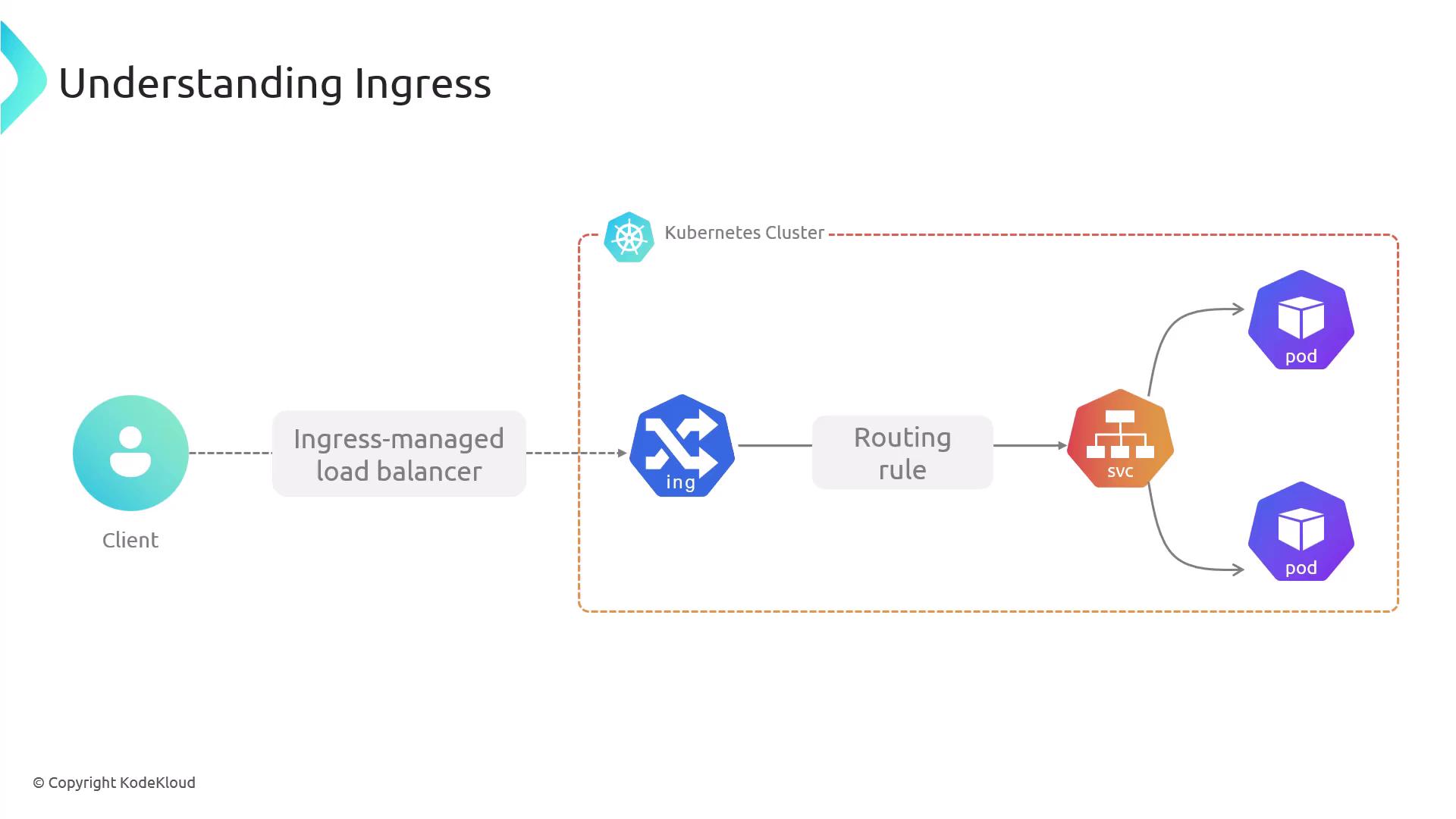
Ingress resource has no effect until you deploy an Ingress Controller, which watches those resources and configures the edge component—such as NGINX or a cloud load balancer—to implement your routing rules.
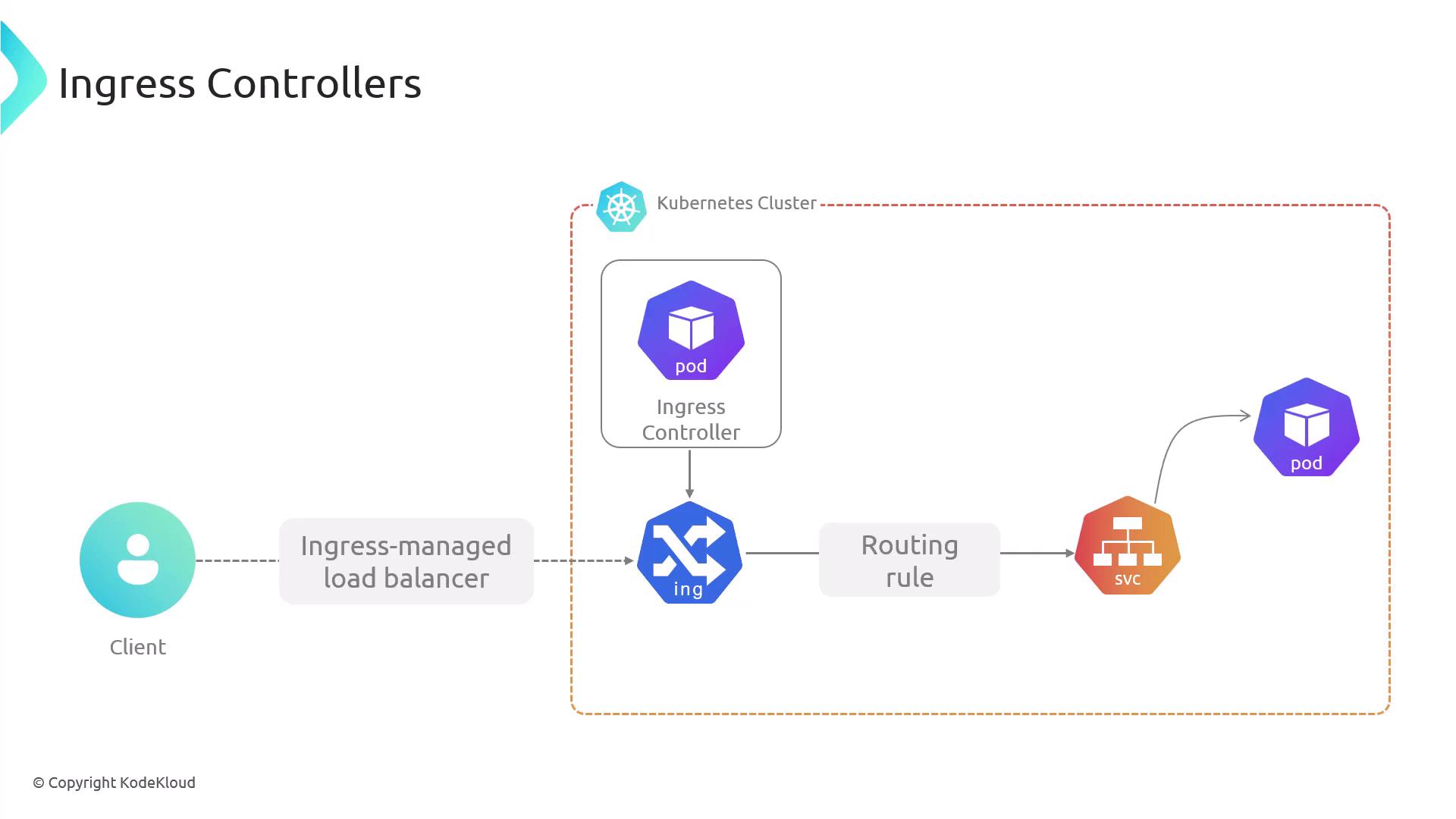
Cloud platforms like AWS, GKE, and AKS also provide managed controllers that integrate with their load balancers and DNS services.
Ingress vs. Service
Services are straightforward to configure, but Ingress provides greater control over HTTP traffic management, security, and virtual hosting.
Anatomy of an Ingress Resource
An Ingress resource uses the standard Kubernetes schema:apiVersion, kind, metadata, and spec. Key spec fields include:
- Ingress Rules
- Default Backend
- Resource Backend
- Path Types
- Annotations
- TLS Configuration
1. Ingress Rules
Rules map hostnames and URL paths to specific services and ports. You can route different paths or domains to separate backends.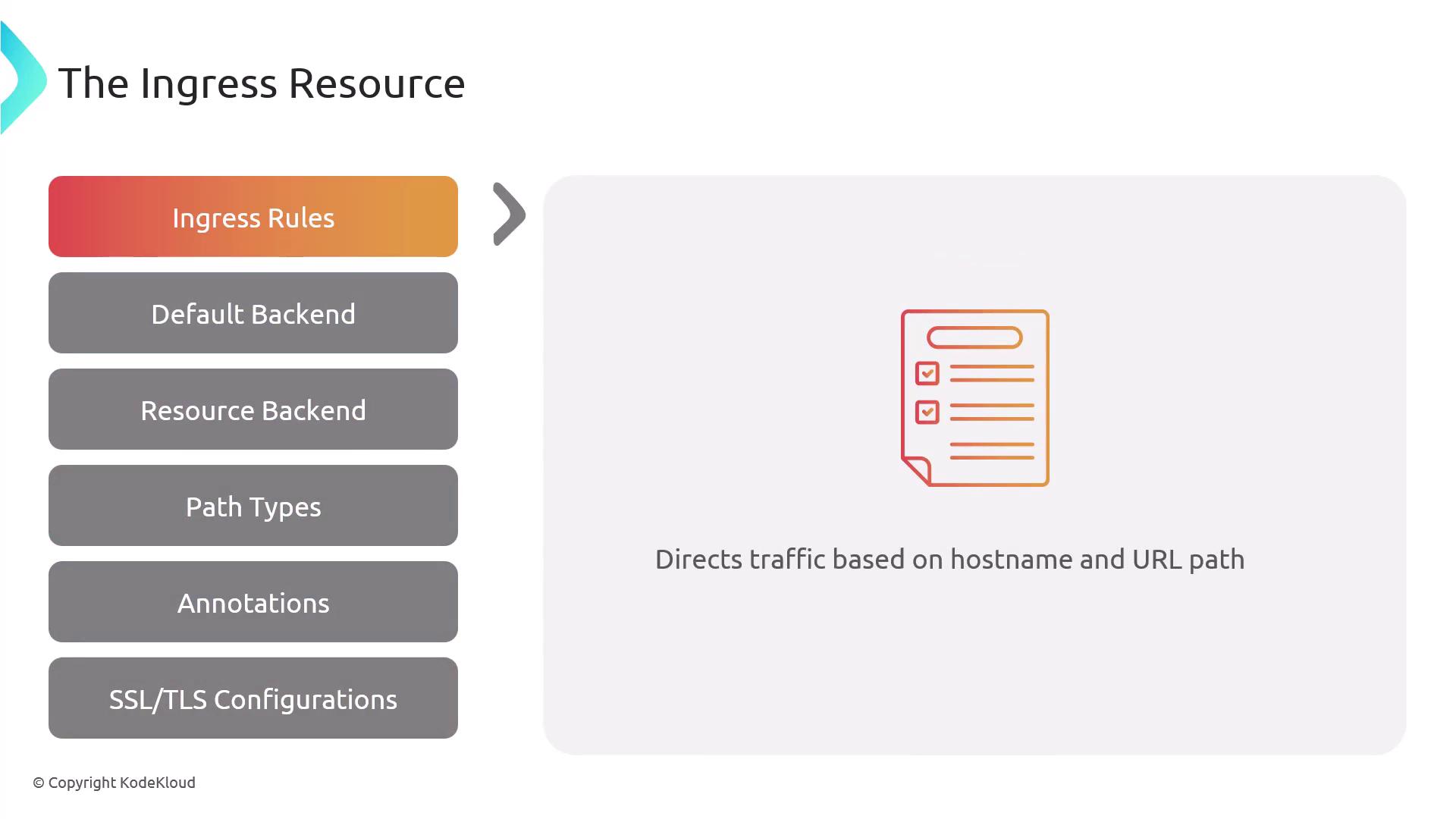
2. Default Backend
The default backend handles requests that don’t match any rule, forwarding them to a specified service and port.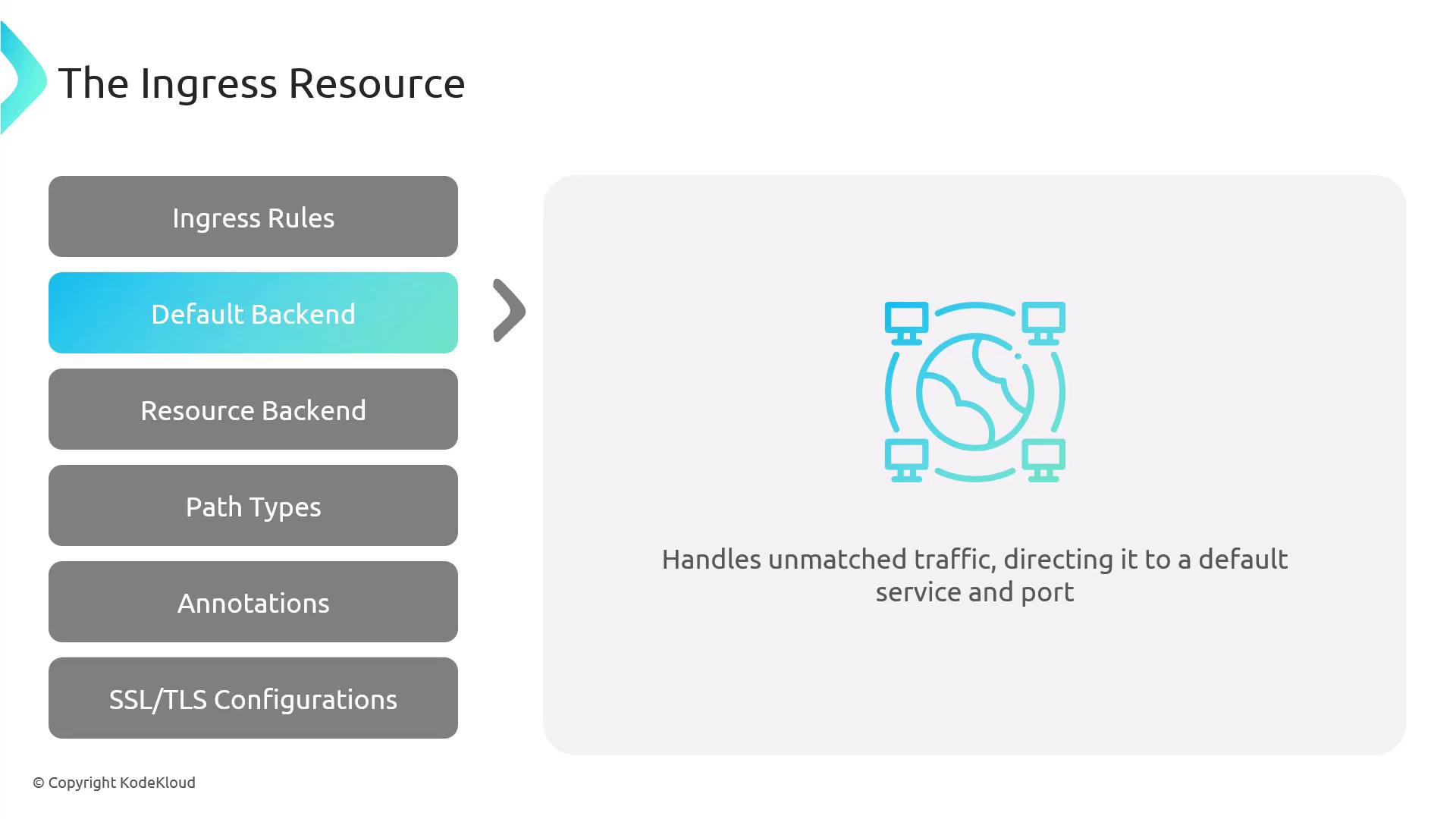
3. Resource Backend
You can reference another Kubernetes resource (in the same namespace) instead of a service. Mixingservice and resource in the same backend is invalid.
Resource backends were supported in earlier APIs (e.g.,
networking.k8s.io/v1beta1) but are not part of the current networking.k8s.io/v1 spec. Controller support varies.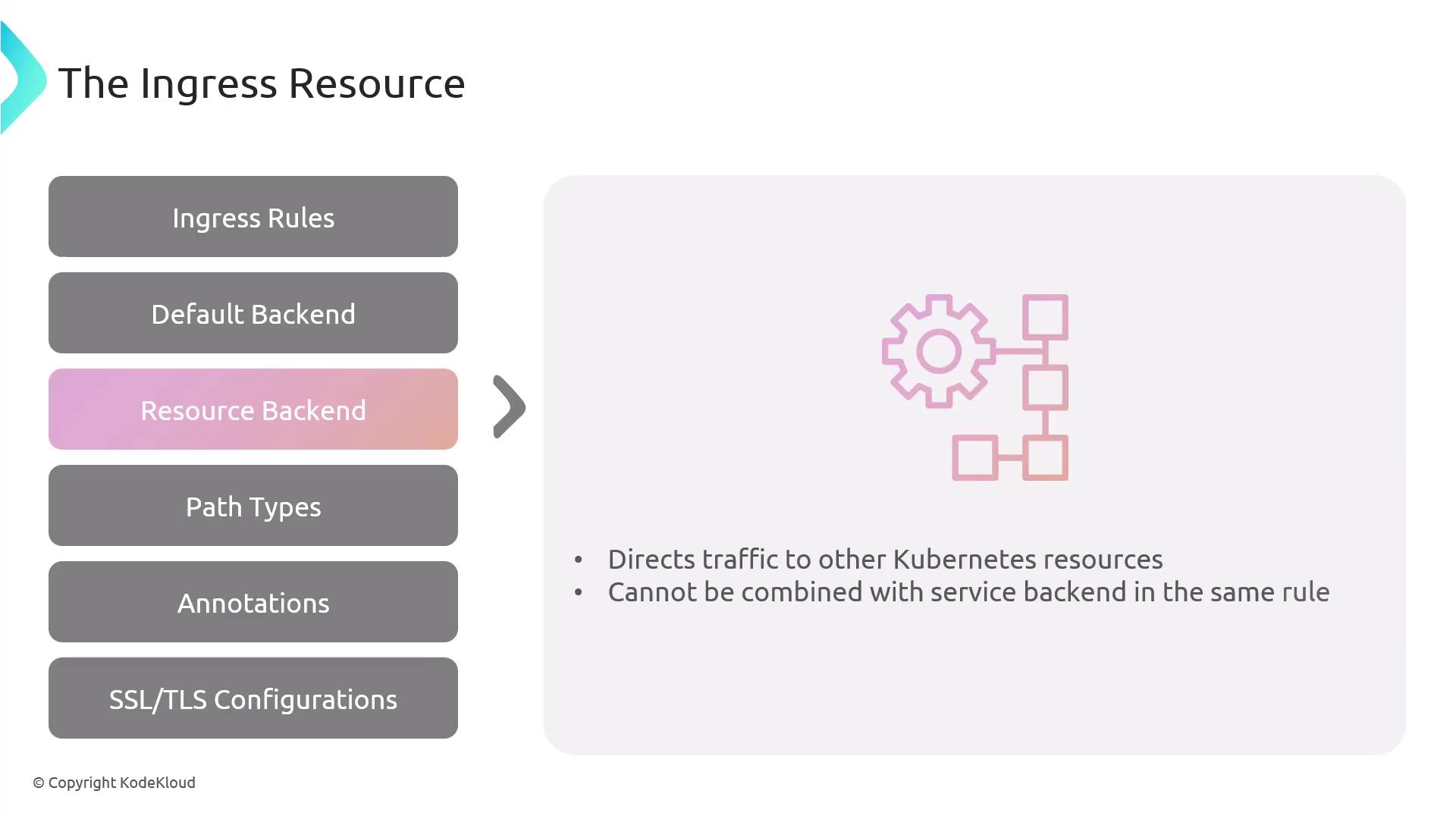
4. Path Types
Path types determine how the Ingress Controller matches request URLs:
5. Annotations
Annotations enable controller-specific features like SSL redirection, URL rewrites, or rate limiting.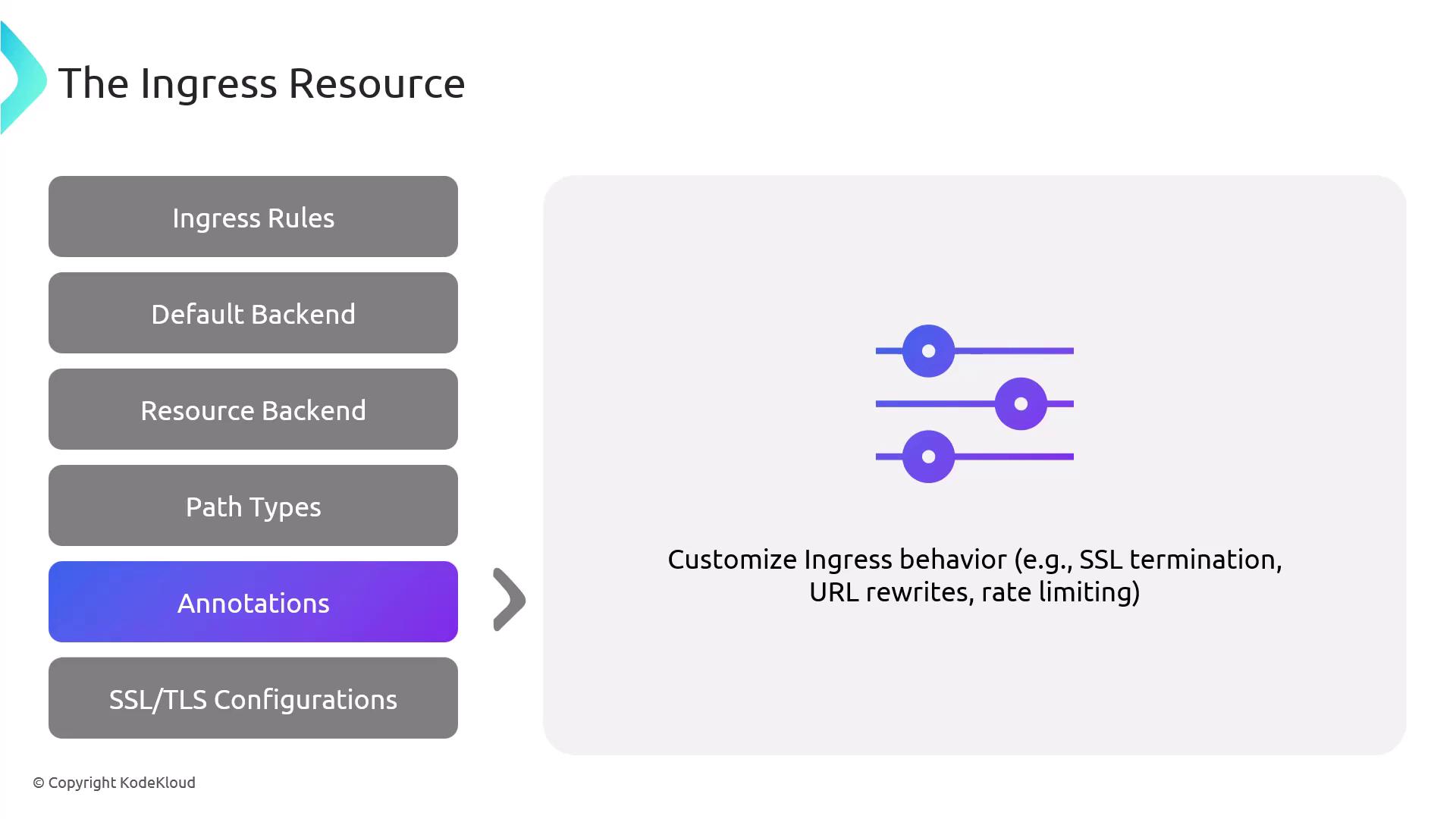
6. TLS Configuration
Specify TLS by referencing Kubernetes Secrets that store certificates and private keys. This configures HTTPS at the Ingress gateway.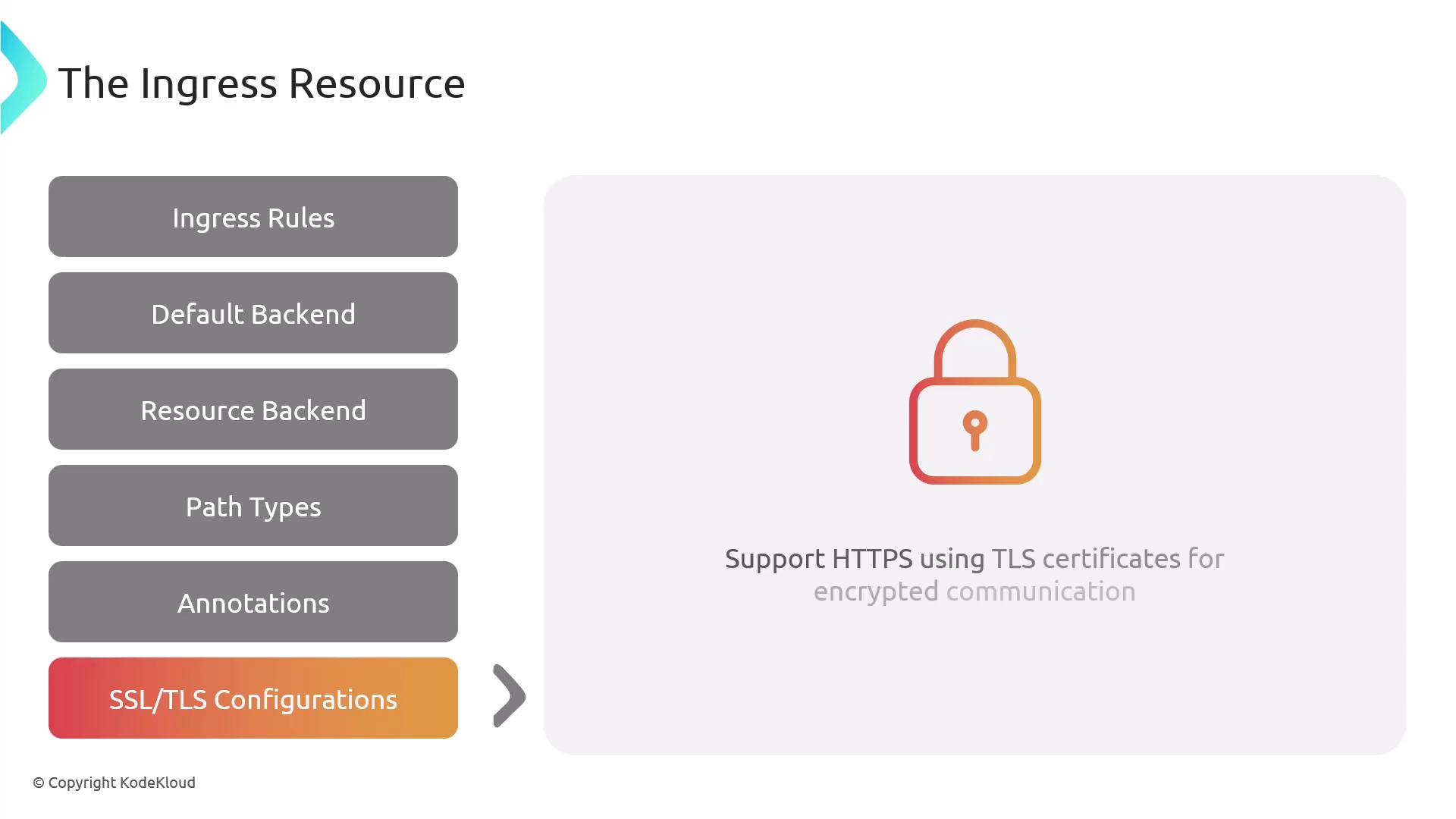
Minimal Ingress Example
This example defines adefaultBackend for unmatched requests and a rule that routes example.com/web* (prefix match) to web-service:80.
/web is sent to default-service:80.
Common Ingress Patterns
- Single-Service Ingress: Routes all traffic to one backend.
- Simple Fan-Out: Path-based routing to multiple services.
- Name-Based Virtual Hosting: Hostname-based routing for multiple domains.
- TLS/SSL Termination: Decrypts HTTPS at the edge and forwards HTTP to services.

Key Benefits of Ingress
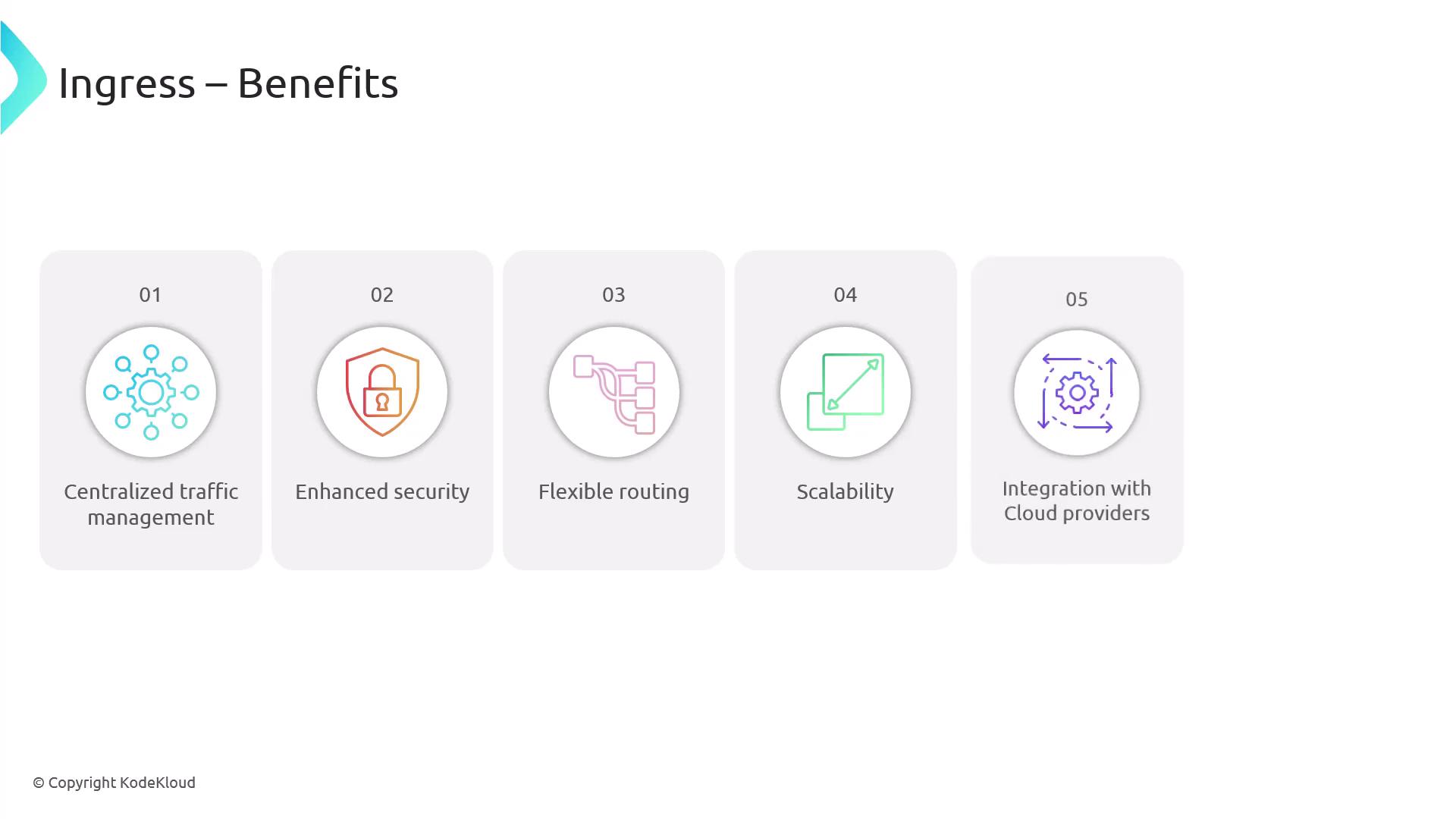
- Centralized traffic management through a single entry point
- Simplified certificate handling with edge SSL/TLS termination
- Flexible path- and host-based routing for complex architectures
- Auto-scaling and high availability via Kubernetes controllers
- Native integration with cloud load balancers, DNS, and managed certificates