

Comparative Overview
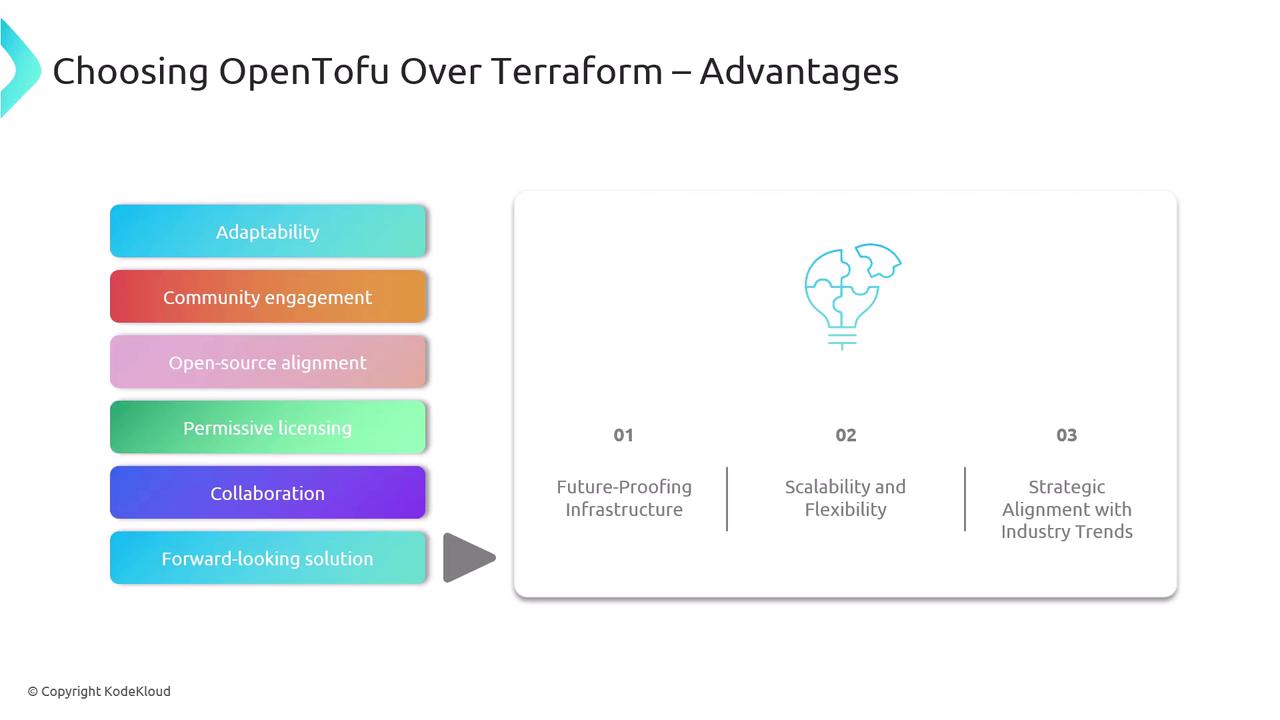
1. Adaptability
OpenTofu’s design prioritizes flexibility, enabling you to tailor your IaC setup with ease:- Modular Architecture: Break your infrastructure into reusable modules and plugins.
- Cloud & On-Prem Support: Deploy consistently across AWS, Azure, GCP, or private data centers.
- Agile Release Cycle: Benefit from regular feature drops, timely bug fixes, and quick compatibility patches.
2. Community Engagement
A vibrant, user-driven community is the backbone of OpenTofu:- Active Contributions: Features and fixes emerge from real-world use cases.
- Transparent Roadmap: Track issues, RFCs, and pull requests in the public repo.
- Feedback Loops: User suggestions directly influence prioritization and design.

3. Open-Source Alignment
OpenTofu embodies open-source principles—transparency, collaboration, and freedom:- Community Governance: Public RFC process determines new features.
- Full Code Access: Inspect, fork, and enhance the codebase at will.
- Documentation & Support: Comprehensive docs and community forums ensure you’re never stuck.
4. Permissive Licensing
With a minimal license footprint, OpenTofu lowers legal barriers:- Unrestricted Use: Integrate, modify, and redistribute without complex terms.
- Interoperability: Seamlessly combine with other open-source tools.
- Clear Legal Terms: Simple, well-documented MPL agreement.
Review the Mozilla Public License (MPL) 2.0 to ensure it meets your project’s compliance requirements.
5. Collaboration
OpenTofu’s inclusive development model accelerates innovation:- Diverse Contributors: Operators, developers, and community advocates unite.
- Knowledge Sharing: Open discussions on best practices and architectural patterns.
- Continuous Iteration: Rapid cycles drive high-quality enhancements.

6. Future-Proofing and Scalability
Building your IaC on OpenTofu ensures long-term success:- Resilient Management: Adapt to emerging cloud services and protocols.
- Elastic Workloads: Scale modules horizontally or vertically as needed.
- Strategic Advantage: Community-driven tools are increasingly preferred across industries.
Links and References
- OpenTofu GitHub Repository
- Terraform Documentation
- Mozilla Public License 2.0
- Infrastructure as Code Best Practices