

Why Choose a Multitenant Cluster?
- Cost Efficiency
Consolidate control-plane and compute resources to lower infrastructure costs. - Agility & Flexibility
Onboard or offboard tenants on demand without spinning up new clusters. - Simplified Management
Monitor and operate all tenants from one GKE console, streamlining DevOps workflows.
Before implementing multitenancy, evaluate your organization’s security posture and compliance requirements. Proper isolation is critical to safeguard tenant workloads and sensitive data.
Isolation Layers in Kubernetes
Consider these five layers to enforce tenant separation: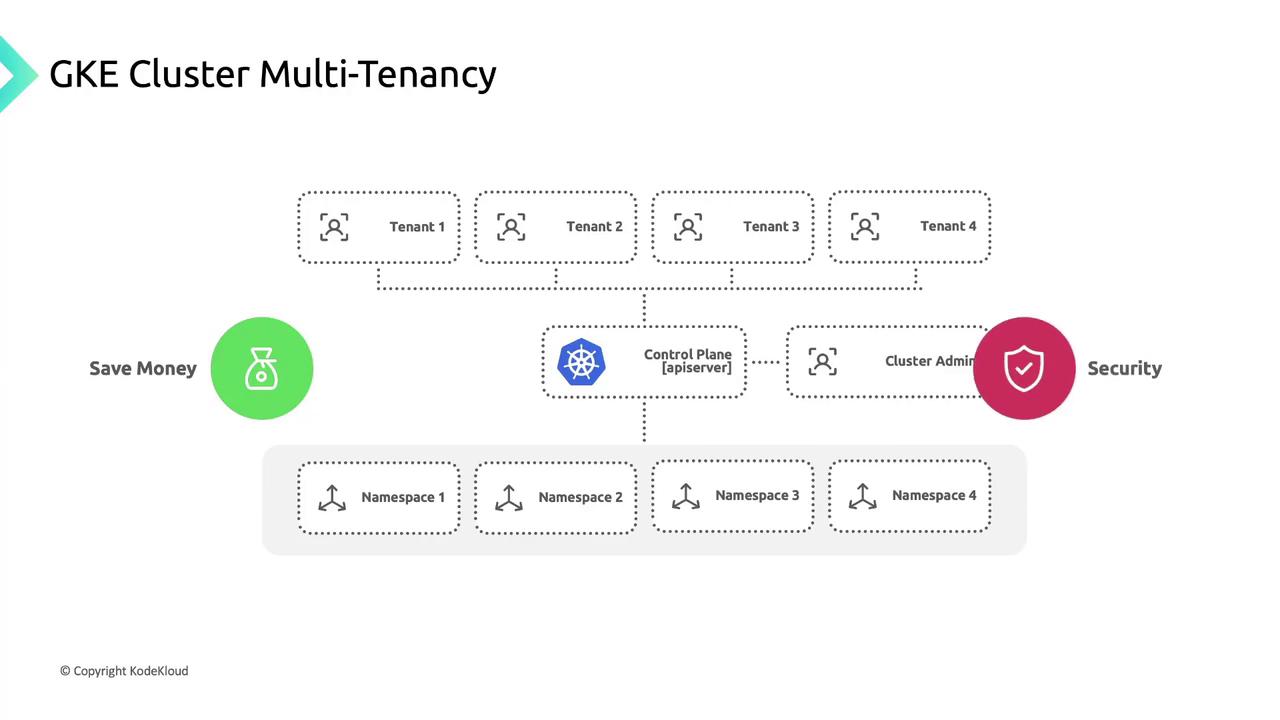
Namespaces for Tenant Isolation
Namespaces are your primary sandbox for tenant workloads:- Apply
ResourceQuotaandLimitRangeto cap CPU, memory, and object counts. - Enforce
NetworkPolicyrules for traffic segmentation. - Use
RoleBindingandClusterRoleBindingfor fine-grained RBAC.
Combine namespaces with dedicated node pools and strict Pod Security Admission profiles for stronger isolation.
Enterprise Best Practices
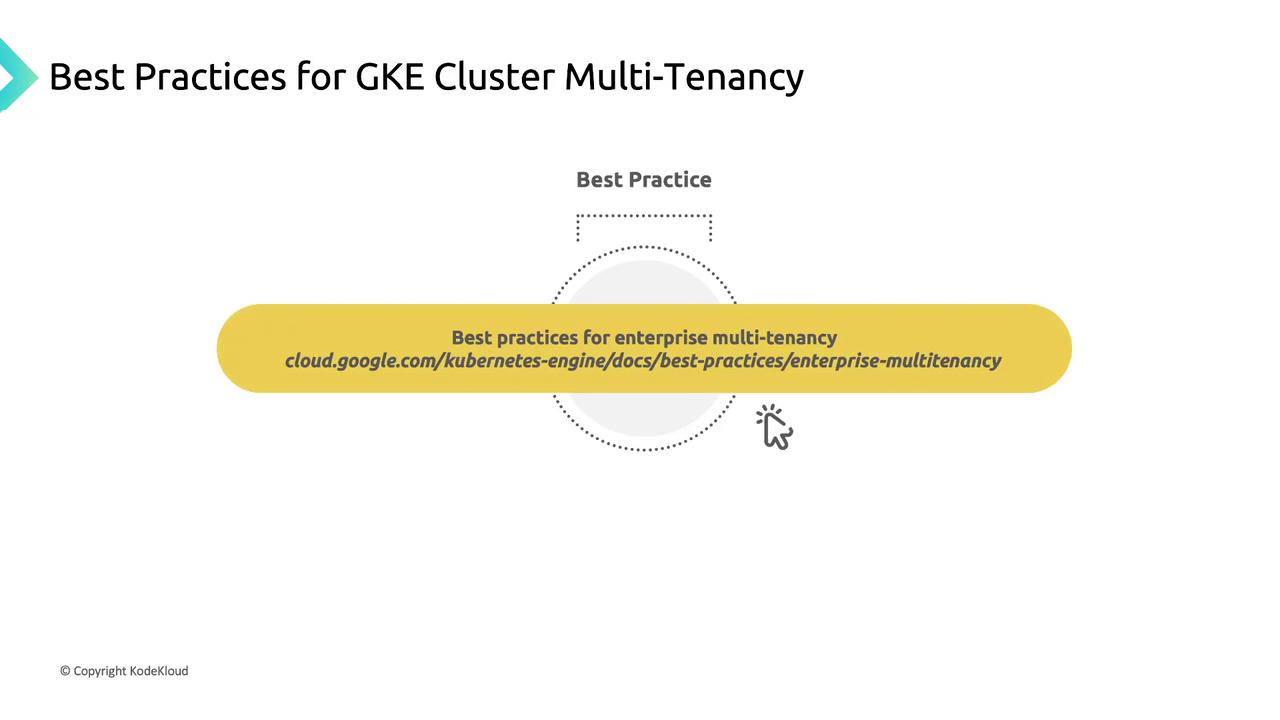
For large-scale, production-grade multitenancy, follow the enterprise best practices:- Secure cluster provisioning with private clusters and VPC-native networking
- Policy enforcement via Anthos Config Management and Gatekeeper
- Centralized monitoring and audit logging
- Automated tenant onboarding and offboarding workflows
Links and References
- GKE Enterprise Multitenancy Best Practices
- Kubernetes Namespaces
- Anthos Config Management
- Pod Security Admission