

The House-Building Analogy
To illustrate how GKE compares to managing Kubernetes yourself, picture building a house. You have two approaches:- Option A: Hire Individual Trades
- Option B: Hire a Builder
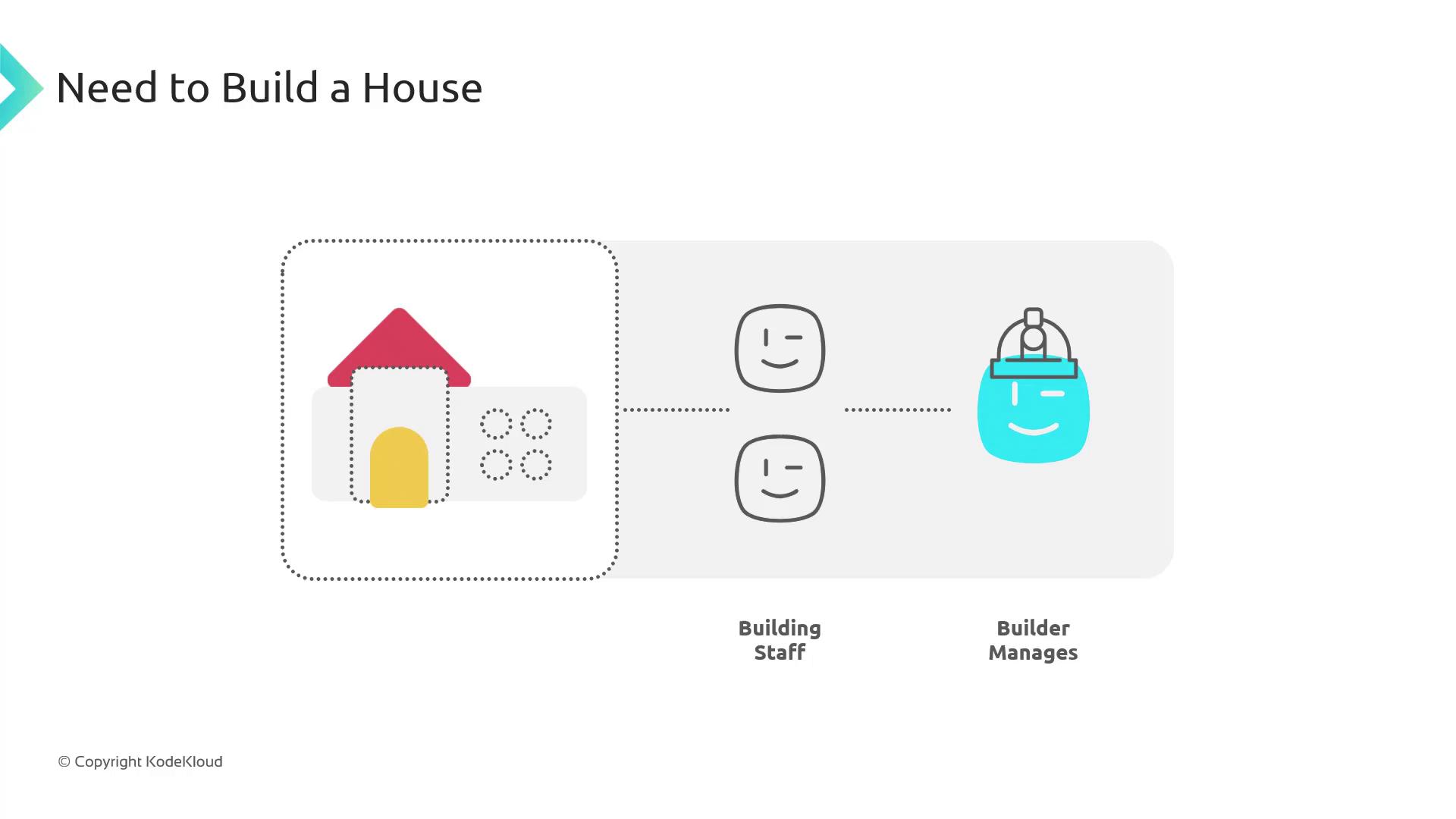
Option A: Manage Each Trade Yourself
Taking on each specialty—carpenters, electricians, plumbers—means you must:- Select qualified trades and materials
- Coordinate schedules and handoffs
- Verify certifications and expertise
- Integrate all parts into a single, livable home
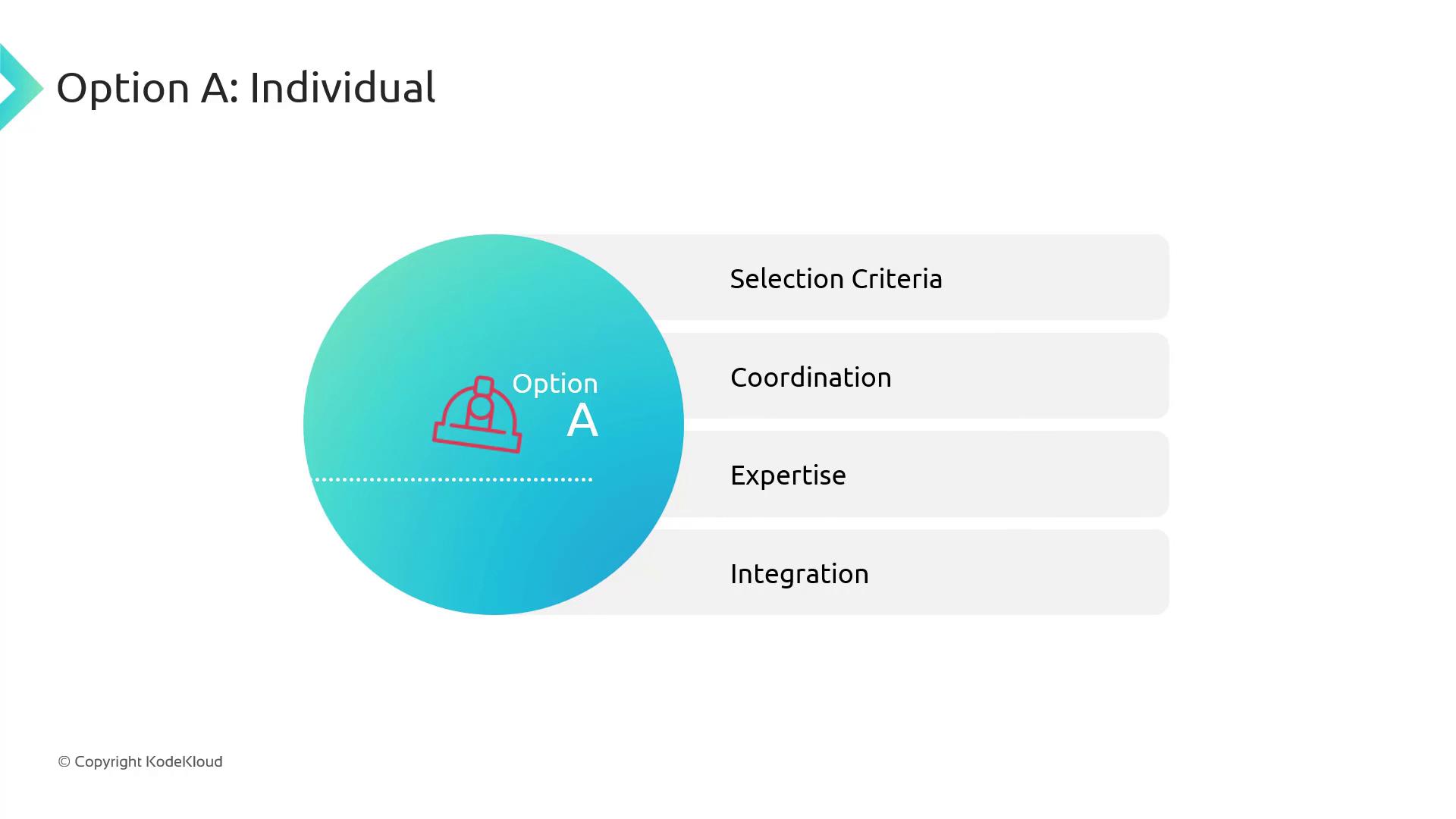
Option B: Hire a Builder
A builder handles everything—sourcing, scheduling, quality control—so you only need to oversee the project outcome:- Centralized selection and procurement
- Single point of contact for updates
- Accountability for trades and results
- Seamless assembly of all components
Kubernetes vs. GKE
Working with upstream Kubernetes is like Option A: you provision the control plane, configure etcd, manage upgrades, scale nodes, and maintain high availability. GKE, on the other hand, is your dedicated builder: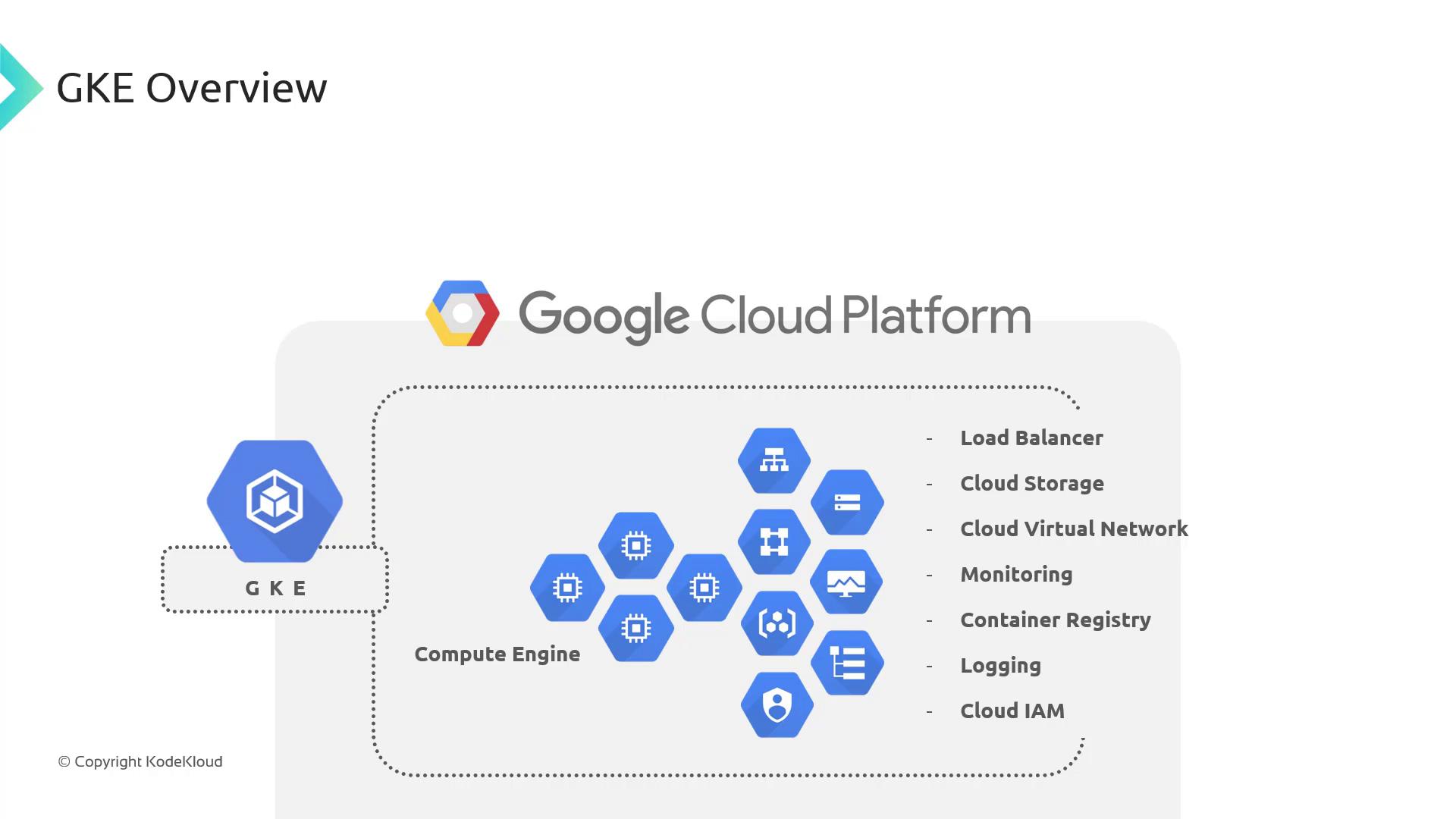
- Control plane provisioning, upgrades, and patching
- Node auto-provisioning, autoscaling, and auto-repair
- Regional clusters with built-in high availability
- Security hardening (e.g., Shielded GKE Nodes)
- Native integration with Cloud Monitoring, Load Balancing, IAM, and more
When to Use GKE
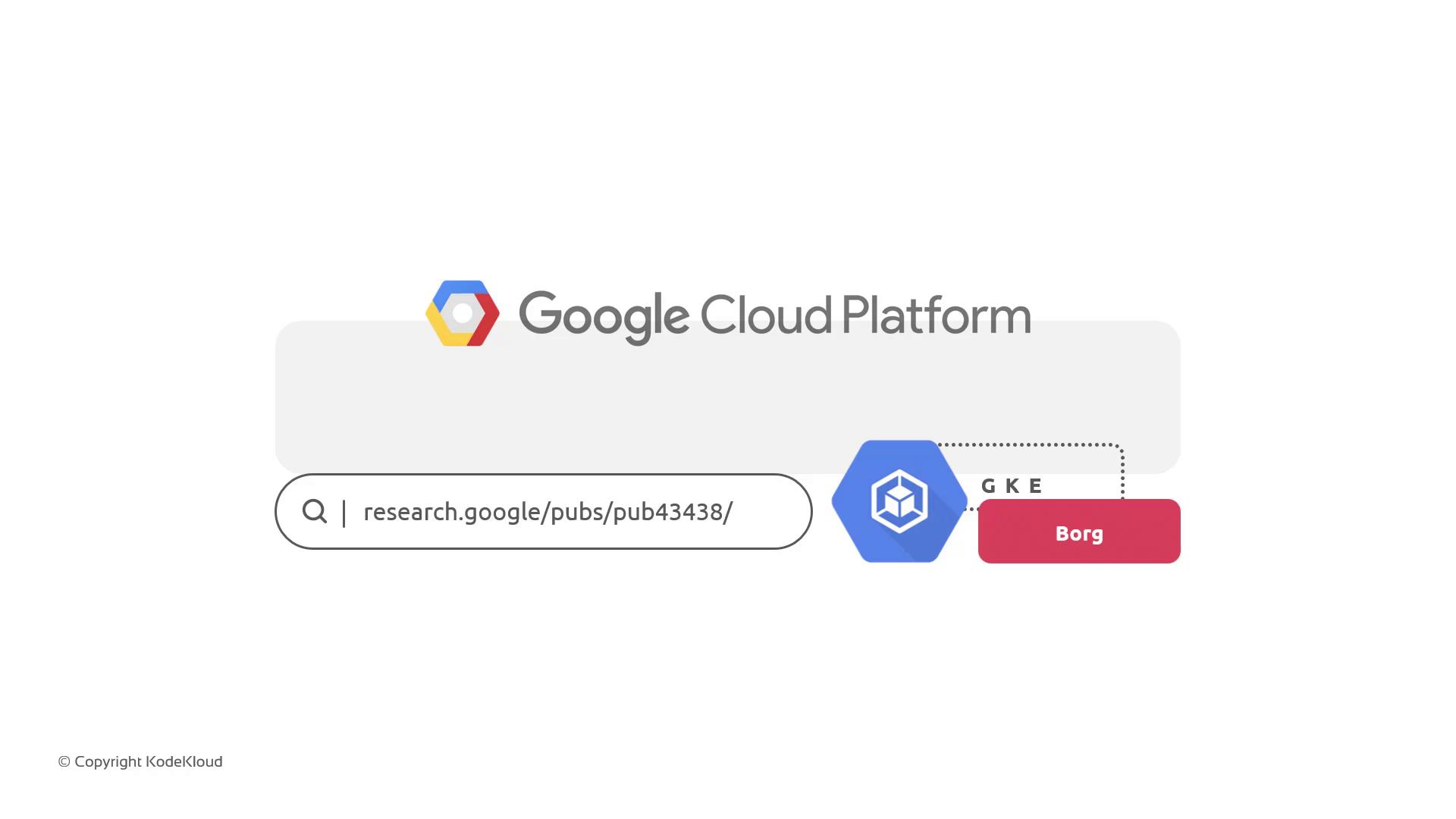
Built on a decade of Borg experience, GKE delivers production-ready defaults and managed services for your applications: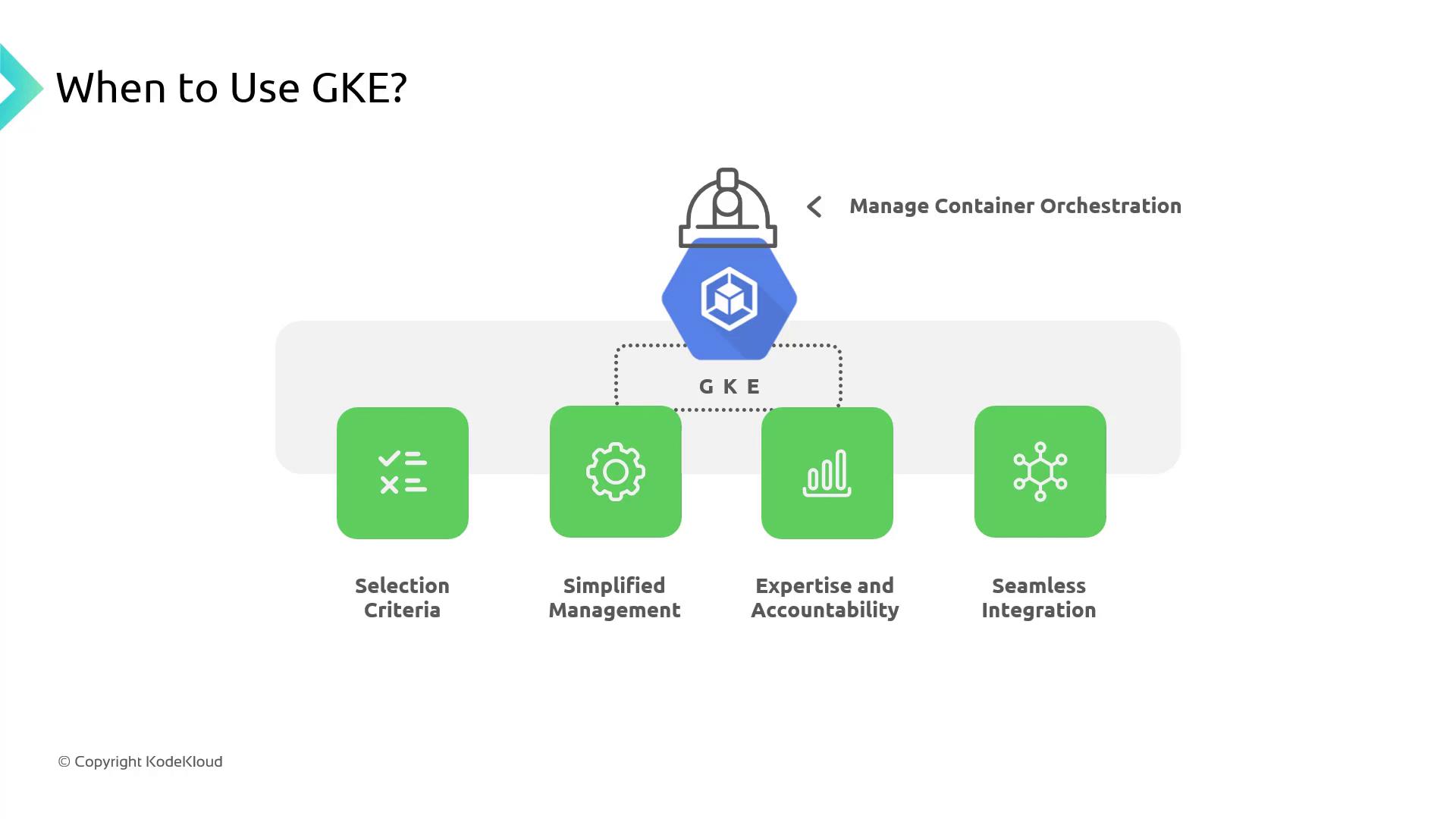
GKE supports Container-Optimized OS (COS), Ubuntu, and Bottlerocket node images for enhanced security and performance.
Key GKE Features & Benefits
GKE enhances open-source Kubernetes with managed services that accelerate development and simplify operations: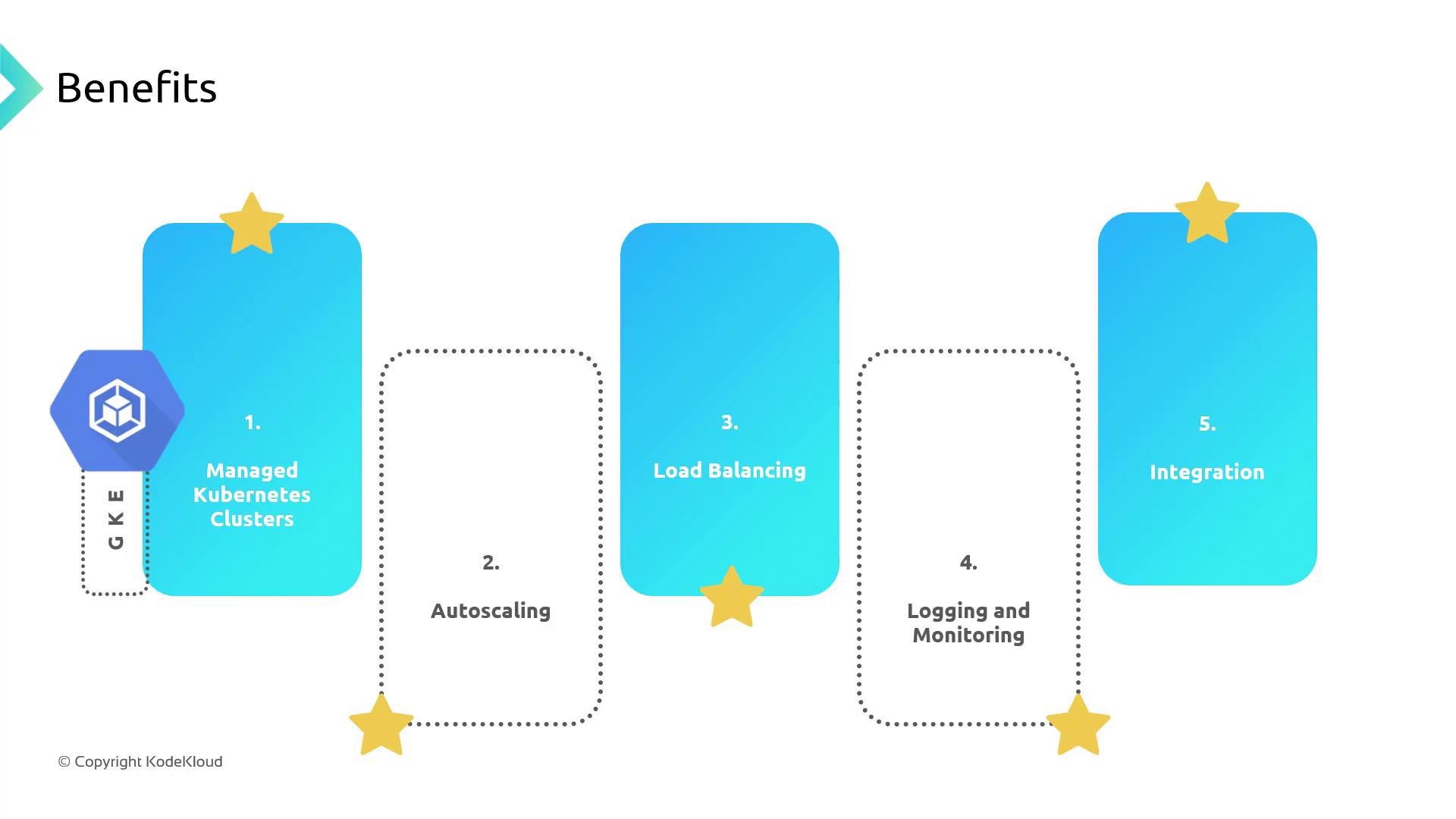
GKE is the ideal choice when you want the power of Kubernetes without the overhead of managing control planes, node lifecycles, and production-grade integrations.
Links and References
- Kubernetes Basics
- Google Kubernetes Engine Documentation
- Terraform Registry: Google Provider
- Google Cloud Platform