- VPC-native clusters
- Route-based clusters
VPC-native Clusters
A VPC-native cluster leverages alias IP ranges so that each VM or Pod network interface can carry multiple IP addresses. This design allows Pods to have their own unique internal IP, simplifying network policies and firewall configurations.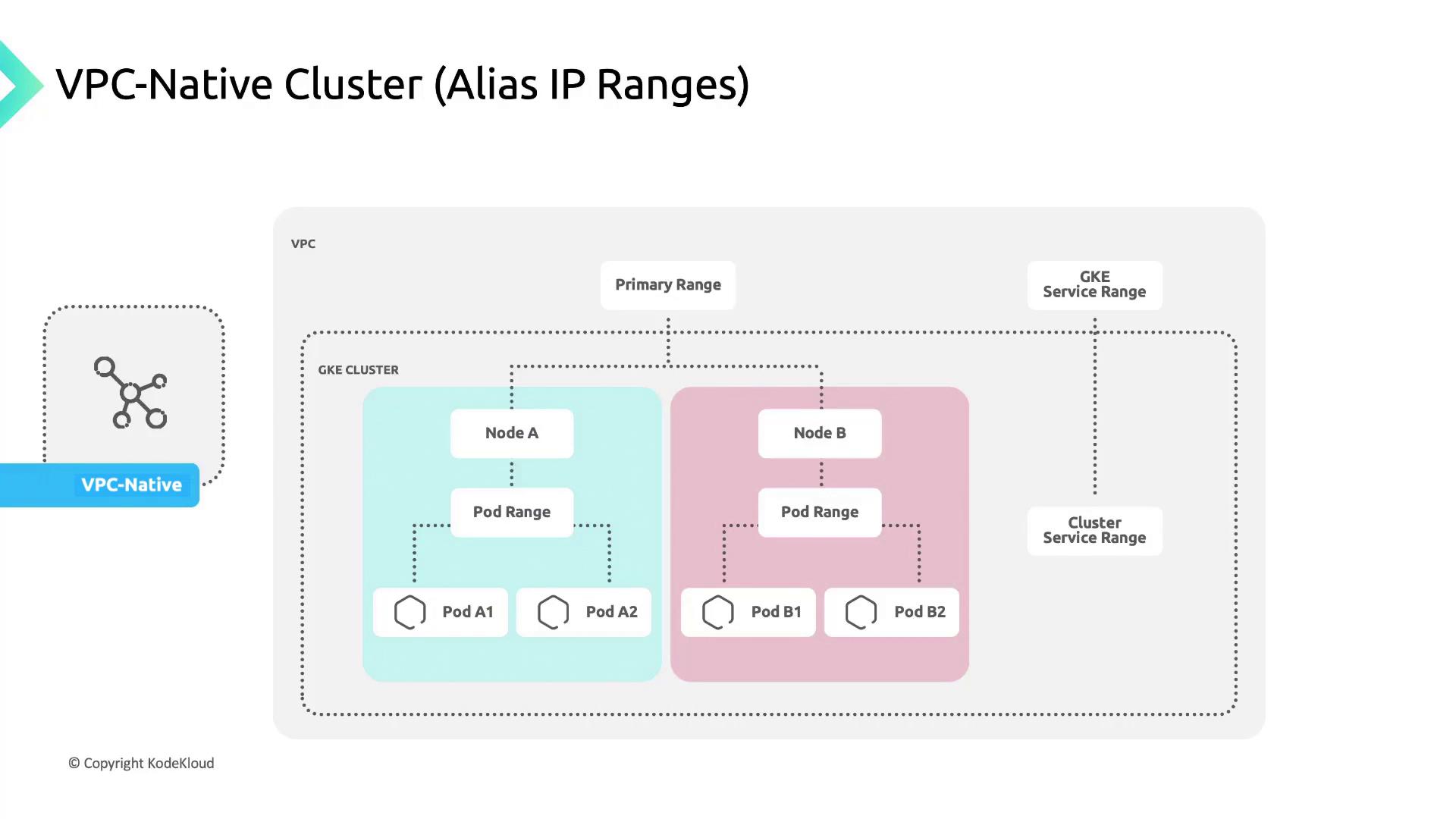
GKE Autopilot clusters enable VPC-native routing by default, so you don’t need to configure alias IPs manually.
Route-based Clusters
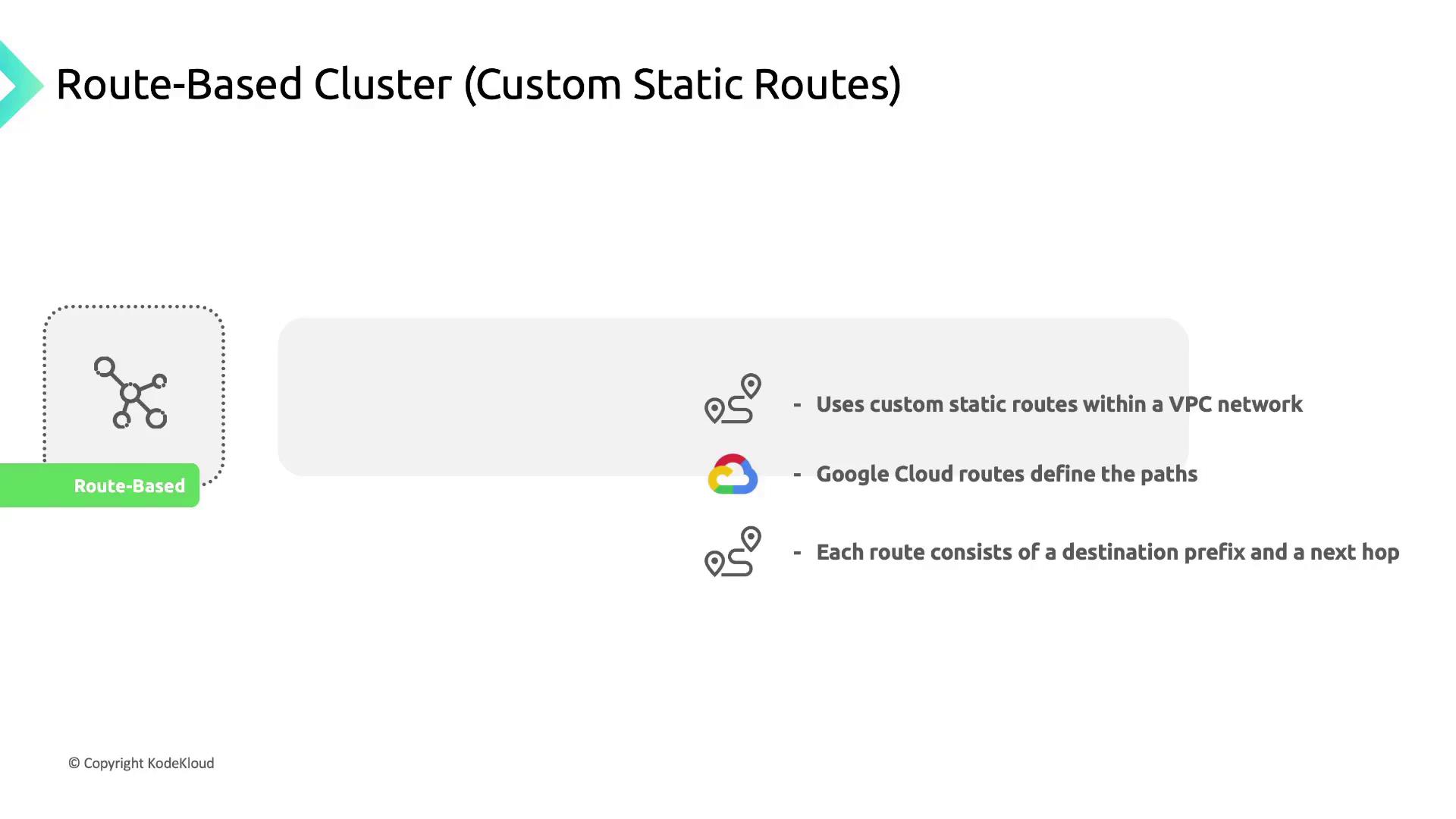
In a route-based cluster, Pod networking relies on custom static routes defined in your VPC. Each route has:- A destination range (CIDR block)
- A next-hop (instance, VPN tunnel, or gateway)
Key Differences
Benefits of VPC-native Clusters
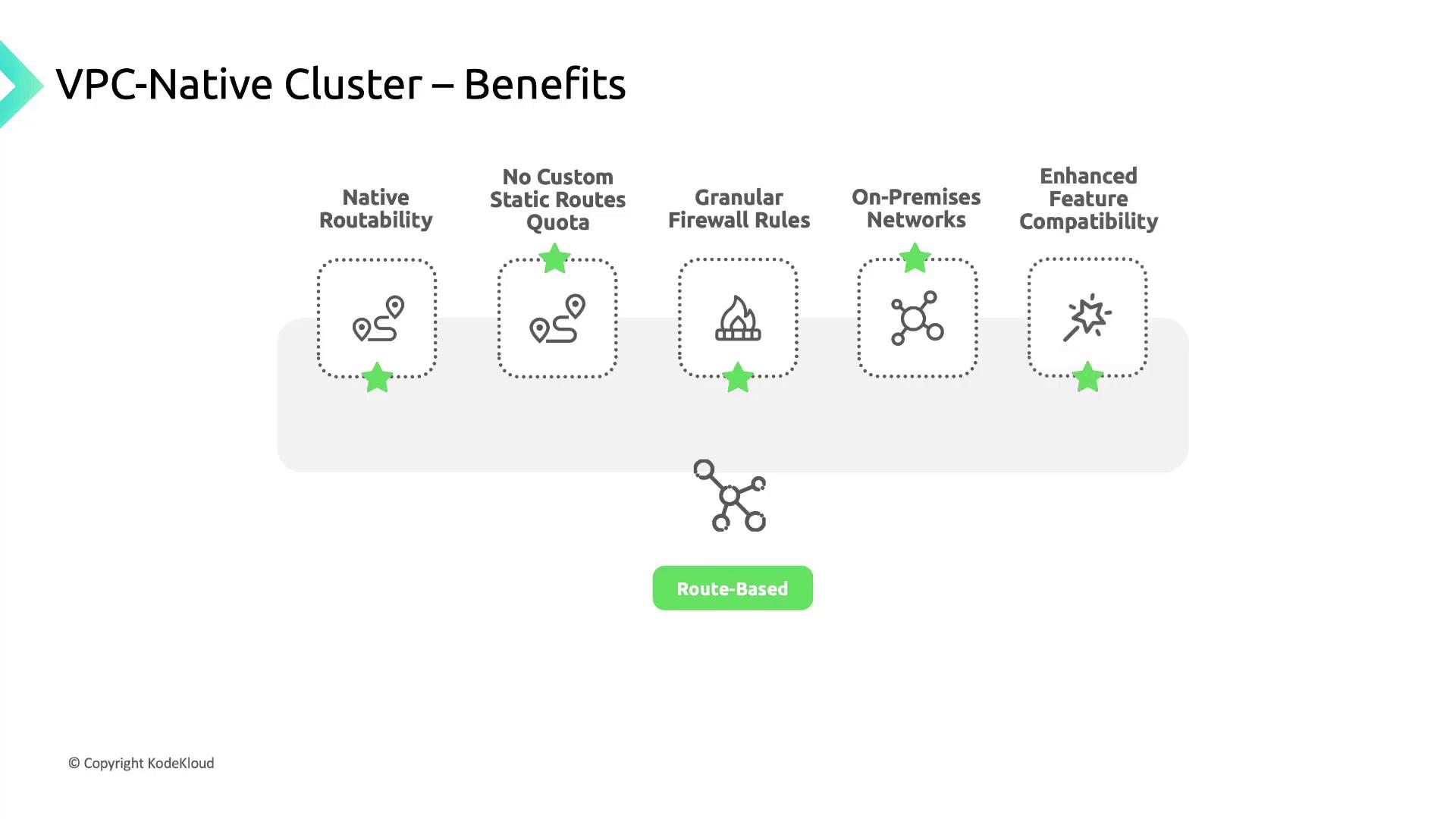
VPC-native clusters deliver several advantages:- Native routability
Pod IPs are fully routable within the cluster’s VPC and any peered networks. - No static route quotas
Alias IPs remove the need for per-Pod static routes, avoiding route quota consumption. - Granular firewall rules
Apply policies directly to Pod IP ranges for tighter security controls. - On-premises connectivity
Secondary Pod IP ranges can be reached via Cloud VPN or Cloud Interconnect using Cloud Router. - Enhanced feature support
Services such as Network Endpoint Groups (NEGs) are optimized for VPC-native networking.