Model Families and Variants
A model family groups related variants by their primary function. Each variant carries a version identifier reflecting its training improvements and feature set. Below is a high-level overview:GPT-3.5 Variants Overview
The GPT-3.5 series balances capability and cost with varying token limits and data cutoffs: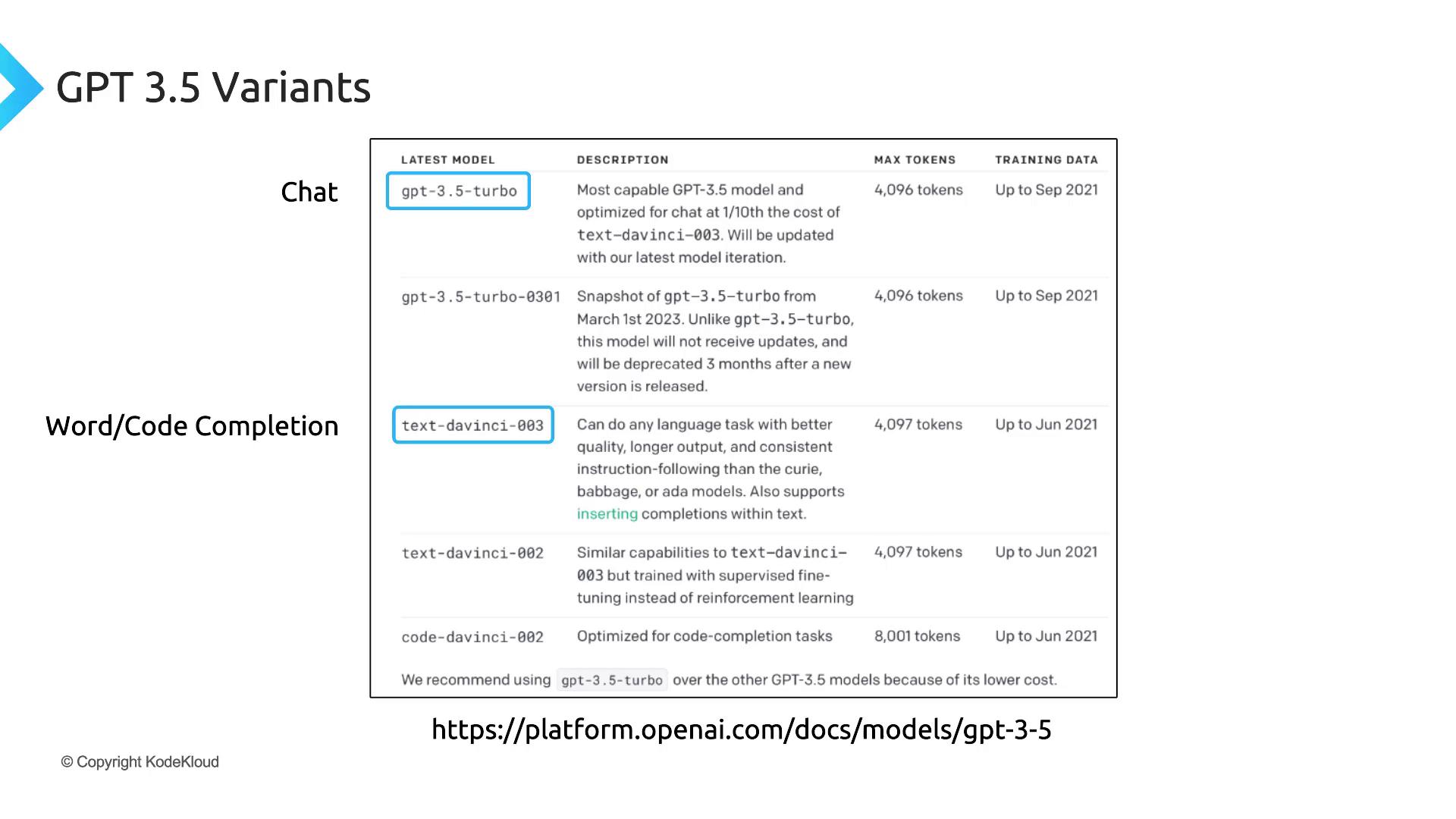
gpt-3.5-turbo is optimized for multi-turn dialogues and often delivers lower latency and cost for chat applications.Fine-Tuning Models
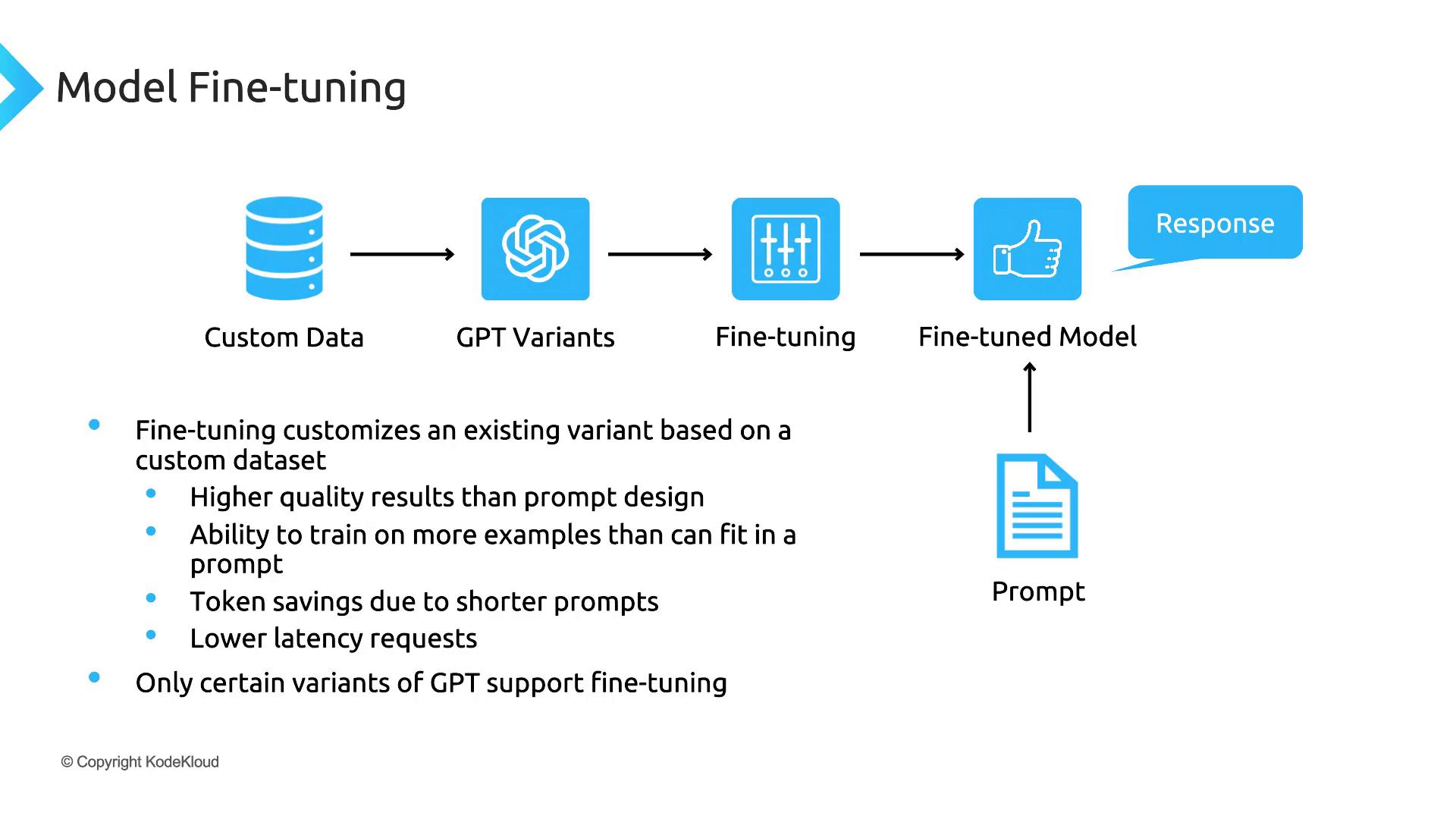
Fine-tuning allows you to customize a base model on your domain-specific dataset. Benefits include:- Domain-tailored responses with higher relevance
- Shorter prompts, reducing token usage and cost
- Faster inference, since context is baked into the model
Fine-Tuning Workflow
- Format your dataset in JSONL with prompt–completion pairs.
- Upload data and create a fine-tuning job via the CLI or API.
- Monitor training, evaluate performance, and deploy your custom endpoint.
Ensure your training data is clean, balanced, and representative. Low-quality data can degrade performance.
Embeddings and Semantic Search
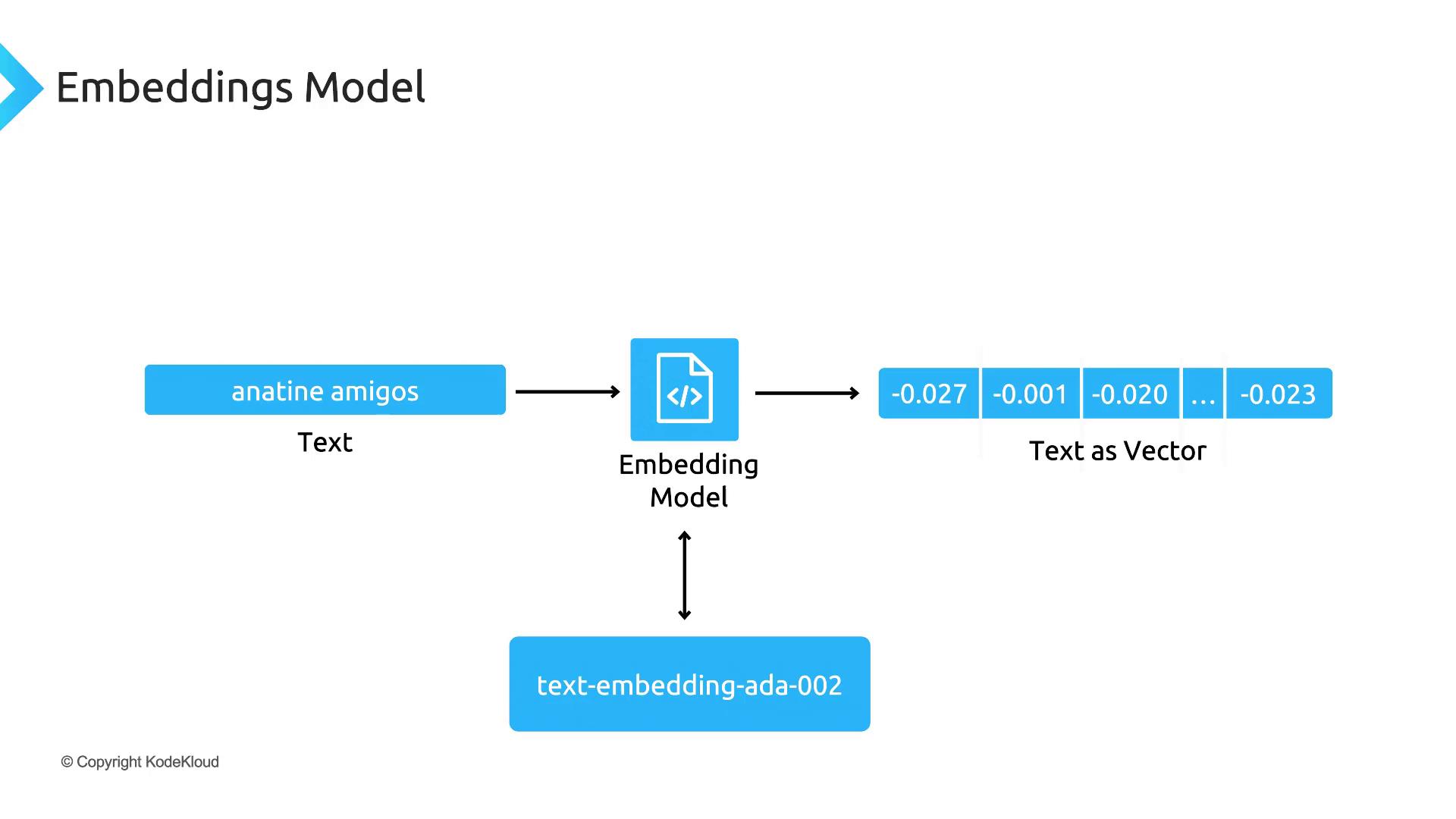
Embeddings convert text into vector representations for advanced applications:
OpenAI’s
text-embedding-ada-002 model generates high-quality embeddings at scale.