Master three core prompt engineering strategies to effectively guide large language models toward your specific needs.
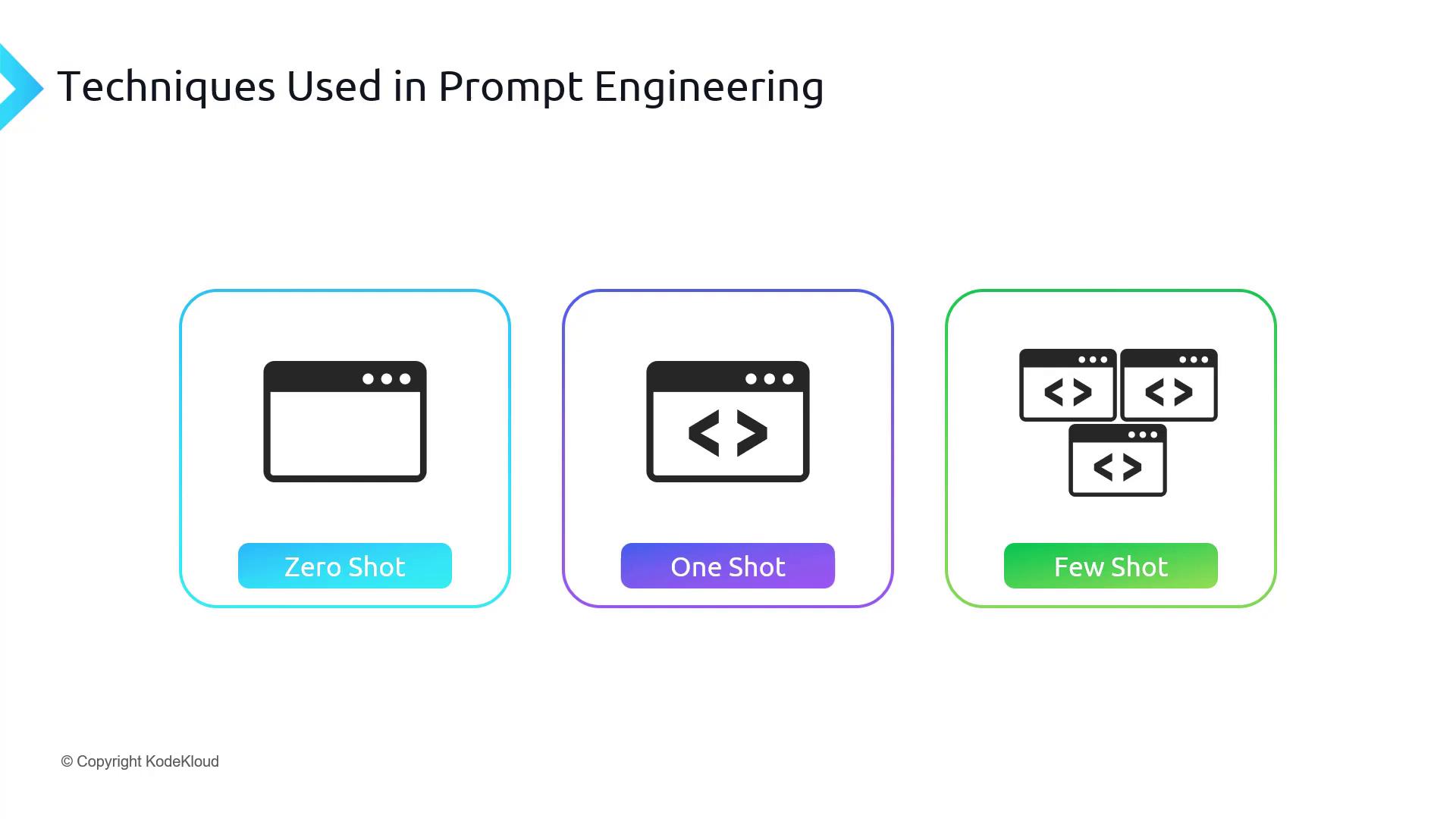
Unlock the full potential of large language models (LLMs) by mastering three core prompt engineering strategies: zero-shot, one-shot, and few-shot prompting. Each technique offers a different balance between simplicity and control, helping you guide an LLM toward your exact needs.
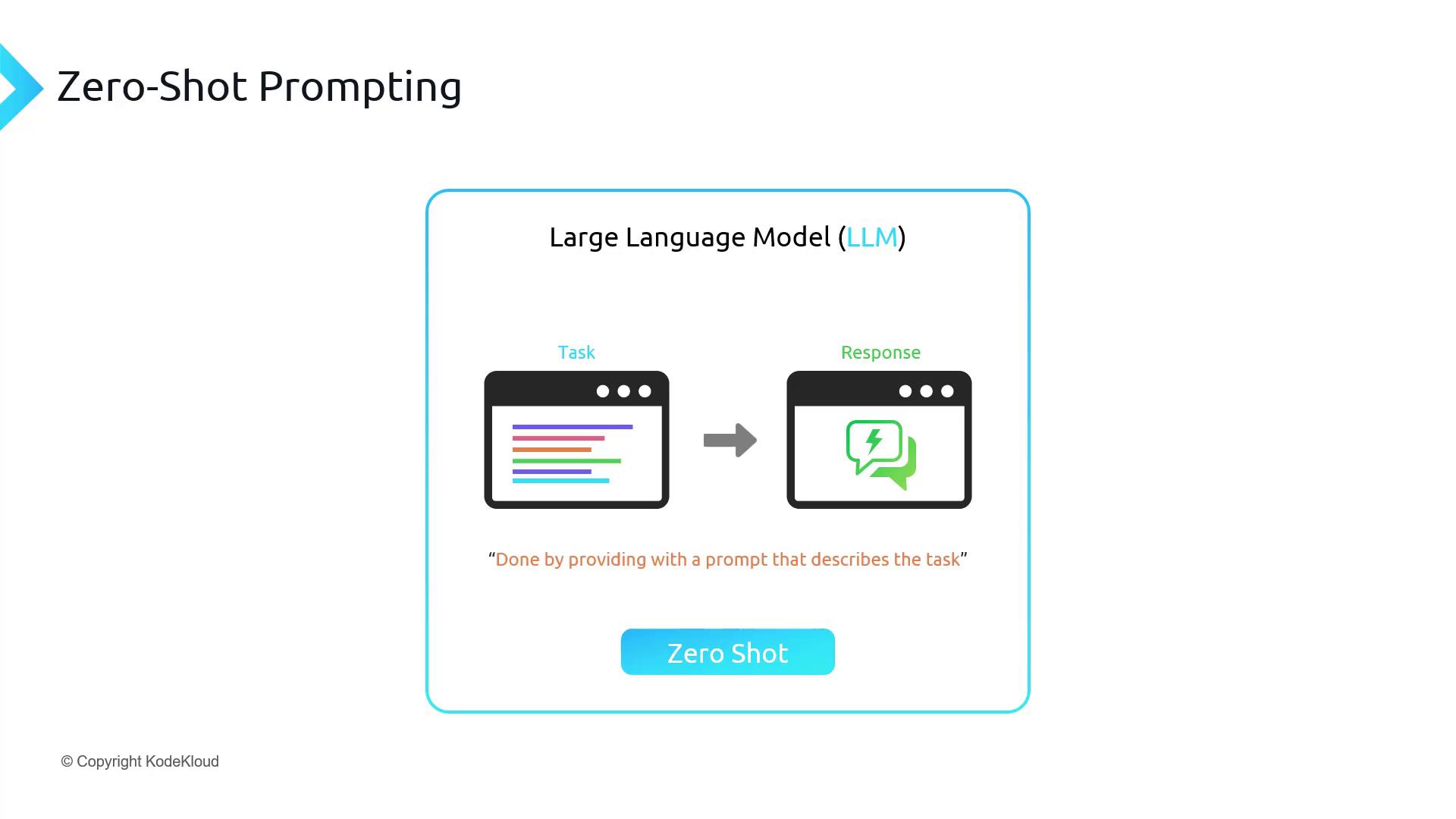
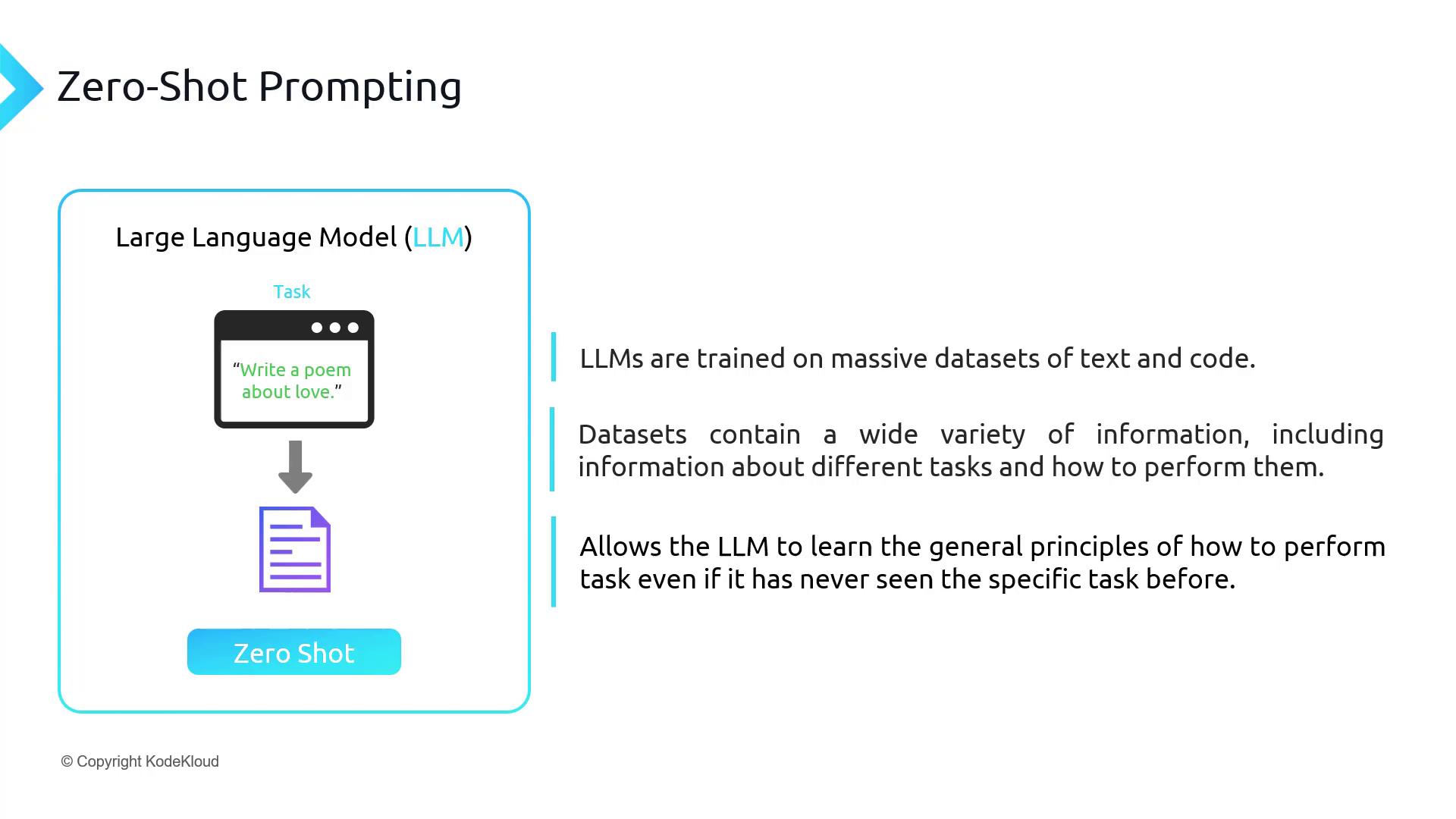
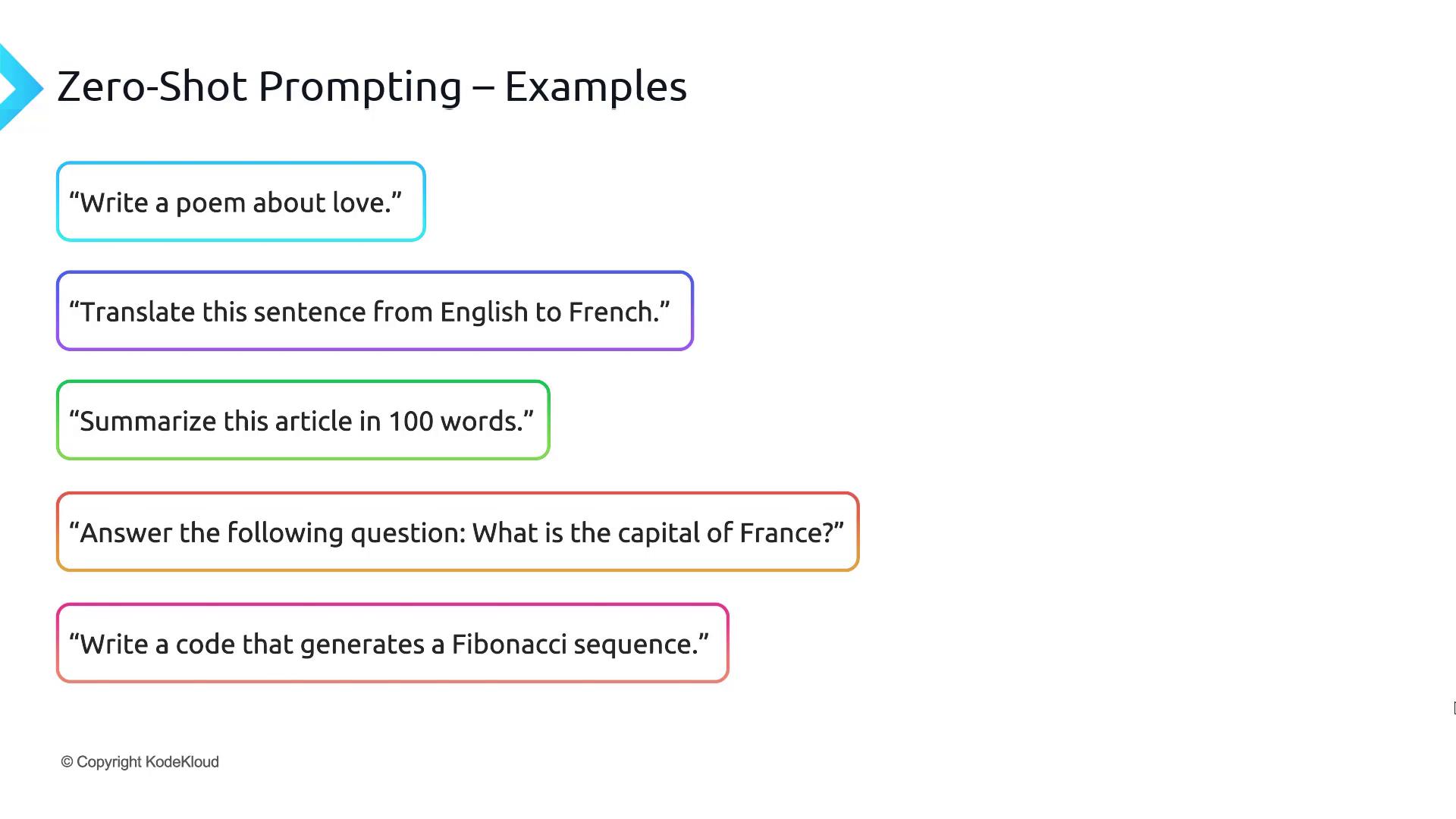
Zero-Shot Prompting: Direct instruction, no examples.
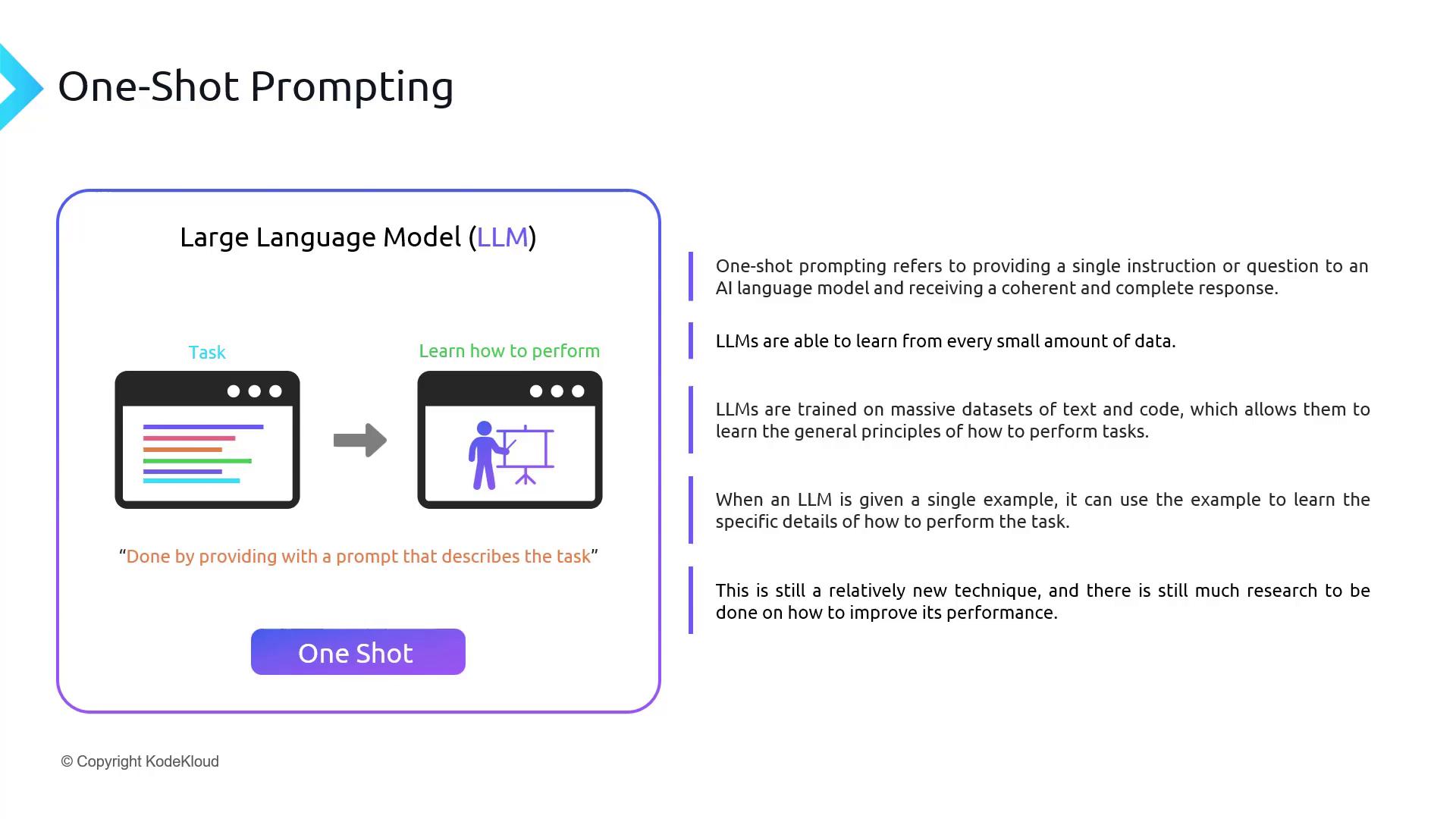
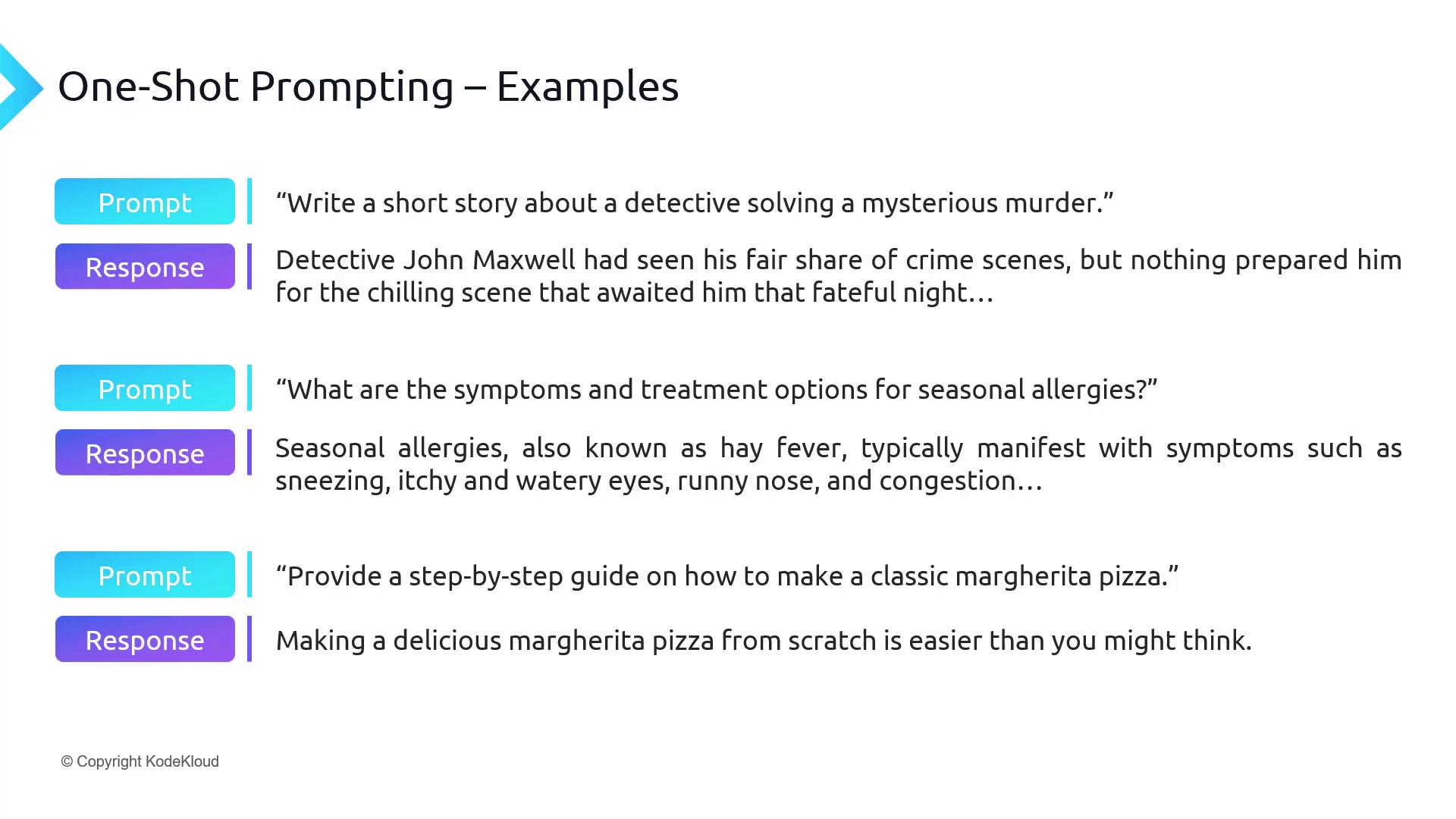
One-Shot Prompting: Single example to illustrate format or style.
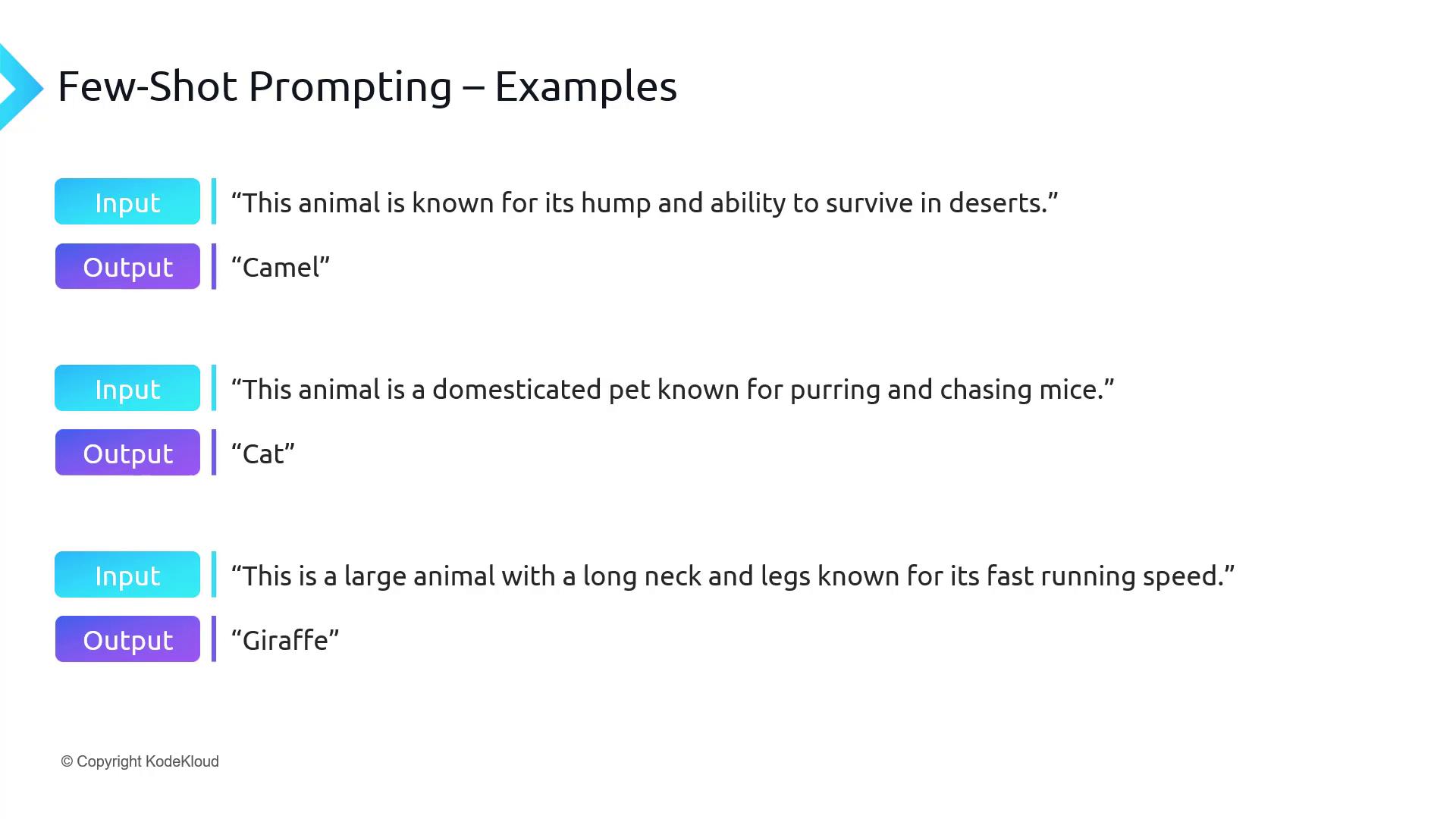
Few-Shot Prompting: Multiple examples demonstrating the pattern.
Technique
Definition
Example Task
Zero-Shot
Direct instruction without examples.
Summarize this article in 100 words.
One-Shot
One sample input–output pair.
Example: “Hello → Hola”. Then translate “Hi”.
Few-Shot
Several input–output pairs in prompt.
Classifying animals by description.
Choose zero-shot for quick tasks, one-shot when you need consistent formatting with minimal context, and few-shot for complex patterns or strict constraints.
Few-shot prompting includes several illustrative examples. By showing multiple input–output pairs, you help the LLM infer the pattern:
Q: A tall mammal with a long neck, spotted coat → Answer: GiraffeQ: A large aquatic mammal known for its intelligence and sonar → Answer: DolphinQ: A desert animal with humps for fat storage → Answer:
This technique typically achieves higher accuracy, especially when output format or domain knowledge is crucial.
Including many examples can increase token usage and latency. Keep your prompt concise to stay within model limits.
By experimenting with zero-, one-, and few-shot prompts—and refining your instructions and examples—you’ll identify the optimal strategy for any LLM-powered application.