

- How context reaches an AI application: the data, tools, and prewritten instructions such as prompt templates.
- The message format used between client and server —
JSON‑RPC 2.0. - How an MCP client and server agree on a protocol version.
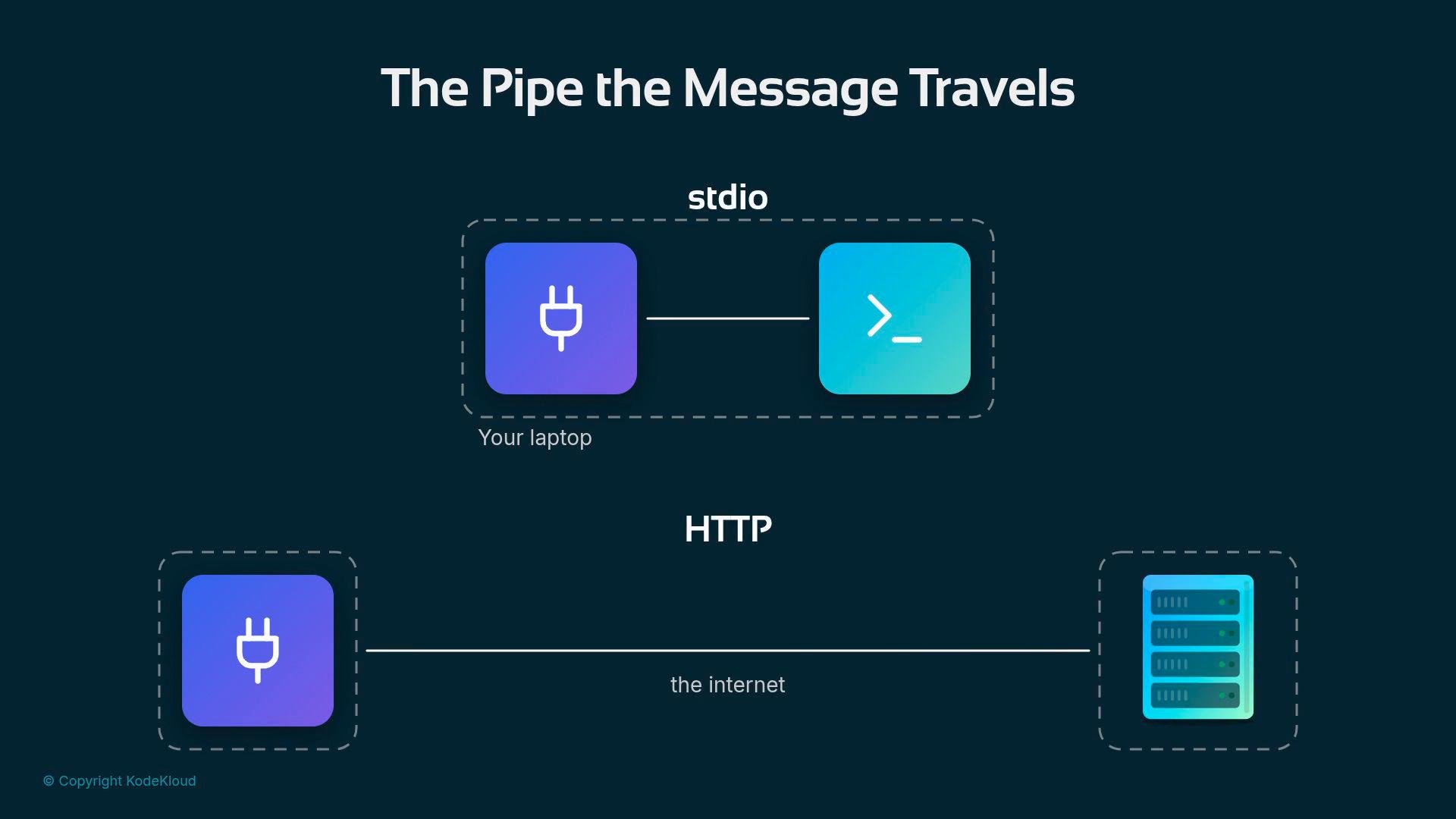
- What a server and a client can offer one another through the transport layer (the pipe the methods travel through).
stdio. Across the internet the pipe is HTTP requests, which let two applications talk to each other.
JSON‑RPC 2.0, let’s briefly revisit RPC.
RPC stands for remote procedure call. A “procedure” is just a function. RPC’s goal is to make calling someone else’s function feel like calling a local function — even when that function runs in a different language, process, or machine. Because the two programs share no memory, every piece of information required for the call must be serialized and transmitted: the function name, its arguments, and the return value or error.
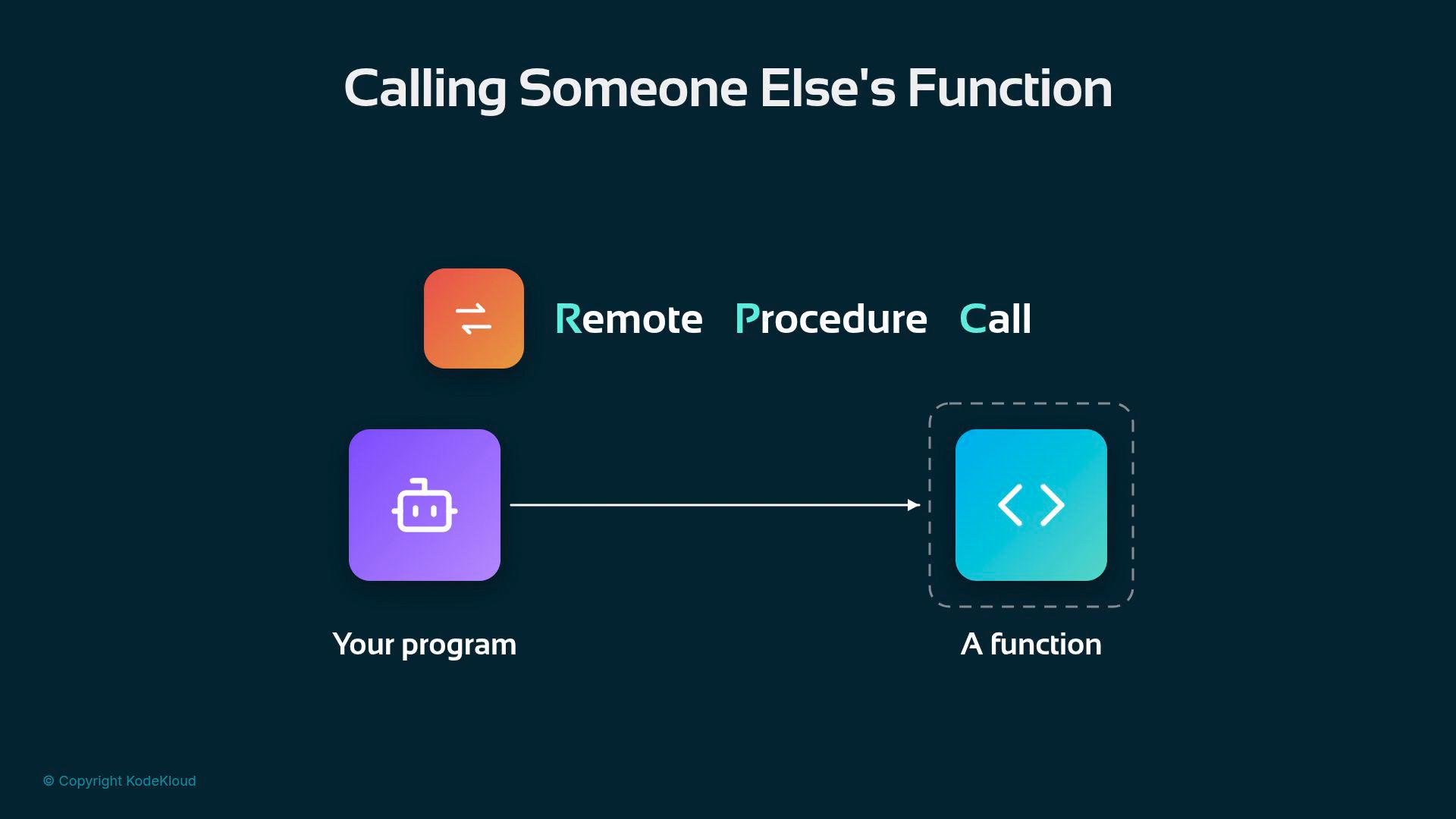
stdio, HTTP, or any other transport that can carry JSON messages. That separation — message format vs transport — is one reason MCP adopts JSON‑RPC.
A minimal JSON‑RPC 2.0 request (a client calling a remote method named getShipment) looks like this:
jsonrpcmust be"2.0"for the JSON‑RPC specification.methodis the remote procedure name, sent as a string (not executable code).paramscontains method arguments (either by-position or by-name).idcorrelates request and response.- Successful calls return
result; failures return anerrorobject.
JSON‑RPC 2.0 describes the message format. The
2.0 refers to the JSON‑RPC spec version, not the MCP protocol version. MCP defines its own version negotiation between client and server when they connect.method is transmitted as text, a server must map that string to an implementation. Servers typically advertise the methods (capabilities) they expose so clients can discover and call them correctly.
Why MCP reused JSON‑RPC instead of inventing a new format:
- JSON is ubiquitous — every major language parses JSON, lowering the barrier for implementers.
- JSON‑RPC is transport‑agnostic; it does not force a single transport mechanism, which aligns with MCP’s flexibility (local
stdio, HTTP, etc.).
Transport selection affects security, latency, and deployment.
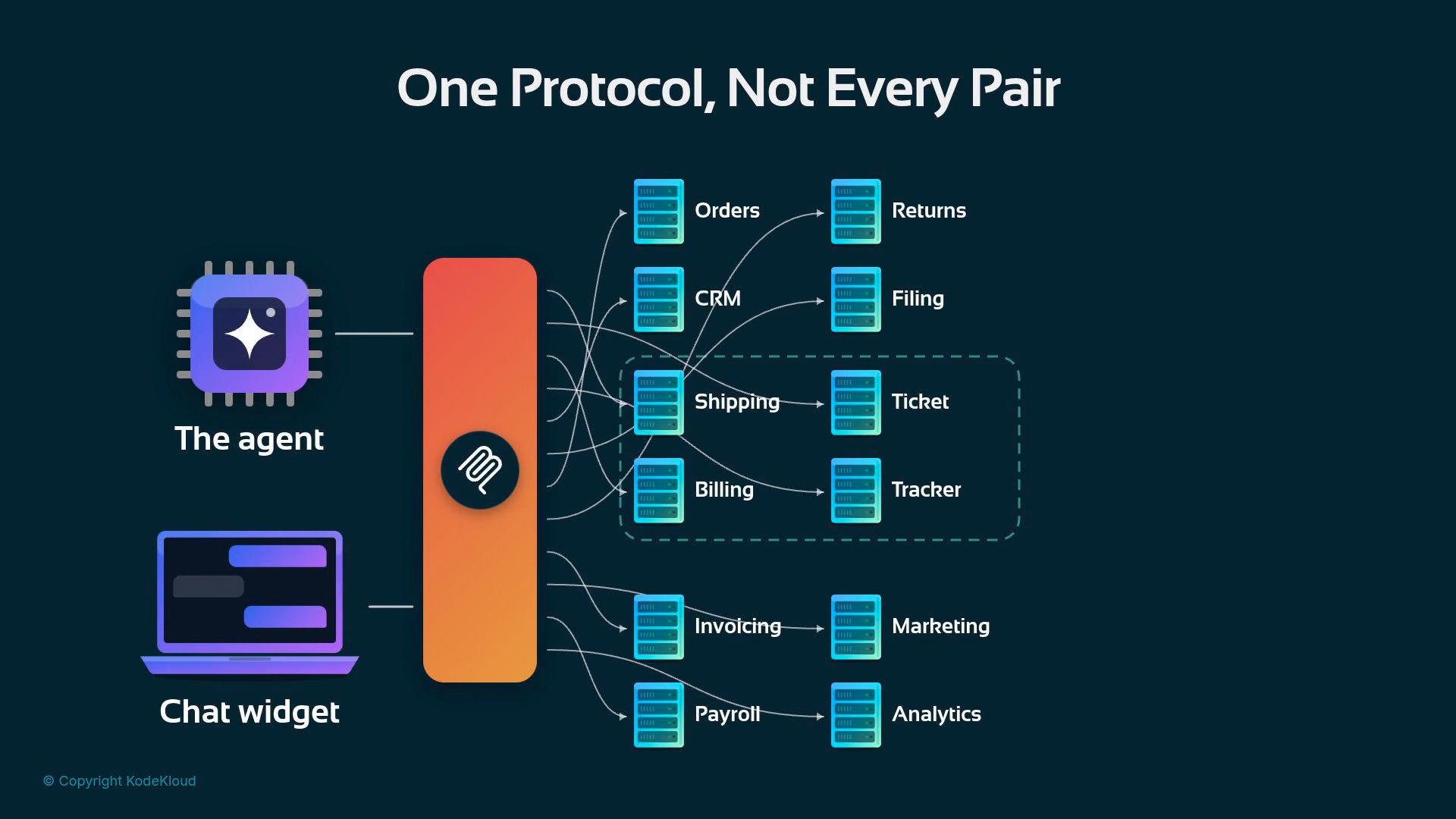
stdio is common for local integrations; HTTP is required for networked deployments. Consider authentication, encryption, and network policies when exposing MCP servers.- MCP standardizes how context and tools reach AI applications.
- It standardizes the message format (JSON‑RPC 2.0) so different languages and runtimes interoperate.
- It defines how client and server agree on protocol versions.
- It defines capabilities and transports (e.g.,
stdio, HTTP), dramatically reducing integration overhead.