

- Server developer
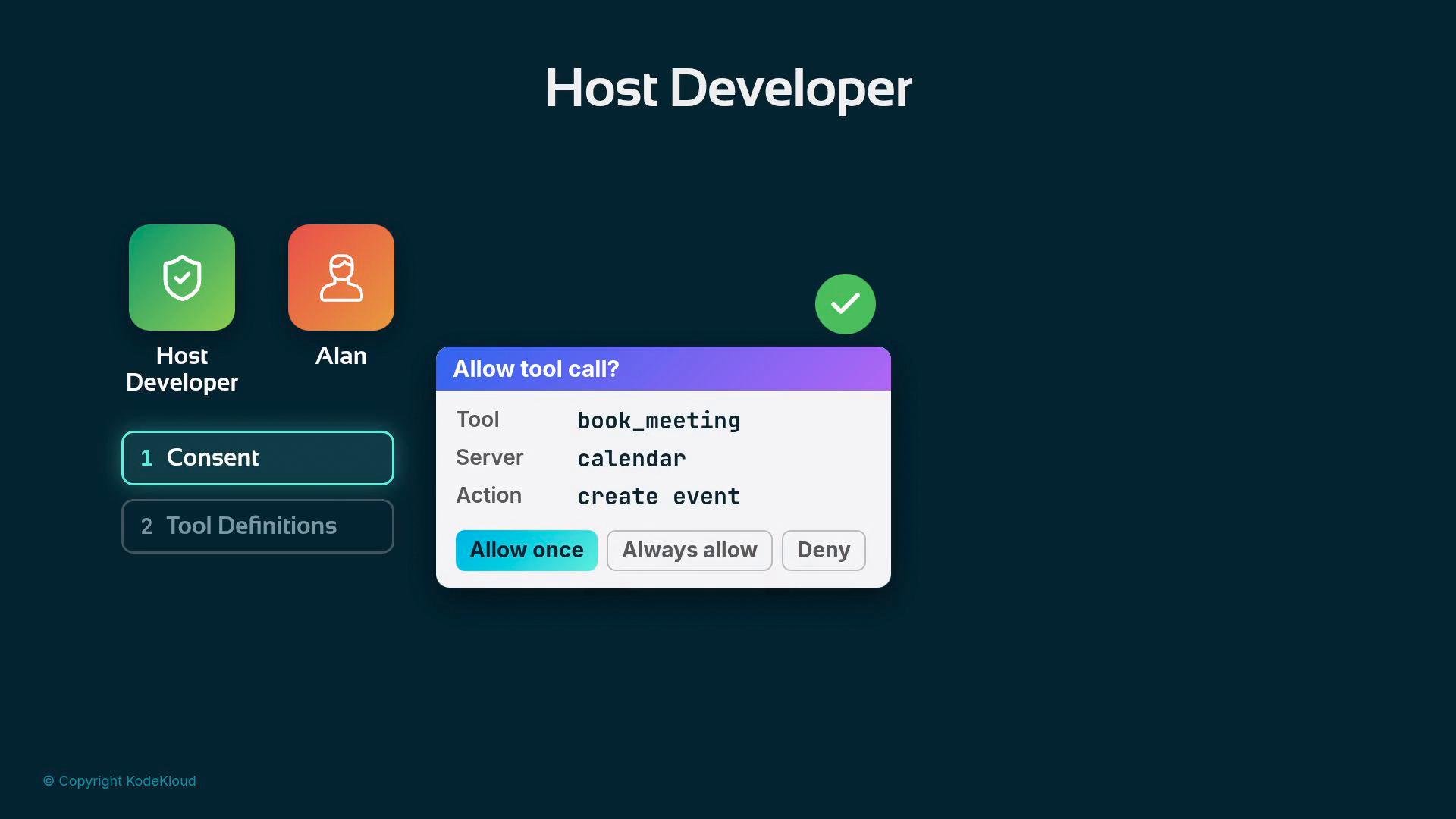
- Host (client) developer
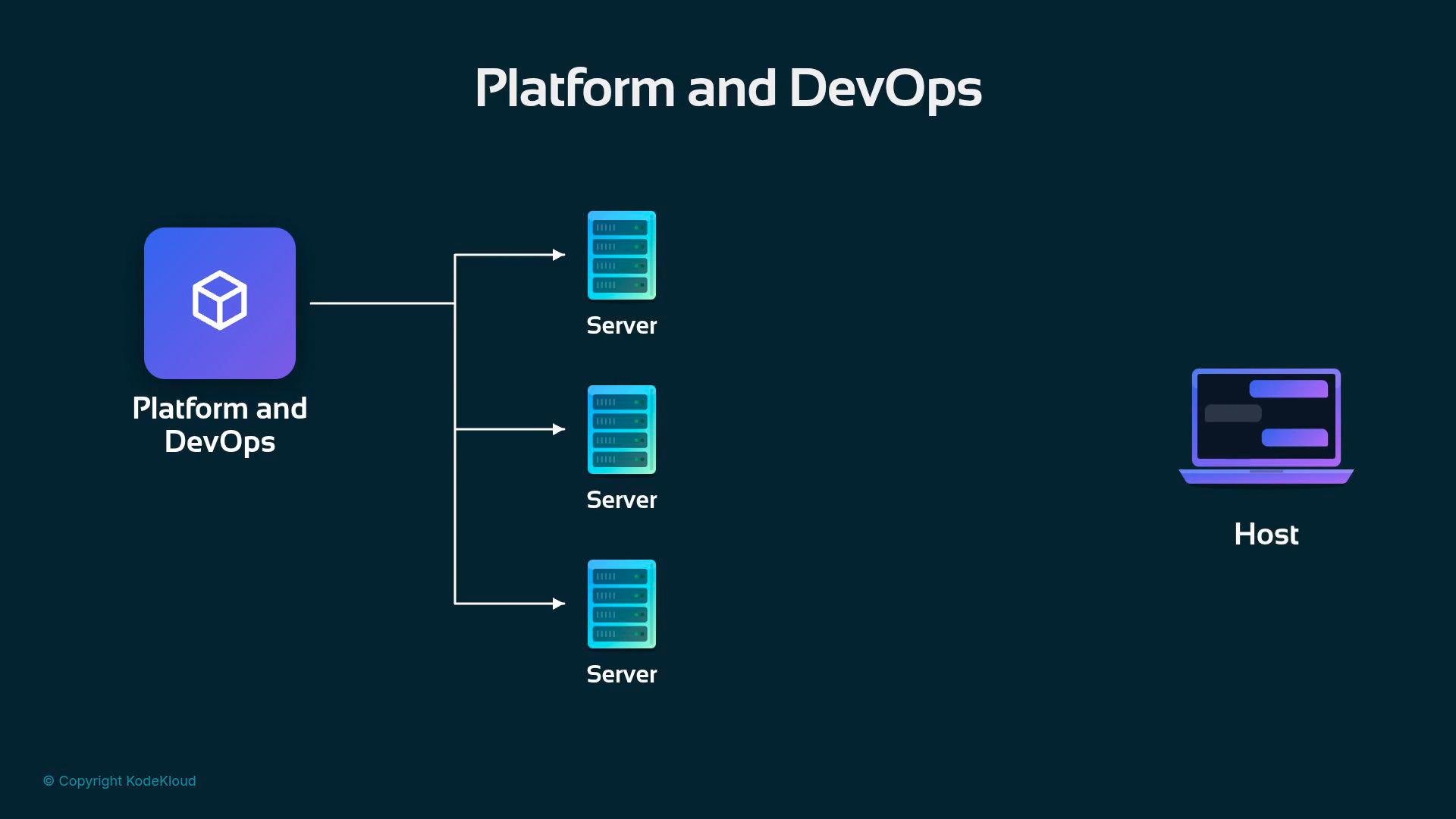
- Platform and DevOps
- Security engineer
- Governance and compliance
- End user
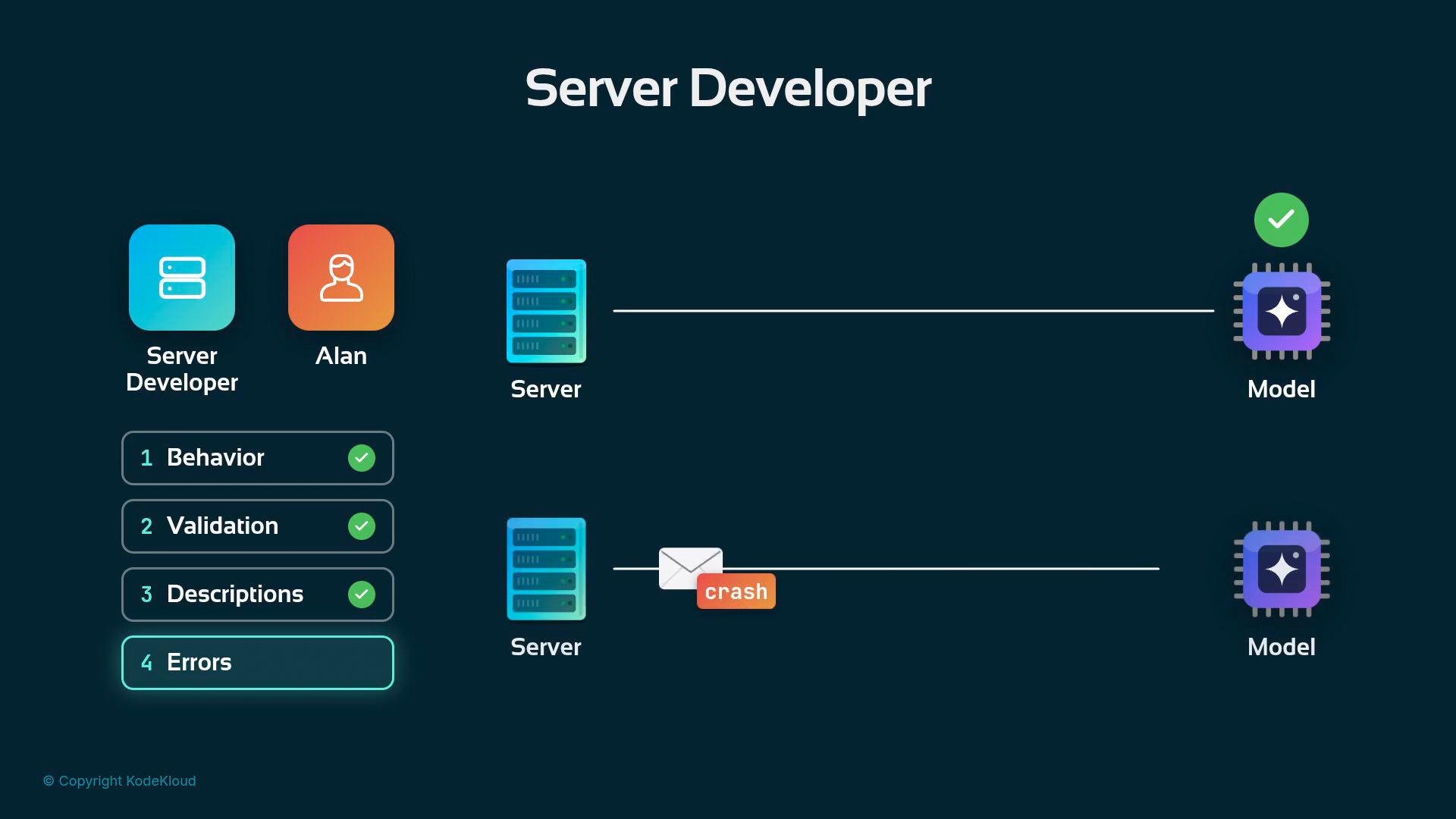
Server developer (Alan)
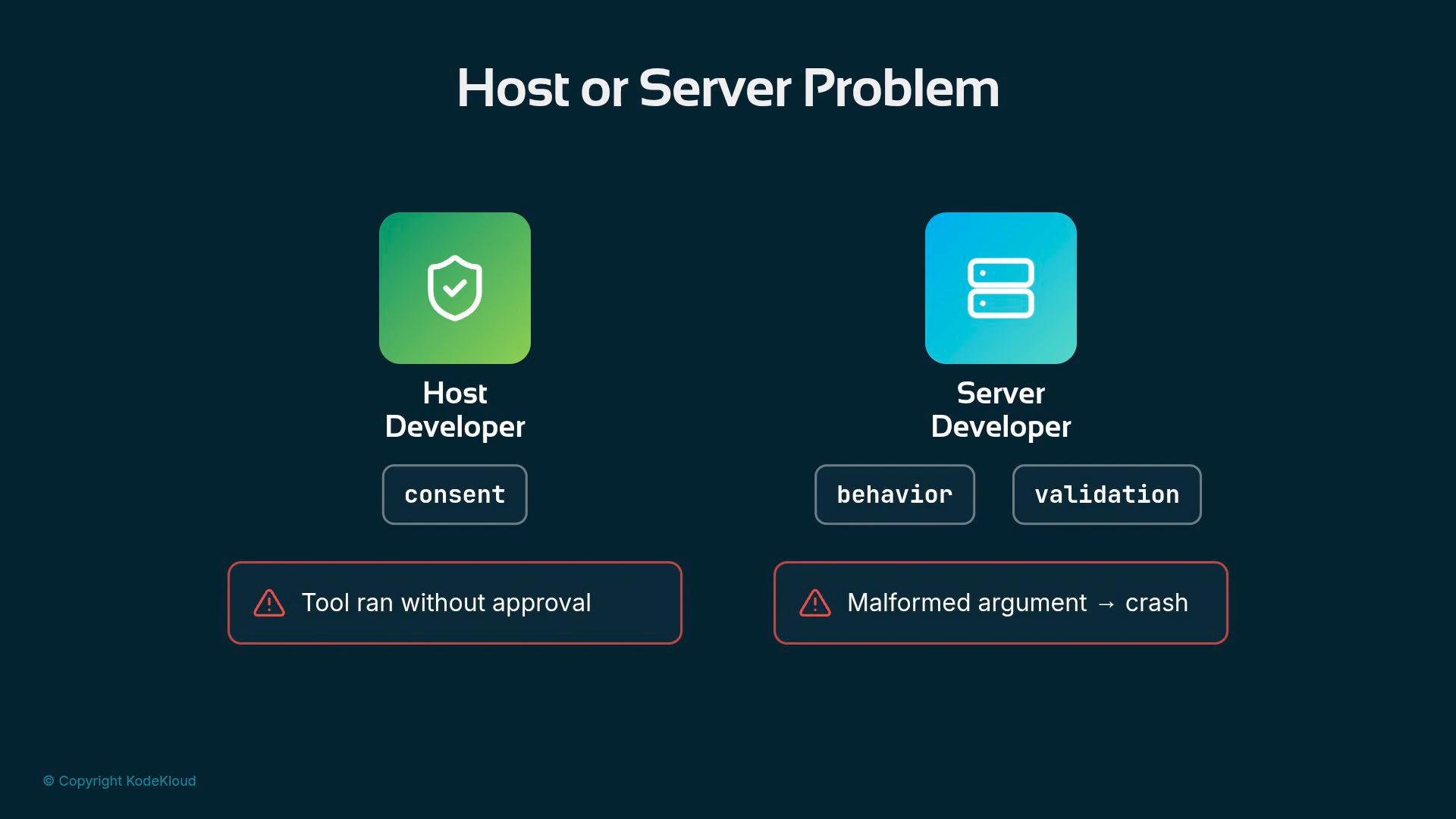
- Tool behavior: Implement the tool to do exactly what its description promises. If a tool advertised as “fetches calendar events” deletes them instead, that is a compliance failure for the server owner.
- Input validation: Treat all caller inputs as untrusted. Validate types, lengths, required fields, and ranges. Fail safely instead of crashing.
- Clear descriptions: The tool description is the primary authoritative text the model sees. Ensure the description, schema, and examples are precise and consistent.
- Error handling: Return execution failures as structured results the model can understand and handle. Avoid protocol-level crashes that terminate the connection or the conversation.
- Consent experience: Own the user-facing consent prompt — wording, specificity of choices, and clarity. Users must understand what they are approving.
- Translation of tool definitions: Present tool definitions in a way the host can enforce consent decisions and apply policy.
- Deploy, scale, and choose the transport layer (local IPC, pipes, or HTTP).
- Hold and manage service credentials, TLS certificates, and routing.
- Keep systems running, instrumented, and observable for production use.
- Perform independent reviews of servers before they are trusted in production.
- Define and enforce permission and least-privilege policies.
- Monitor for misuse and suspicious activity; respond to incidents.
- Maintain the approved server inventory.
- Define and enforce audit requirements and data-handling rules.
- Own the policies that specify which tools or servers are allowed and under which conditions.
- Include a request ID with every call — a globally unique identifier (for example, a UUID defined in RFC 4122) for end-to-end tracing, alerting on destructive calls, and correlating authentication failures. See: https://www.ietf.org/rfc/rfc4122.txt
- Alert on failed authentication and on attempts to call write-capable tools without explicit consent.
- Teach end users to supervise agents. Avoid blind approvals — clicking “Allow” without reading bypasses the final safety check.
Assign each responsibility to a distinct owner. Independence between implementation, security review, and governance reduces the risk of missed issues and improper approvals.
- Evaluate: Inventory existing servers and determine needs.
- Pilot (read-only): Start with read-only pilots. Piloting write-capable tools against production data carries risk.
- Govern: Establish no-entry policies and formally approve the server inventory before expanding access.
- Scale (with human-in-the-loop): Require human review or explicit approval for every write-capable action.
- Operate: Monitor, audit, and periodically review permissions and policy adherence.
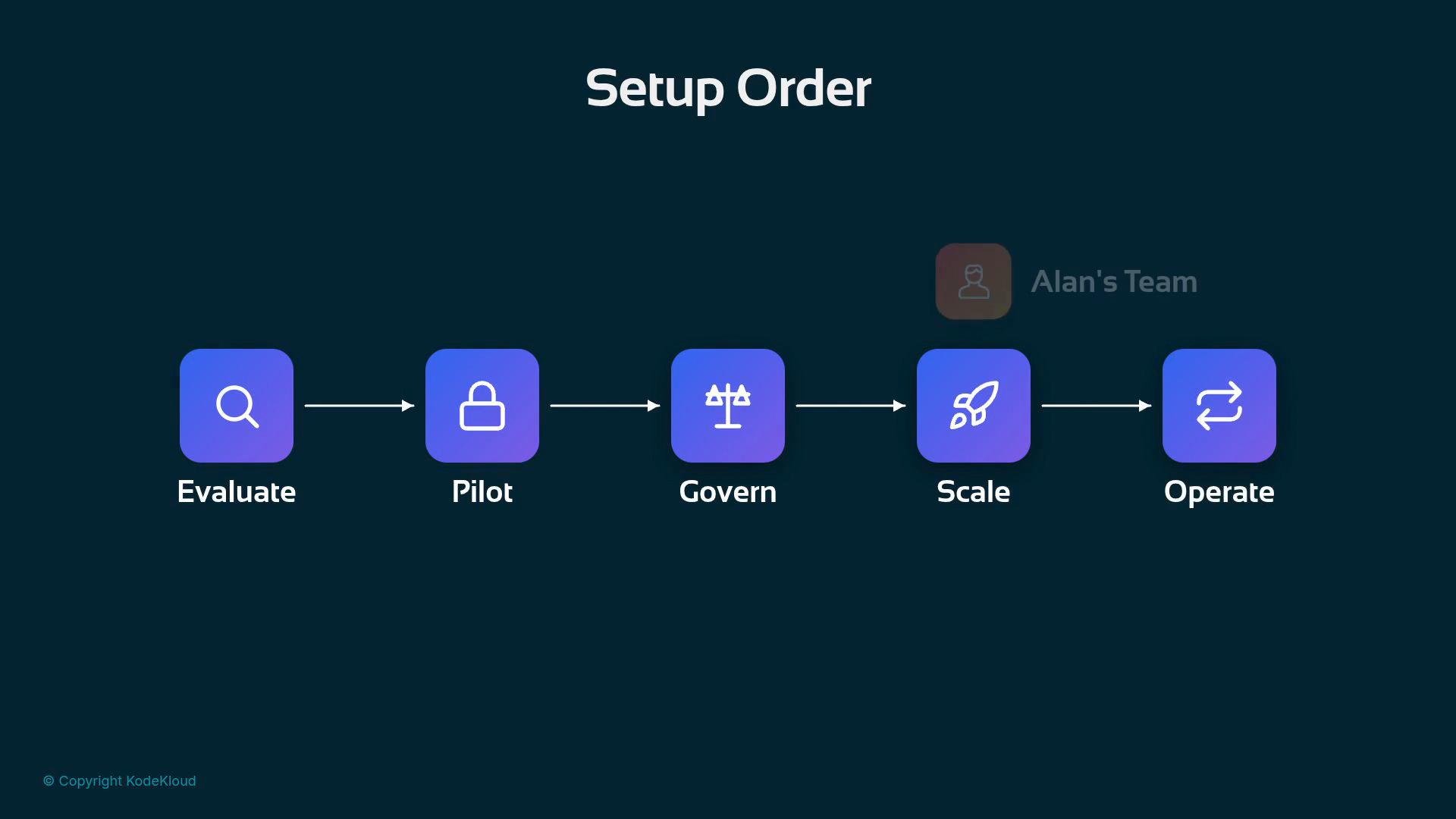
- They started at scale with three servers already running and later tried to retrofit governance after failing the first compliance review.
- After the failure, responsibilities were separated: Alan kept server and host responsibilities, platform duties moved to the operations team, security was assigned to someone who did not implement the server, and governance assumed inventory approval.