

Traditional IT Services
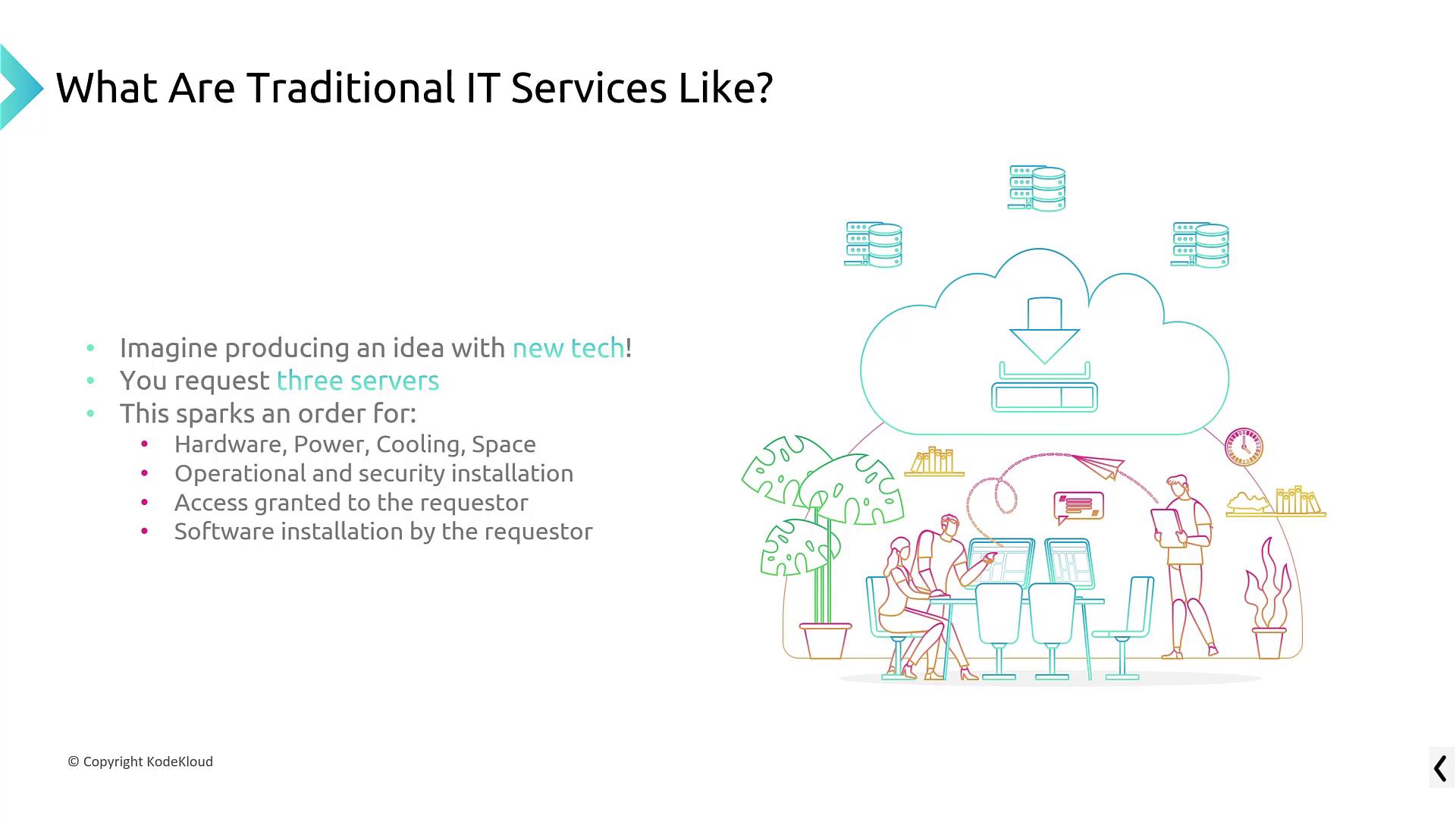
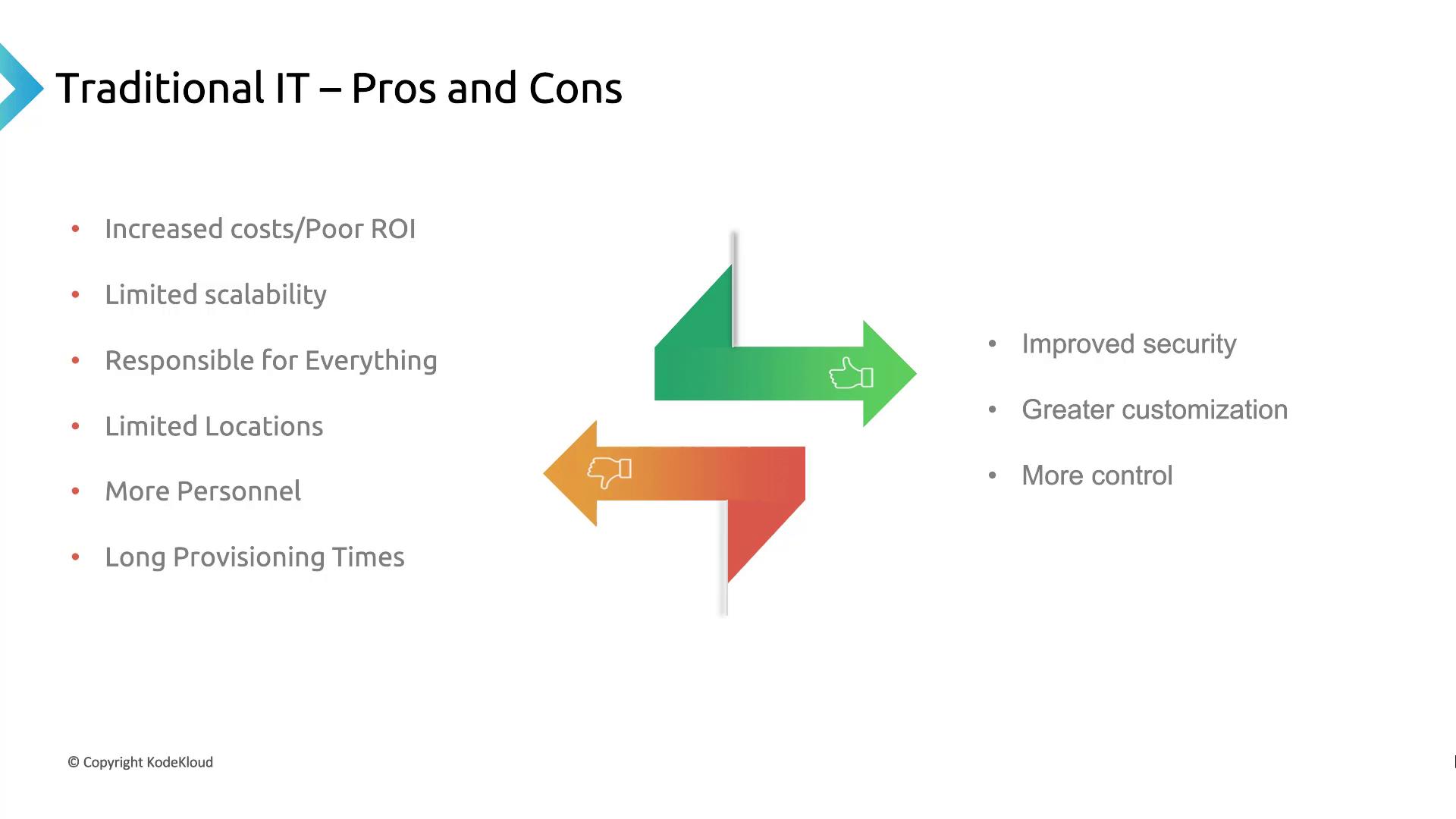
Imagine you have a cutting-edge idea in 2023 and need to build a solution using modern technology. In a traditional IT environment, you might request three separate servers—one for the web server, one for the application server, and one for the database—following a classic three-tier architecture. This process involves multiple steps and dependencies:- Submit a hardware order to your IT department.
- Arrange for essential requirements such as power, cooling, rack space, and physical security.
- Coordinate with your operational and security teams to install the necessary software.
- Receive access to set up and run your new technology solution.
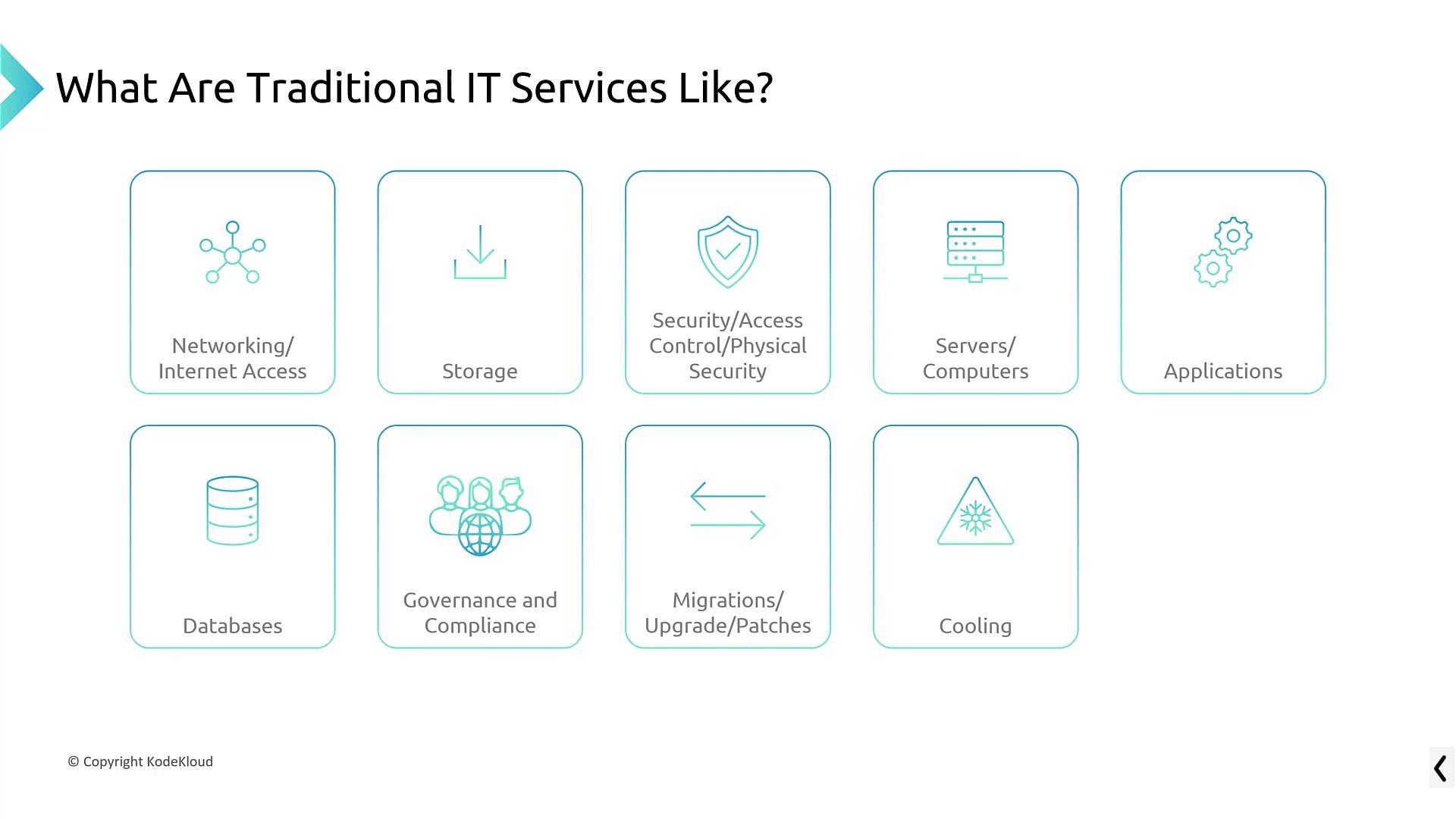
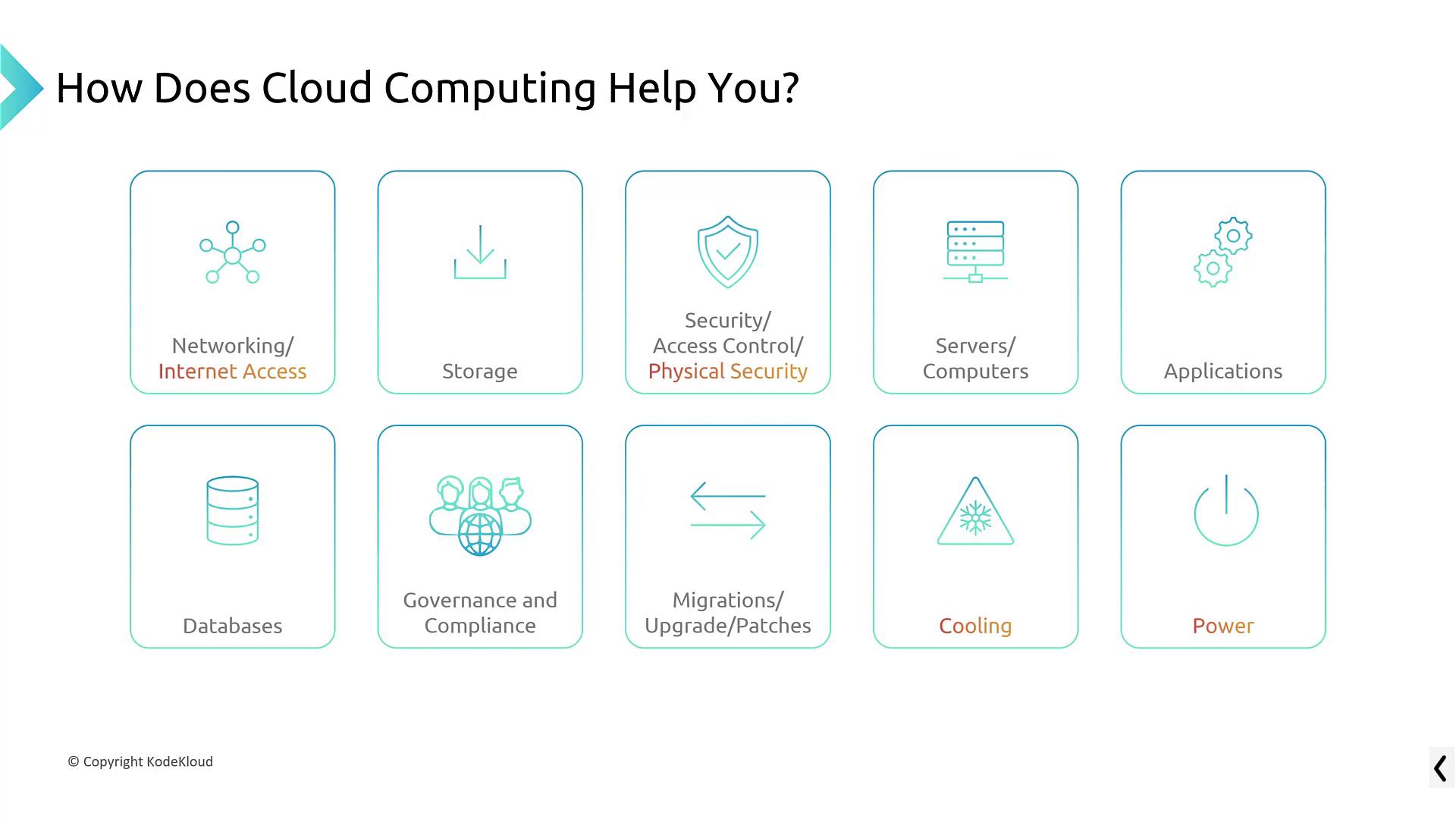
- Networking and Internet access
- Storage and security (physical and access control)
- Server hardware and applications
- Database installation and configuration
- Governance, compliance, patches, migrations, upgrades, and environmental considerations (cooling and power)
Cloud Computing: Definition and Operation
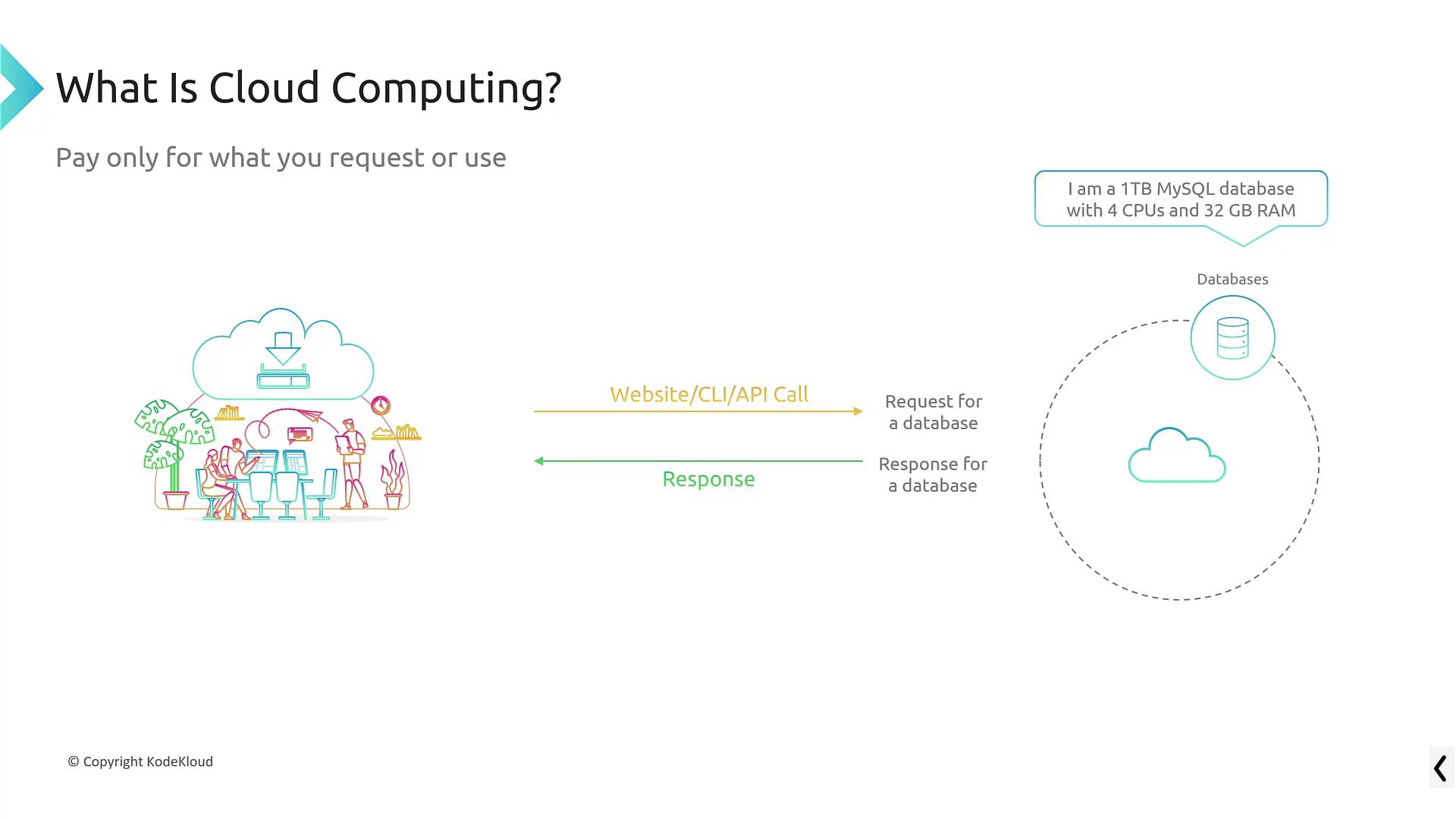
Cloud computing offers IT resources on demand, including compute power, application hosting, database services, and networking. It uses an API-driven model, meaning resources can be provisioned automatically when a client sends a request—whether through a website, command-line interface, or API. For example, if you need a MySQL database with one terabyte of storage, four CPUs, and 32 GB of RAM, cloud providers like AWS automatically configure and deploy these resources. Instead of investing in physical hardware that is hard to return or repurpose, you only pay for the resources you use over the exact period they are active.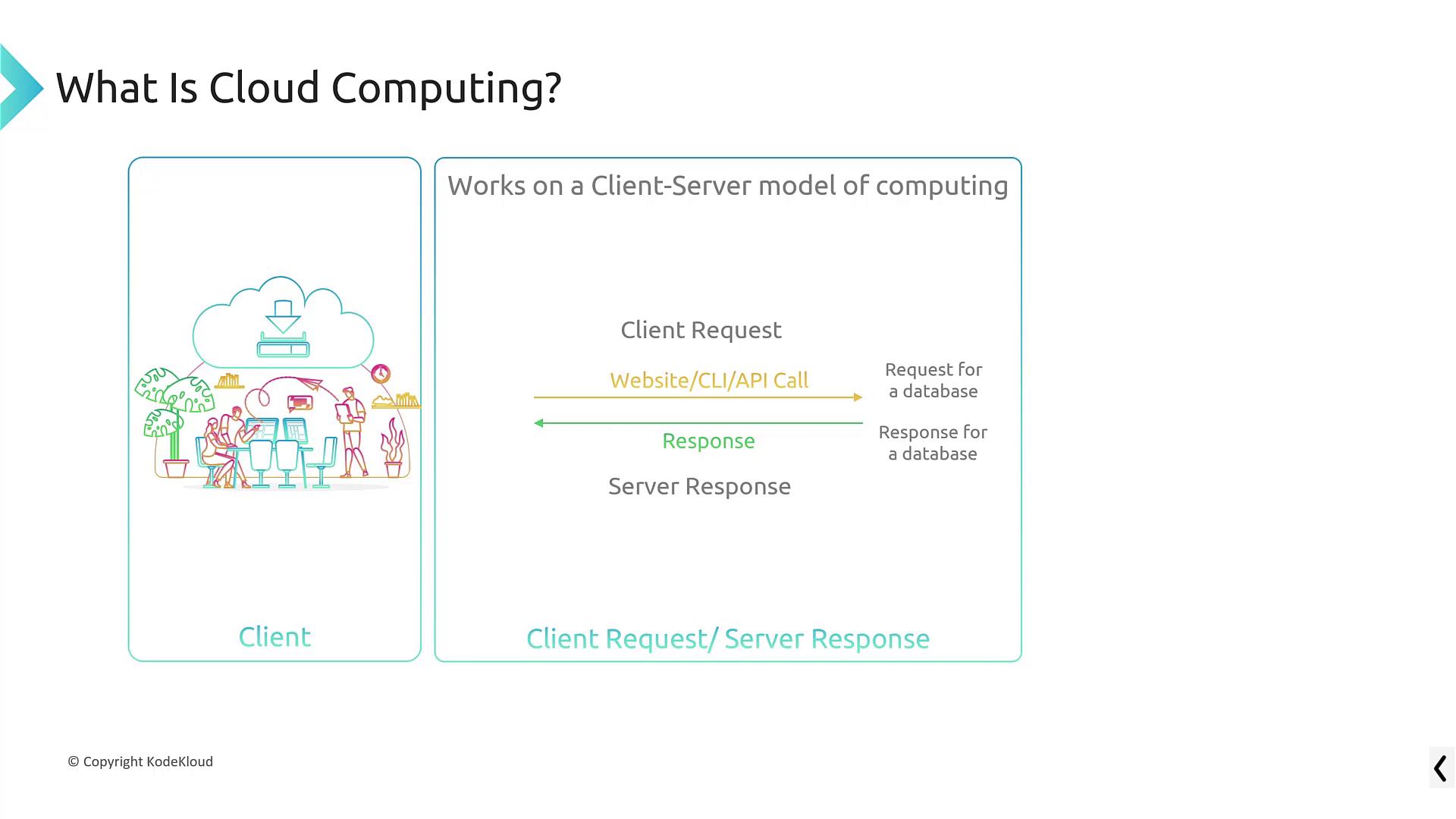
Cloud Deployment Models
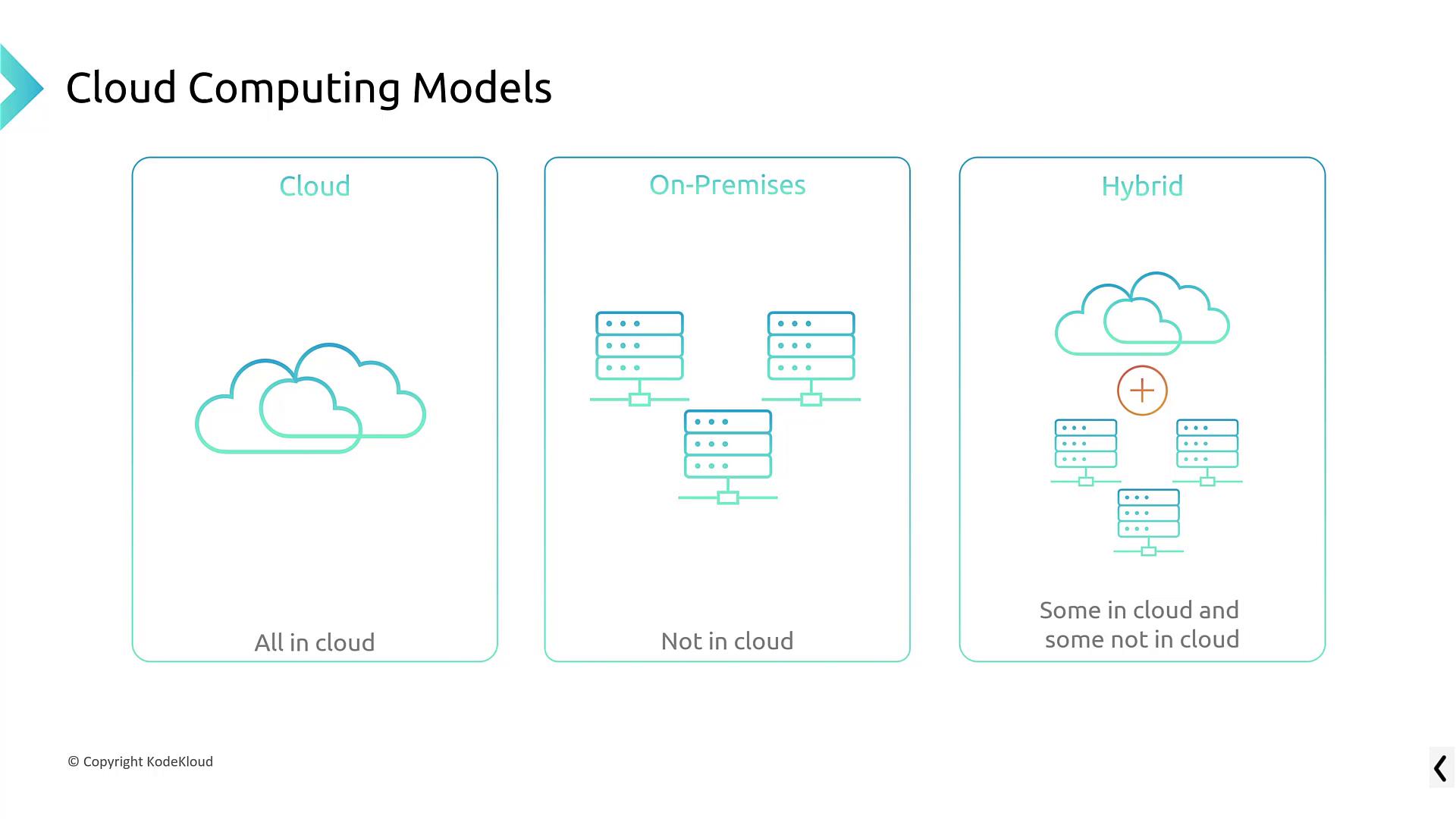
Cloud consumption generally falls into three primary models:-
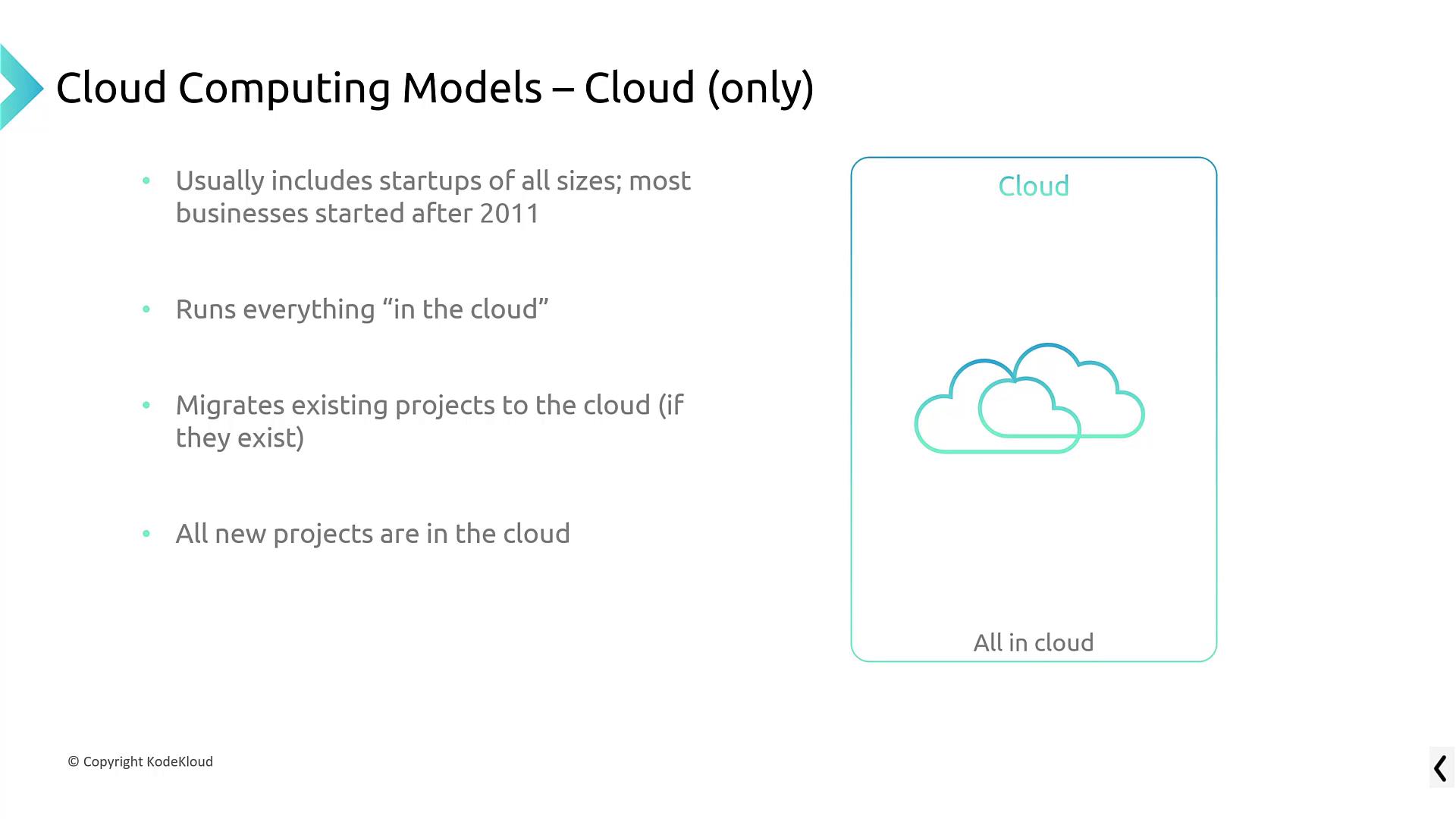
All-in-Cloud:
Organizations opt to run all workloads on cloud providers like AWS. This model is popular among startups and modern enterprises because it enables scalable, on-demand resource allocation without the need to manage physical hardware. -
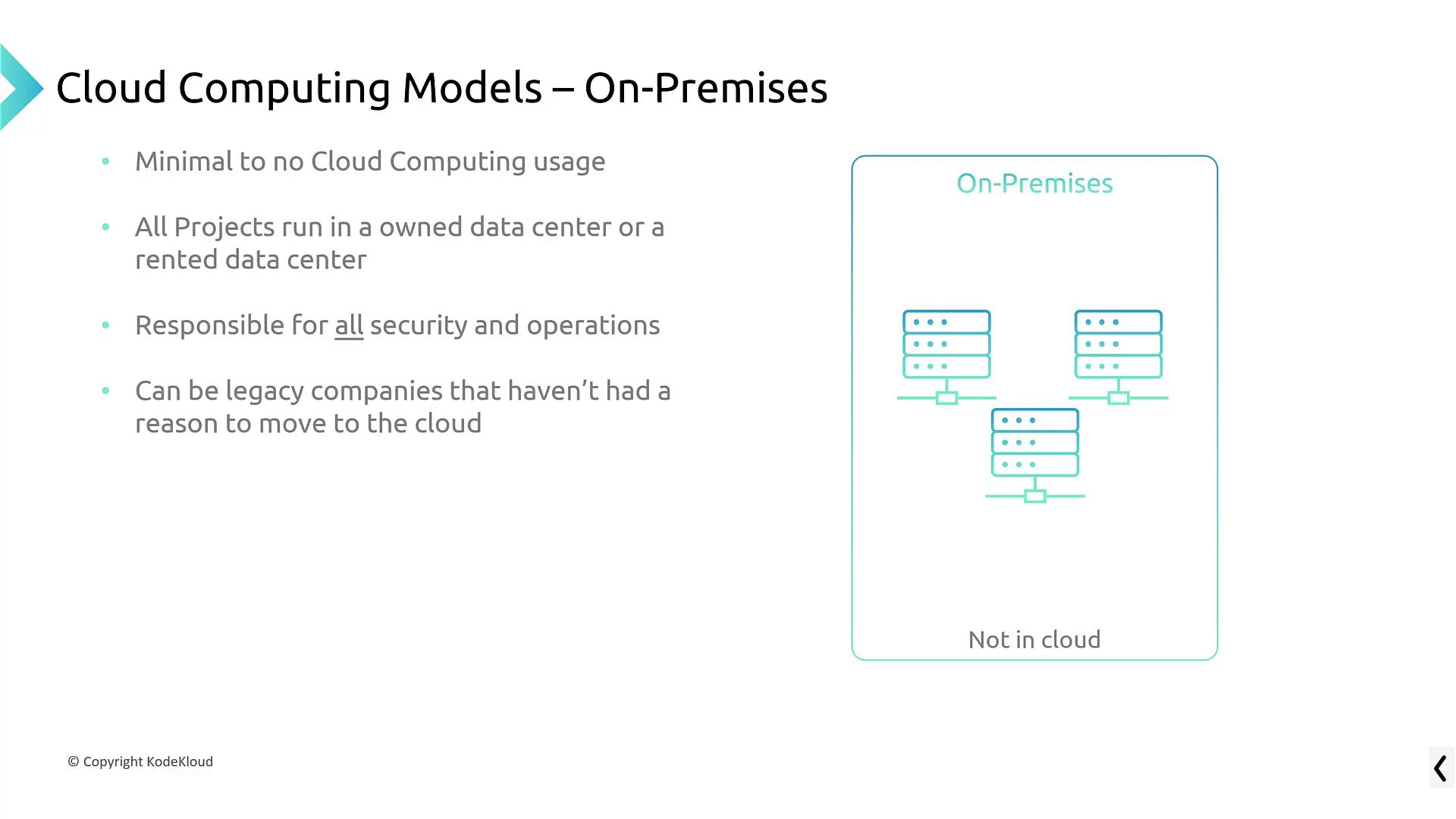
On-Premises (Private Cloud):
Organizations maintain their own data centers and use virtualization technologies to manage resources internally. This model requires complete oversight of the entire stack—from hardware to software—and is often selected by companies with strict security and compliance mandates. -
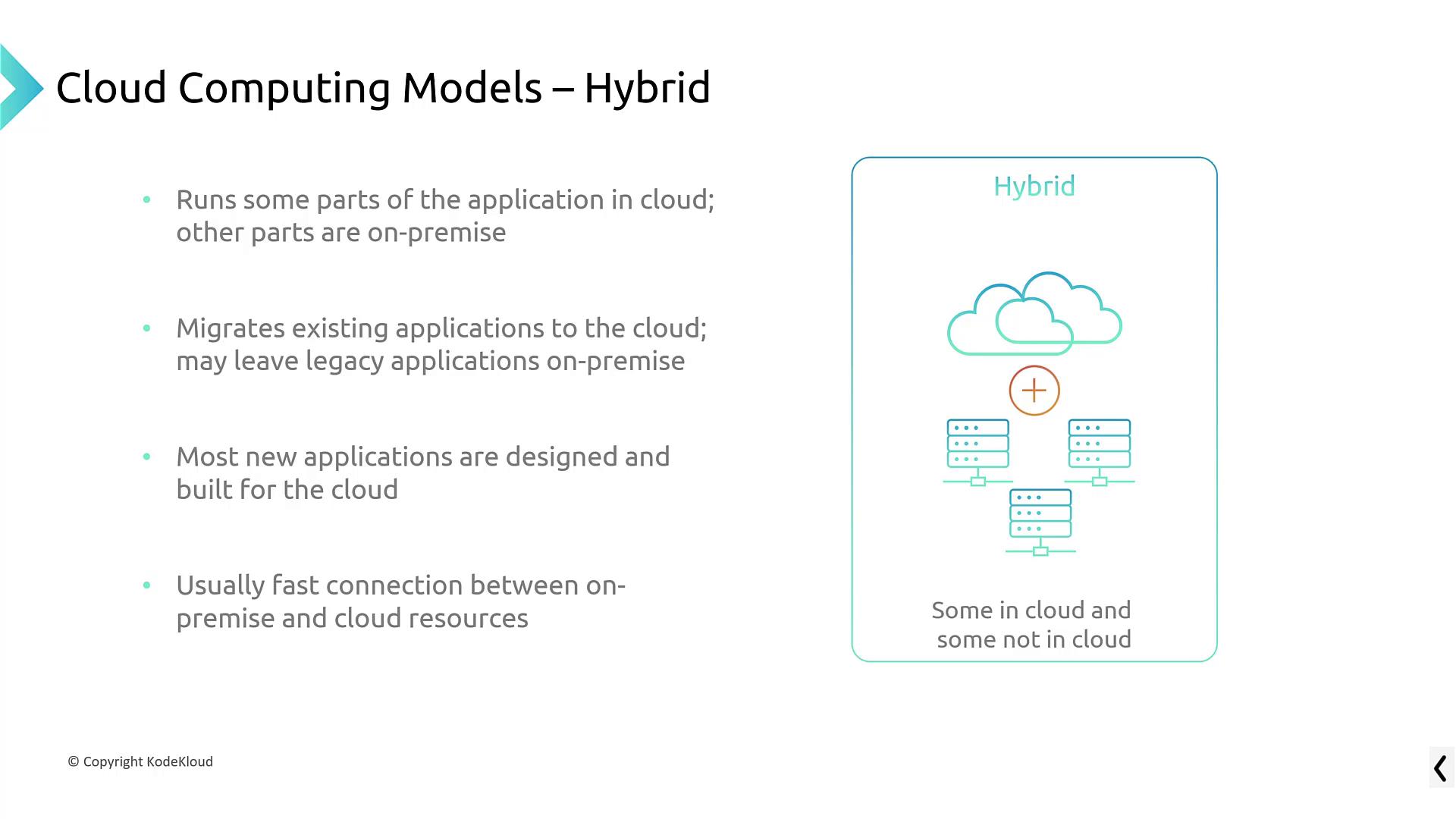
Hybrid Cloud:
This model combines cloud and on-premises resources. Some workloads run in the cloud, while others remain in traditional data centers. Hybrid clouds are designed to leverage the best of both worlds, usually connected through high-speed links. It is important to note that hybrid cloud differs from multi-cloud, which involves using services from multiple cloud providers.
Summary
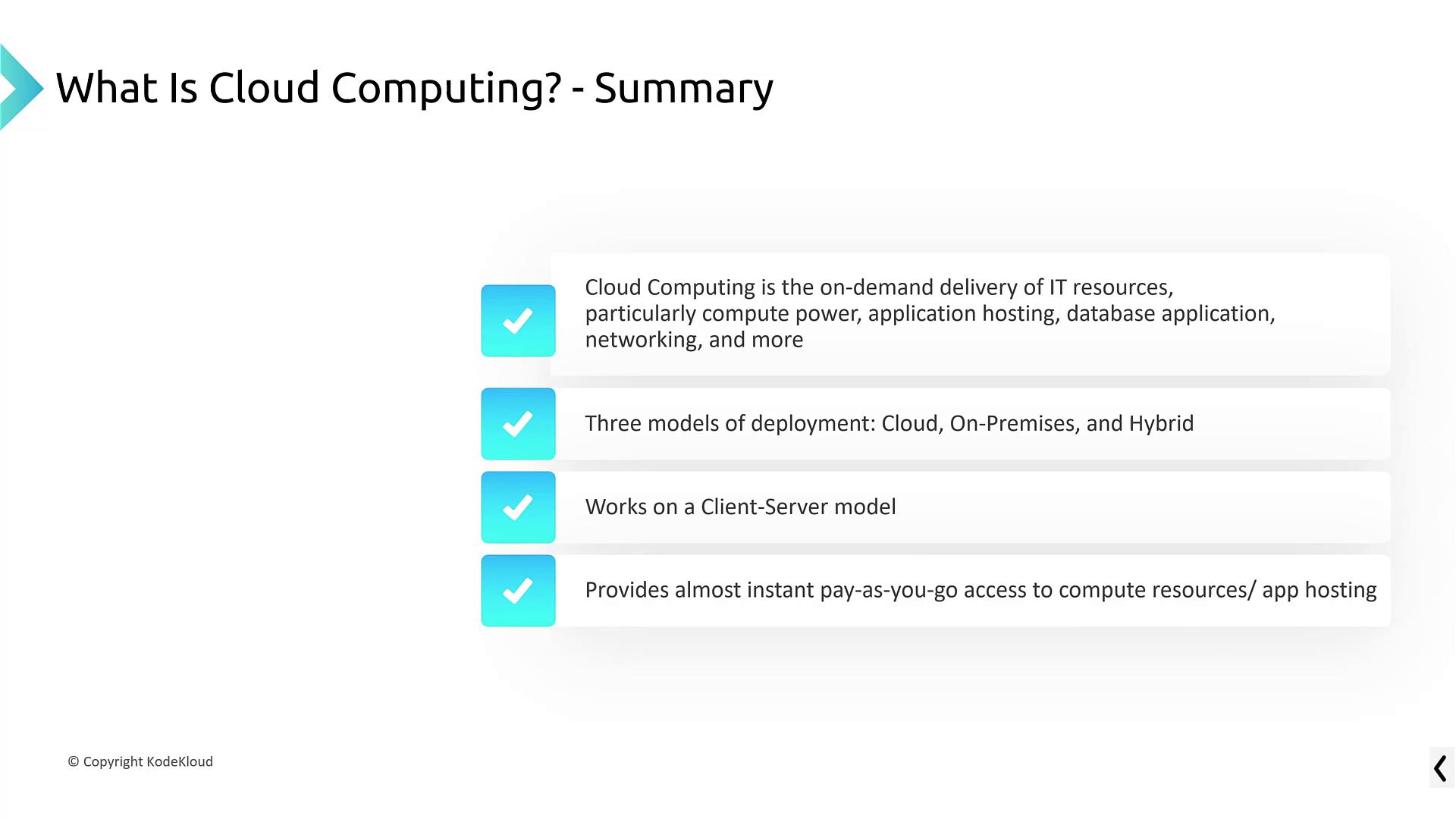
Cloud computing is the on-demand delivery of IT resources, enabling businesses to pay only for what they use. Here are the key takeaways:- Resources are provisioned rapidly using an API-driven client-server model.
- Three main deployment models exist: All-in-Cloud, On-Premises (Private Cloud), and Hybrid.
- Cloud solutions reduce overhead by eliminating the need for physical infrastructure management.
- Providers like AWS offer scalable, cost-effective resources, significantly reducing setup times compared to traditional IT.
- Cloud computing is ideal for modern applications, although legacy systems may still require on-premises or hybrid solutions.
Cloud computing offers unparalleled flexibility and efficiency by provisioning resources as needed, which can significantly reduce operational costs and setup time.