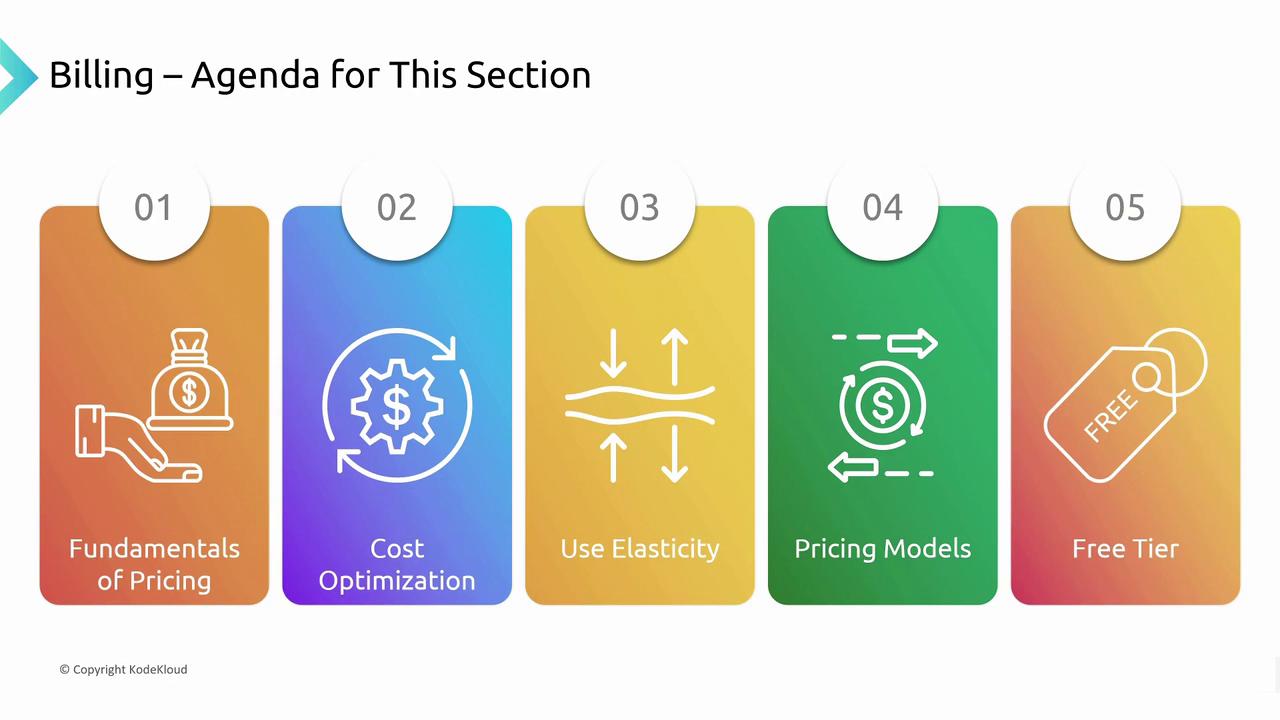
Fundamentals of AWS Pricing
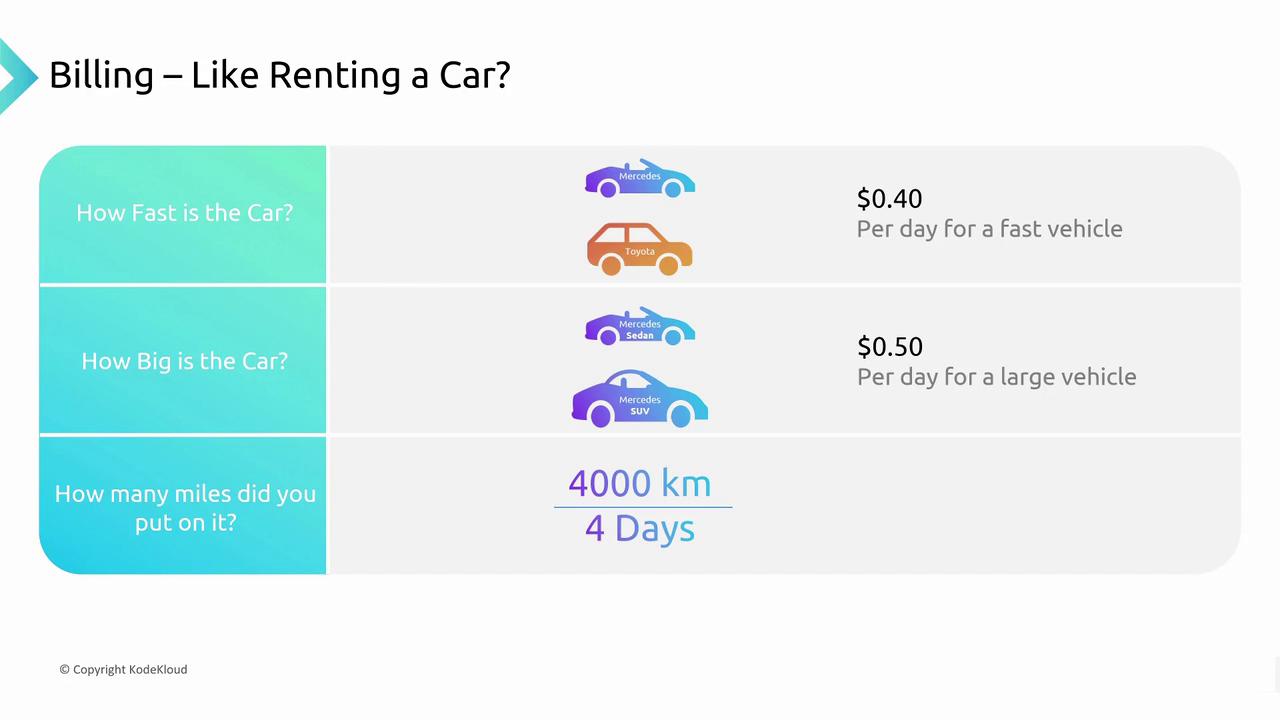
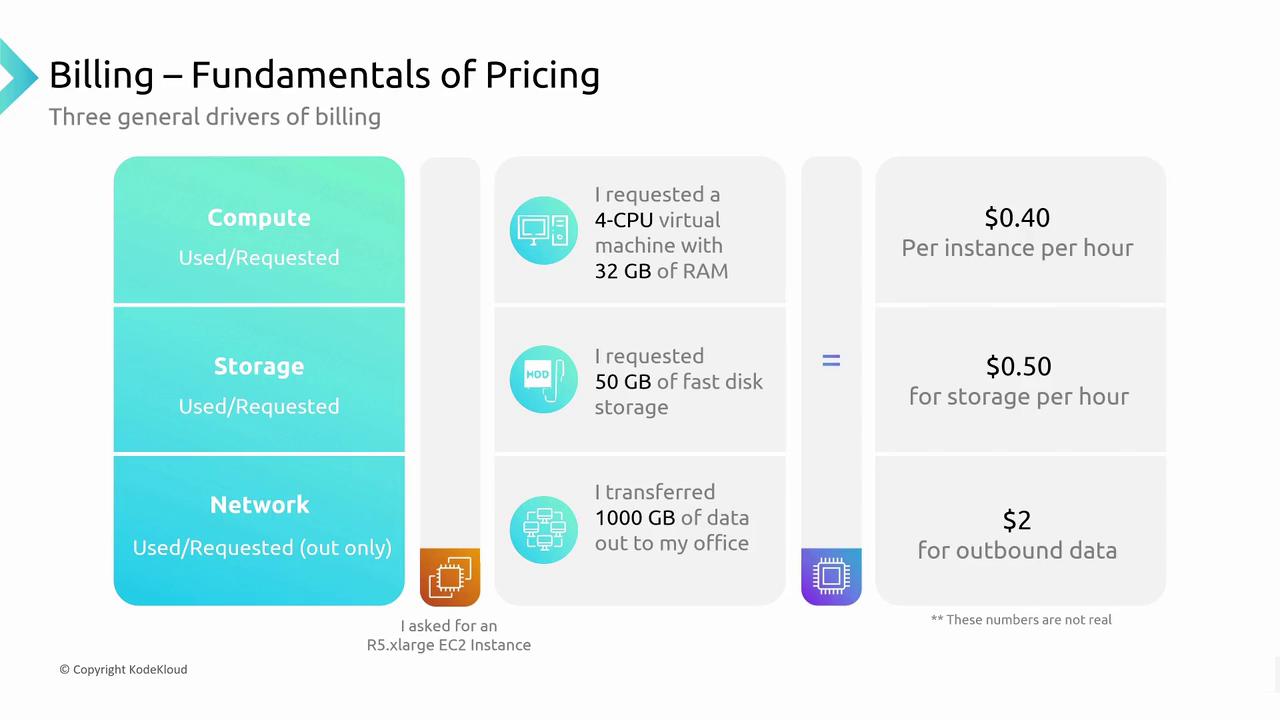
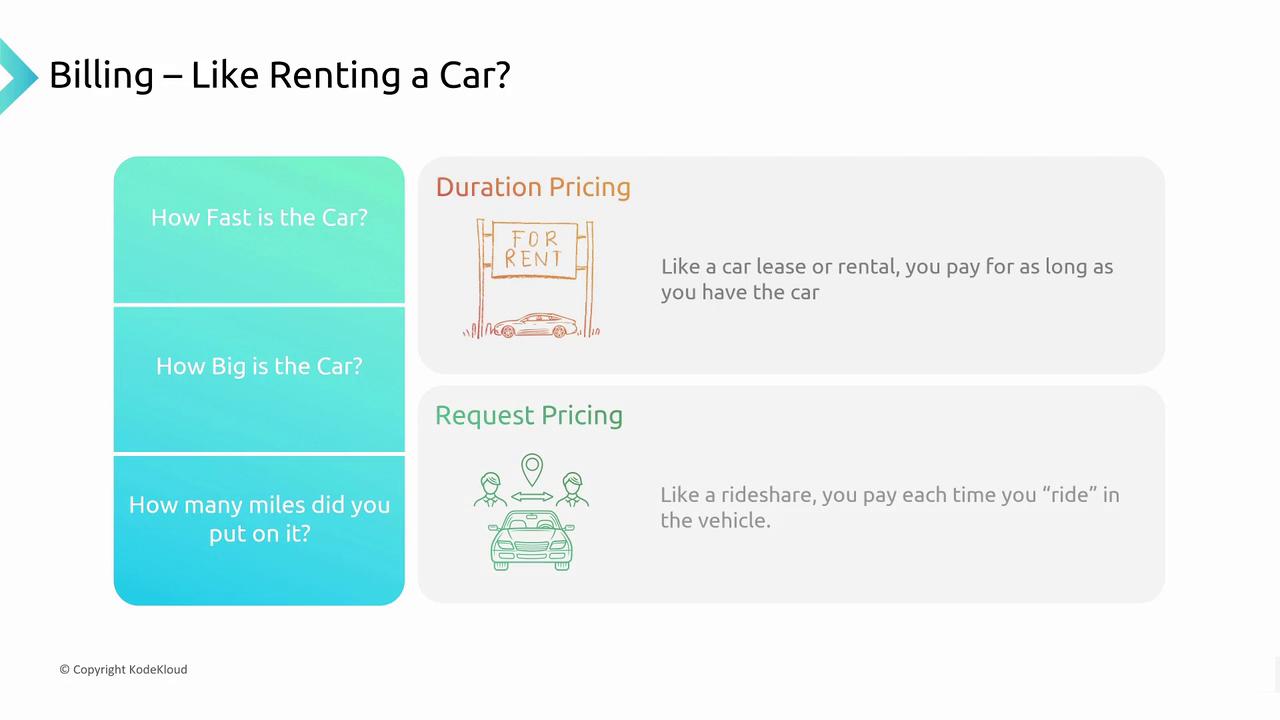
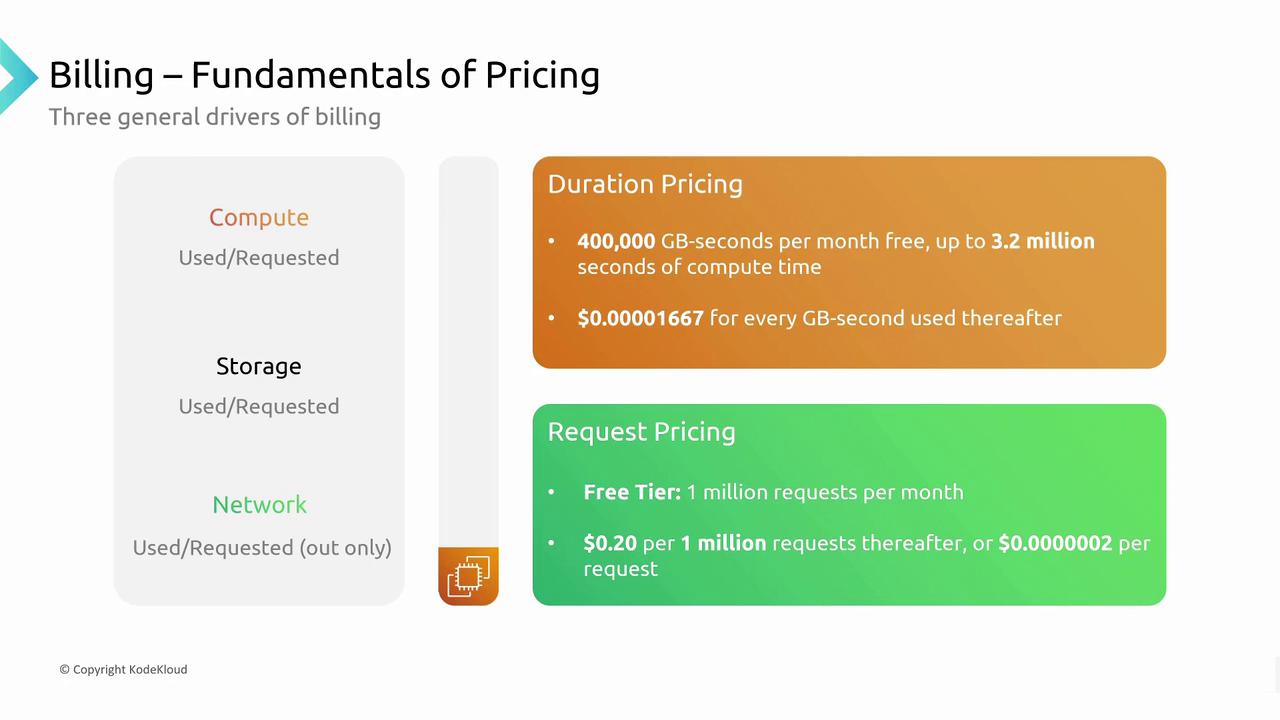
AWS pricing is driven by several key factors, much like renting a car. When renting, you consider the type of vehicle, rental duration, and mileage. Similarly, AWS billing is based on:- Compute: The processing power used—measured by the number and size of CPUs and the amount of RAM.
- Storage: The amount of data stored and the duration for which it is held.
- Networking: Outbound data transfer, with most inbound data being free.
- Duration Pricing: Services like EC2 and RDS charge based on the time the resources are running.
- Request Pricing: Serverless services, such as AWS Lambda, bill you for the number of requests and the execution time in milliseconds or seconds.
Cost Optimization Strategies
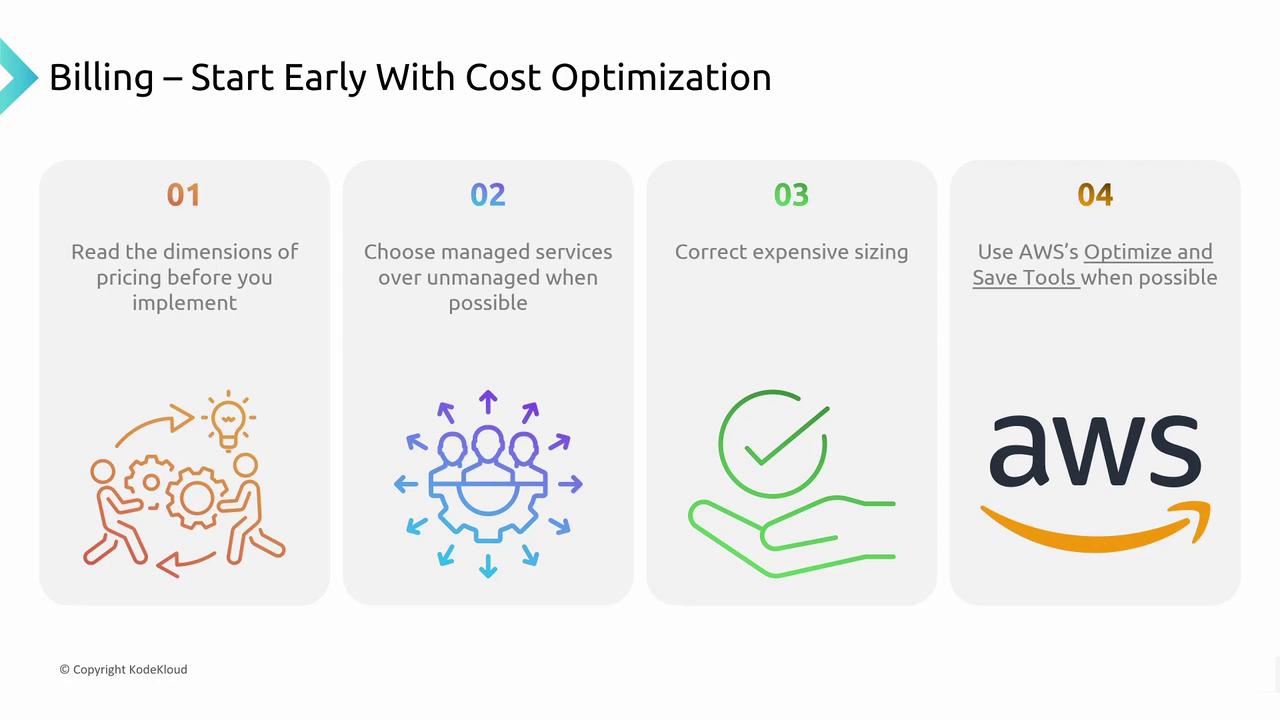
Managing costs is crucial in AWS because every service can have financial and security implications. Here are some best practices:- Understand Your Pricing: Before deploying, review the AWS Pricing Guides or use the AWS Pricing Calculator to estimate costs.
- Prefer Managed Services: Managed or serverless services often use request pricing and incur minimal duration charges, making them more cost effective than unmanaged services.
- Right-Size Your Resources: Continuously monitor usage and adjust your resource allocation. If only a portion of your virtual machines is fully utilized, scale down accordingly and use autoscaling to adjust capacity based on demand.
- Leverage AWS Optimization Tools: Use services like Compute Optimizer and Trusted Advisor to receive recommendations for better resource utilization and cost reduction.
Regularly review your spending before, during, and after projects to adjust resource usage for maximum cost efficiency.
Maximizing the Benefits of Elasticity
Elasticity—the ability to scale resources up or down based on demand—is a core strength of AWS. Use autoscaling features and infrastructure-as-code tools (such as AWS CloudFormation or Terraform) to manage resources dynamically. For example, scale down your web servers during low-traffic periods and scale up during peak times. Additionally, consider pausing non-critical resources, like databases, during off-peak hours to further reduce costs.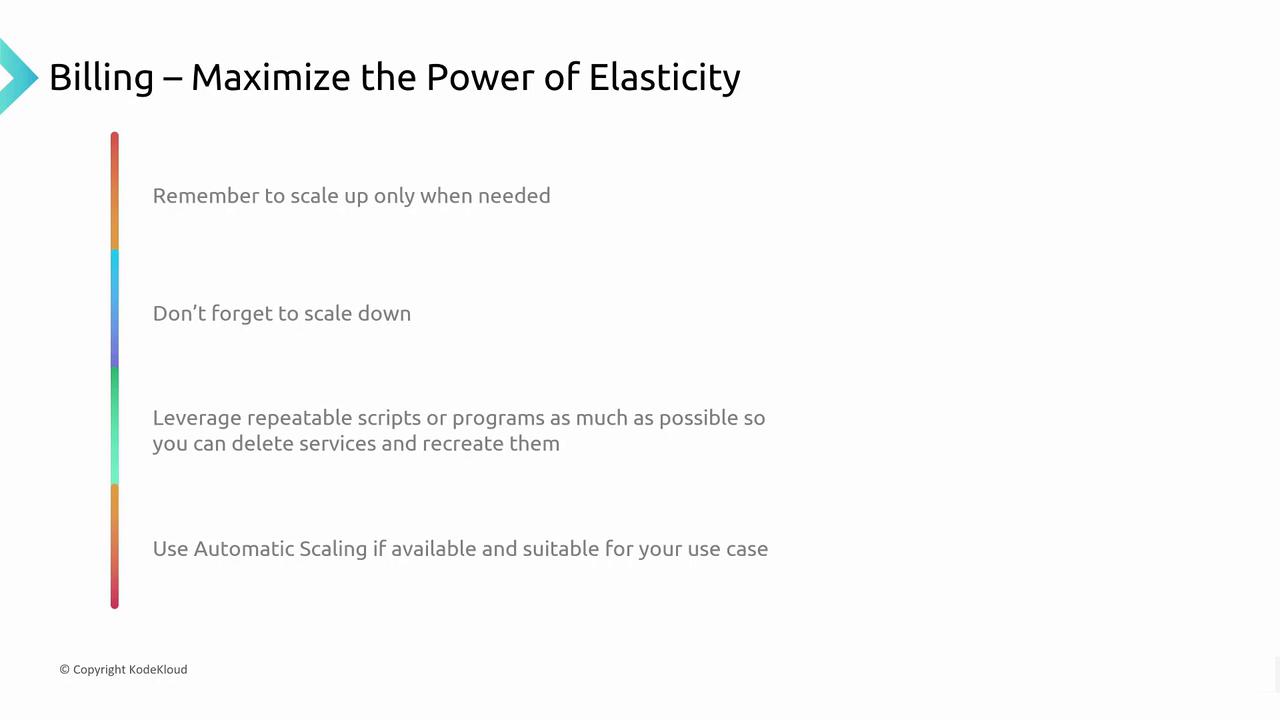
AWS Pricing Models
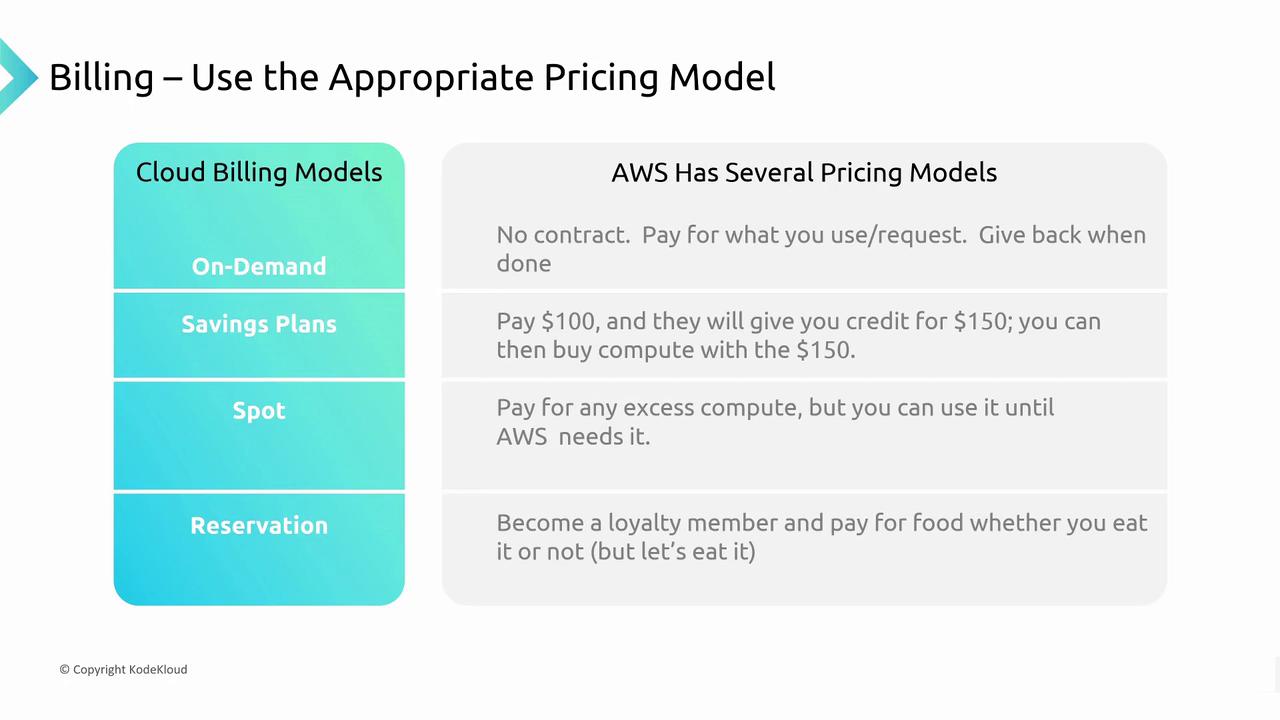
AWS offers several pricing models to suit different business needs:- On-Demand: Pay for resources only when they are in use. This model is best for testing or unpredictable workloads.
- Savings Plans: Commit to a certain spend upfront to receive a discount on your overall usage.
- Spot Instances: Bid on unused AWS capacity at significantly reduced rates. These instances can be reclaimed when needed.
- Reservations: Also known as reserved instances, this model requires a one- to three-year commitment for specific resources, which can result in significant savings if usage is predictable.
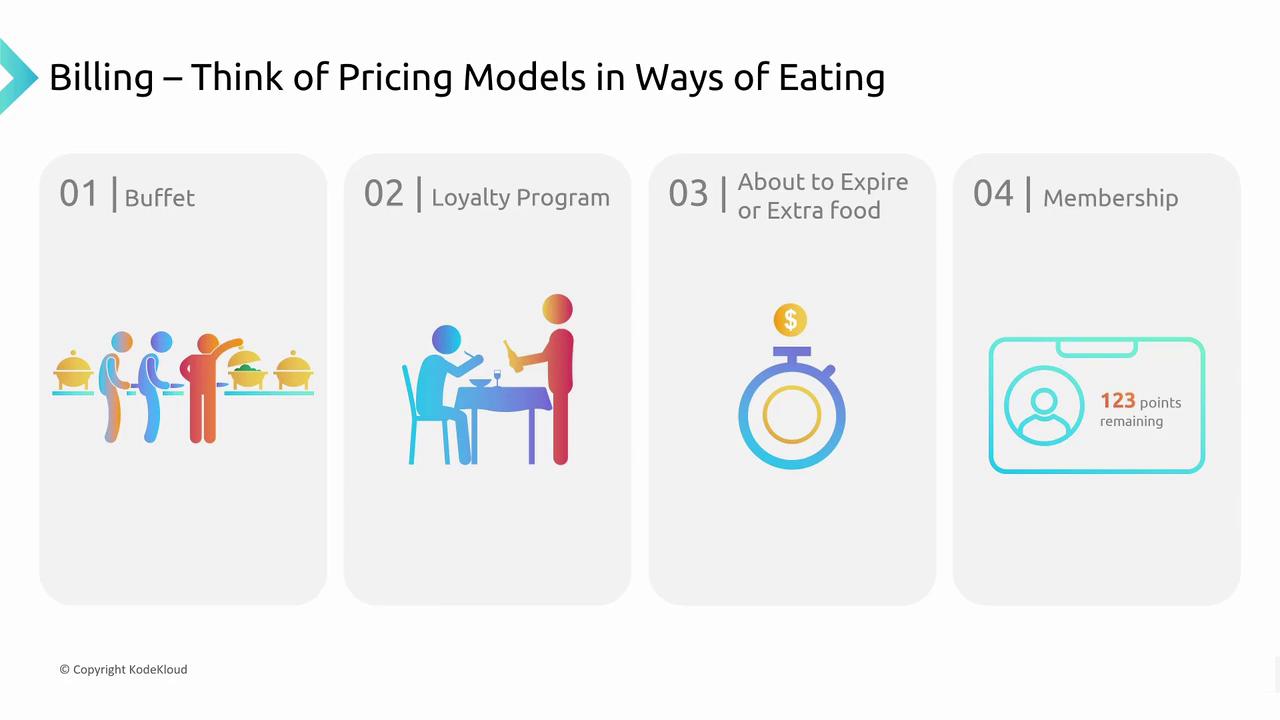
- On-Demand: Like a buffet—you pay only for what you eat.
- Savings Plans: Similar to a loyalty program, offering added benefits for an upfront commitment.
- Spot Instances: Comparable to buying surplus stock at discounted prices, with the risk of the offer ending.
- Reservations: Like a membership where you reserve capacity in advance, whether or not fully used.
The Free Tier
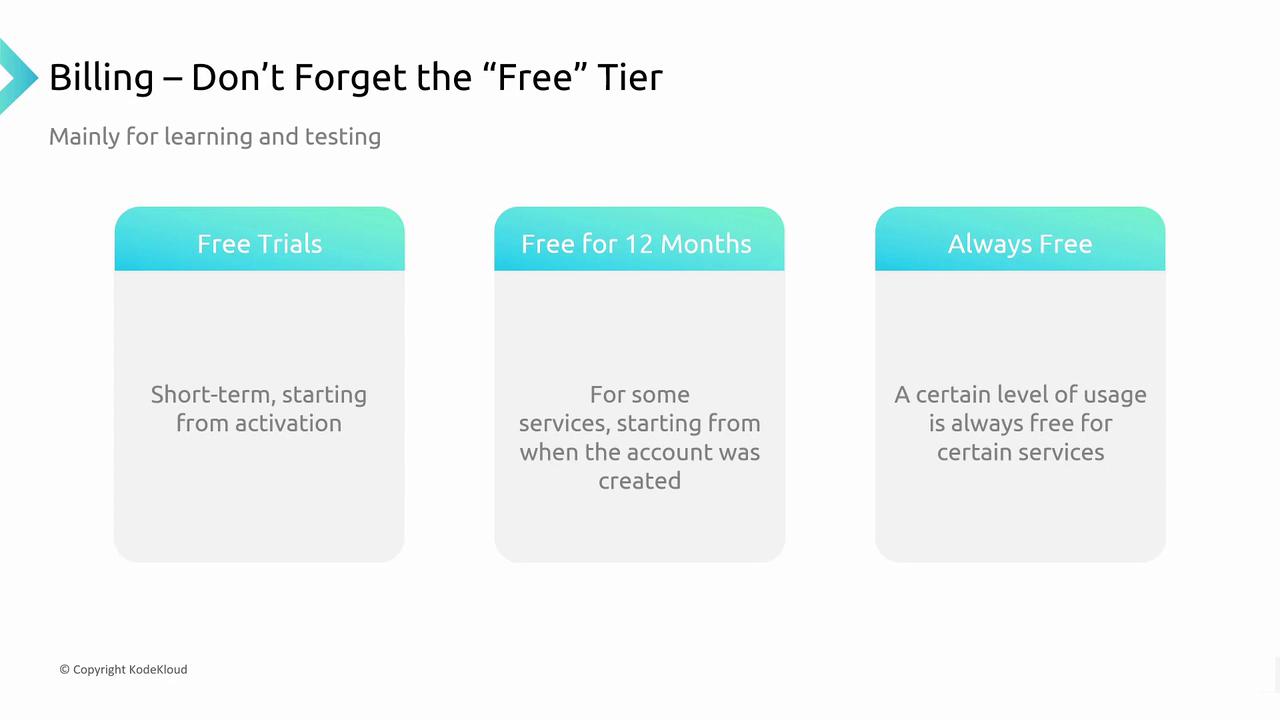
The AWS Free Tier is an excellent way to explore and experiment with AWS services without incurring costs. It includes:- Short-term free trials for select services.
- A 12-month free usage period for a range of popular services.
- Always-free services that remain free indefinitely.
Take advantage of the AWS Free Tier to learn and prototype without upfront costs.
Summary
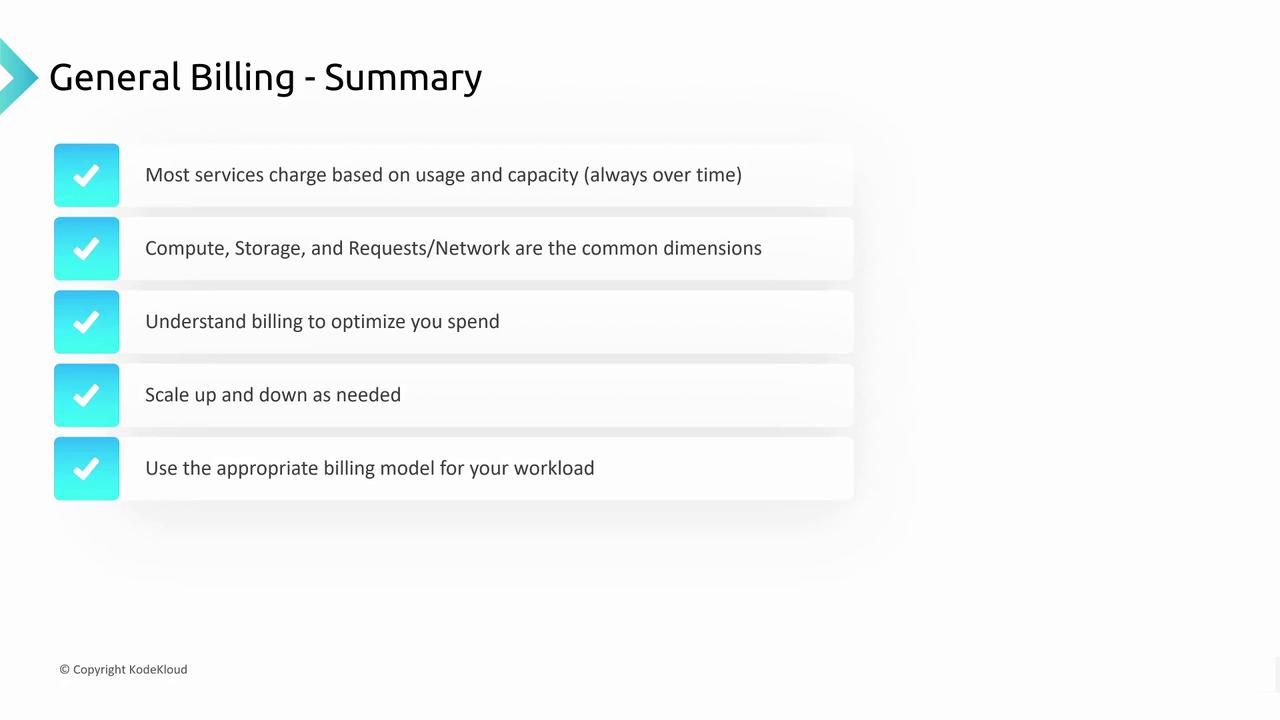
AWS billing is predominantly usage-based, determined by compute, storage, and networking dimensions. Key points include:- Compute: Costs are associated with the number of processors and memory usage over time.
- Storage: Fees depend on how much data is stored and for how long.
- Networking: Charges accrue for outbound data transfer.