

- CNCF surveys show most container users run Kubernetes in production. As projects move from pilot to platform, cost issues emerge quickly.
- The three recurring causes of cost leakage are oversized resource requests, node-pool fragmentation, and unclear ownership for cost allocation.
- Fixing these requires both engineering changes (right-sizing, node-pool design) and operational changes (metadata for ownership + telemetry).
- Oversized requests: autoscaling alone doesn’t stop waste
- Right-size requests and limits using historical container metrics before relying on HPA or VPA.
- Use resource requests that approximate steady-state usage and limits for burst capacity.
- Combine metrics-driven autoscaling (HPA/VPA) with quotas and limit ranges to prevent runaway reservation growth.
- Cluster and node-pool expansion increases inefficiency
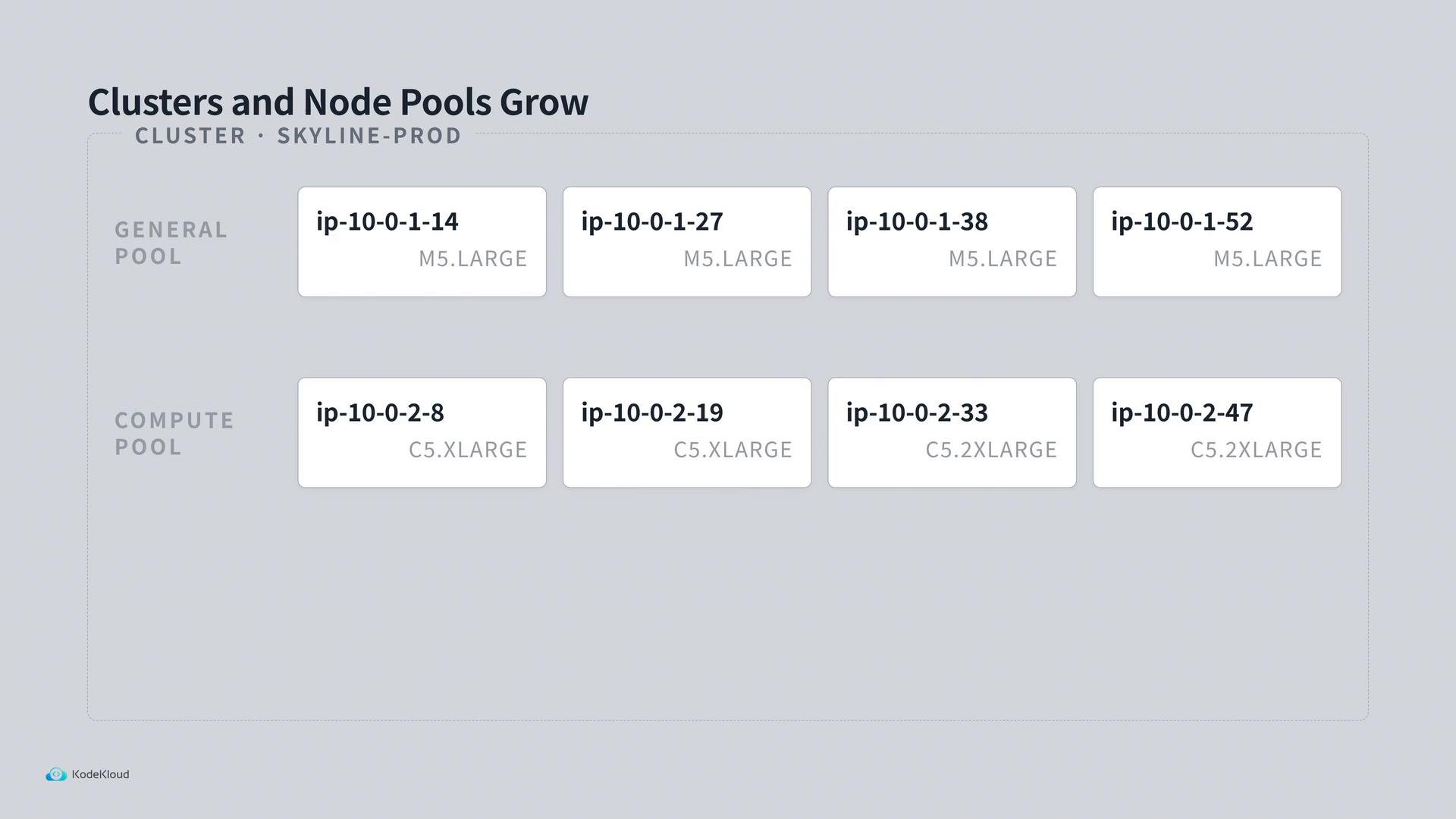
- Check allocated resources on nodes:
kubectl describe nodes | grep -A1 "Allocated". - Use custom node selectors, taints/tolerations, and bin-packing-aware schedulers to place similar workloads together.
- Consider right-sizing node pools, using fewer instance families, or autoscaling groups with narrower size ranges to reduce fragmentation.
- Shared infrastructure and unclear ownership break cost allocation
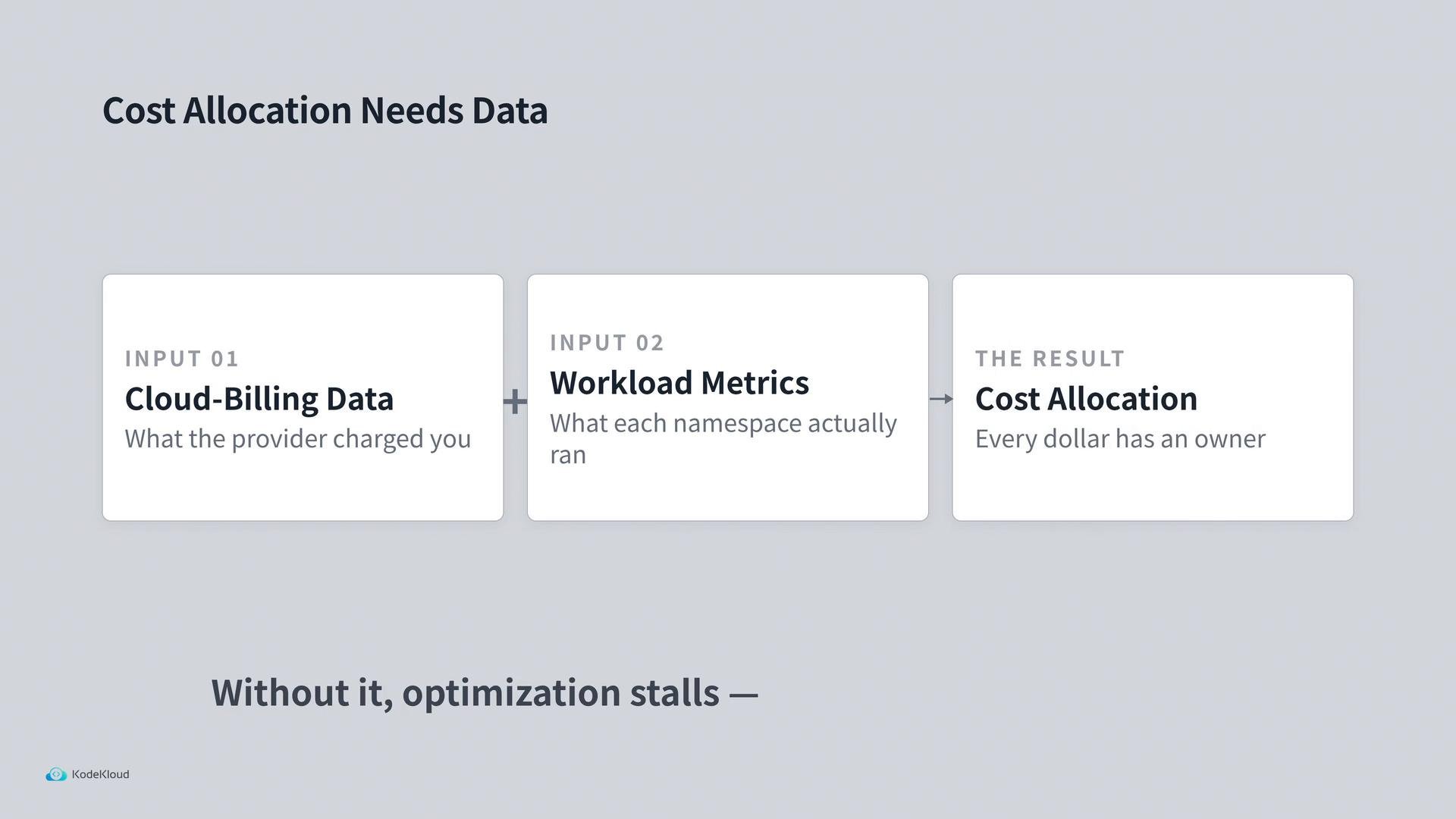
- Cloud billing (provider invoices, reserved instance discounts, committed use discounts).
- Workload metadata (namespaces, labels, cost-center tags, pod/container metrics).
- Mapping logic to attribute billed dollars to workload owners (team, service, environment).
- Right-sizing resources before trusting autoscaling,
- Reducing node-pool fragmentation via careful instance selection and scheduling policies,
- Enforcing metadata and telemetry so costs can be allocated to owners and optimized continuously.
Practical checks to start building your FinOps posture
- Count namespaces to gauge scale:
- Inspect namespace labels to verify ownership metadata:
- Useful node diagnostics:
- Enforce namespace and workload labels (
team,cost-center) via admission policies. - Run a right-sizing exercise using historical metrics and automated suggestions.
- Consolidate node pools and tune autoscaler scaling parameters.
- Build a pipeline that joins cloud billing with workload telemetry for per-namespace cost reports.
Start by enforcing lightweight metadata (labels/annotations) on namespaces and workloads. This mapping is the foundation for automated cost allocation and for enabling AI-driven recommendations.