

- Cluster access — Could we identify and log into the cluster?
- Service and logs — Could we find the service and read its logs?
- Independent fix — Could we independently fix the issue, and if not, why?
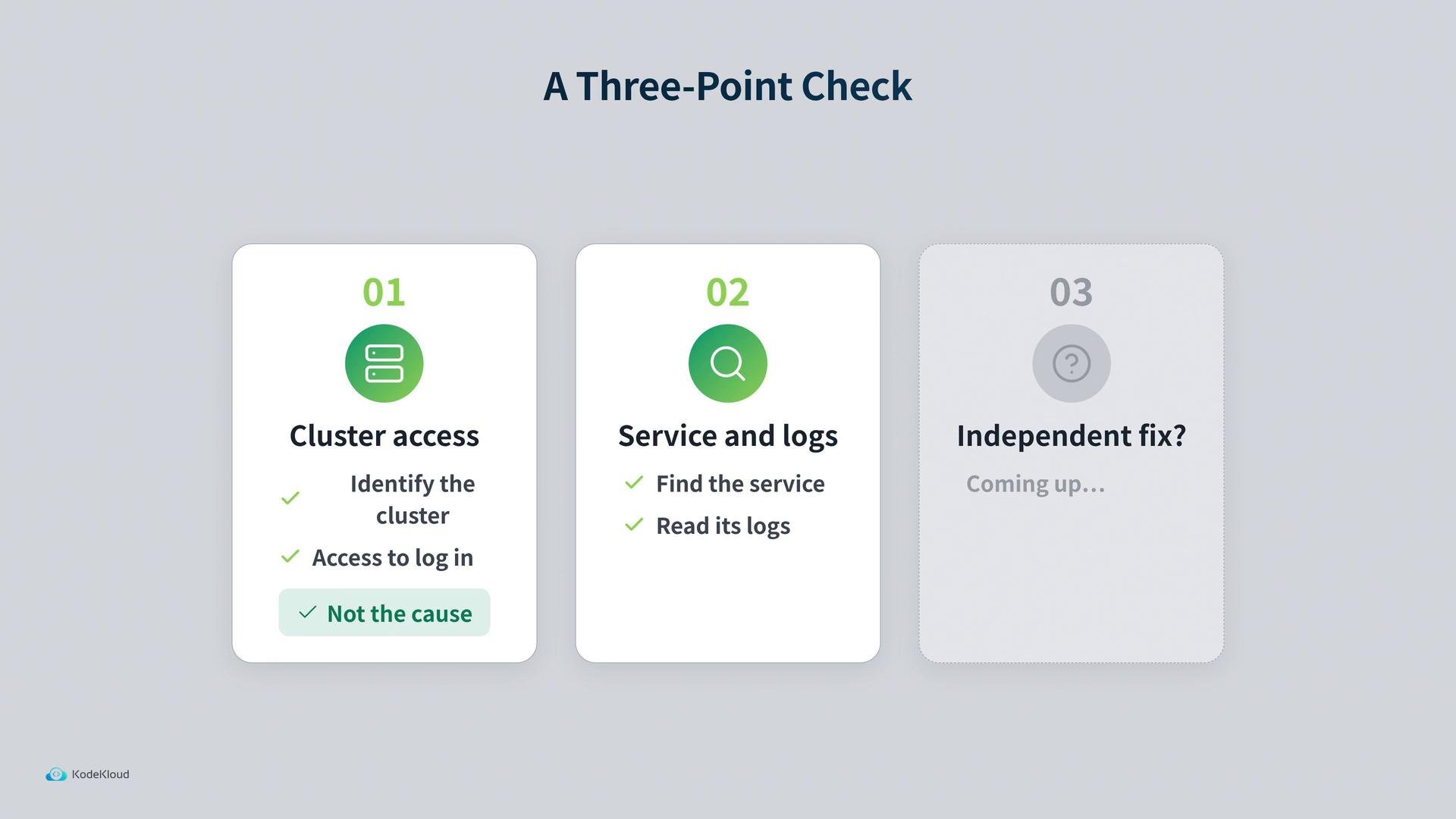
- Cluster access: We identified the cluster and logged in — access was not the issue.
- Service and logs: We found the service and read its logs — visibility was sufficient.
- Independent fix: This is where the incident failed the test.
What happened and why it matters
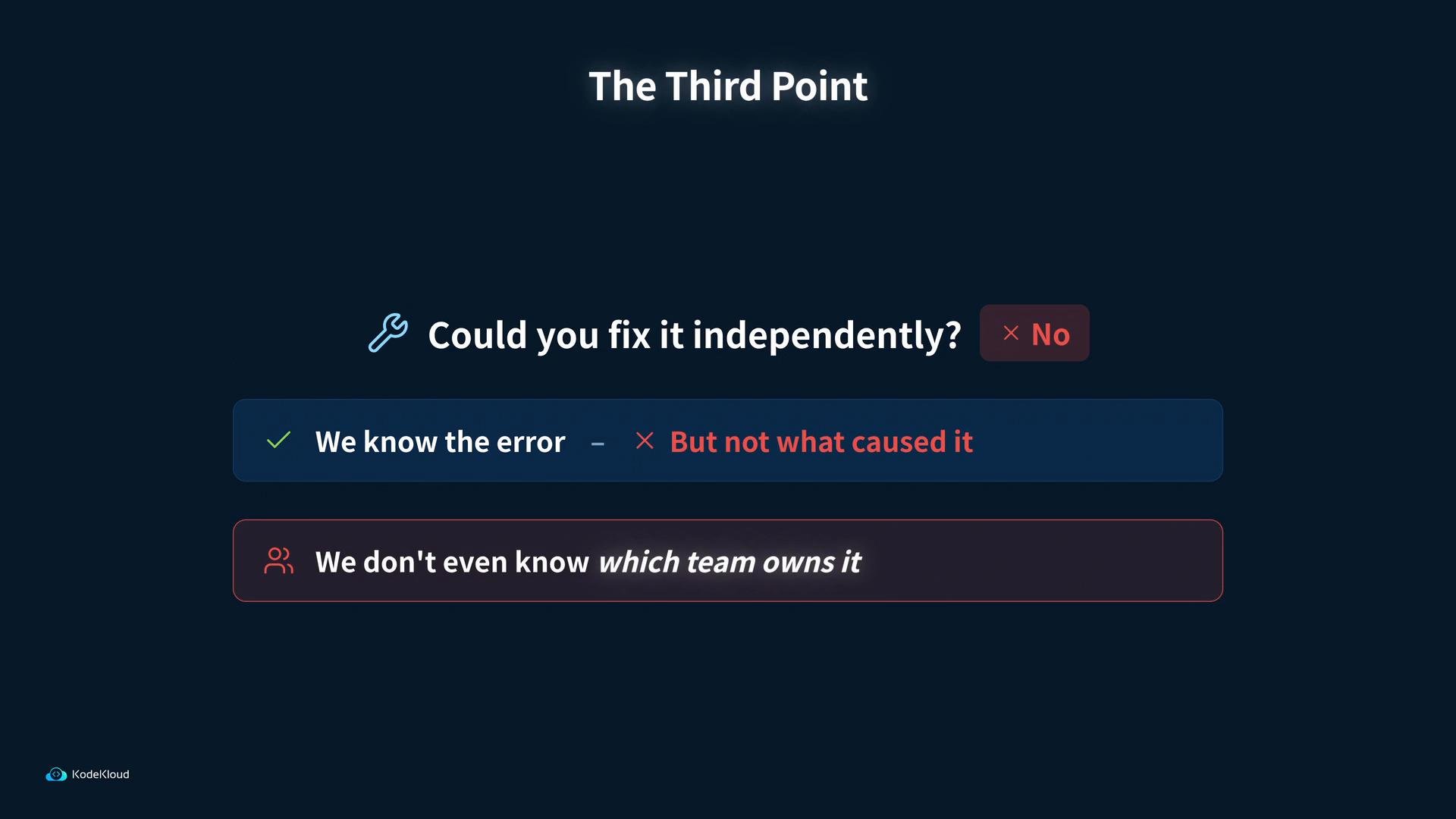
We patched the symptom to restore service availability, but we could not implement a durable fix. The immediate reasons:
- The error message was visible, but it did not indicate the underlying cause.
- The service lacked ownership metadata, so responders could not determine which team to involve for a long‑term resolution.
owner or communication tags, responders waste time hunting for the right team — time that increases customer impact and GMV exposure.
A minimal set of labels significantly improves incident response speed and accountability. Example Kubernetes service metadata:
Adding and enforcing standard labels such as
owner and slack-channel (or pagerduty/oncall) on Kubernetes resources makes incident response faster and enables better accountability.- Automated scanning for untagged or mis‑tagged resources.
- Ownership lookup and automatic escalation routing (Slack, PagerDuty).
- Remediation suggestions and policy enforcement to prevent future drift.
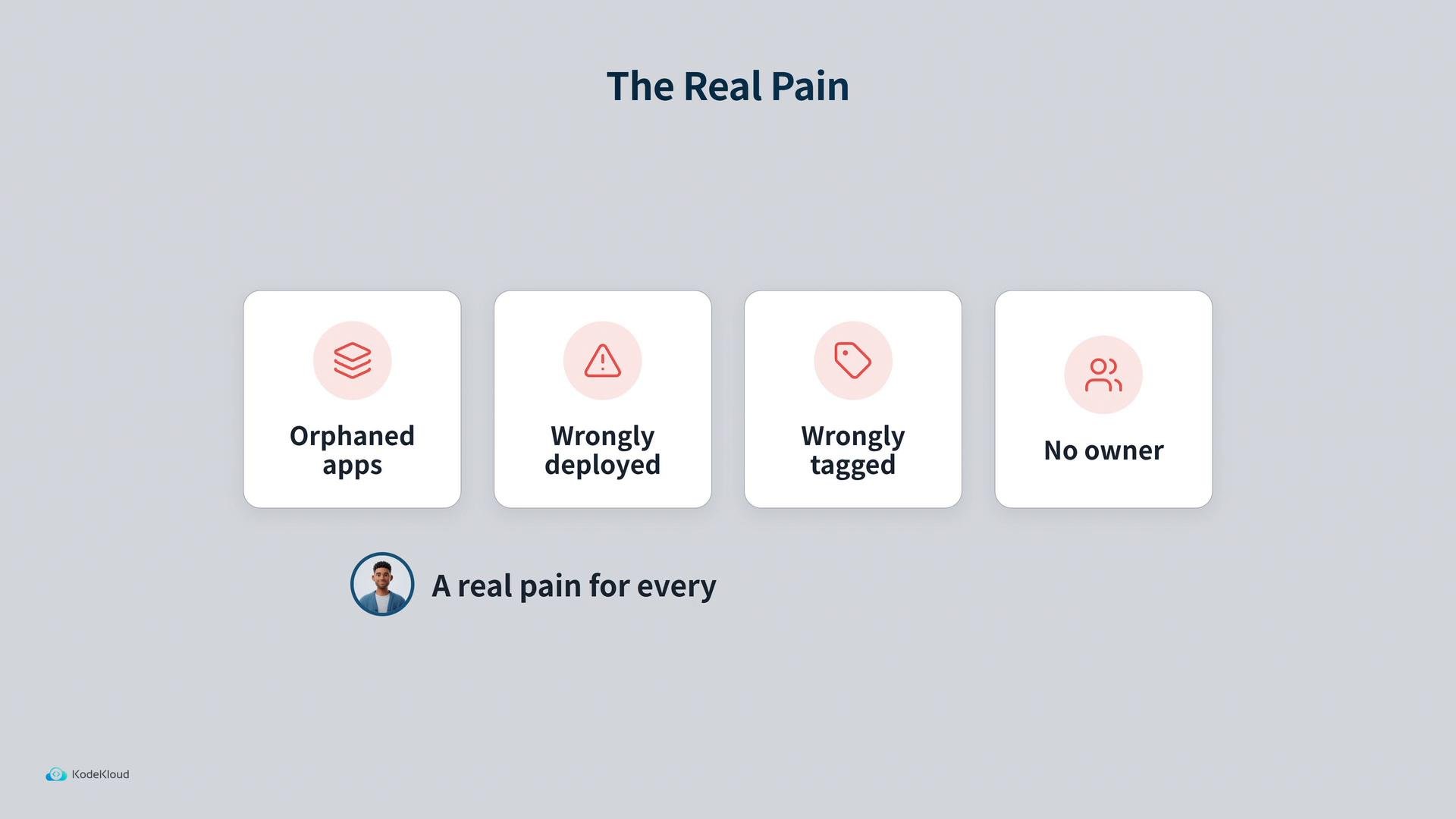
- Orphaned applications with no clear owner.
- Incorrect or inconsistent deployments.
- Mis‑tagged resources that complicate billing and FinOps.
- Increased mean time to resolution (MTTR) due to lack of contact information.
- Reduce MTTR by surfacing ownership metadata.
- Improve accountability and escalation workflows.
- Prevent FinOps leakage caused by mis‑tagged resources.
- Kubernetes Documentation: https://kubernetes.io/docs/
- Incident Response and Postmortem Best Practices: https://landing.google.com/sre/sre-book/chapters/postmortem-culture/