

Defining Bias vs. Fairness
Bias refers to systematic errors or prejudices learned during training, while fairness is the deliberate effort to counteract these biases and achieve equitable outcomes.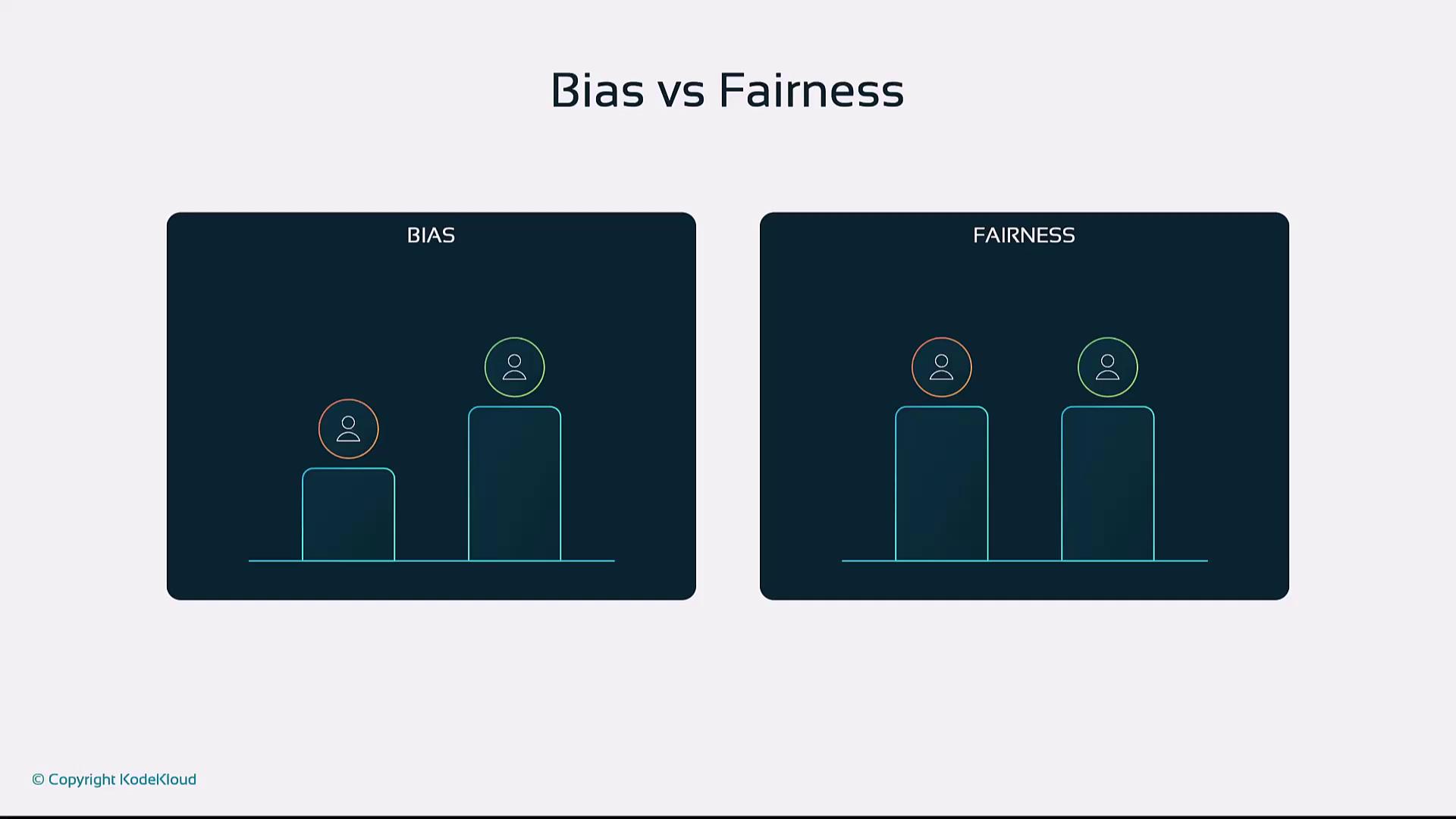
What Is Bias in LLMs?
Bias in LLMs occurs when models exhibit systematic preferences, associations, or prejudicial patterns based on their training data.
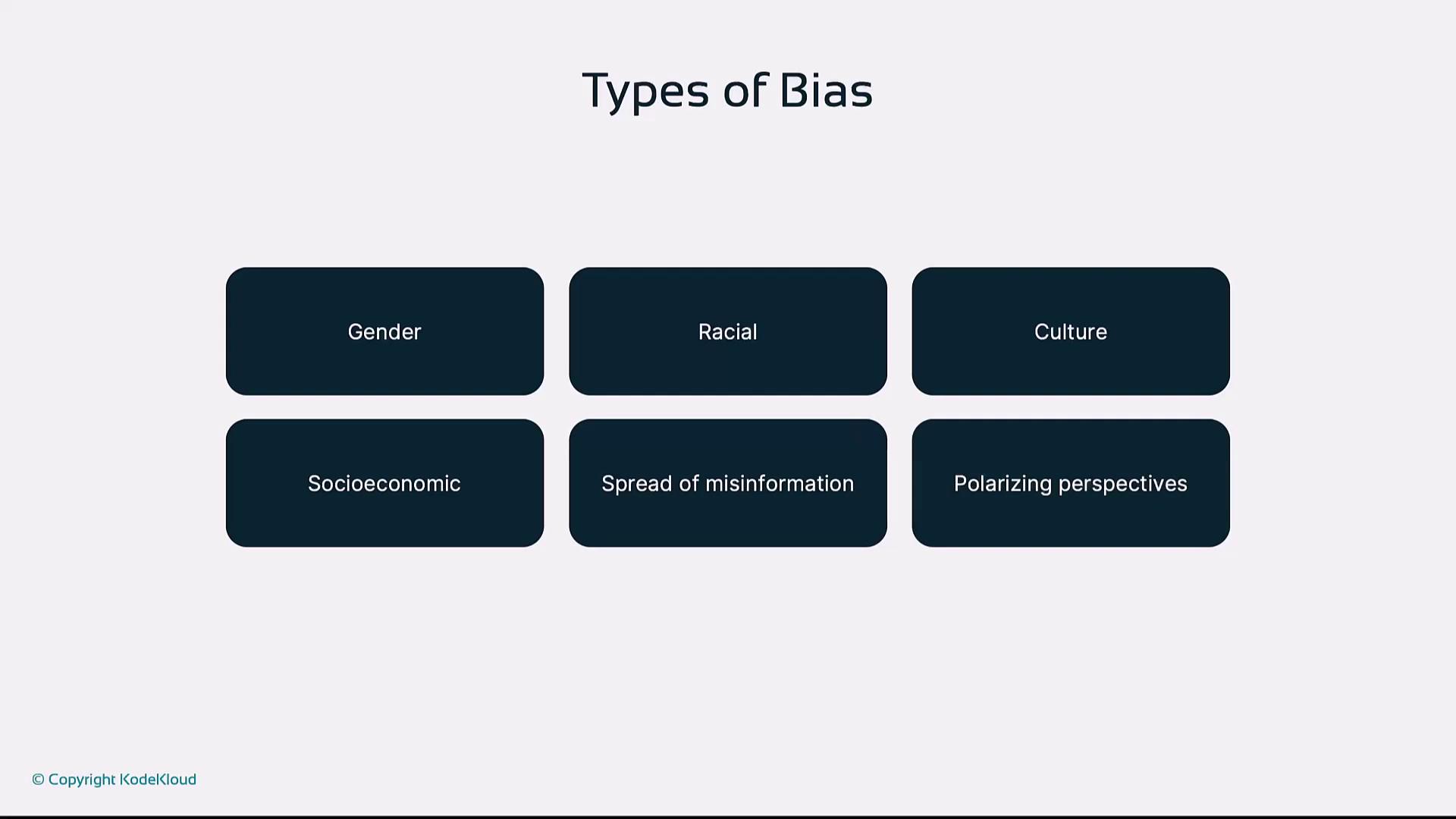
Common Types of Bias
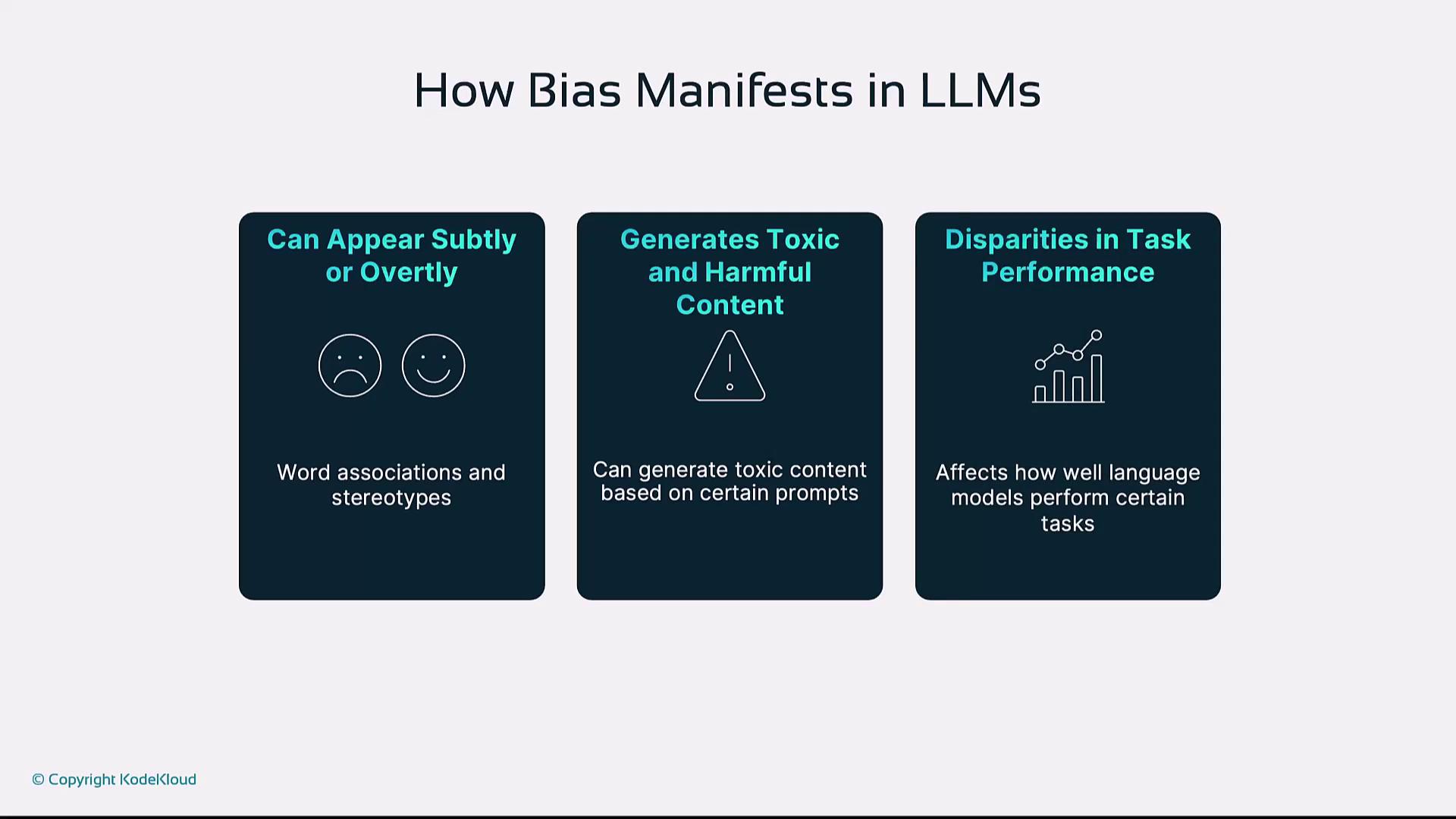
How Bias Manifests in LLM Outputs
Bias can surface in subtle word choices, explicit toxic content, or uneven model performance:- Word association stereotypes (e.g., “The doctor said” → “he”; “The nurse said” → “she”)
- Harmful or toxic responses under ambiguous prompts
- Lower accuracy or fluency on non-Western dialects or languages
Implications of LLM Bias
- Reinforcing social stereotypes at scale (e.g., in recruitment tools)
- Eroding user trust and raising ethical or legal concerns
- Marginalizing underrepresented communities and perspectives
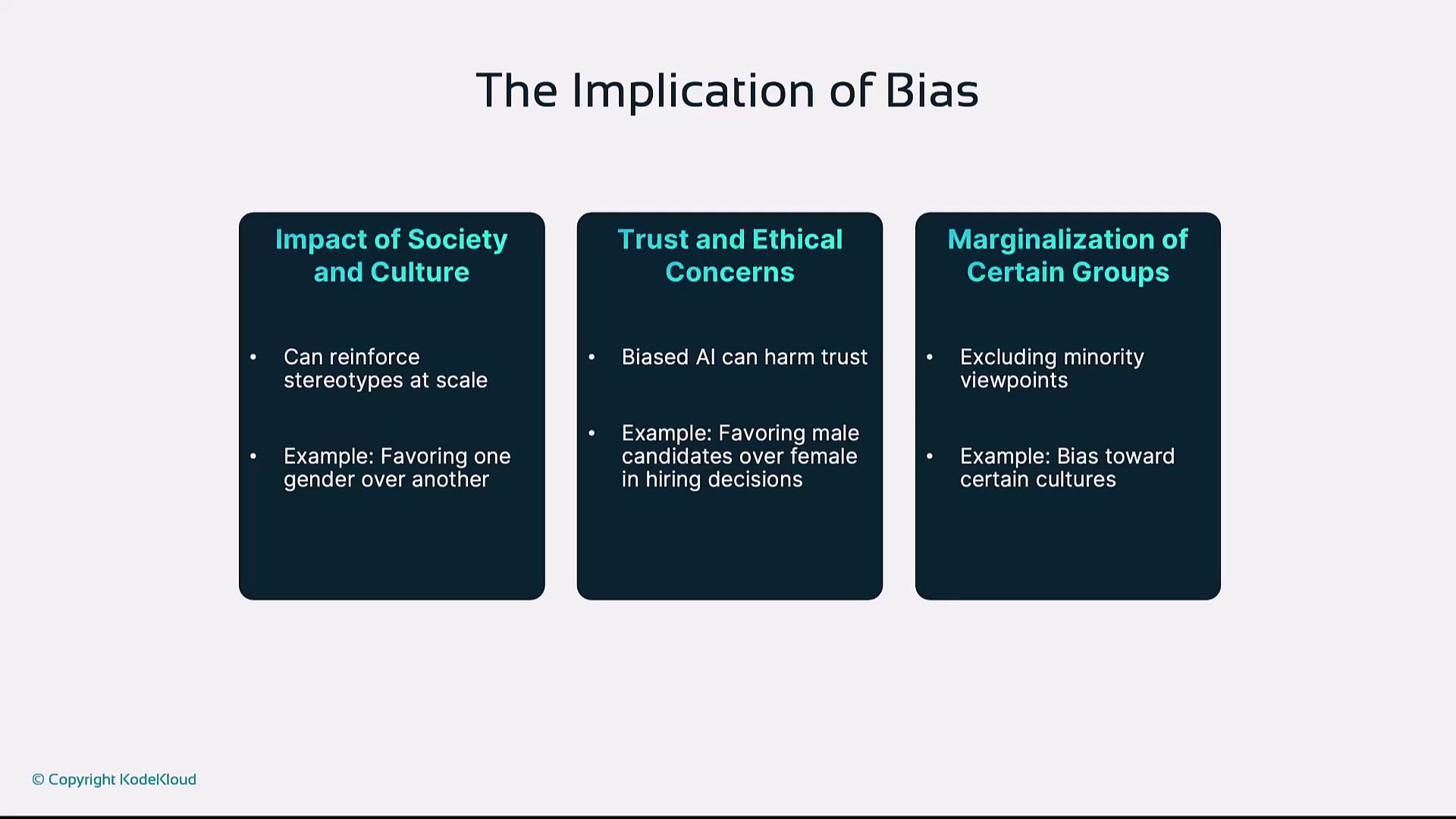
Biased AI systems deployed without audit can perpetuate harmful narratives and expose organizations to reputational and compliance risks.
Strategies to Mitigate Bias and Enhance Fairness
- Bias Auditing: Test models with neutral, demographically varied prompts to detect skewed outputs
- Balanced Training Data: Curate datasets representing diverse regions, cultures, and socioeconomic backgrounds
- Debiasing Techniques: Apply fine-tuning, counterfactual augmentation, or adversarial training to reduce associations
- Fairness Metrics: Measure performance across groups using metrics like Equality of Opportunity
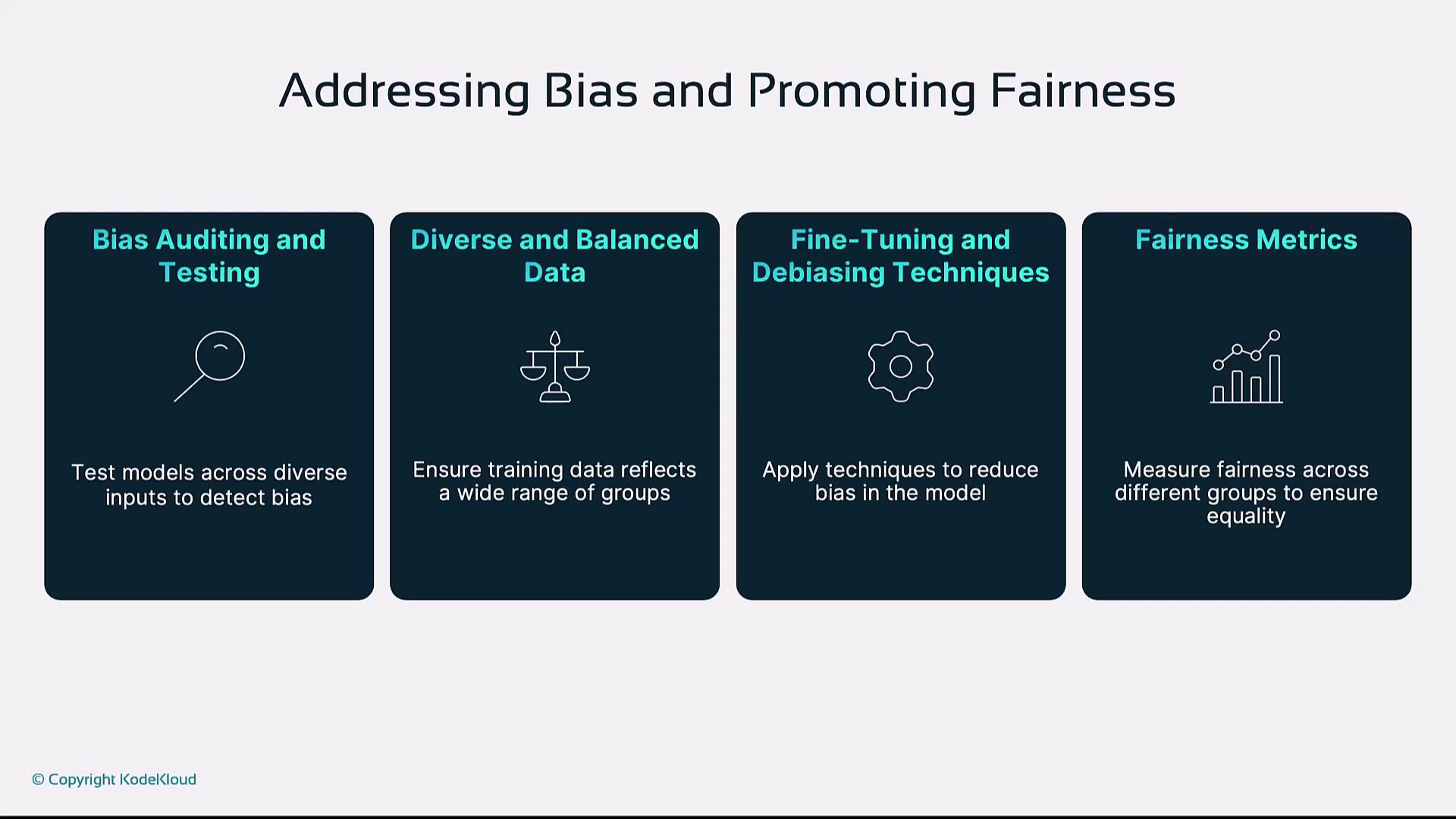
Incorporating continuous monitoring and user feedback loops helps maintain fairness as models evolve.
Current Research, Tools, and Frameworks
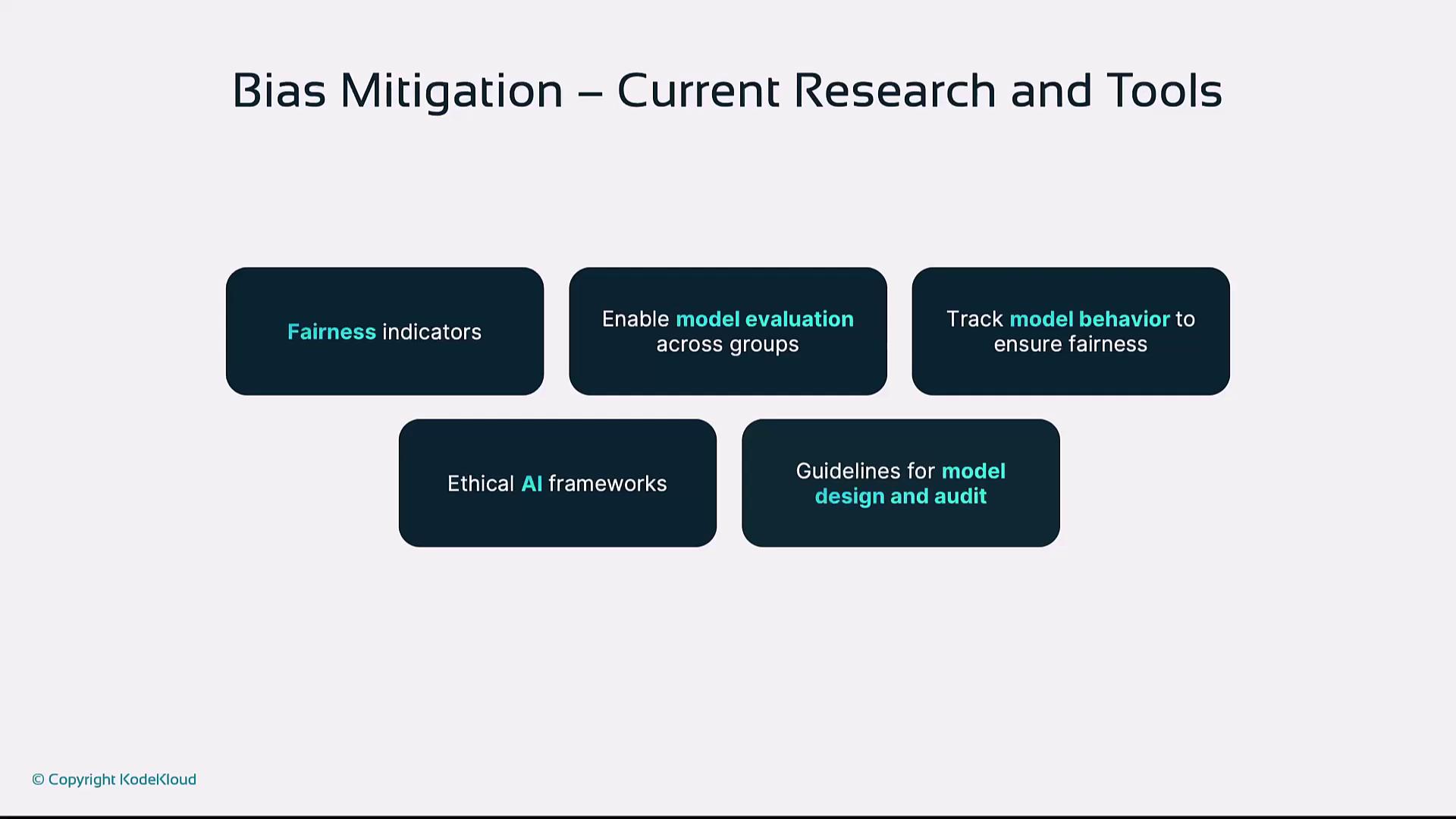
- Fairness Indicators: Google’s Fairness Indicators for tracking disparities
- Ethical AI Frameworks: Principles from OpenAI Charter and Google AI Principles guide transparent, accountable model development
Links and References
- Google Fairness Indicators
- Equality of Opportunity (ML Fairness)
- OpenAI Charter
- Google AI Principles