

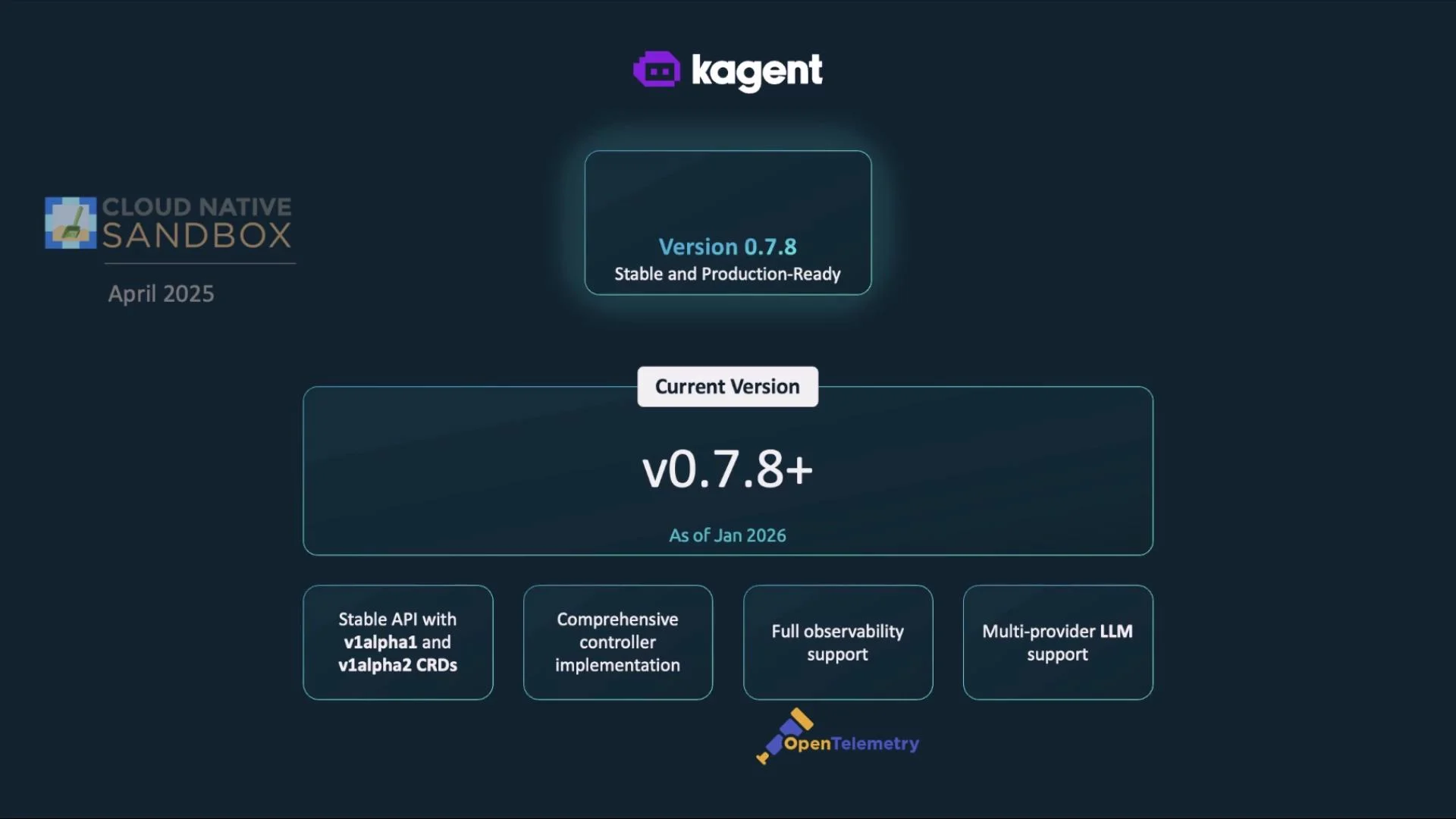
KAgent is part of the CNCF Sandbox (accepted April 25). There is both an open source edition and a commercial offering backed by Solo. The stable release as of January 2026 is
v0.7.8. For community discussion and support, see the project Discord and GitHub repository.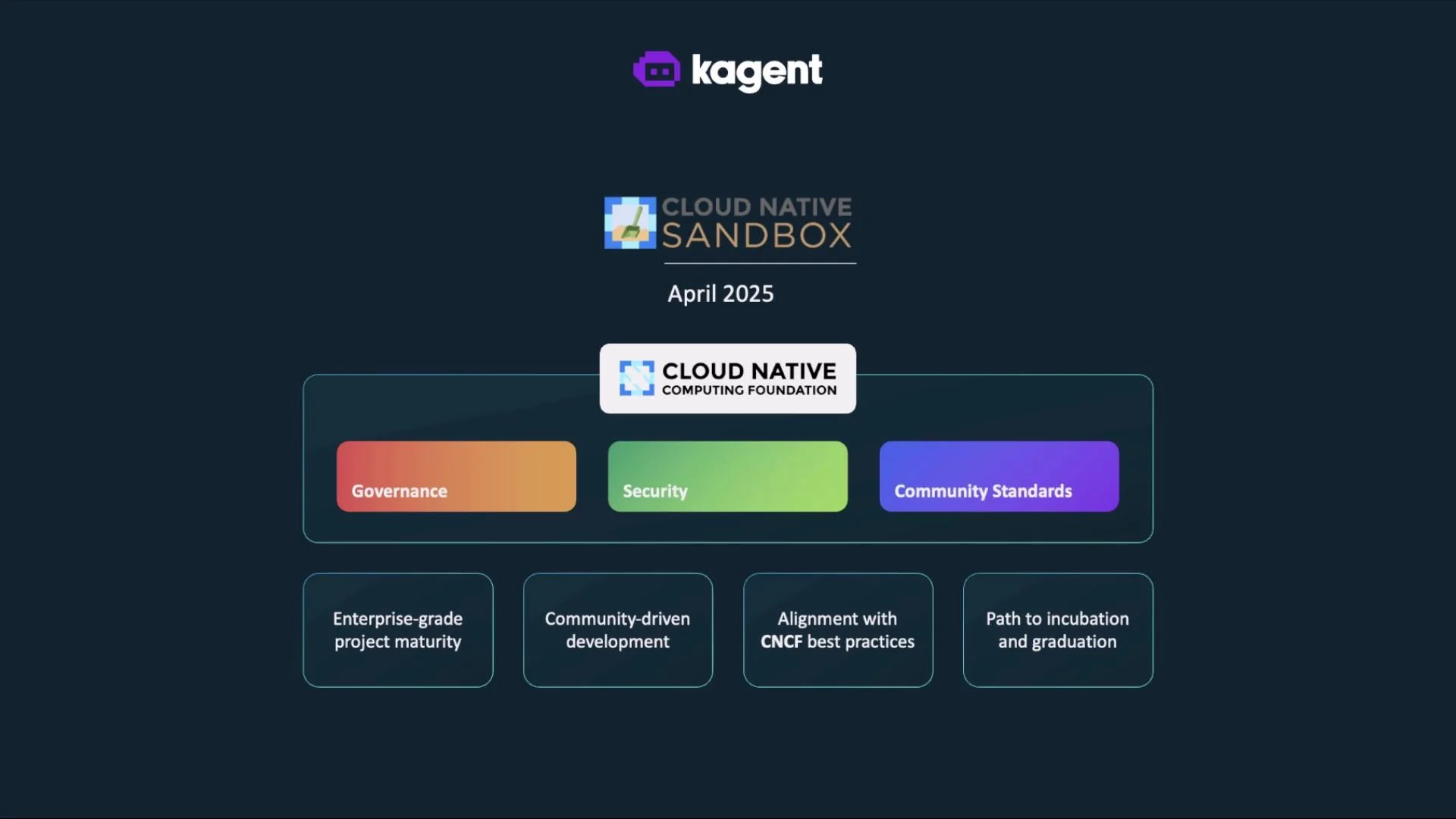
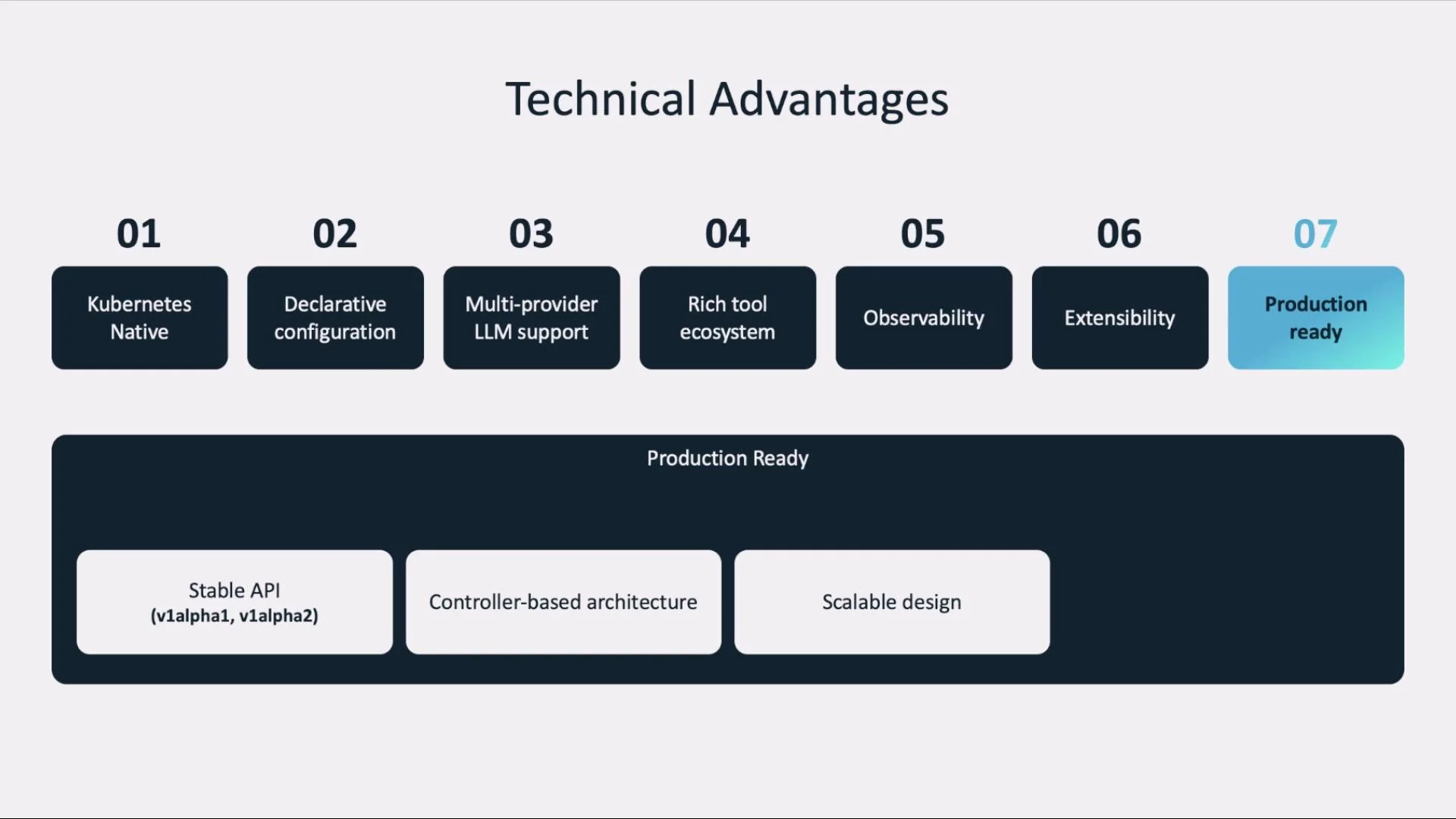
- Stable APIs and CRDs (v1alpha1 and v1alpha2).
- A controller implementation that is Kubernetes-native.
- Built-in observability using OpenTelemetry.
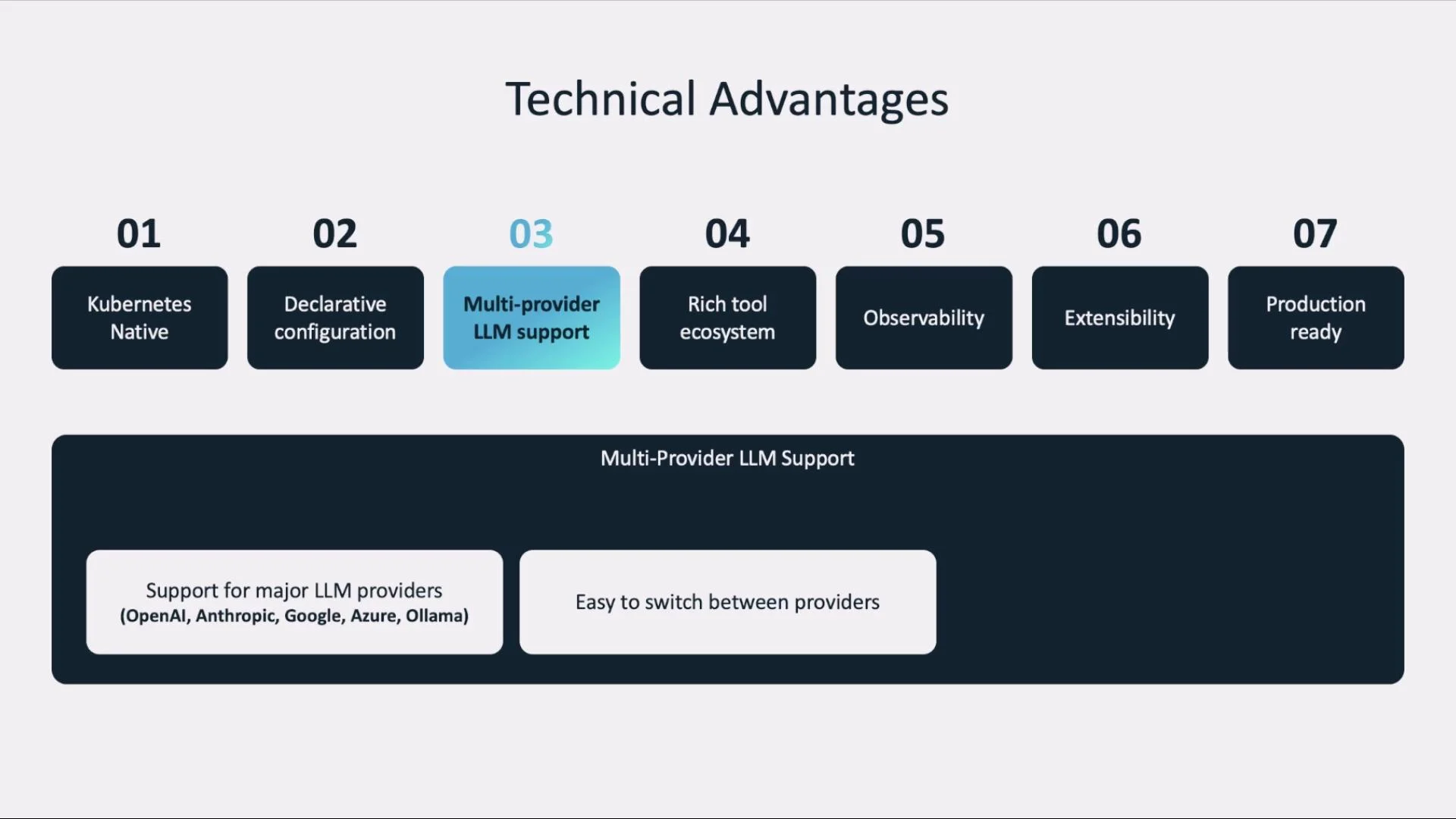
- Multi-LLM provider support and easy provider switching.
- GitHub: 1,665+ stars, 331+ forks.
- Contributors: 100+ developers.
- Active Discord community (800+ members) and regular releases/issues management.
Where KAgent Excels — At a Glance
Technical advantages
- Kubernetes native: KAgent builds on CRDs, controllers, and supports HPA. It integrates with Kubernetes lifecycles and scales with cluster capacity.
- Declarative, IaC-friendly configuration: Agents are YAML/CRD resources suitable for GitOps (
argocd,flux) and version control. - Multi-provider LLM support: Out of the box support for providers such as OpenAI, Anthropic, Google Vertex AI, Azure OpenAI, Ollama, etc. Switching providers is usually a single-line change in an agent resource.
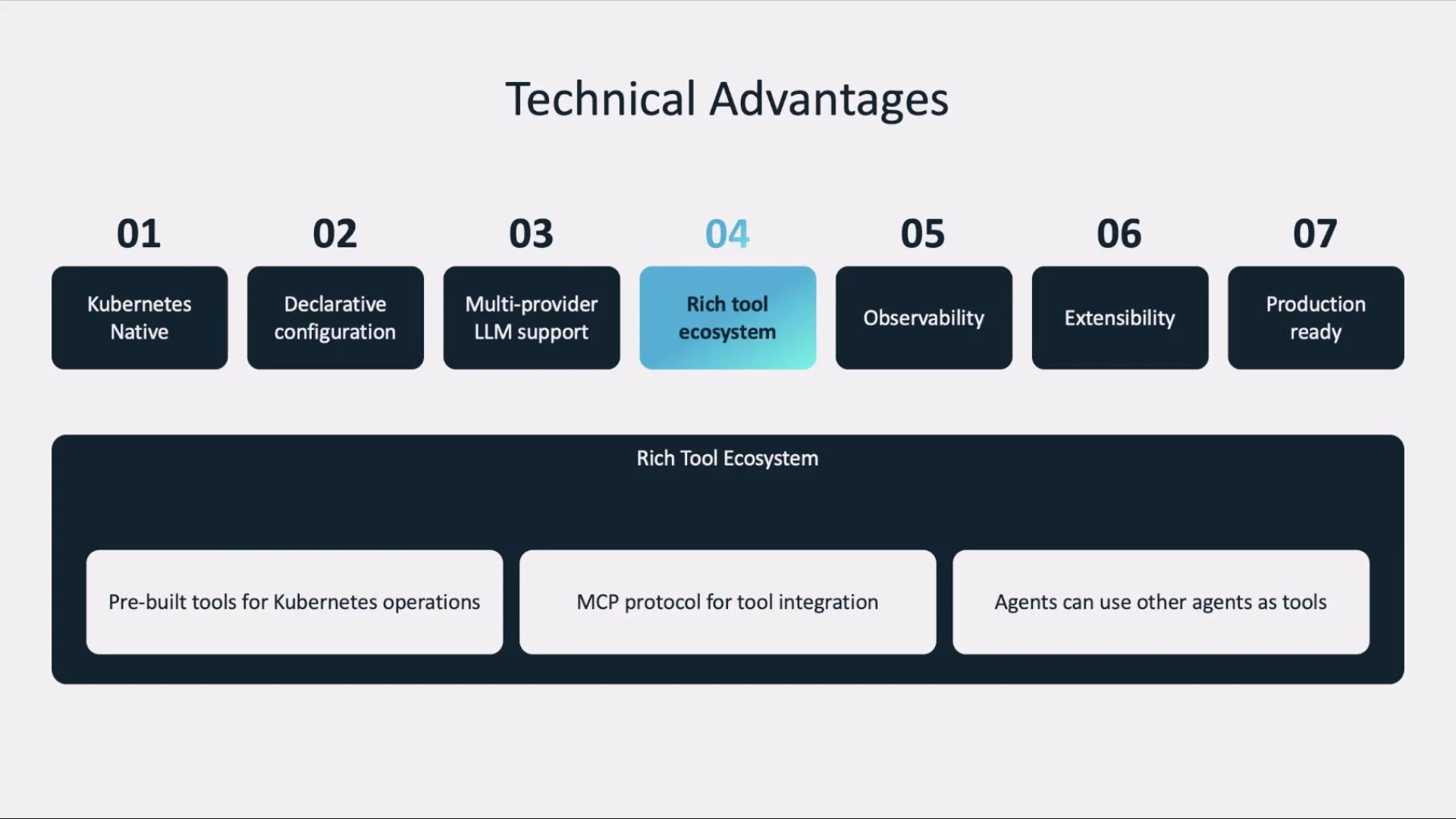
- Rich tool ecosystem: Pre-built tools for Kubernetes operations and a standardized tool protocol enable tool interoperability. Agents can also call other agents as tools.
- Observability: Built-in OpenTelemetry tracing lets you connect KAgent to existing tracing/monitoring stacks to visualize agent operations, diagnose failures, and measure latencies.
- Extensibility: Open source design permits adding/removing tools, custom MCP-protocol tools, and fine-grained model-level configuration.
- Production-ready architecture: Stable APIs and a controller-based design allow you to scale KAgent as long as the cluster provides the required CPU/memory/network resources.
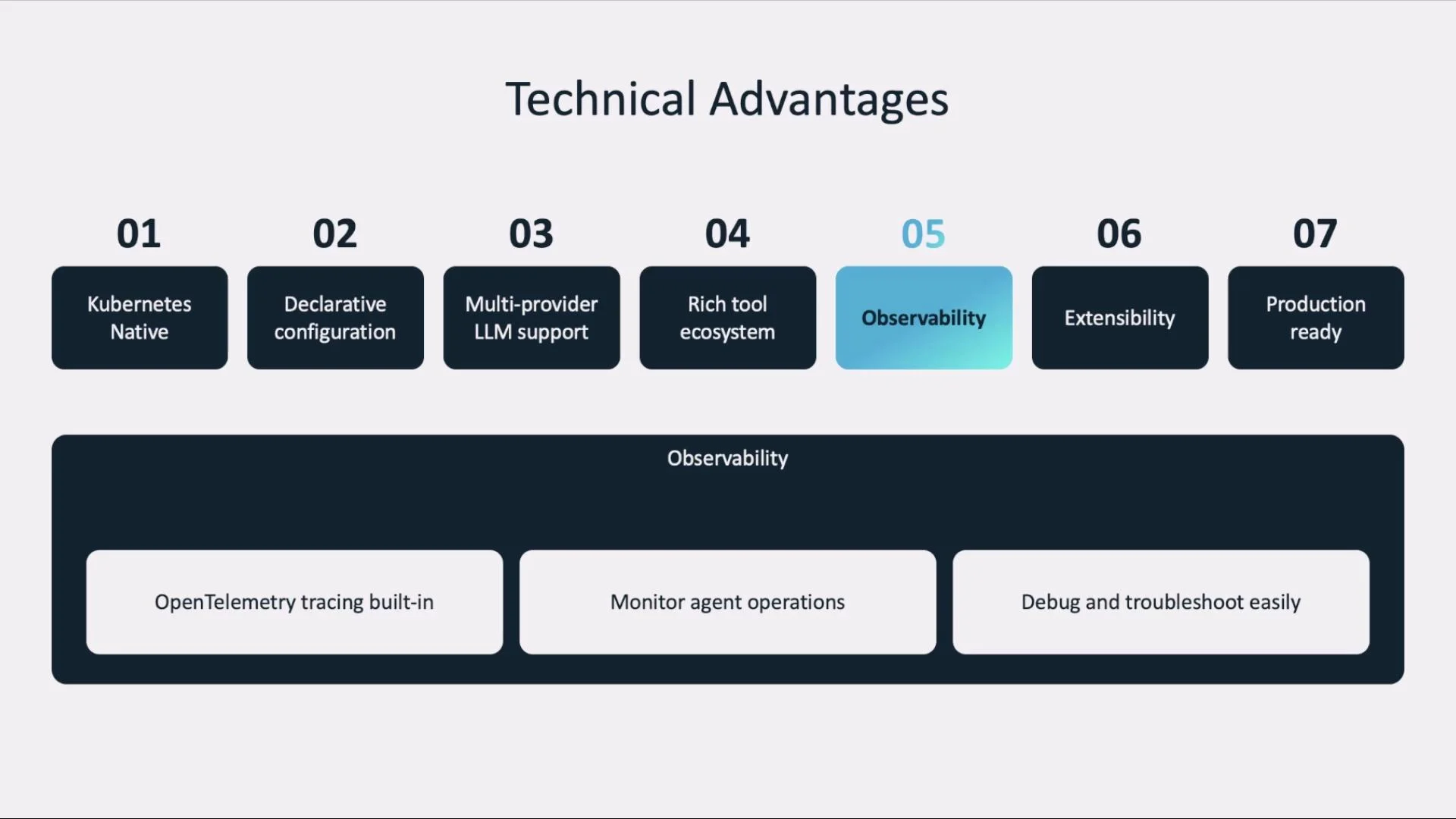
KAgent scales with your cluster. Ensure you provision appropriate CPU, memory, and network resources for agent workloads and LLM calls (e.g., large-context models may increase memory and request rates).
Operational advantages
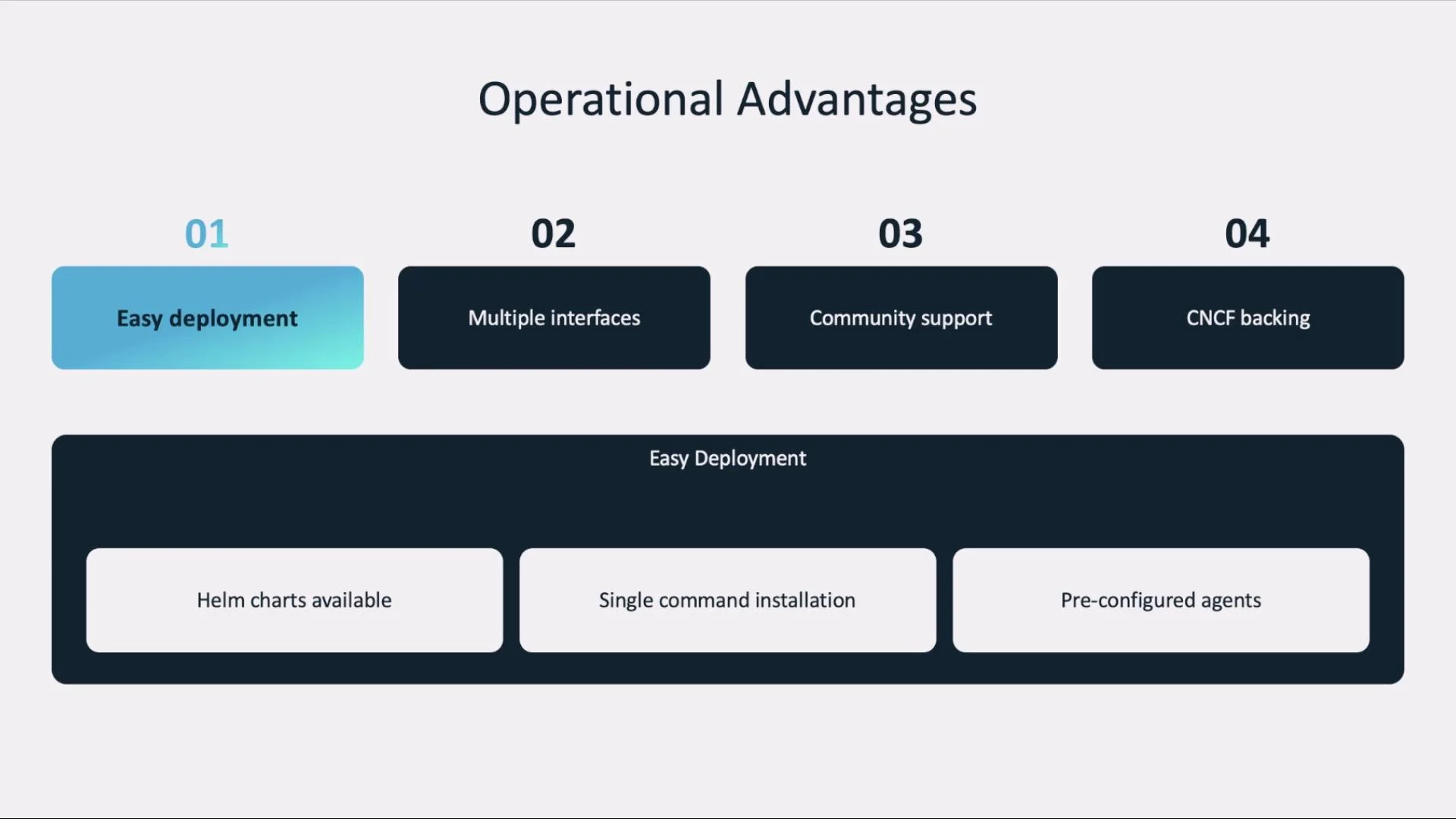
- Easy deployment: Install via Helm charts or the
kagentCLI. The CLI supports single-command installation and includes pre-configured agent examples to get started fast. - Multiple interfaces: Interact through a Web UI, CLI, or programmatic APIs for automation and integration.
- Community & governance: CNCF sandbox status, active documentation, and community channels provide guidance, security recommendations, and operational best practices.
Use-case advantages
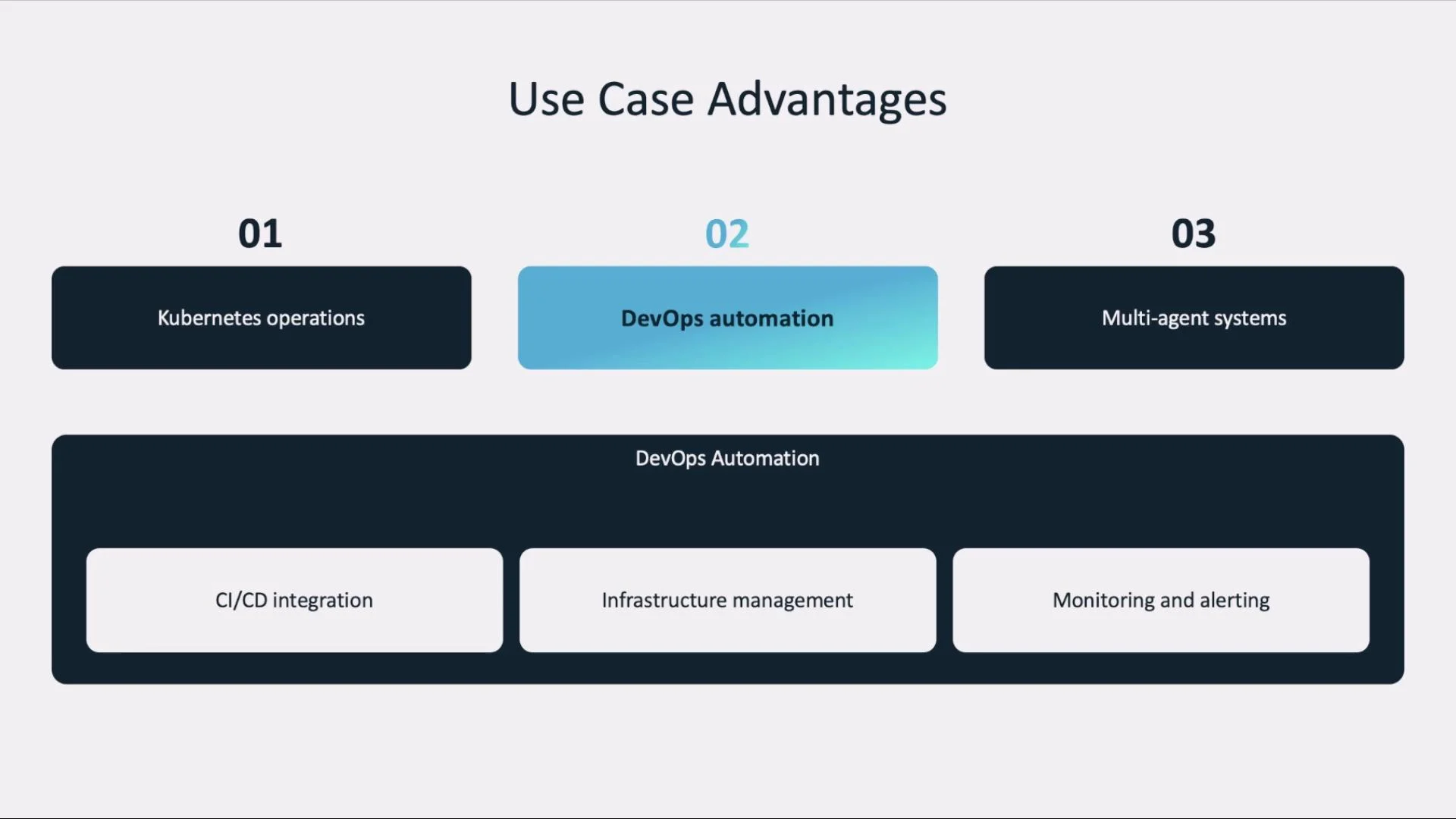
KAgent ships with community-maintained pre-built agents focused on Kubernetes operations. These are practical for:- Debugging and troubleshooting cluster issues.
- Automation for resource management and policy enforcement.
- CI/CD and GitOps integration where agents act on declarative YAML resources.
Quick links and references
- KAgent GitHub: https://github.com/kagent (search the project repository for installation and examples)
- CNCF Sandbox: https://www.cncf.io/sandbox/
- GitOps: https://www.gitops.tech/
- OpenTelemetry: https://opentelemetry.io/
- Major LLM providers: OpenAI, Anthropic, Google Vertex AI, Azure OpenAI, Ollama