

Azure fundamentals: identity, resources, and governance
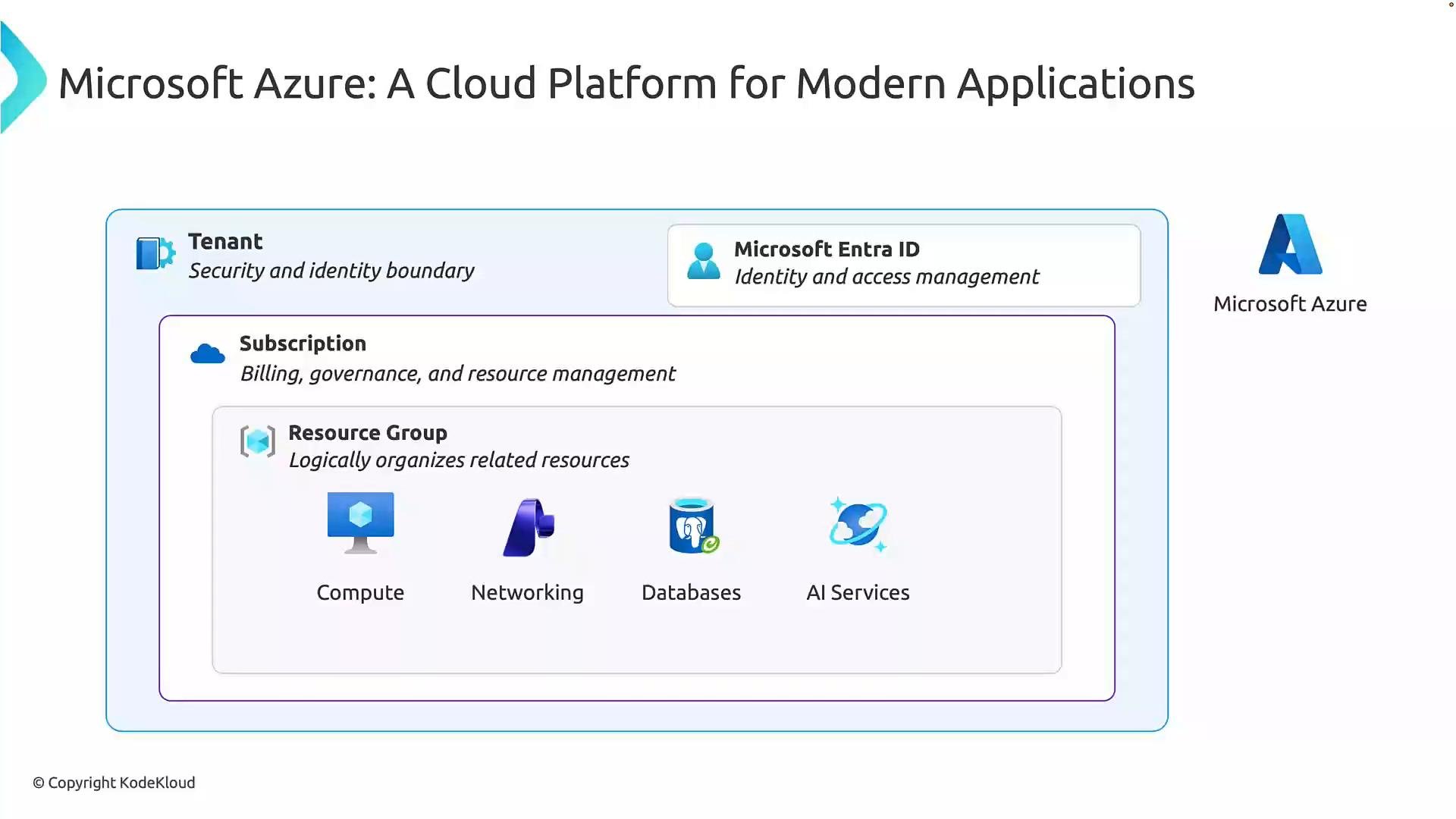
Microsoft Azure is a cloud platform that provides infrastructure and services so organizations can build, deploy, and operate applications without managing the physical data center. A critical piece of that environment is Microsoft Entra ID (identity and access management). Entra ID answers two fundamental questions for Azure:- Who or what is requesting access?
- What is that identity allowed to do?
- Users — individual human identities.
- Groups — collections of users for simplified access control.
- Applications and service identities — identities for apps and automated services.
- Permissions and roles — rules that define allowed actions.
Azure resources are arranged in a hierarchy that affects access, billing, and governance. The typical hierarchy is:
Think of the hierarchy as: tenant → subscription → resource group → individual resources.
Microsoft Foundry — a unified AI platform
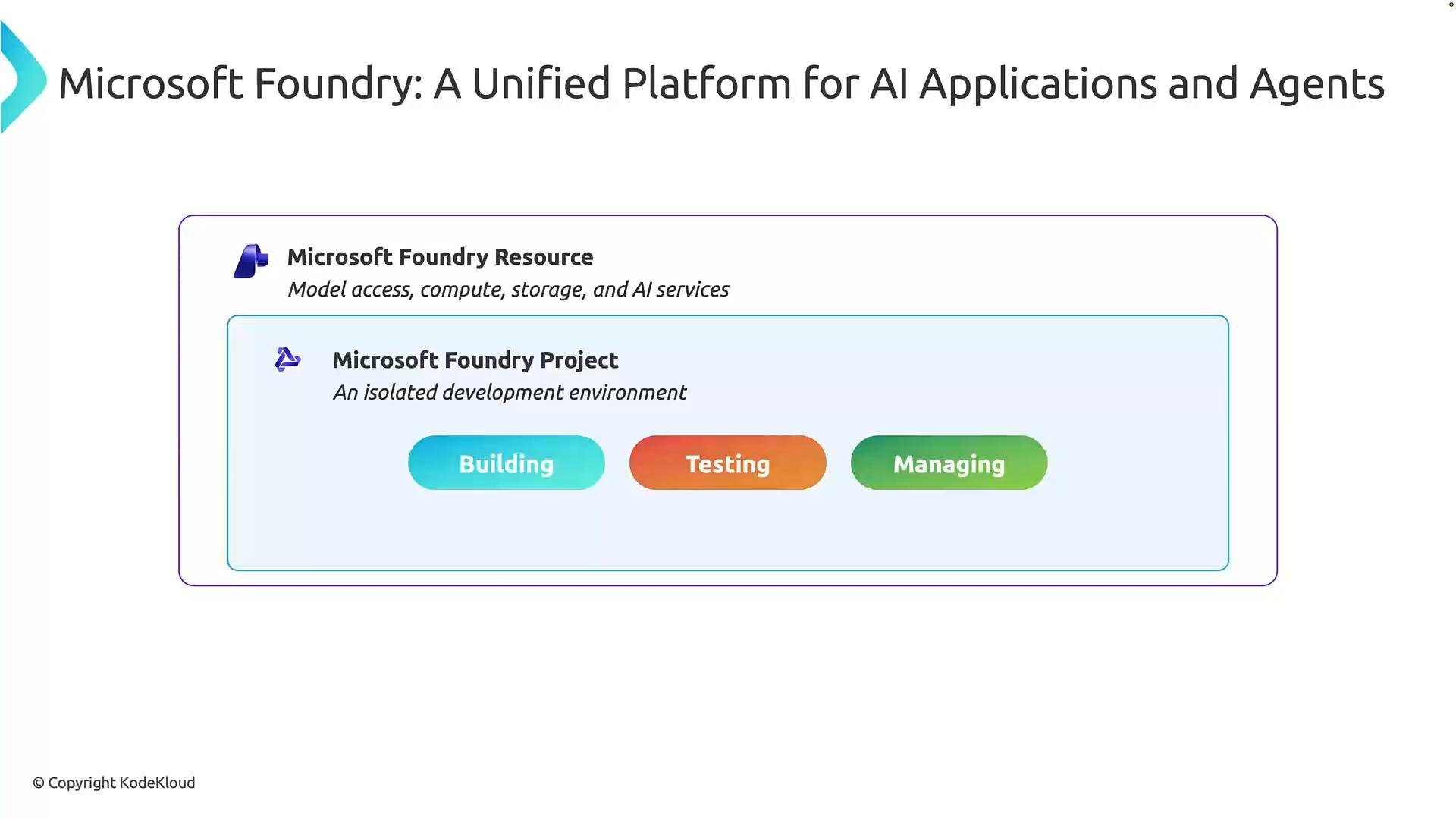
Microsoft Foundry is a unified platform that brings models, compute, storage, and AI services together so developers can build, test, deploy, and manage complete AI applications and agents. Foundry supports the full AI application lifecycle:- Development — configure models, tune behavior, and assemble application components.
- Deployment — publish AI capabilities to users or downstream services.
- Management — monitor, update, scale, and observe applications in production.
Foundry projects and the core building blocks
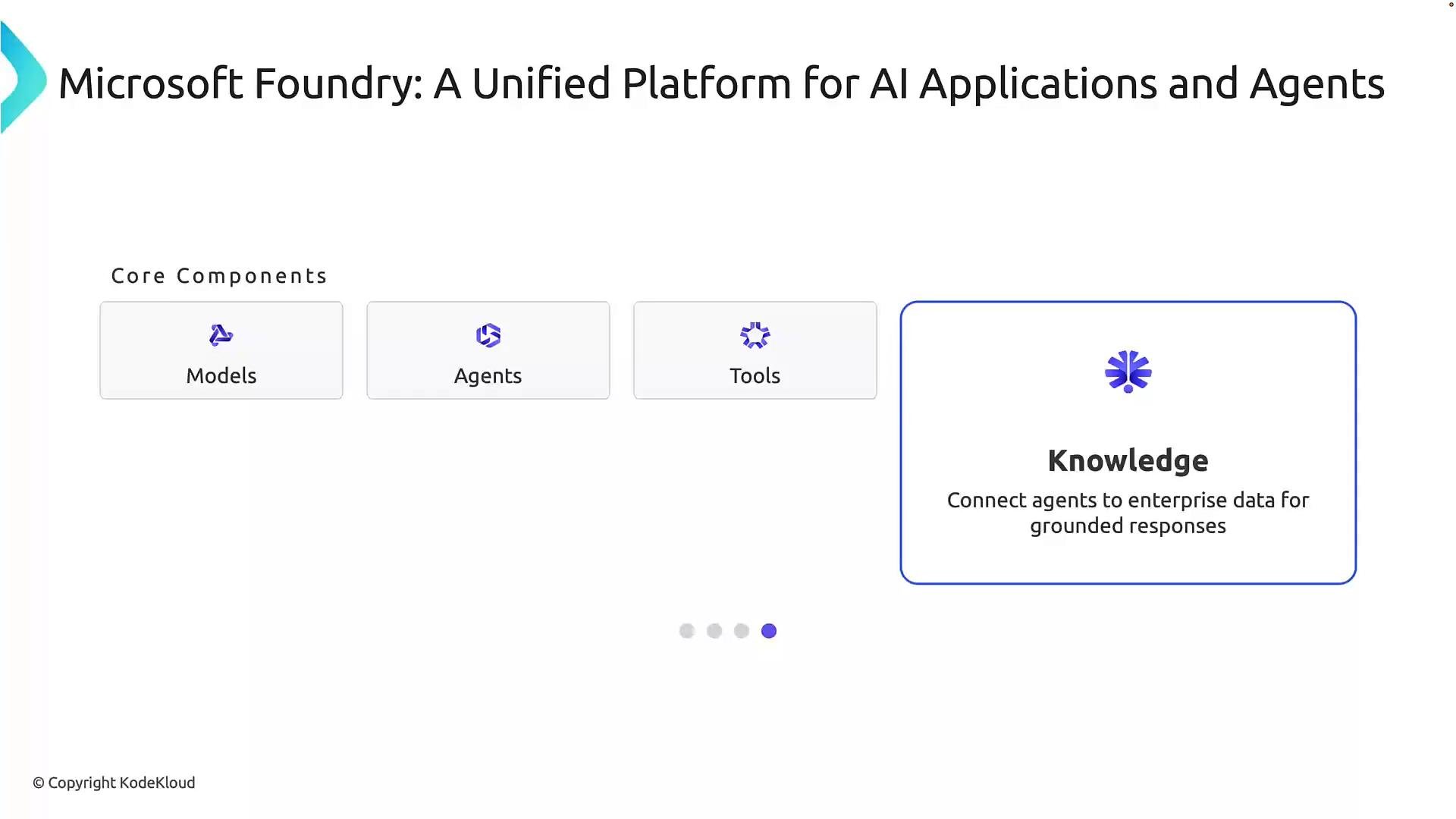
Inside a Foundry resource, you create Microsoft Foundry projects — isolated development environments for building, testing, and managing AI applications and agents. Projects are useful for experimentation and iterative development before broader release. Within a Foundry project, four core components combine to form production AI applications:- Models — the AI systems that process inputs and produce outputs (e.g., language models).
- Agents — orchestrators that use models, tools, and knowledge to accomplish multi-step tasks.
- Tools — connectors that let agents interact with external systems or APIs in a controlled, auditable way.
- Knowledge — domain-specific data (documents, databases, knowledge bases) that grounds model responses in accurate, organization-specific information.
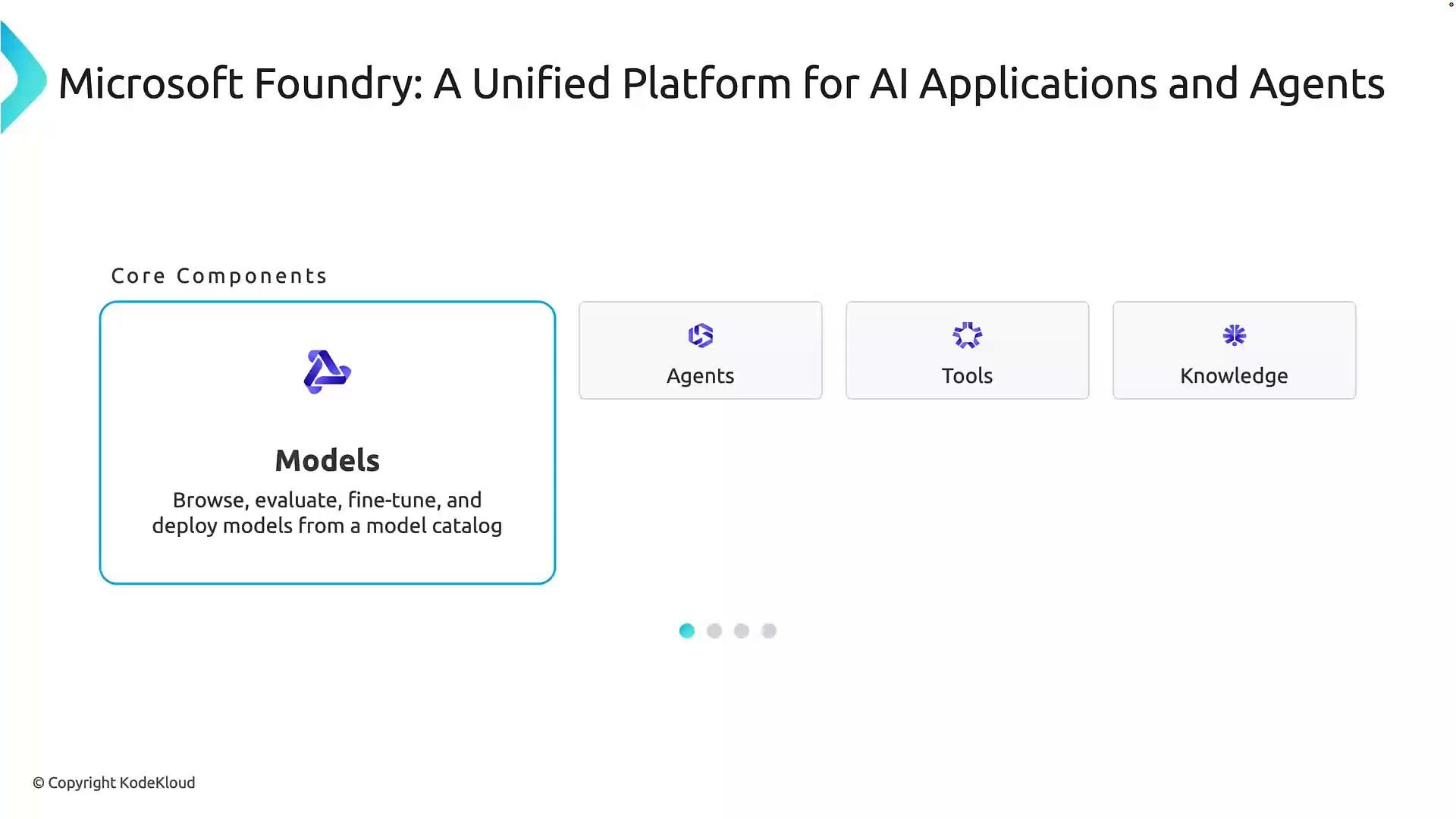
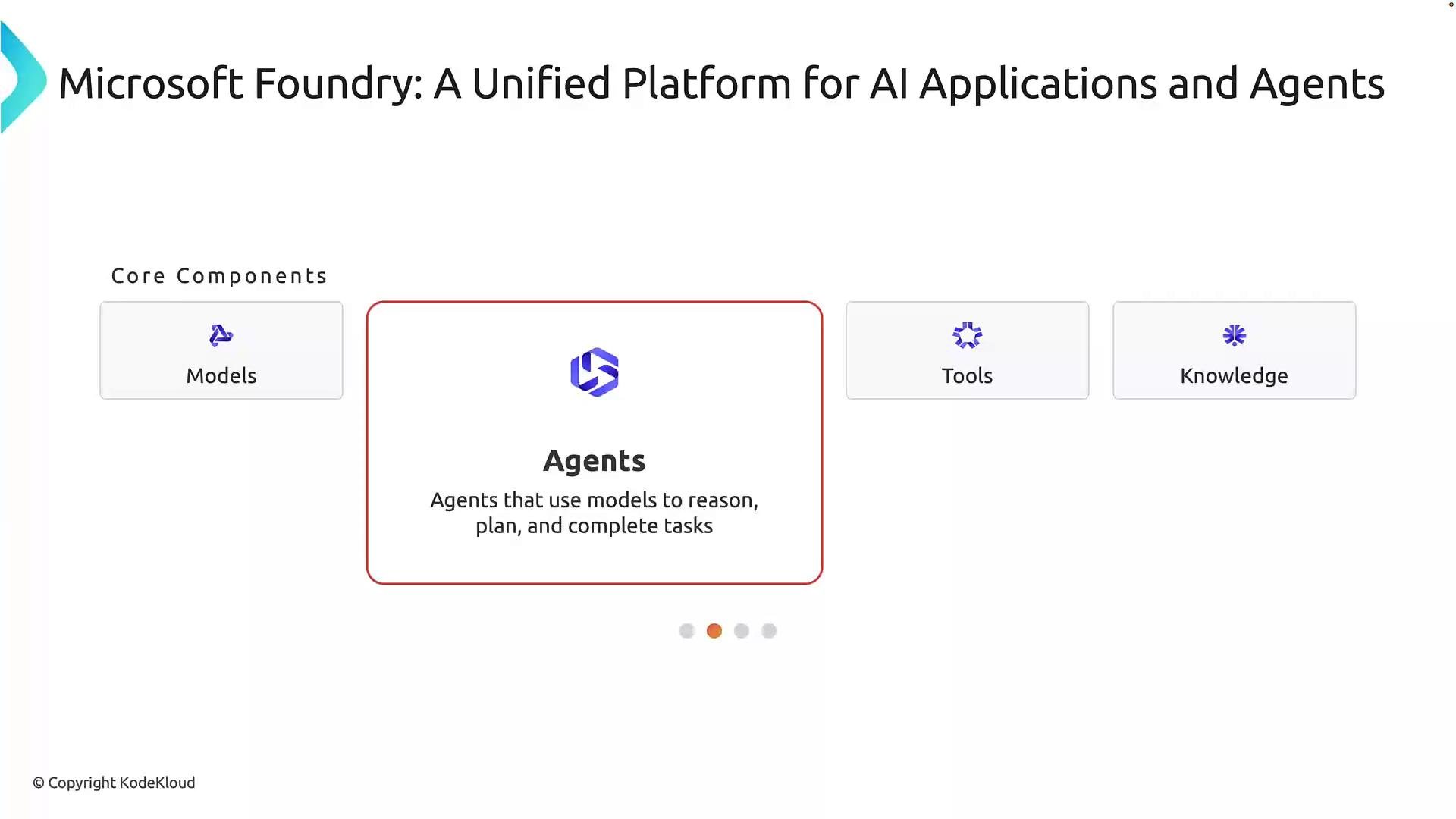
- Model: understands and parses natural language customer requests.
- Agent: decides steps (e.g., check order, verify policy, initiate refund).
- Knowledge: product and refund policies (e.g.,
refund within 7 days). - Tools: fetch order details and call the order management API to issue a refund.
Accessing Foundry models and services: endpoints and SDKs
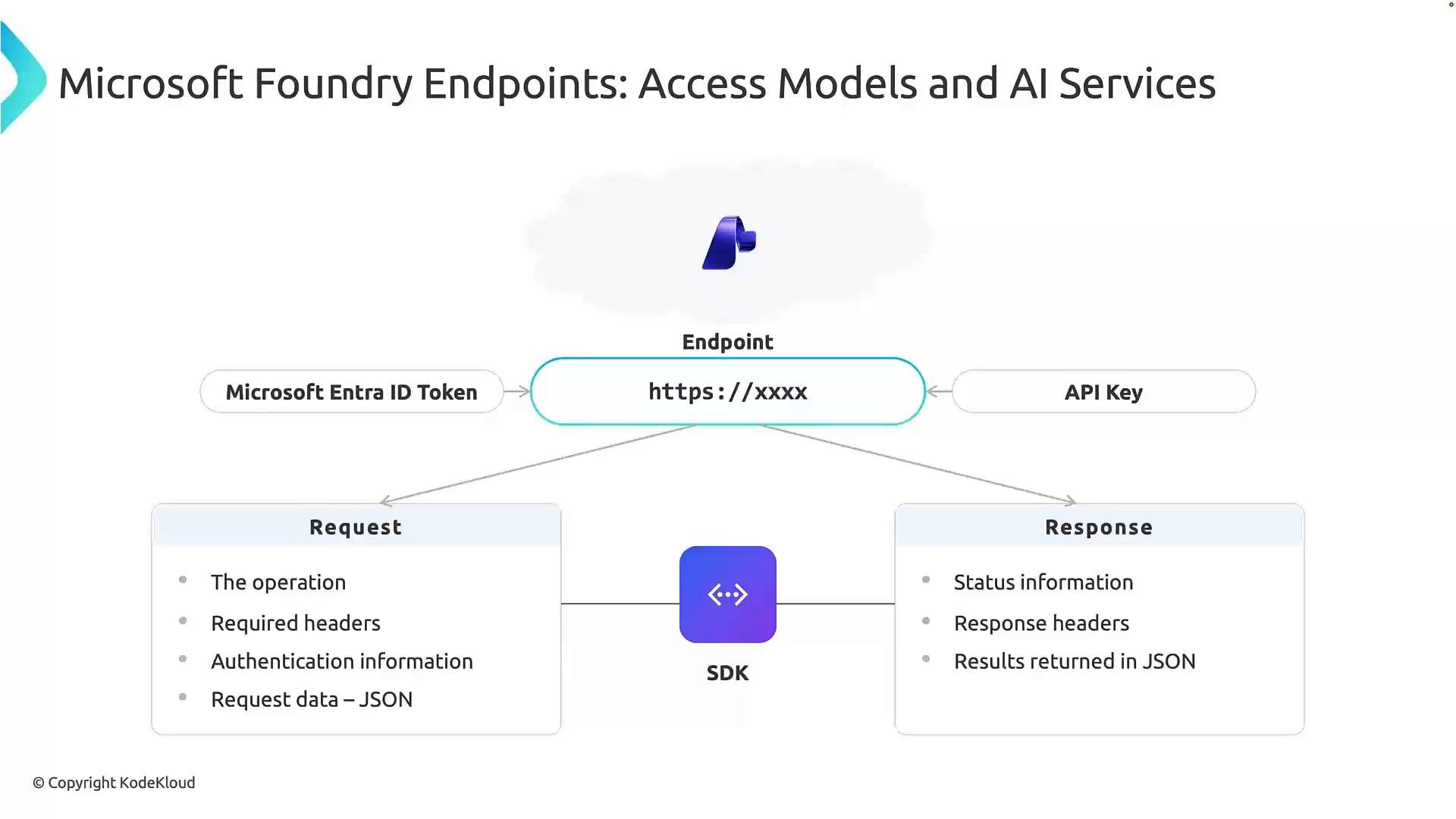
Applications access Foundry models and AI services via secure endpoints — HTTPS URLs that act as the front door to a model or service. To call an endpoint you need:- Where to connect — the endpoint URL (the endpoint).
- How to authenticate — the credential or identity used to prove access.
Protect authentication credentials: store API keys and tokens in secure stores (Key Vault, managed identities, or other secret stores) and avoid embedding them in application code or public repositories.
- Build a request with the operation, required headers (including authentication), and JSON payload as needed.
- Send the request to the endpoint over HTTPS.
- Receive a response with the HTTP status and JSON results.
Next steps: explore in the Azure Portal
Now that you understand tenants, subscriptions, resource groups, Microsoft Entra ID, and the Microsoft Foundry concepts (resources, projects, models, agents, tools, knowledge, endpoints, and SDKs), the next step is to explore these resources in the Azure Portal or the Foundry UI. Inspect a Foundry resource, create a project, and try connecting a sample application to a model endpoint using an SDK and a managed identity. Links and references- Microsoft Entra ID overview: https://learn.microsoft.com/entra/identity
- Azure resource organization: https://learn.microsoft.com/azure/architecture/cloud-adoption/
- Azure Key Vault: https://learn.microsoft.com/azure/key-vault/
- Microsoft Foundry (platform docs) — consult your subscription or tenant documentation for the Foundry UI and API endpoints.