

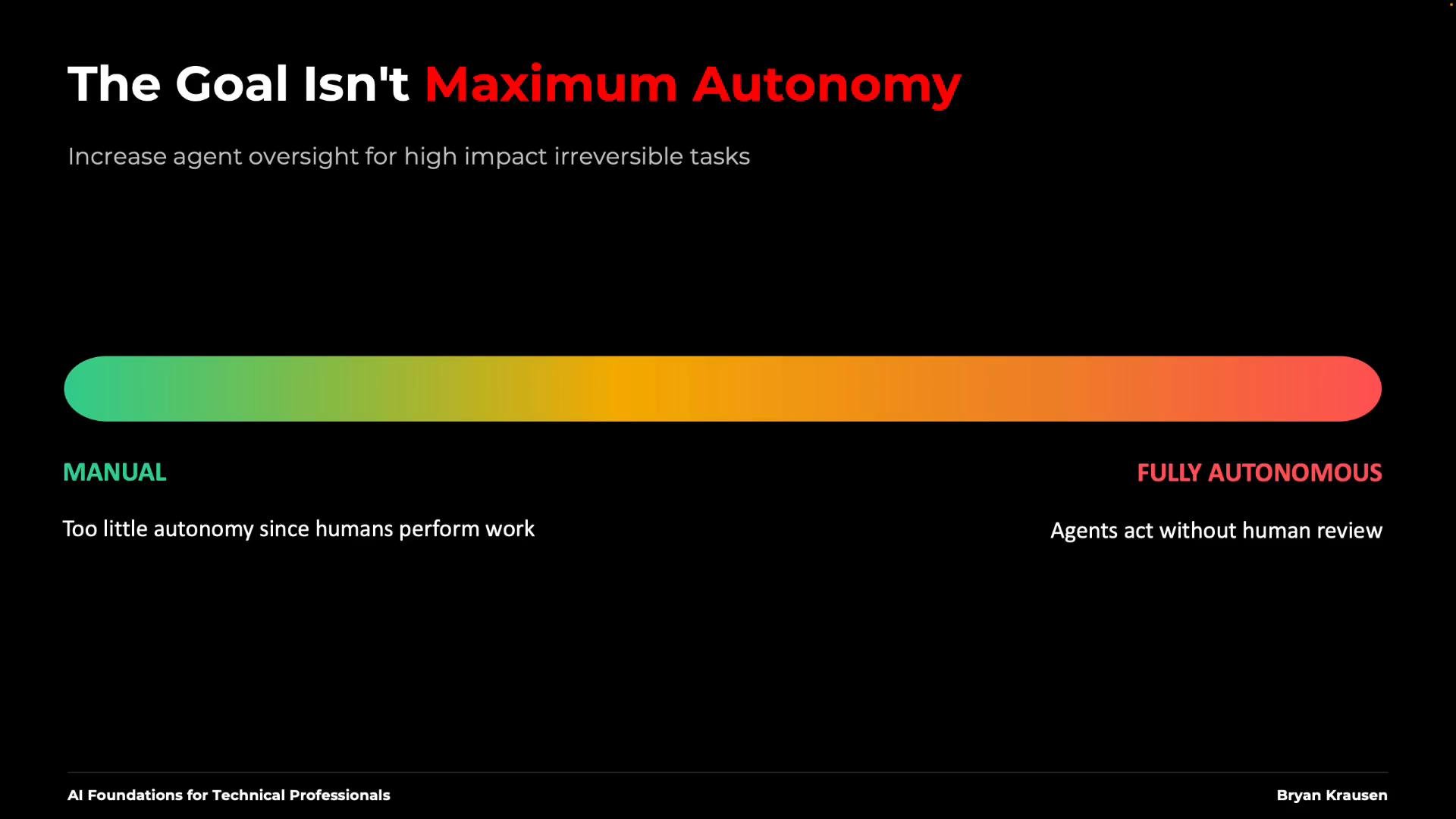
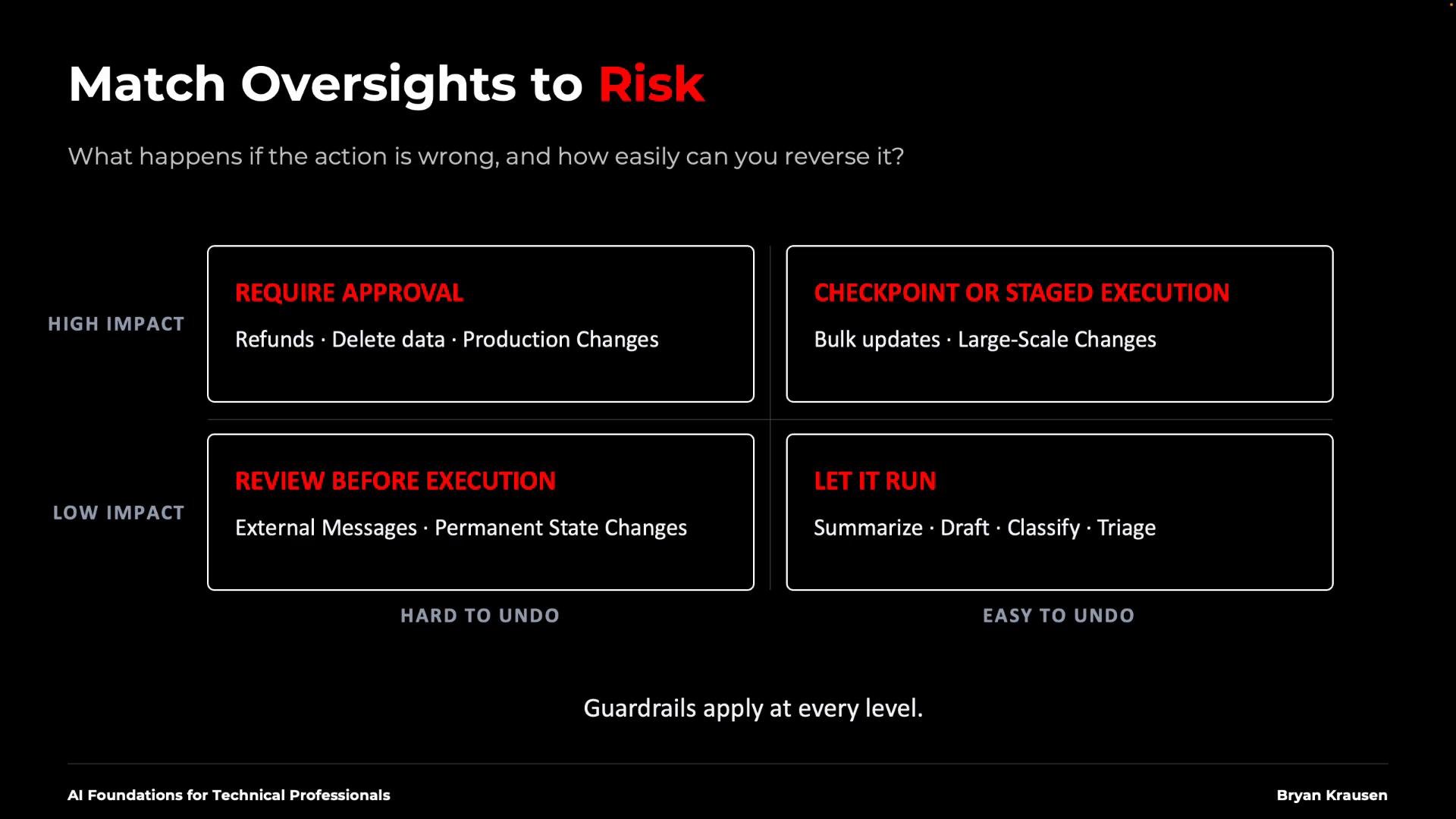
These three patterns and their relationships are illustrated below.
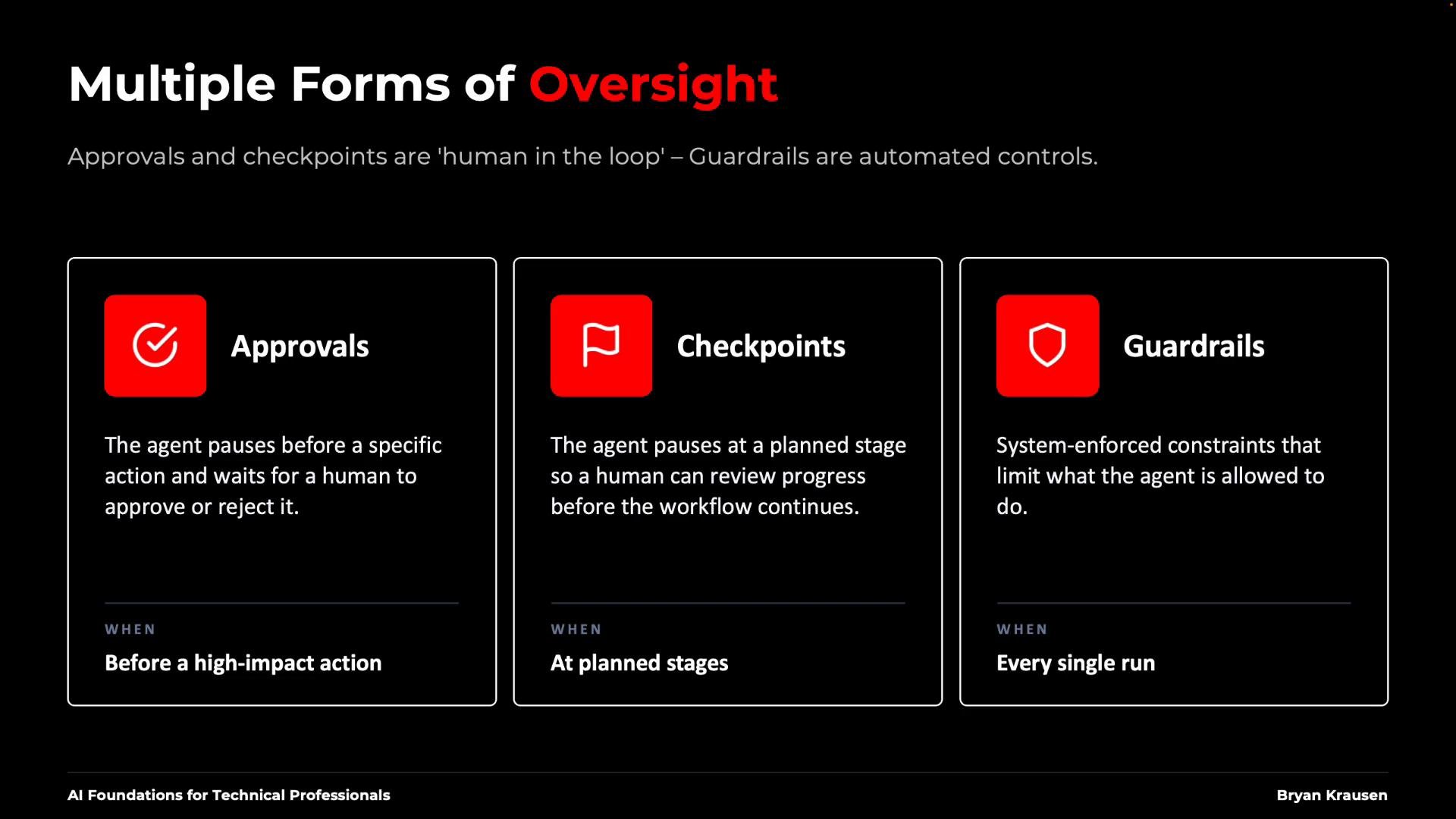
- High-impact, irreversible, or customer-facing actions (refunds, deletion of records, production deployments).
- Any action where legal, financial, or reputational consequences require an auditable, human decision.
- A support agent computes a $200 refund and prepares a transaction. The refund is not executed until a support lead approves. If approved, the workflow continues and logs the decision; if rejected, the agent either stops or proposes an alternative.
- Avoid approval fatigue. Requiring approval for low-risk, frequent tasks leads reviewers to approve automatically. Reserve approvals for genuinely consequential actions.
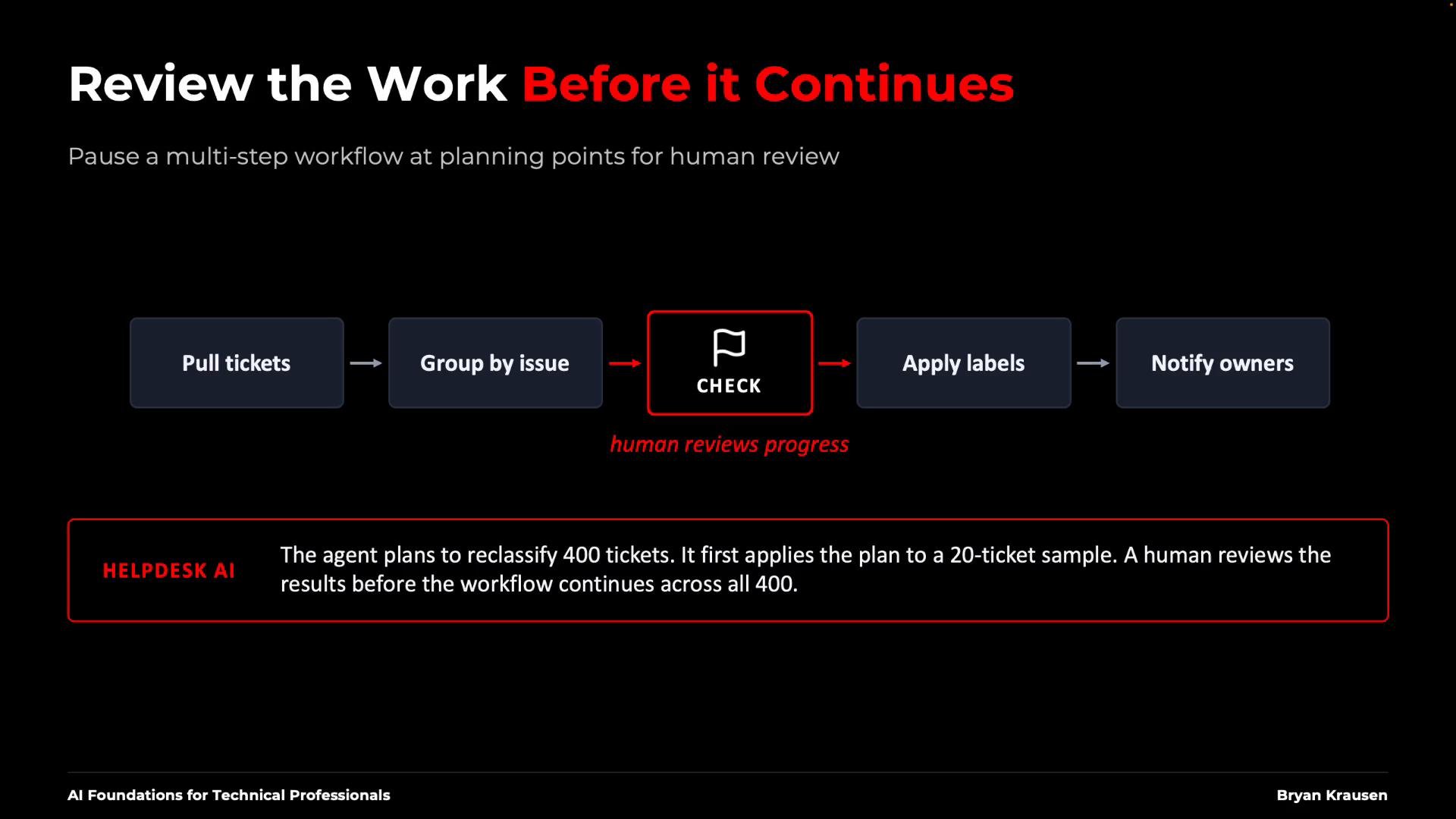
- Bulk changes or staged operations where validating a sample reduces downstream risk.
- Complex multi-step workflows where intermediate validation prevents amplification of errors.
- A helpdesk agent proposes reclassifying 400 tickets. It first processes a sample of 20 tickets and hits a checkpoint for a human review. If the sample is correct, the human approves and the agent applies the reclassification to the remaining tickets.
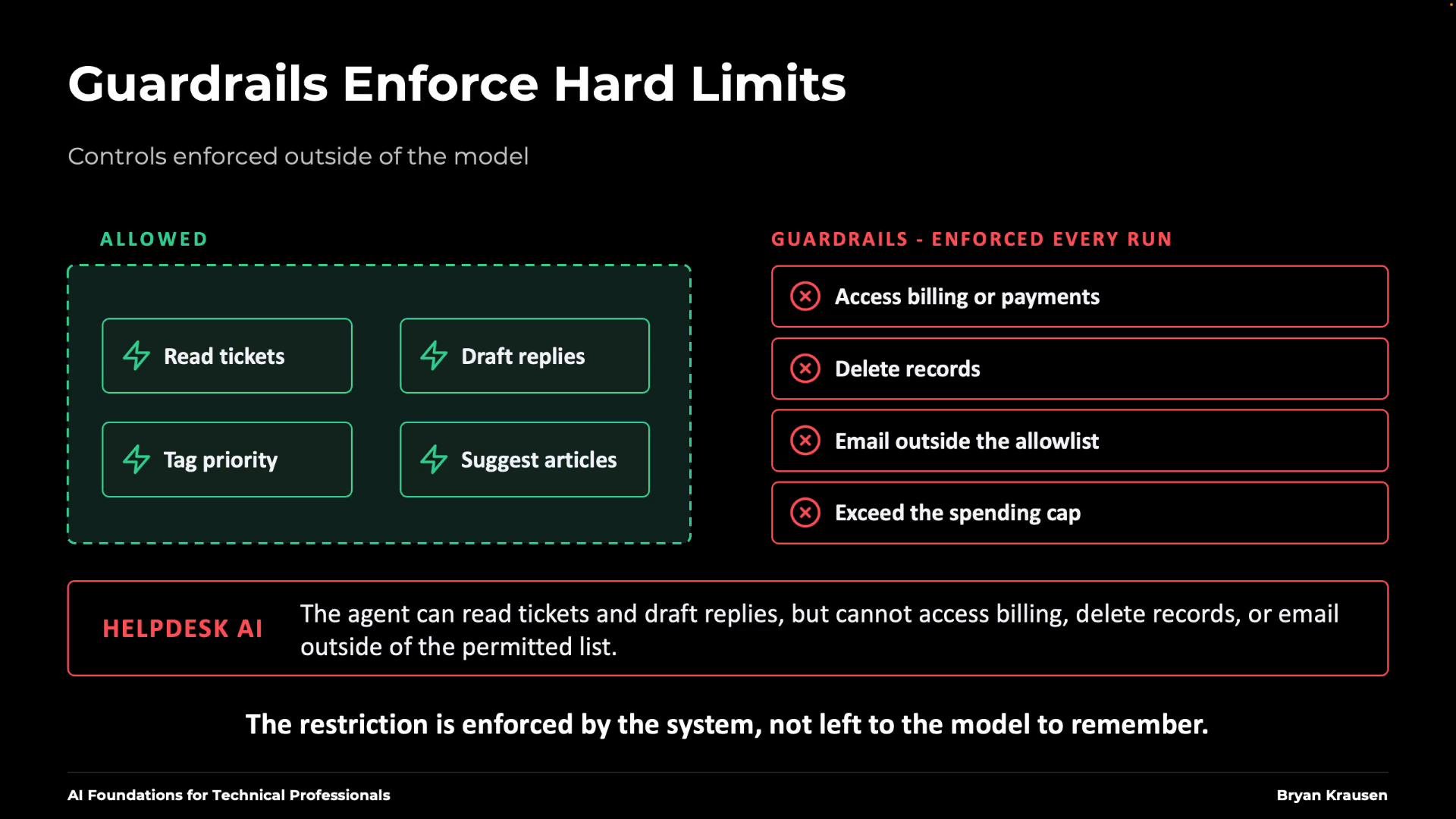
- Not just a prompt instruction—guardrails are technical controls applied to the agent’s identity, tools, or infrastructure.
- Enforced automatically at runtime, independent of the model’s output.
- Allowed: read tickets, draft replies, tag priority, suggest knowledge-base articles.
- Prohibited by guardrail: access billing systems, delete records, send email outside an allowlist, exceed a spending cap.
- Saying “never delete records” in a prompt is guidance. Configuring the agent’s permissions so it cannot call any record-deletion API is a guardrail.
- What happens if this action is wrong? (Impact)
- How easy is it to reverse? (Reversibility)
Always layer guardrails beneath these decisions so technical limits protect against model failure or misuse.
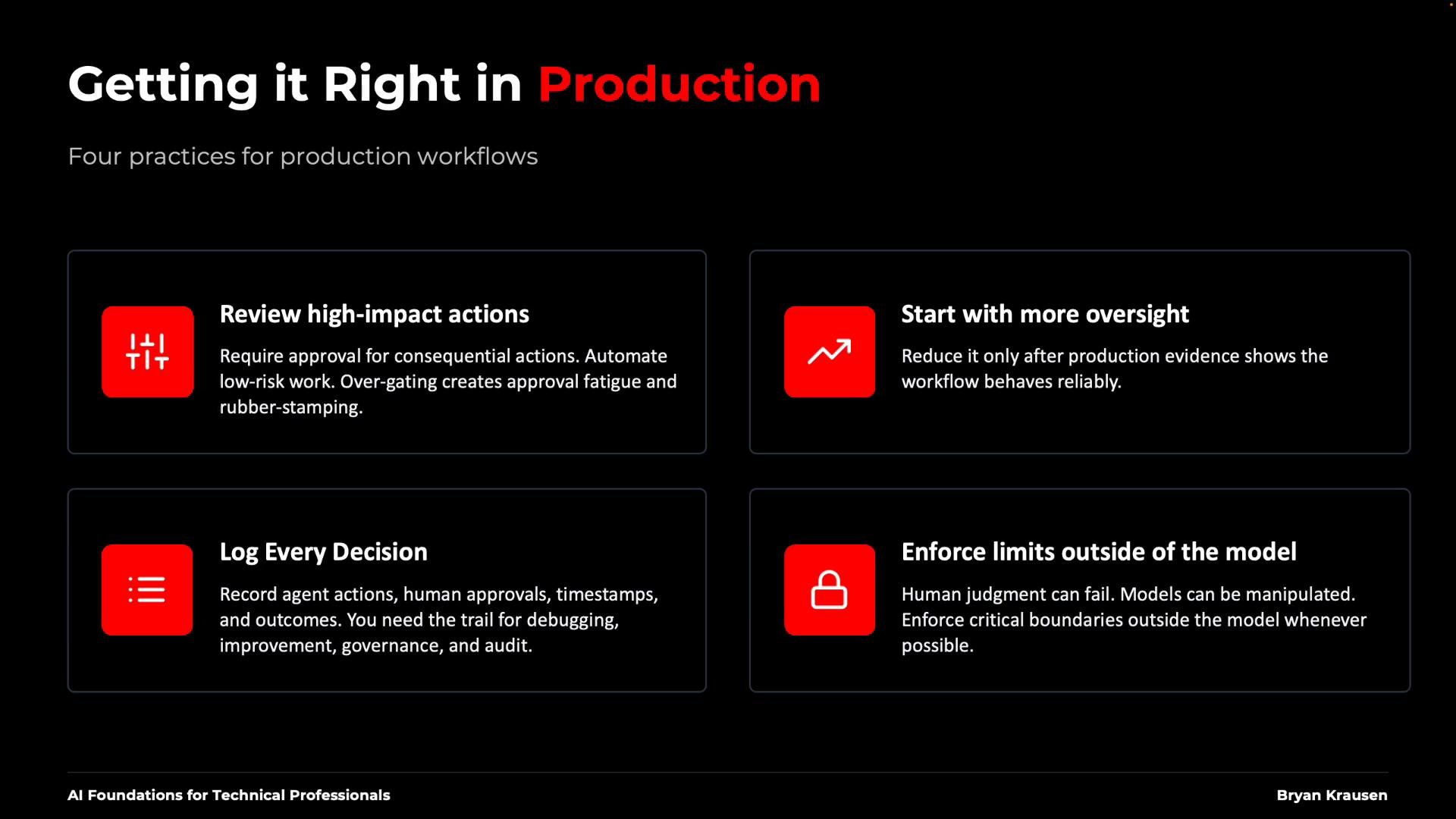
- Focus human review on high-impact actions. Preserve automation for low-risk tasks so agents remain valuable.
- Start with conservative oversight for new workflows. Use production telemetry to measure reliability, then reduce supervision where safe.
- Log every decision: what the agent attempted, what was approved/rejected, timestamps, and final outcomes. These logs are critical for debugging, governance, and audits.
- Enforce critical limits outside the model: permissions, allowlists, spending caps, and infrastructure policy so the system doesn’t rely only on human reviewers or prompt constraints.
- Approvals: use when an explicit human decision is required before executing a consequential action.
- Checkpoints: use when staged review of intermediate results reduces the risk of cascading errors.
- Guardrails: implement as technical, system-level limits that the agent cannot bypass.
Design for risk: apply approvals and checkpoints for actions with higher impact or low reversibility, and always implement system-level guardrails and comprehensive logging to maintain safe, auditable workflows.
- NIST AI Risk Management Framework
- Responsible AI principles and governance patterns
- Guidance on designing human-in-the-loop systems: academic and industry literature on HITL best practices and auditability