

The core problem: N agents × M tools
On one side you have AI assistants or agents — call that count N. On the other side you have the internal systems those agents must interact with (GitHub, Jira, Postgres, Slack, etc.) — call that count M. Without a shared integration standard, engineers build direct, custom connectors for every agent-tool pair. Each connector must implement authentication, map data to/from the tool’s API, and handle retries and errors. Even when two agents integrate with the same service, they often implement that integration independently.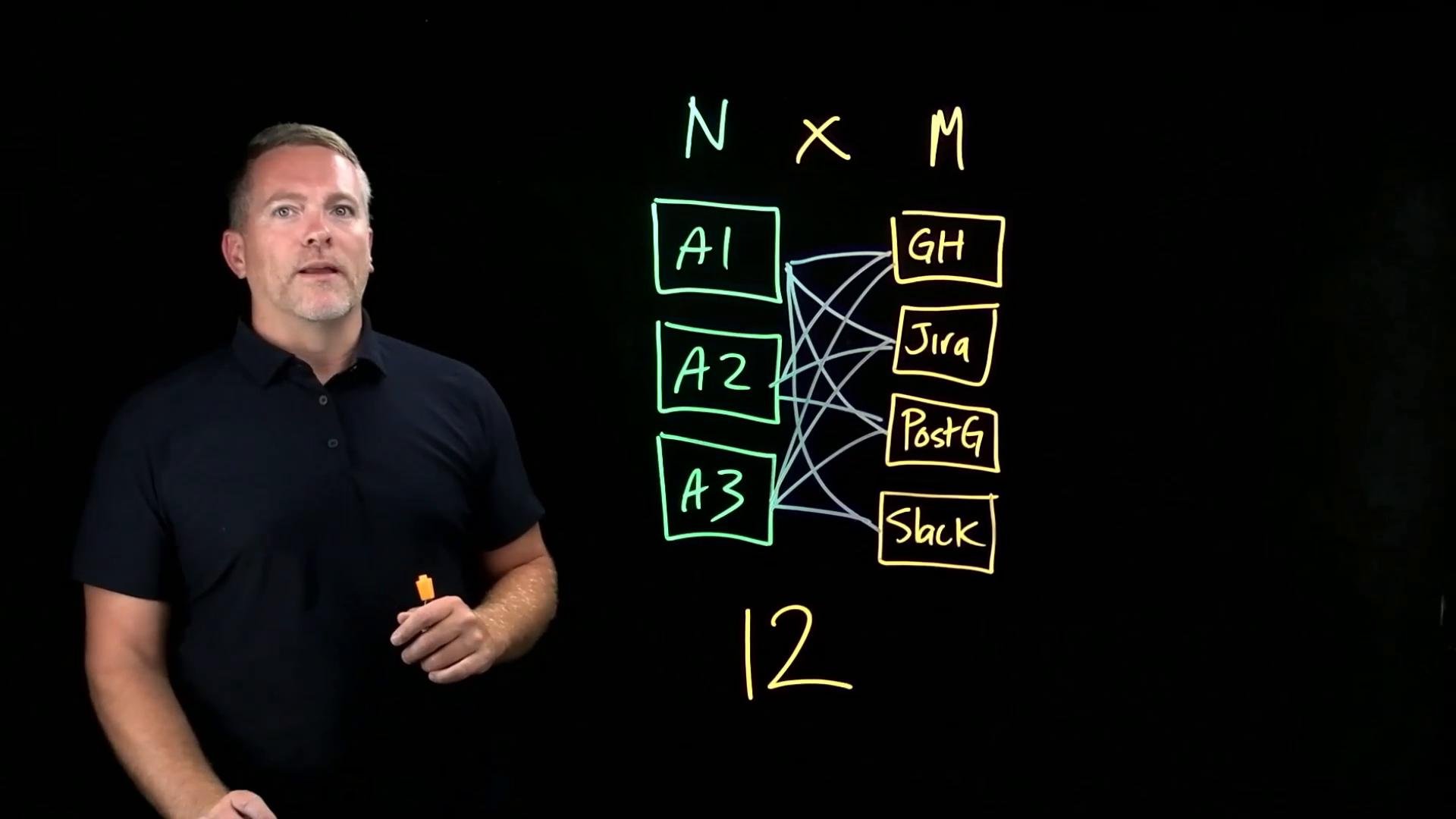
- With 3 agents and 4 tools: 3 × 4 = 12 connectors.
- With 50 agents and 10 tools: 50 × 10 = 500 connectors.
Why this is costly
- Duplication of effort across teams.
- Inconsistent authentication and error semantics.
- Fragmented maintenance: bug fixes and feature changes must be applied across many connectors.
- Slower onboarding for new agents or tools.
The maintainable alternative: a shared standard and adapters
A far more maintainable approach is to introduce a shared integration standard between agents and tools. Each agent implements a client-side adapter for that standard, and each tool implements a server-side adapter. Instead of N × M pairings, you build N client adapters plus M tool adapters — a total of N + M implementations. That dramatically reduces integration surface area and simplifies cross-team coordination.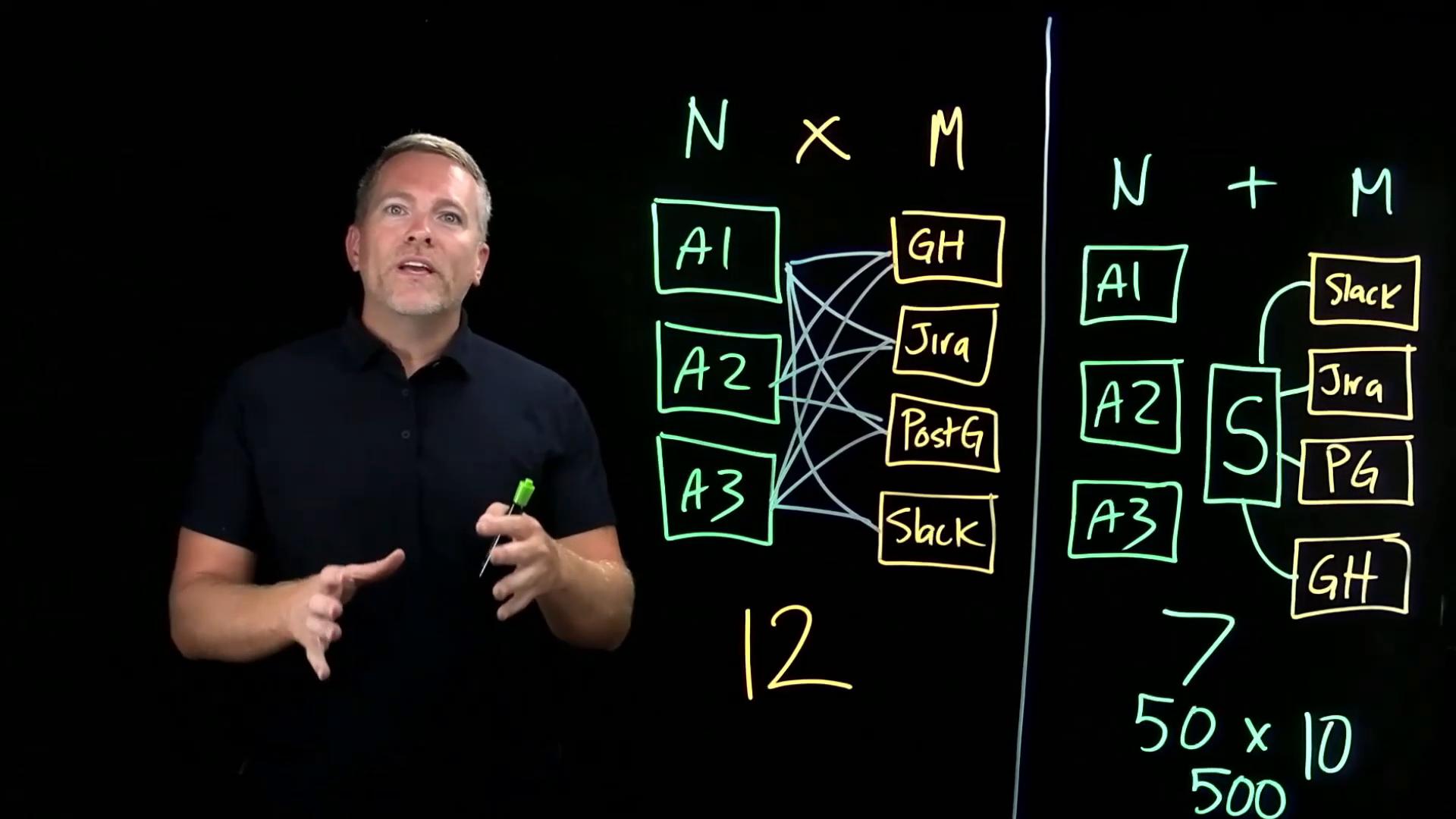
MCP: the shared standard for AI integrations
For AI applications and tools, the shared standard often used is MCP. When hosts, clients, and servers adopt MCP, the architecture becomes modular: defined adapters handle the integration boundaries, and the standard ensures consistent behavior across the ecosystem.Using a shared standard like MCP converts the integration problem from O(N×M) work to O(N+M). That reduces long-term maintenance, accelerates onboarding, and makes security and observability consistent across integrations.
- Authentication and authorization flows for the specific tool or agent.
- Data serialization and mapping between the standard’s contract and the tool’s API.
- Error semantics, retries, and observability (logging/metrics/tracing).
- Security controls and permission checks at the integration boundary.
Without a standard, teams accumulate technical debt: duplicated connectors, inconsistent behavior, and an exploding maintenance burden. Introducing a well-defined adapter pattern early avoids costly refactors later.
Links and references
- USB-C (standardization analogy)
- Learn more about MCP and adapter design patterns in your platform documentation.