

- Traffic splitting — send a controlled percentage of requests to the Gateway while the remainder continues to the Ingress.
- Mirroring (traffic shadowing) — duplicate live requests to the Gateway so you can test behavior without impacting users.
- A/B testing — route subsets of users to the Gateway to validate new behavior or features.
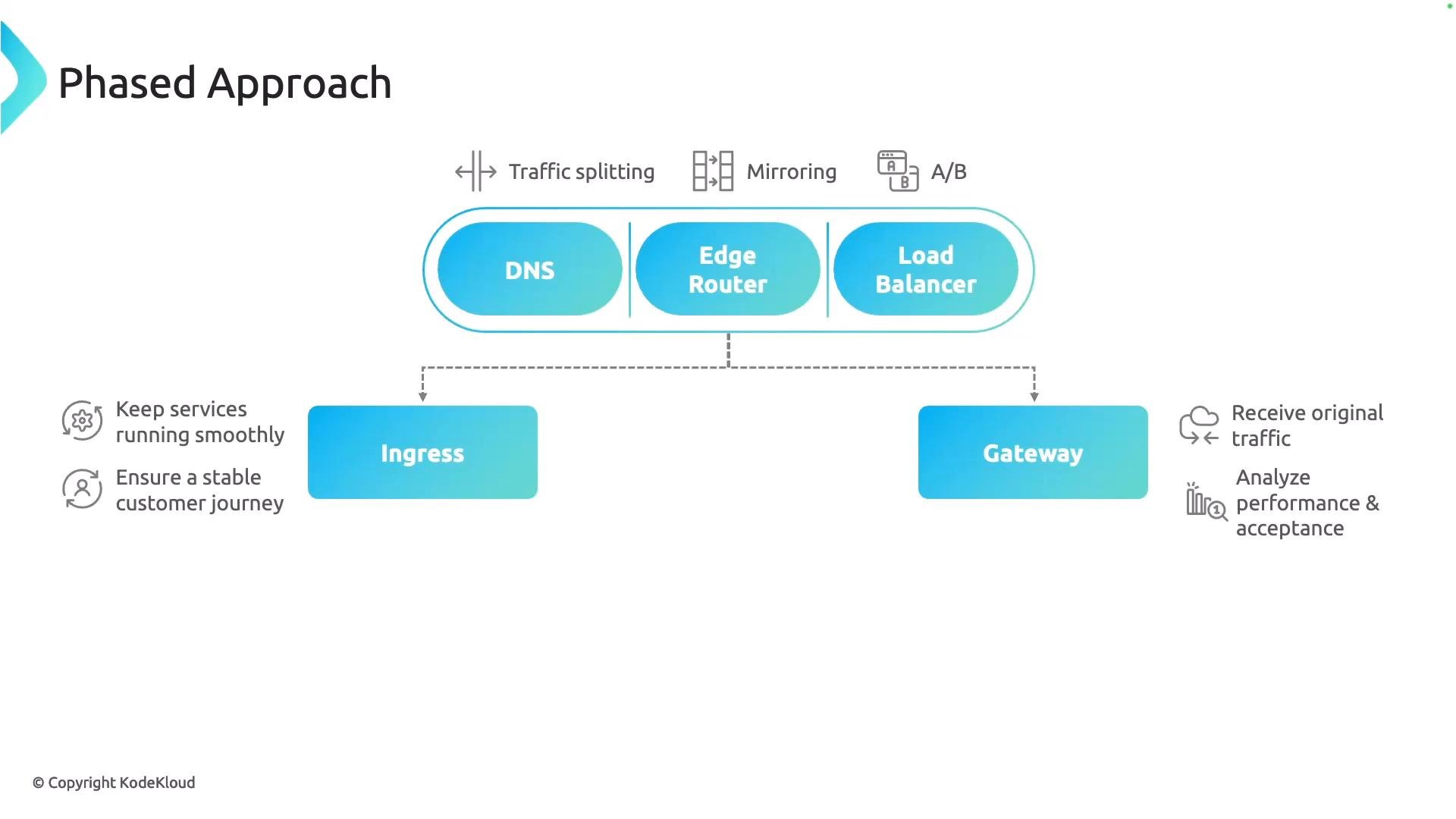
- Lower the DNS TTL well in advance so caches refresh quickly once you update records.
- When ready, update DNS records to point to the new infrastructure (load balancer or edge router).
- Continuously monitor DNS resolution and reachability after the change to detect propagation or routing issues.
- Have automated rollback steps and runbooks ready so you can revert quickly if you detect misrouting or failures.
Lowering TTL shortens cache lifetimes, but some public resolvers and client caches may still ignore short TTLs. Schedule a maintenance window, monitor closely, and keep rollback steps ready.
- Instrument both old (Ingress) and new (Gateway) paths with metrics, logs, and traces so you can compare behavior.
- Monitor DNS resolution times, edge/router reachability, request success rates, latency percentiles, and resource utilization on gateway pods.
- Automate alerts for spikes in error rates, increased latency, or unexpected traffic routing.
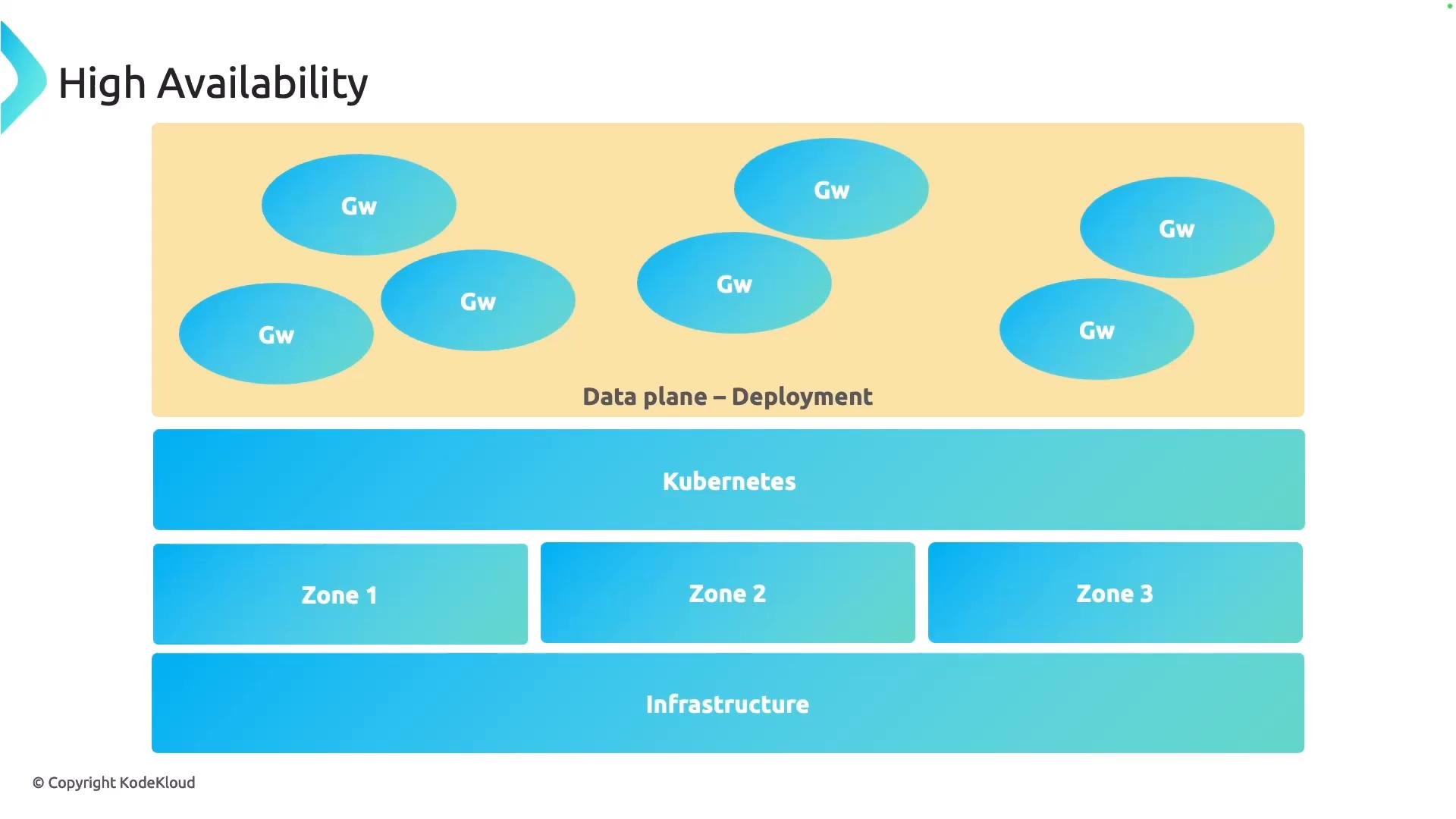
- Scale the Gateway data plane (replicas, HPA) to handle peaks.
- Use PodDisruptionBudgets to ensure a minimum number of gateway pods remain available during upgrades and node drains.
- Distribute gateway pods across topology domains (zones/regions) with
topologySpreadConstraintsand node affinity/anti-affinity to avoid single‑zone failures. - Tune readiness and liveness probes so pods only receive traffic when healthy.
- Select the appropriate Service type and configure your external load balancer for cross‑zone load balancing.
- Start small and iterate: validate with traffic splitting and mirroring before a full cutover.
- Automate checks and provide clear runbooks for cutover and rollback steps.
- Monitor end‑to‑end latency, error rates, and resource utilization for both Ingress and Gateway paths.
- Validate configuration parity: probes, timeouts, retry policies, and connection limits should match production behavior.
- Use canary releases and gradual ramp‑ups for traffic percentages to reduce risk.
When mirroring traffic, avoid duplicate state‑changing operations (for example, payments). Mirror requests should be read‑only or clearly guarded to prevent side effects.
- Gateway API documentation: https://gateway-api.sigs.k8s.io/
- Kubernetes concepts: https://kubernetes.io/docs/concepts/overview/what-is-kubernetes/
- DNS and TTL best practices: https://developers.google.com/speed/public-dns/docs/using
- dig(1) and curl(1) manual pages for troubleshooting