

Why CSI Matters
CSI was designed to support a wide array of storage solutions without being bound to Kubernetes-specific implementations. By leveraging CSI, developers can create custom drivers for diverse storage systems, thereby promoting flexibility and innovation. Major storage vendors, including Portworx, Amazon EBS, Azure Disk, Dell EMC, Isilon, PowerMax, Unity, XtremIO, NetApp, Nutanix, HPE, Hitachi, and Pure Storage, have adopted this standard. The vendor-agnostic nature of CSI ensures that any compliant container orchestration tool can interface seamlessly with any CSI-supported storage system. The diagram below encapsulates the CSI architecture, detailing logos, Remote Procedure Call (RPC) workflows, and guidelines for managing volumes in containerized environments: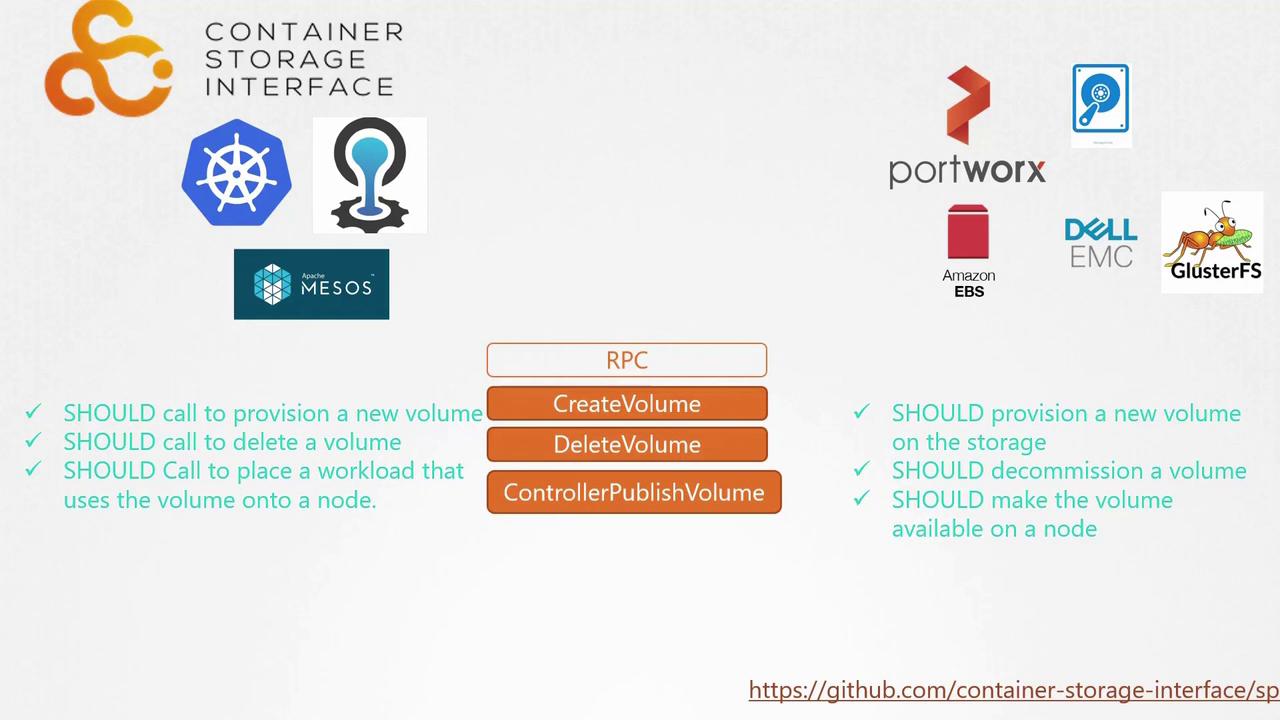
How CSI Works
At its essence, CSI defines a series of RPCs used by container orchestrators to interact with storage drivers. Here’s an overview of the typical interactions:- Volume Creation: When a pod is deployed and requires a storage volume, Kubernetes initiates a “Create Volume” RPC call, providing details such as the volume name and configuration parameters. The corresponding storage driver then provisions a new volume on the storage array and returns the operation status.
- Volume Deletion: Conversely, when a volume is no longer needed, Kubernetes makes a “Delete Volume” RPC call. The storage driver processes the decommissioning of that specific volume and communicates the result back to Kubernetes.
For an in-depth look at the CSI specifications, visit the full CSI specification on GitHub.