Bridging Network Devices
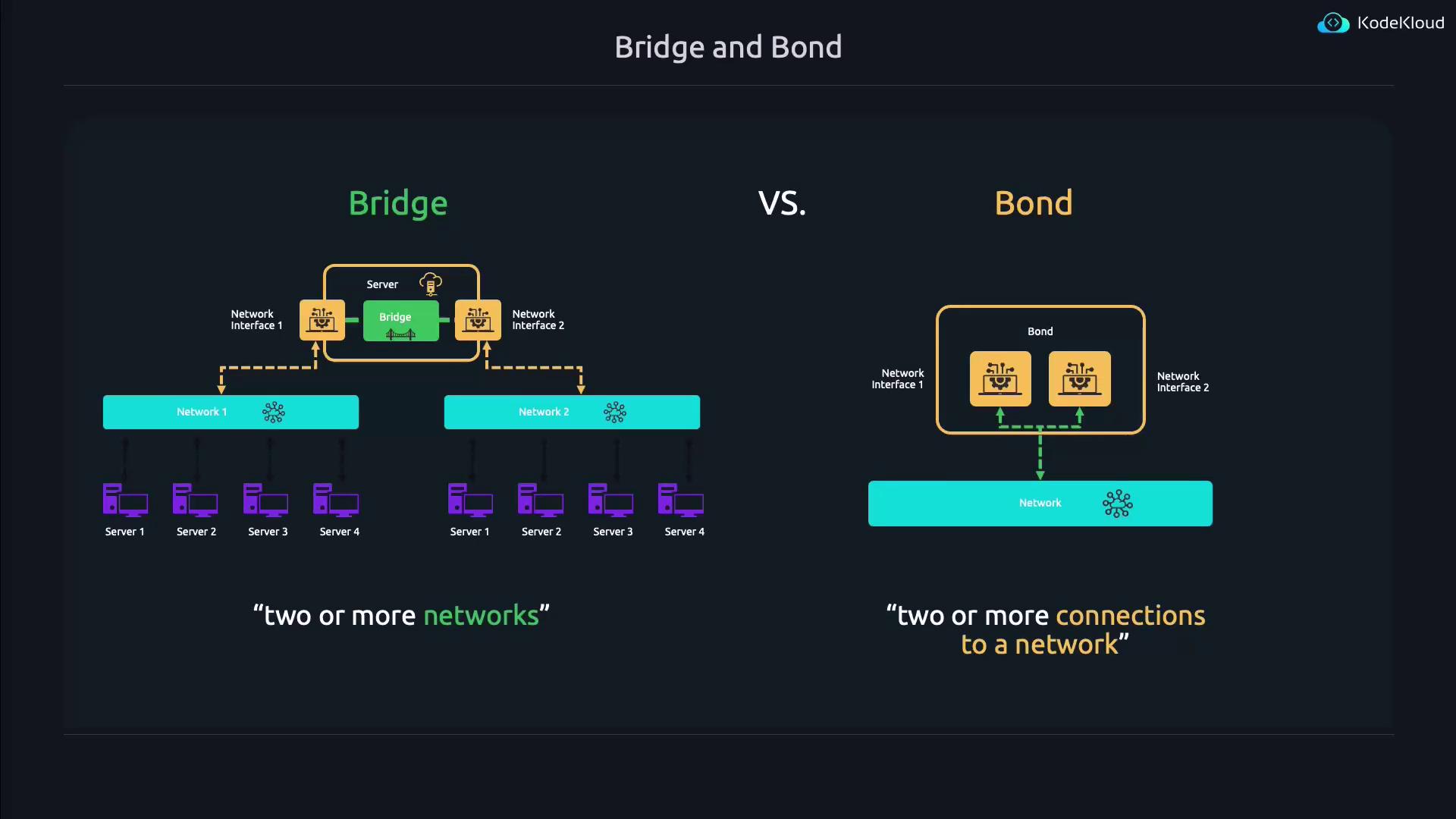
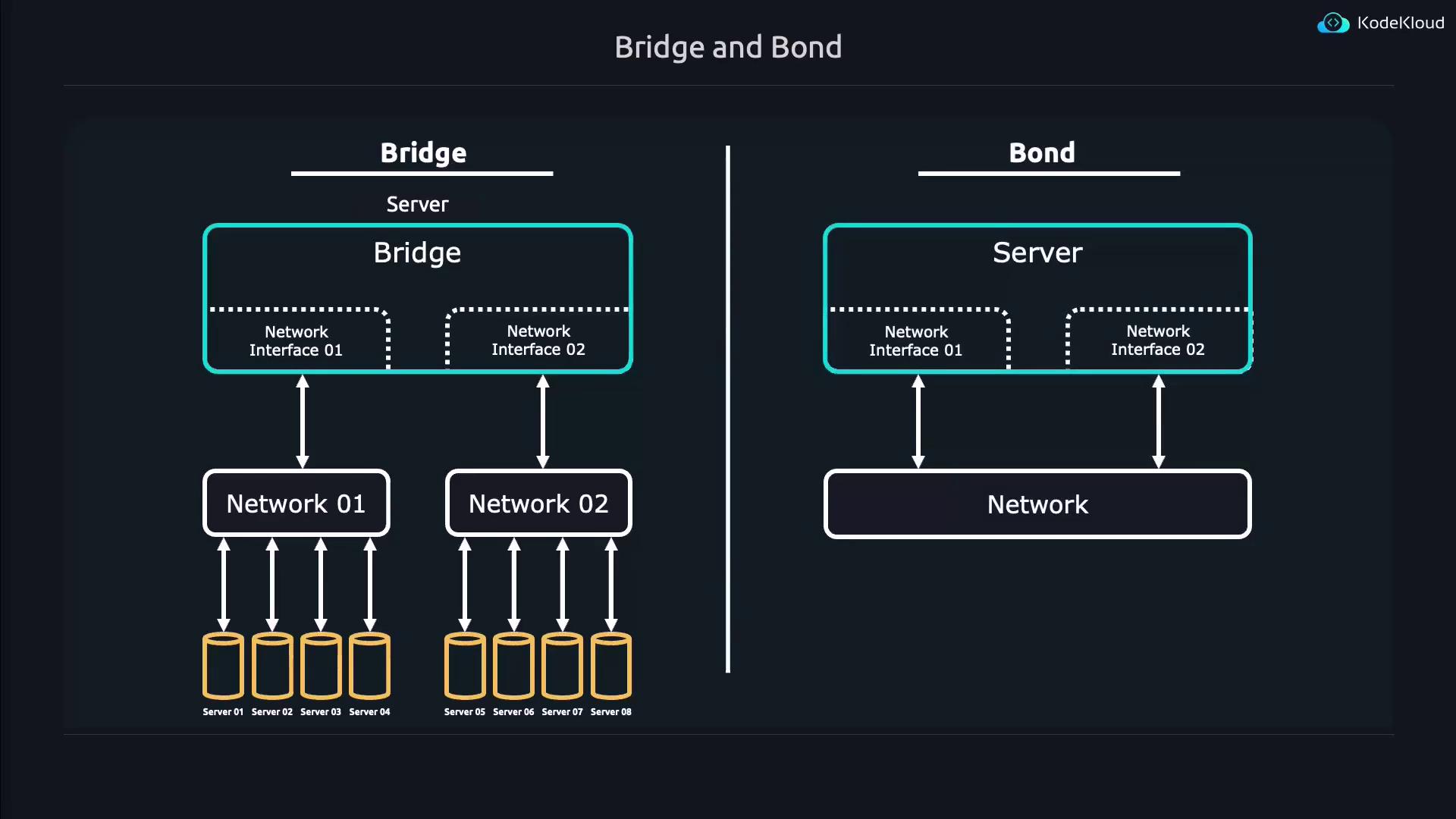
When you bridge two or more network devices, a virtual bridge is created that interconnects them. This virtual bridge allows computers on different physical networks to communicate seamlessly, just as if they were on the same network. Consider a server with two network interfaces (or network cards) connected via cables to different networks. By adding these interfaces to a bridge, devices on either network can interact without additional routing. In Linux, this virtual device is simply called a bridge, and each network interface attached to the bridge is known as a port.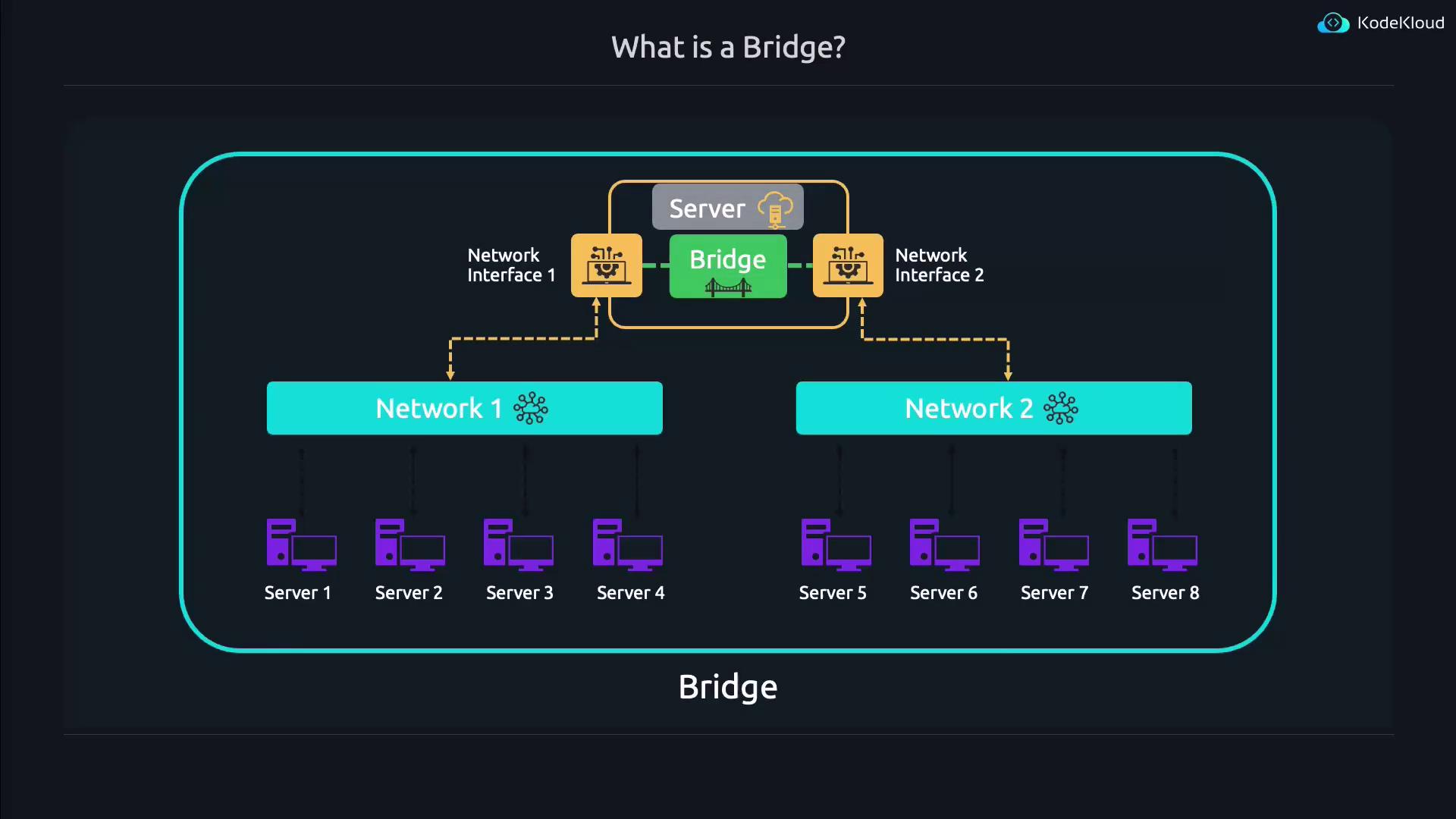
Bonding Network Devices
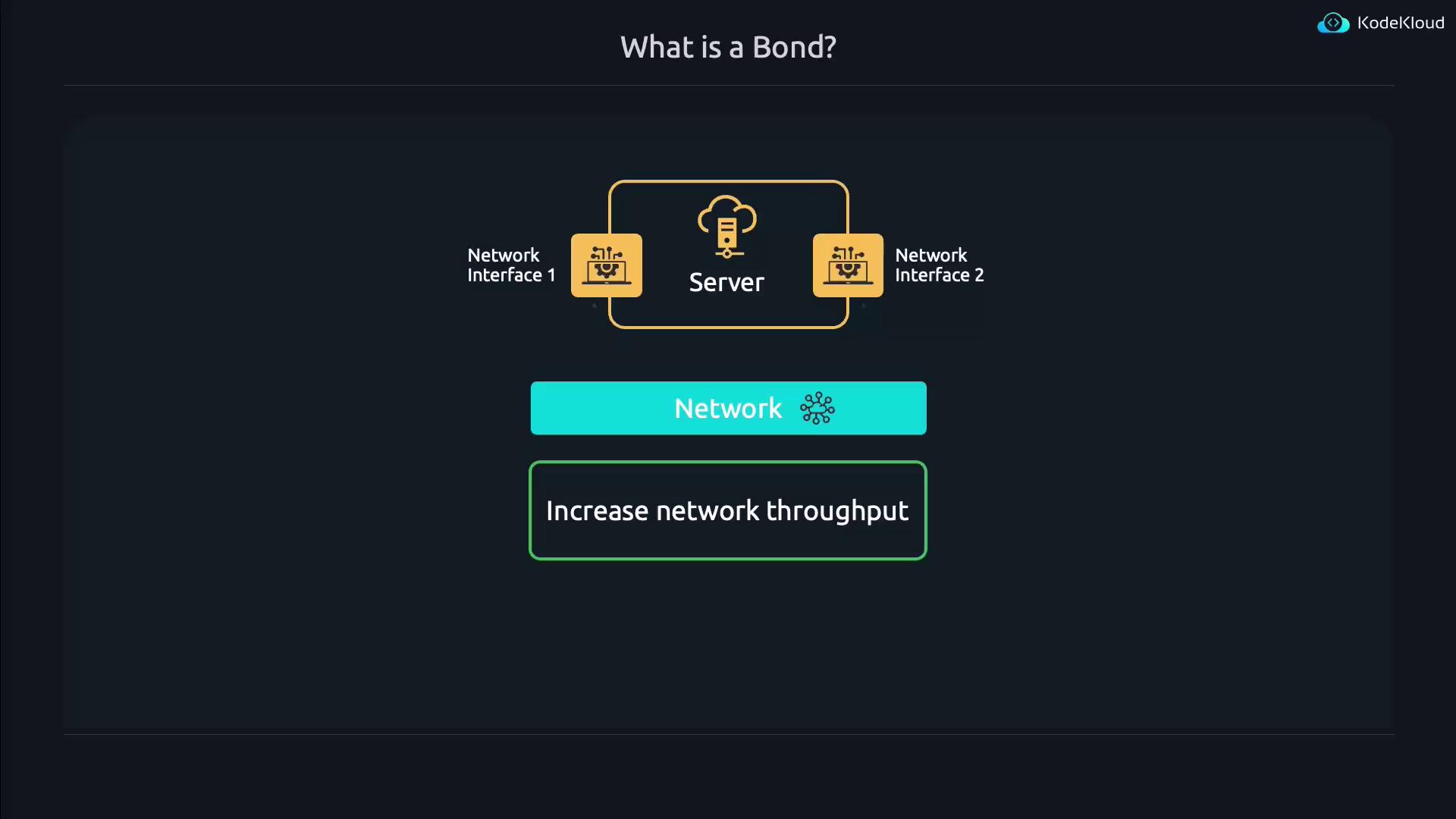
Bonding combines multiple physical network devices into one logical interface. This configuration provides several benefits:- Resilience: Maintains connectivity even if one network interface fails.
- Increased Throughput: Aggregates multiple network cards to achieve higher data transfer speeds.
- Enhanced Reliability: Offloads traffic to available interfaces if one experiences a slowdown.
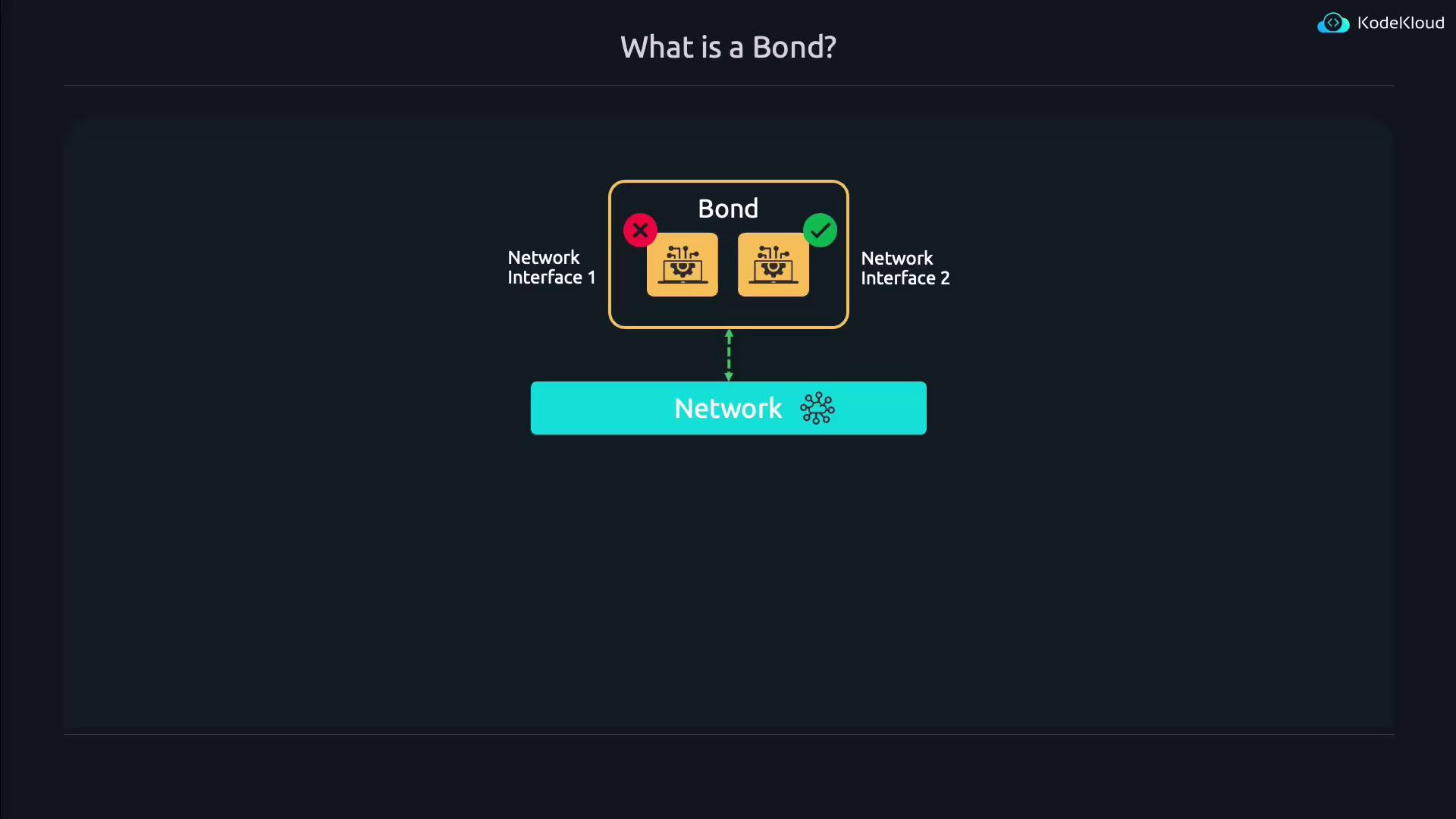
Bonding Modes in Linux
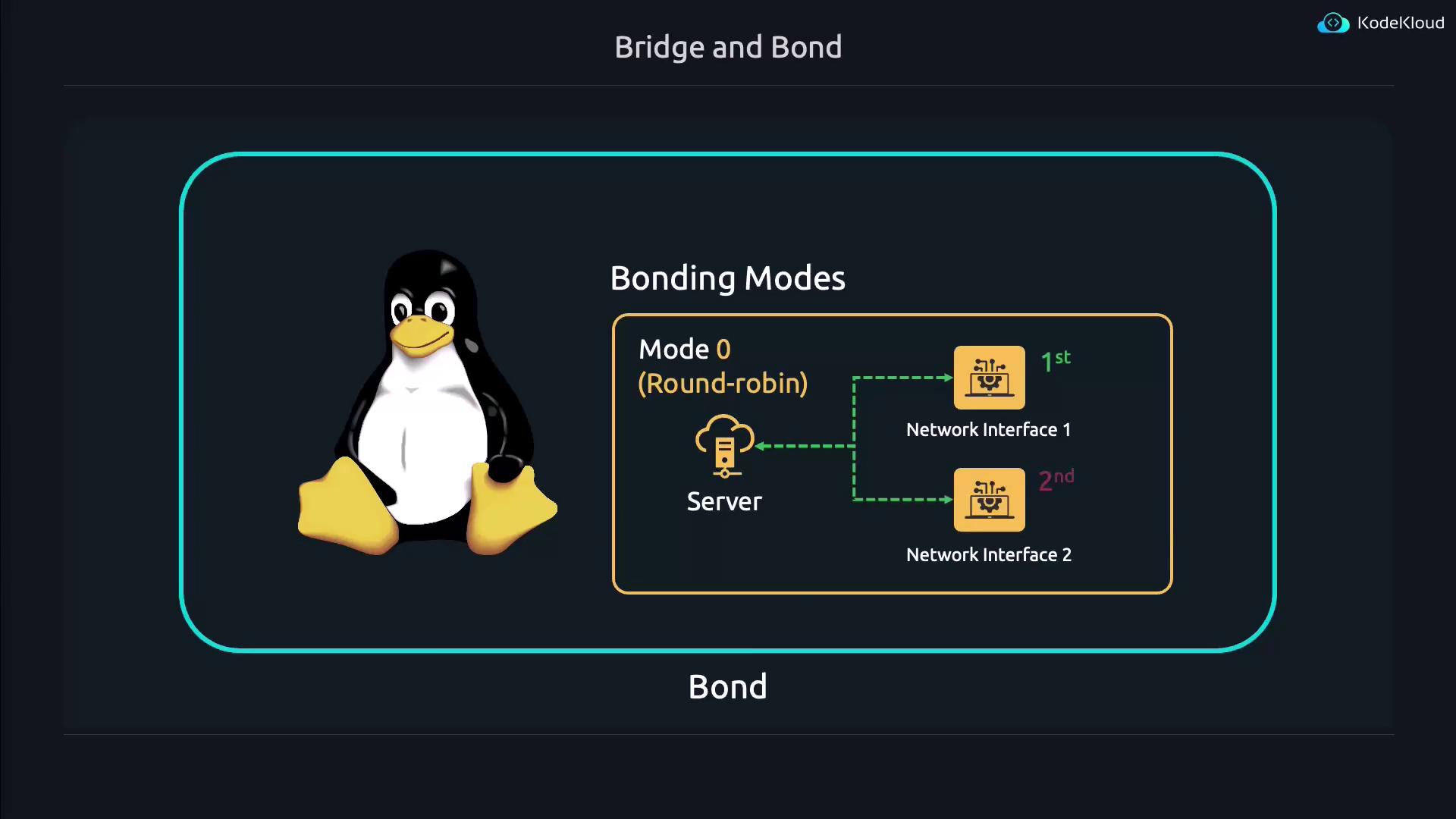
Linux supports several bonding modes (Mode 0 through Mode 6). Choosing the correct mode allows you to tailor your bond configuration for optimal performance, load balancing, and redundancy.- Mode 0 (Round Robin):
Data packets are transmitted sequentially across the interfaces.
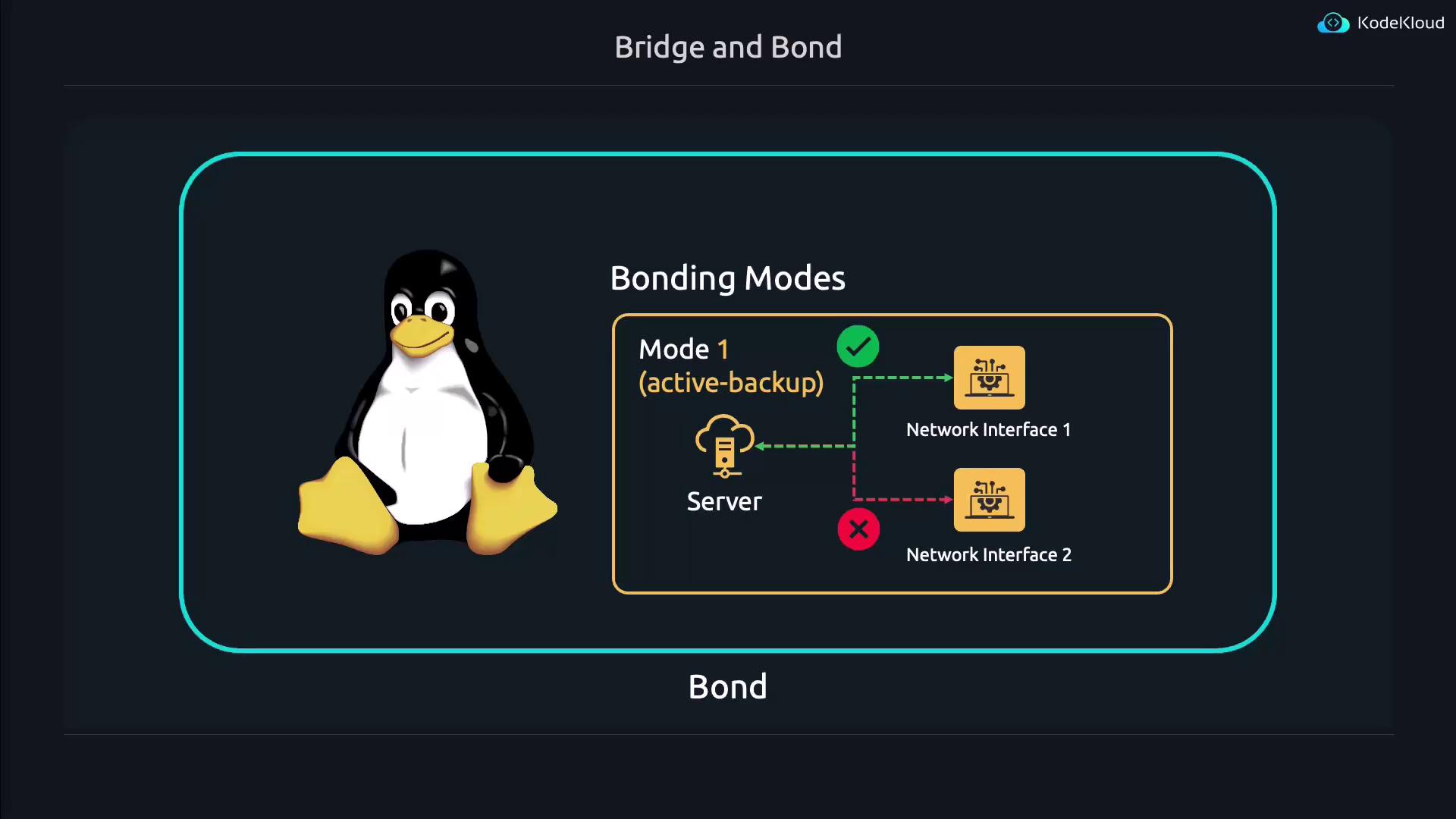
- Mode 1 (Active Backup):
Only one interface is active while the others act as backups that take over if the active connection fails.
-
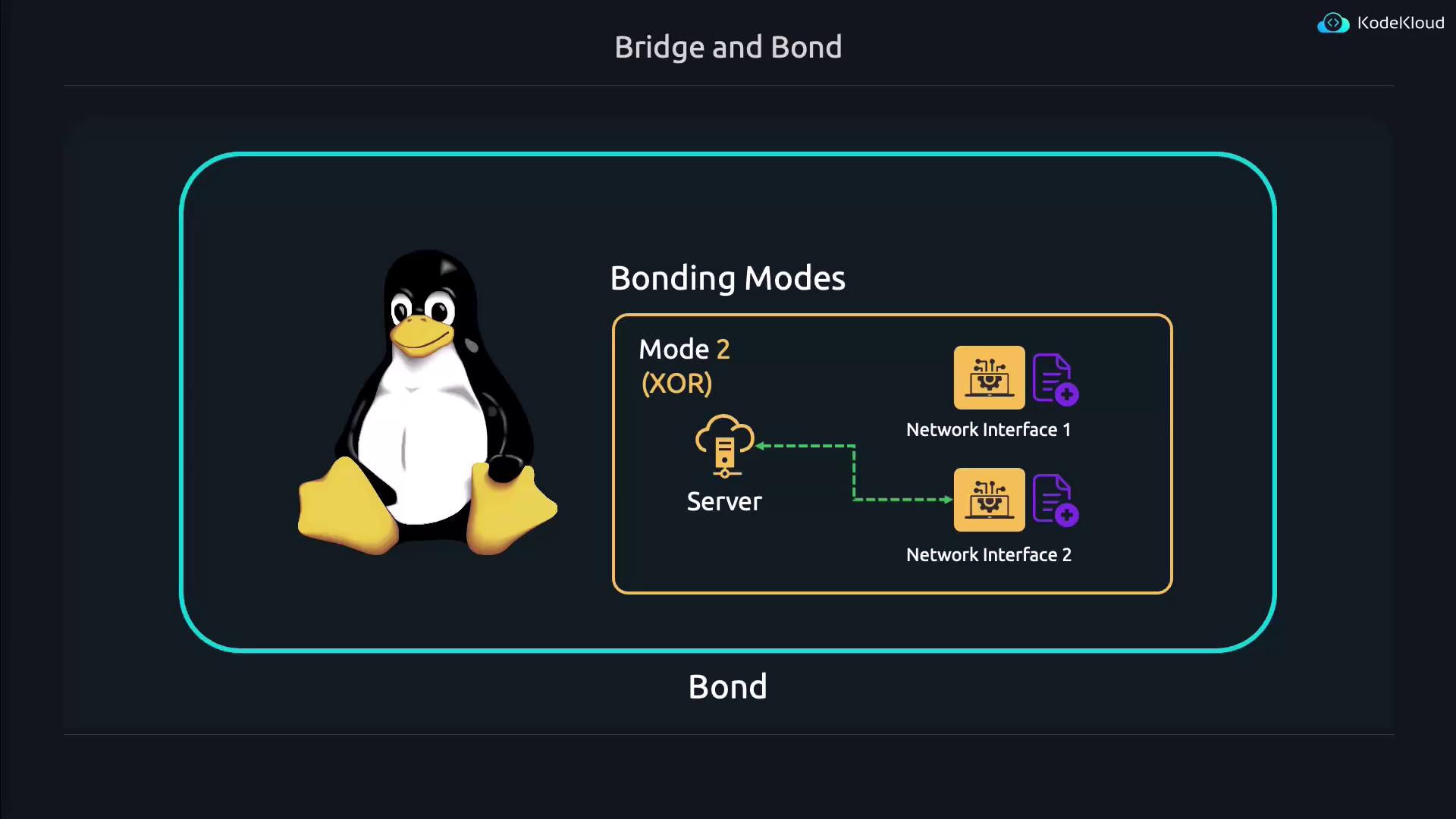
Mode 2 (XOR):
Selects the interface based on the source and destination of the data packet, ensuring that identical connections use the same interface. -
Mode 3 (Broadcast):
Transmits data packets through all interfaces simultaneously.
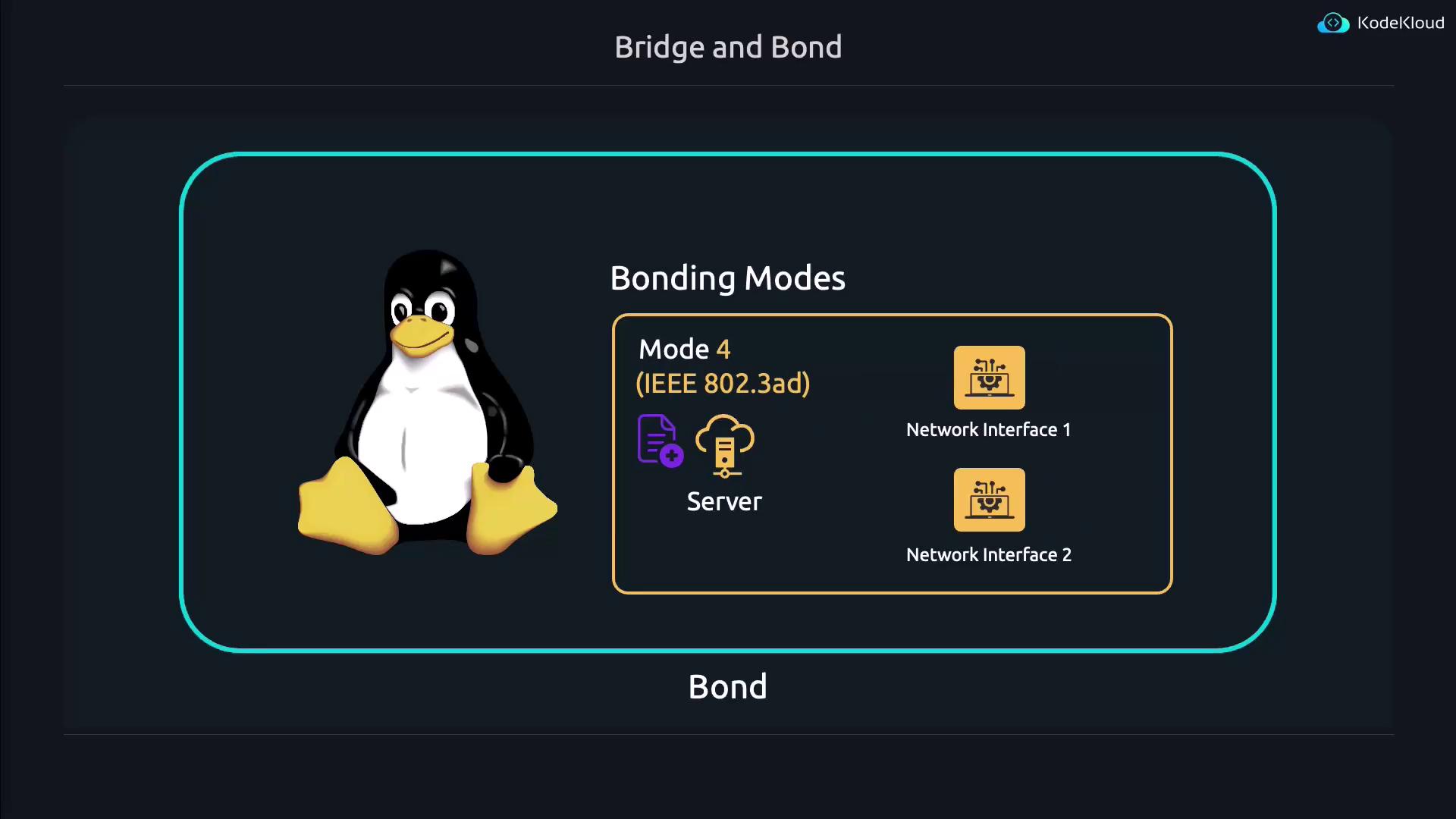
- Mode 4 (IEEE 802.3ad):
Uses dynamic link aggregation to combine interfaces, improving throughput.
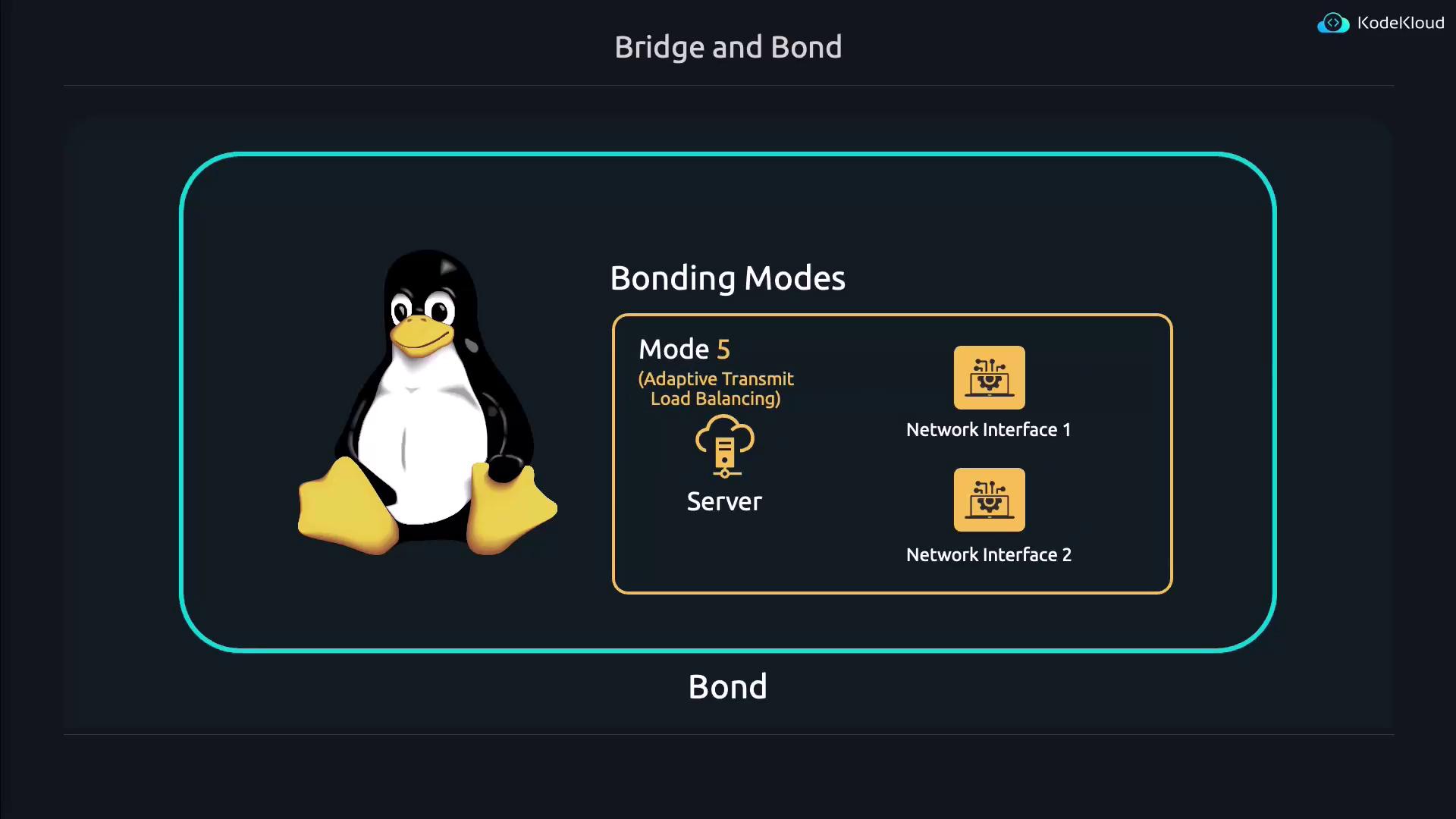
- Mode 5 (Adaptive Transmit Load Balancing):
Distributes outgoing traffic by selecting the least busy interface.
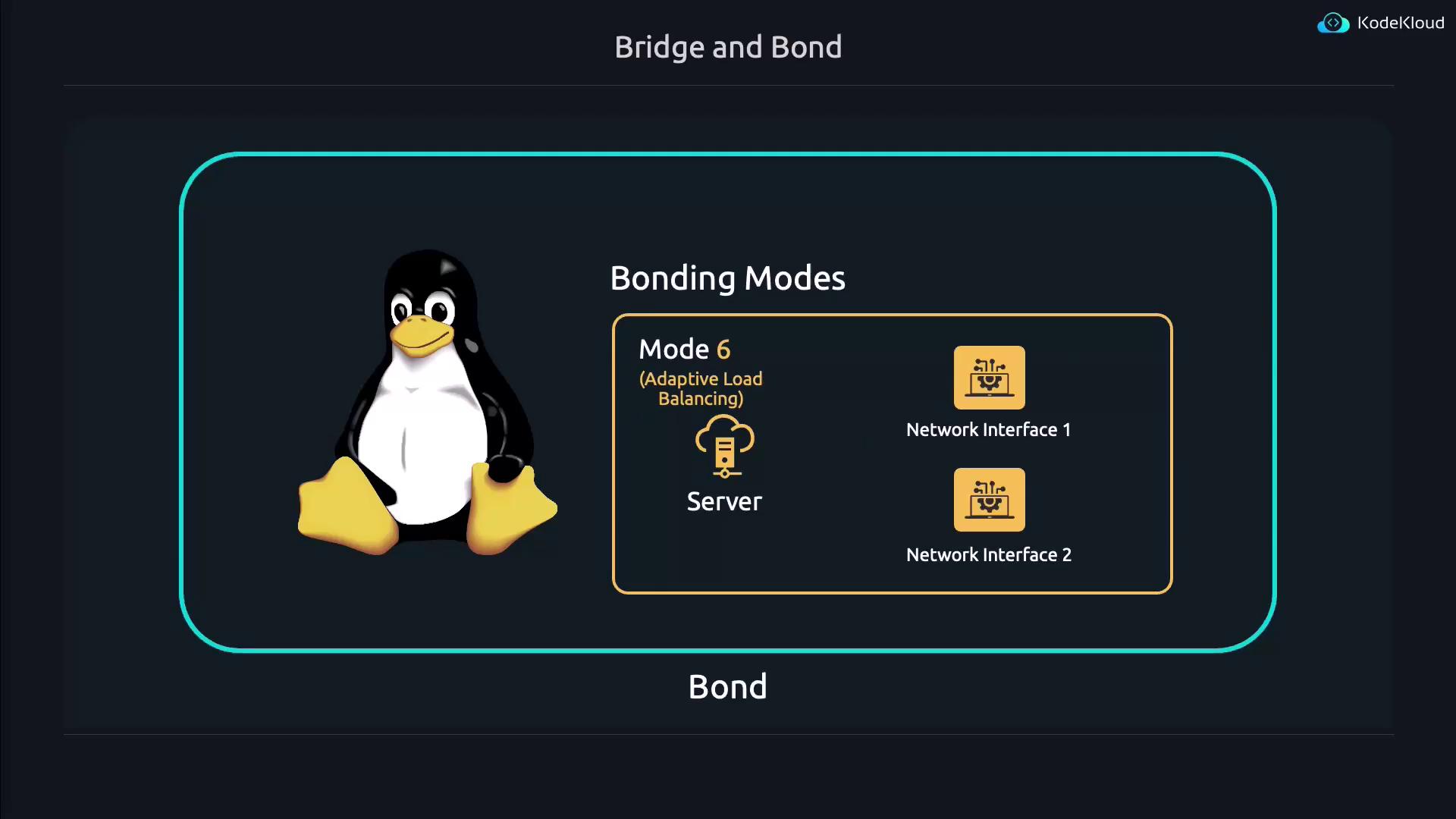
- Mode 6 (Adaptive Load Balancing):
Balances both incoming and outgoing traffic across the bonded interfaces.
For network deployments, understanding your objectives—whether maximizing throughput or ensuring constant connectivity—will guide your choice between bridging and bonding as well as the specific bonding mode to implement.
Bridging versus Bonding
In summary, bridging and bonding offer different network solutions:- Bridging: Connects two or more separate networks to enable seamless communication among devices as if they were on the same network.
- Bonding: Aggregates multiple network connections into a single logical interface to improve overall performance and reliability.