

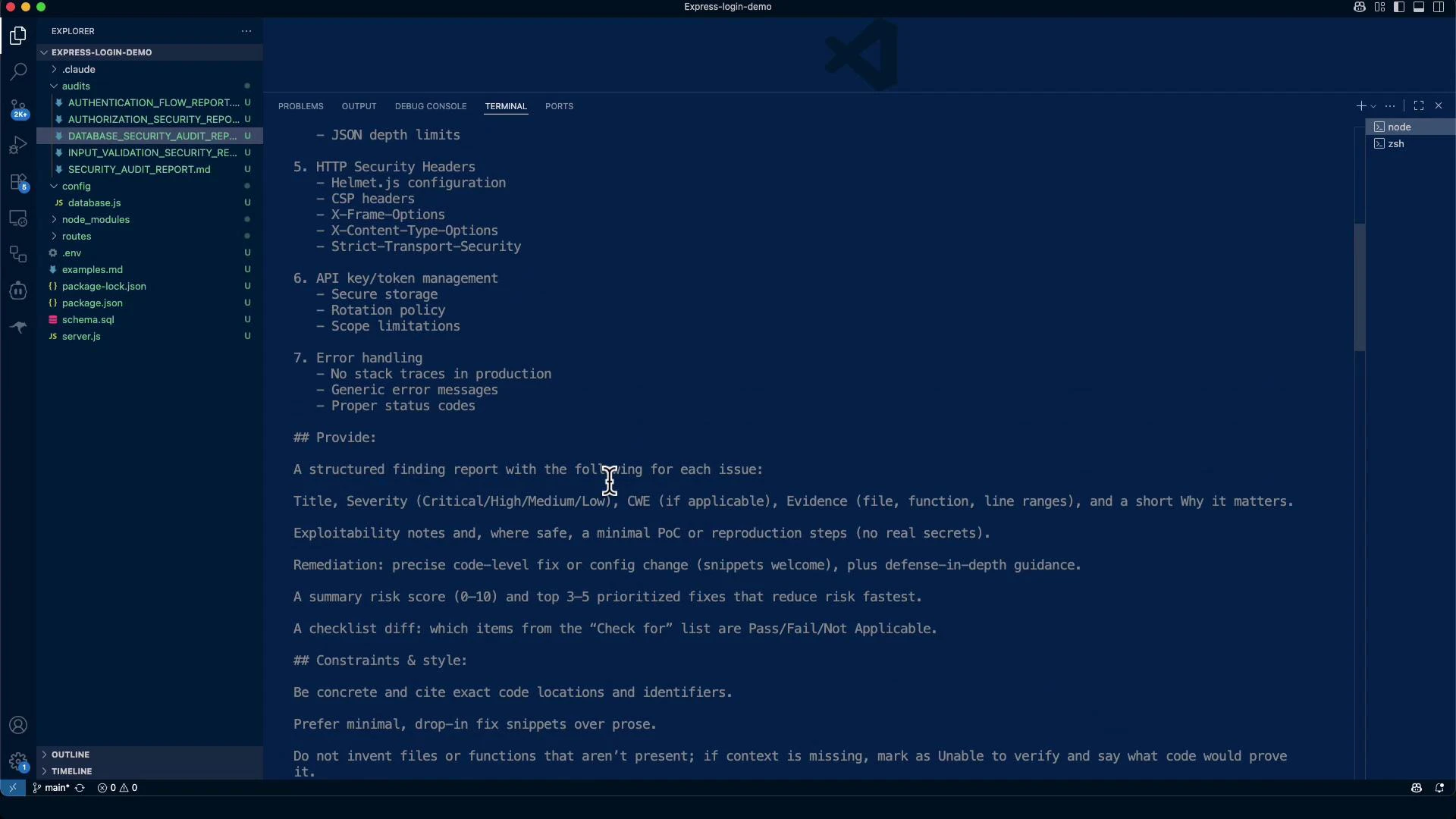
- CORS: avoid wildcards in production, validate origins, handle credentials
- Rate limiting: per-endpoint controls, stricter auth limits, distributed strategies for scale
- API versioning: route and deprecate old versions safely
- Request size limits: body parser limits, file upload limits, JSON depth
- HTTP security headers: Helmet, CSP, X-Frame-Options, X-Content-Type-Options, HSTS
- Secrets management: secure storage, rotation, proper key sizes
- Error handling: no stack traces to clients, structured server-side logging
- Cite exact code locations and identifiers.
- Prefer minimal, drop-in fix snippets over prose.
- If evidence is missing, mark as Unable to verify and state what code would prove compliance.
- The audit output should be written to audits/API_INFRASTRUCTURE_SECURITY_AUDIT.md.
Executive scan summary (automated outputs)
Searches and scans during the audit produced these examples:- Missing or permissive CORS configuration
- No rate limiting on authentication endpoints
- Missing security headers (CSP, X-Frame-Options, HSTS)
- No request size limits
- Weak JWT secret management (hardcoded/short secrets)
- Verbose error messages or logs that may disclose sensitive info
Detailed Findings, PoCs, and Minimal Remediations
🔴 CRITICAL: Missing or Permissive CORS Configuration
- Severity: Critical
- CWE: CWE-346 (Origin Validation Error)
- Evidence: server.js — No CORS configuration present or CORS set to wildcard (*)
- Rationale: Without origin validation, browsers may allow cross-origin requests that leak data or enable CSRF-style attacks.
- Use environment variables for different environments (development, staging, production).
- Avoid ’*’ in production. If you must support many origins, use a dynamic allowlist backed by config.
🔴 CRITICAL: No Rate Limiting on Sensitive Endpoints
- Severity: Critical
- Evidence: No express-rate-limit or equivalent middleware applied to auth endpoints (e.g., /api/auth/login)
- Rationale: Without limits, login endpoints are susceptible to brute force and credential stuffing.
🔴 CRITICAL: Missing HTTP Security Headers
- Severity: Critical
- CWE: CWE-693 (Protection Mechanism Failure)
- Evidence: server.js — No Helmet or other security header middleware present
- Rationale: Missing headers enable clickjacking, XSS, MIME sniffing, and downgrade attacks.
🔴 HIGH: Missing Request Size Limits
- Severity: High
- Evidence: Body parsers used without explicit limits (server.js)
- Rationale: Large or deeply nested payloads can cause memory exhaustion or DoS.
🔴 HIGH: Weak JWT Secret Management
- Severity: High
- Evidence: Hardcoded or short JWT signing secret found OR unable to verify secure secret storage
- Rationale: Weak/committed secrets allow token forging and unauthorized access.
- Do not hardcode secrets in repo. Use environment variables or a secret manager (HashiCorp Vault, AWS Secrets Manager).
- Use long, random secrets for HMAC (>= 64 chars) or prefer RS256 with proper key management and rotation.
● MEDIUM: Information Disclosure in Error Handling / Logging
- Severity: Medium
- Evidence: Verbose logs or stack traces returned to clients and/or logged with sensitive data
- Rationale: Stack traces or sensitive information in responses assist attackers with reconnaissance.
- Return generic messages to clients.
- Log detailed diagnostics server-side with restricted access.
Security Checklist Results (summary)
Risk Assessment & Prioritized Remediation Plan
Overall risk: 8.5 / 10 (High) Top priority (within 24 hours)- Replace hardcoded/weak JWT secrets with secure secrets or secret manager
- Implement rate limiting on authentication/login endpoints
- Add security headers via Helmet (enable HSTS only when HTTPS is confirmed)
Proof-of-Concept Tests (examples)
- Check security headers:
- Test rate limiter response:
Notes on audit verifiability
- The audit inspected server.js, files under routes/, and configuration files. If files or identifiers were missing, the audit marked them as Unable to verify and included the code that would prove compliance.
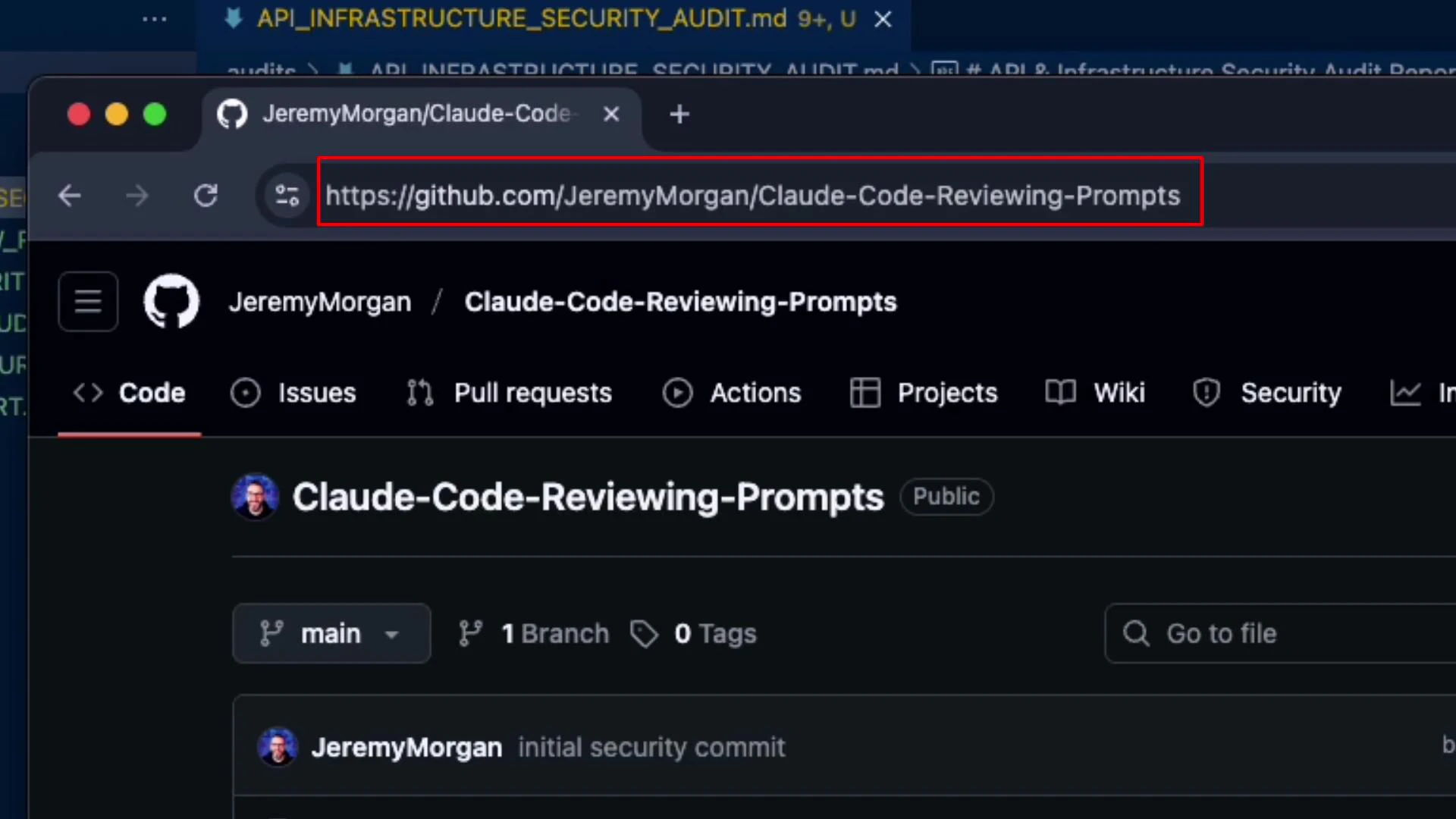
- The complete audit report is saved as audits/API_INFRASTRUCTURE_SECURITY_AUDIT.md (379 lines) with concrete findings, exact code locations, PoC tests, and remediation snippets.
Prioritize quick mitigations (rate limiting, security headers, and secrets) before public deployment. These reduce the largest immediate attack surface.
Conclusion & Next Steps
The express-login-demo requires immediate hardening before production due to missing CORS restrictions, absent rate limiting, weak secret management, and a lack of security headers. Recommended next steps:- Implement the high-priority fixes listed above (JWT secrets, rate limiting, Helmet).
- Re-run automated scans and conduct penetration testing after fixes.
- Introduce secure secret storage and rotation policies.
- Automate security checks in CI/CD and schedule periodic audits.
Links and References
- Express JSON/body parser limits: https://expressjs.com/en/api.html#express.json
- Helmet (security headers): https://www.npmjs.com/package/helmet
- CORS middleware: https://www.npmjs.com/package/cors
- express-rate-limit: https://www.npmjs.com/package/express-rate-limit
- CSP (Content Security Policy) guide: https://developer.mozilla.org/en-US/docs/Web/HTTP/CSP
- Secrets management: HashiCorp Vault (https://www.vaultproject.io/), AWS Secrets Manager (https://aws.amazon.com/secrets-manager/)