

A Sprint is a set period of time during which specific work has to be completed and made ready for review.
The Baker Analogy
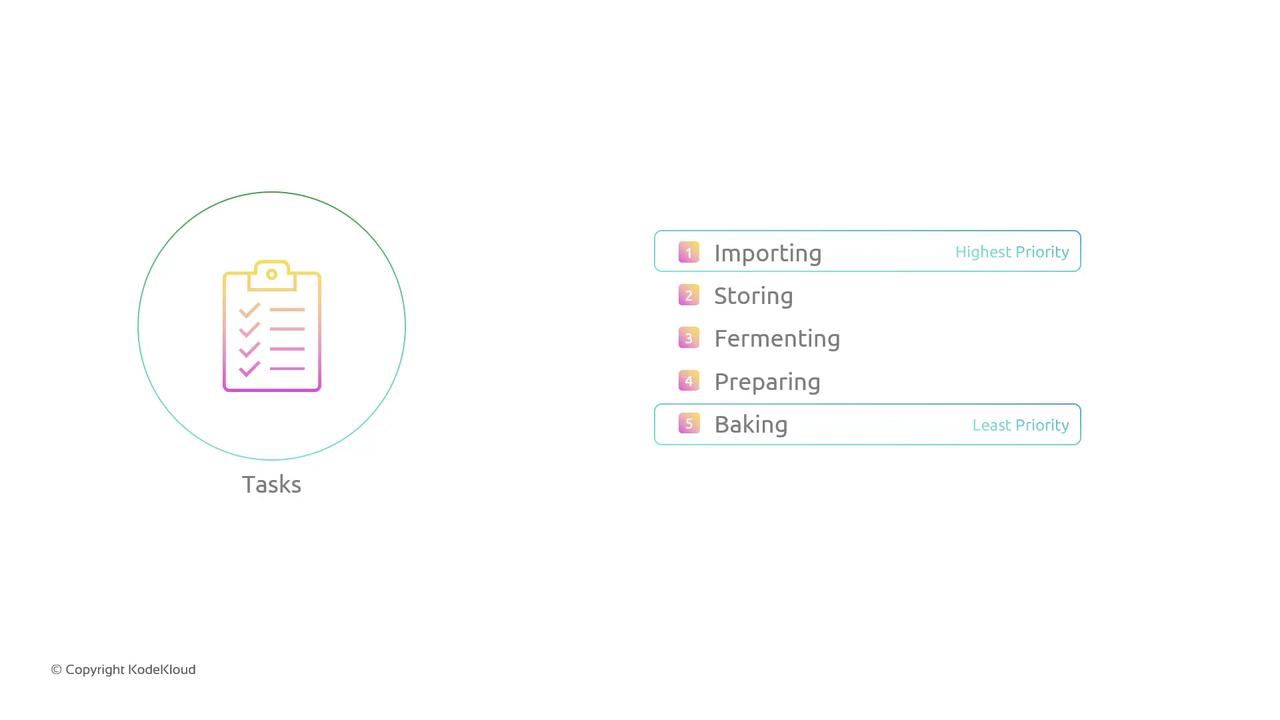
Consider a baker who aims to produce quality loaves of bread. His workflow includes:- Import good-quality wheat
- Store the wheat properly
- Ferment the dough
- Prepare the dough
- Bake the bread
Translating to DevOps
A DevOps team operates similarly, with:- A desired outcome (feature, bug fix, release)
- A backlog of tasks ranked by priority
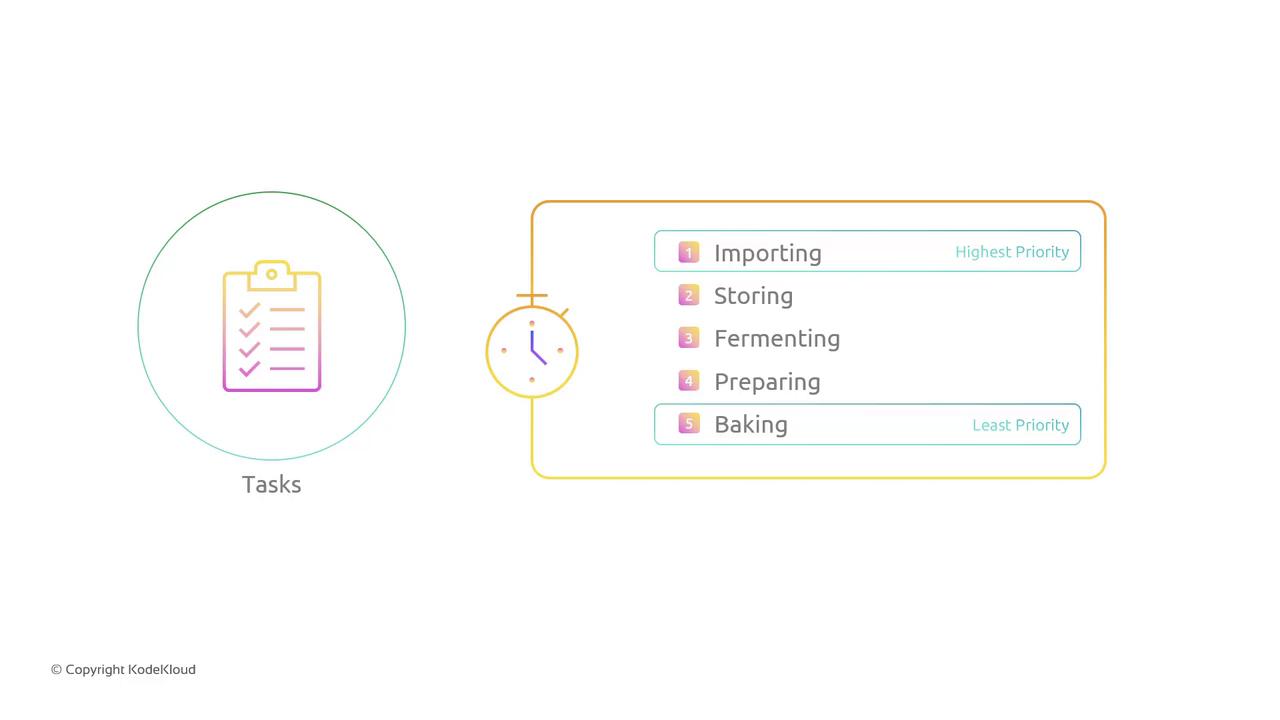
- Defines the scope (what will be done)
- Executes the selected tasks within a fixed timeframe
Timeboxing a Sprint helps teams focus on delivering the highest-value items and avoids scope creep.
Stages of a Sprint
Below is an outline of the four core stages in a Sprint cycle: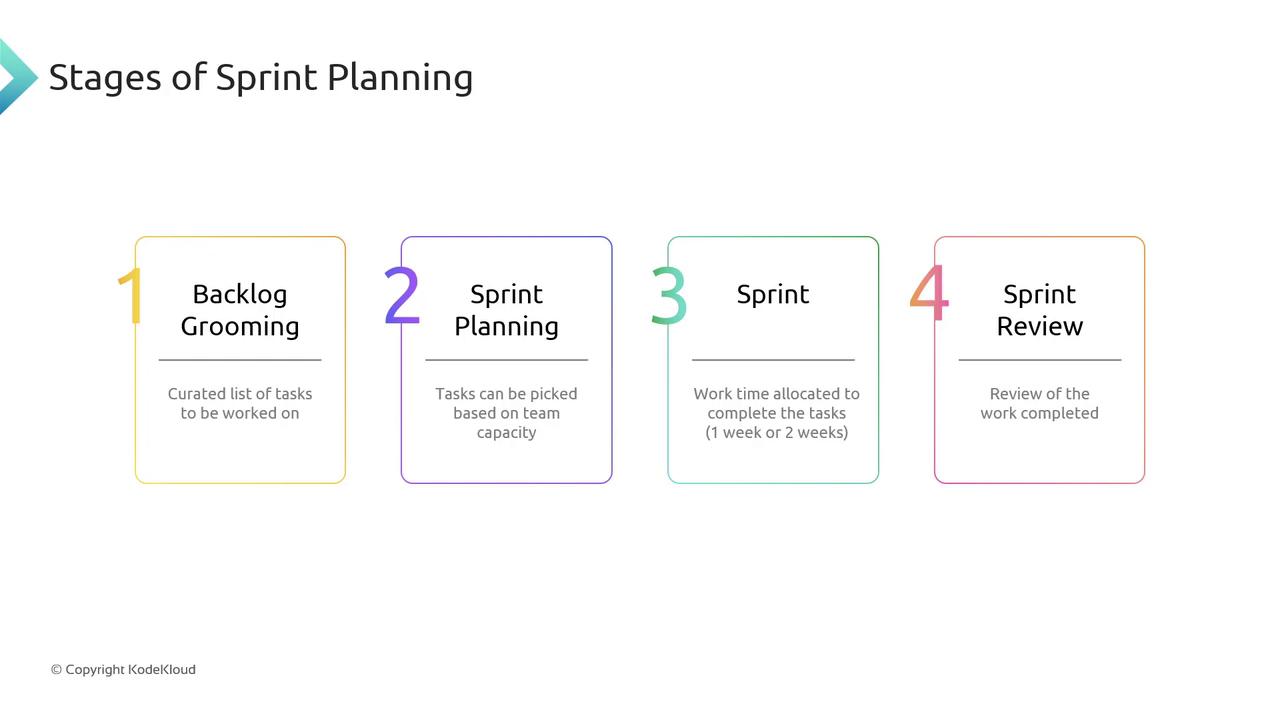
1. Backlog Grooming
- Curate and refine the product backlog.
- Assign priority and ensure each item has clear acceptance criteria.
2. Sprint Planning
- Choose backlog items that match the team’s capacity (e.g., 3 engineers over 2 weeks).
- Break down tasks further if needed.
3. Sprint Execution
- Work within the agreed timebox (commonly 1–2 weeks).
- Avoid adding new tasks mid-Sprint.
Do not add new tasks mid-Sprint—this disrupts focus and the planned scope.
- Escalate blockers to the Product Owner or Scrum Master for prompt resolution.
4. Sprint Review
- Demonstrate completed work to stakeholders.
- Verify each task meets the acceptance criteria and collect feedback for future Sprints.