

Overview
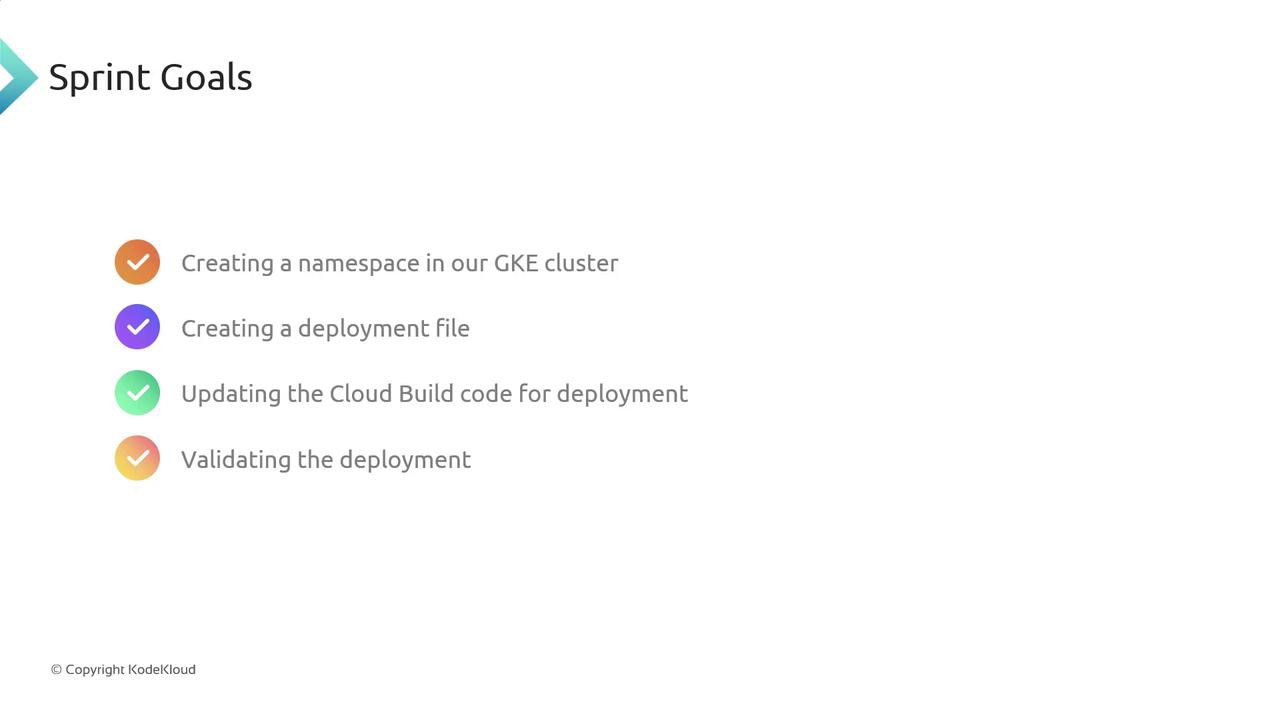
In Sprint 05, our team focused on extending our Google Kubernetes Engine (GKE) continuous delivery workflow. The primary objectives were to:- Isolate resources by creating a dedicated Kubernetes namespace
- Deploy our container image using a Kubernetes Deployment manifest
- Automate build and deploy steps via Cloud Build
- Verify that pods and services are running as expected
Sprint Goals
Achievements
- Namespace Provisioned
Successfully createdmy-app-namespacein our GKE cluster. - Deployment Manifest Applied
Deployedapp-deployment.yamlwith replica scaling and liveness probes. - Cloud Build Pipeline Modified
Added build triggers and deployment steps tocloudbuild.yaml. - End-to-End Validation
Verified pod readiness withkubectl get podsand service endpoints viakubectl port-forward.
A Cloud Build step failed due to an outdated builder image. Always inspect build logs with:Then update the
cloudbuild.yaml to reference the latest builder tags.Key Takeaways
- Automating deployments with Cloud Build reduces manual errors.
- Namespaces provide effective isolation for development and production workloads.
- Regularly update pipeline images and inspect CI logs for faster troubleshooting.