

Why a Summarization Node?
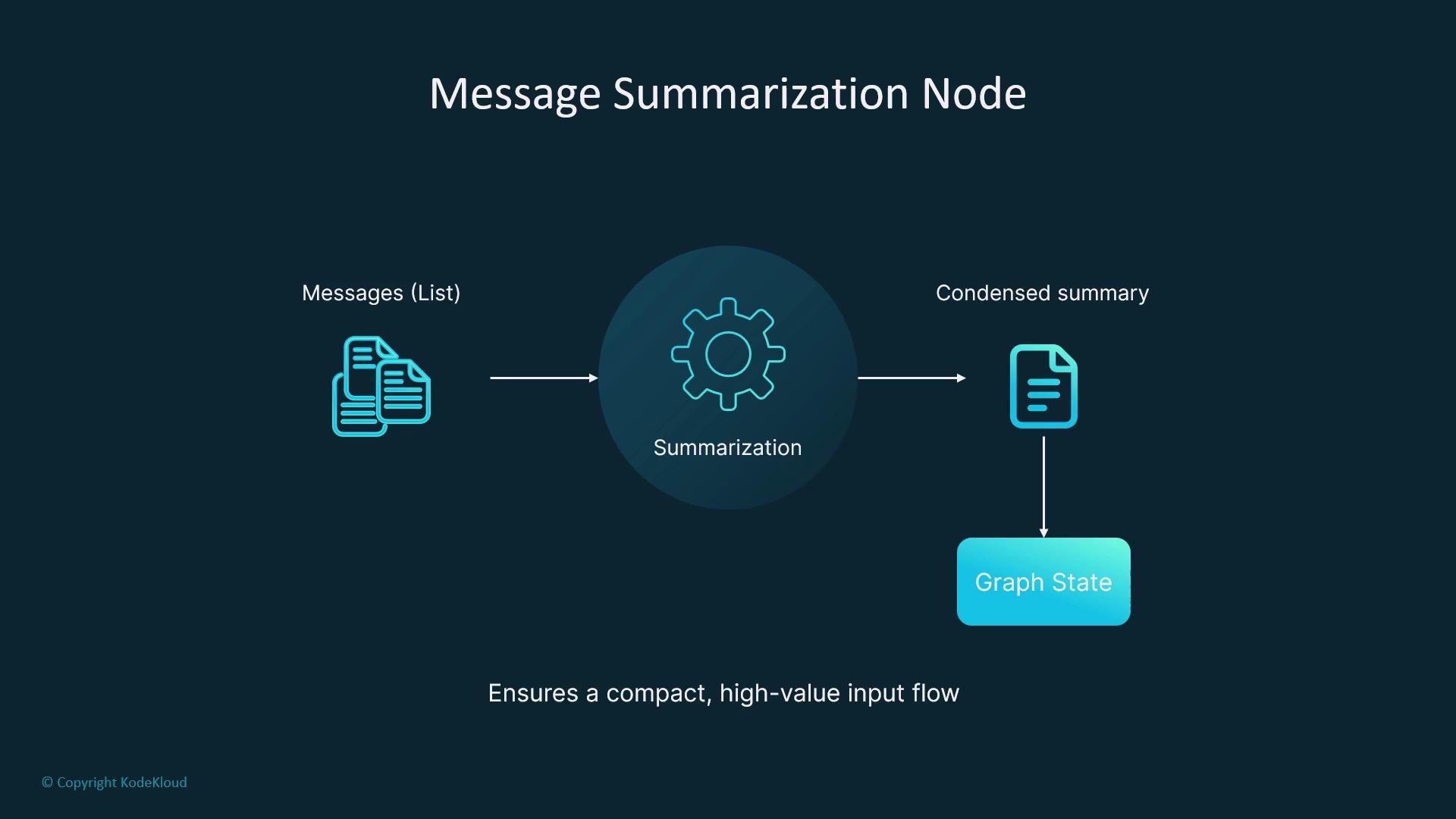
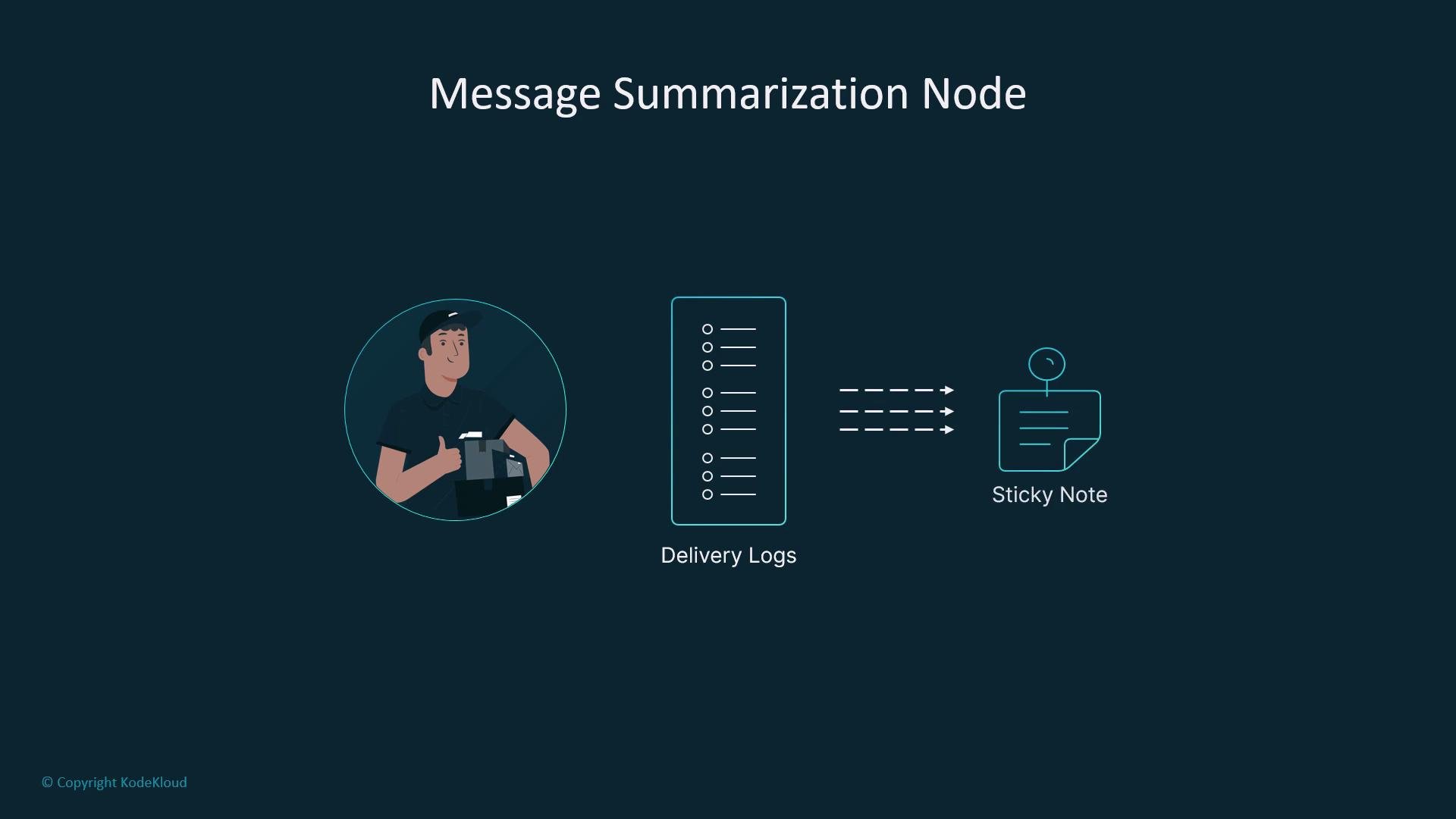
When conversations expand, simple trimming or filtering can lose context. A summarization node compresses the conversation into a smaller, information-dense representation so the graph continues to operate with sufficient context without exceeding token budgets. Key benefits:- Keeps long-running workflows efficient.
- Reduces token consumption and cost.
- Preserves essential facts, objectives, and action items.
- Enables historical context to be reloaded compactly (e.g., from a vector DB).
Typical Implementation Flow
- Instantiate a chat model to generate summaries.
- Define the graph state schema (e.g.,
messages+summary). - Implement a node that builds a prompt (system instruction + conversation) and asks the model to produce a concise summary.
- Store the summary in state and optionally reset or trim
messages.
messages list. This compresses the conversation so it stops growing unbounded while preserving context.
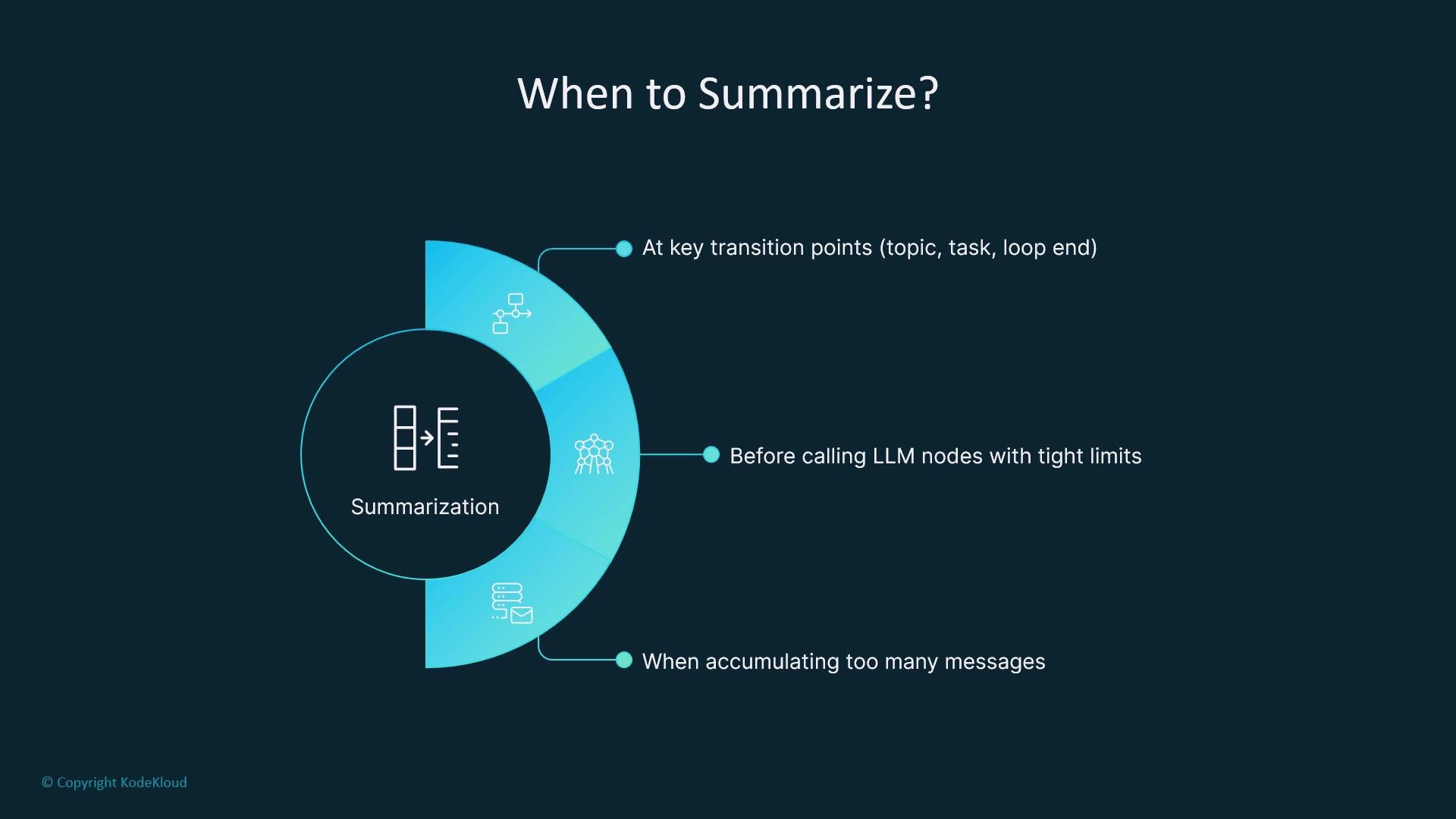
When to Trigger Summarization
Use summarization intentionally at transition points that meaningfully reduce context size or before expensive downstream steps.State Management Patterns
After creating a summary, you can choose how to store or apply it: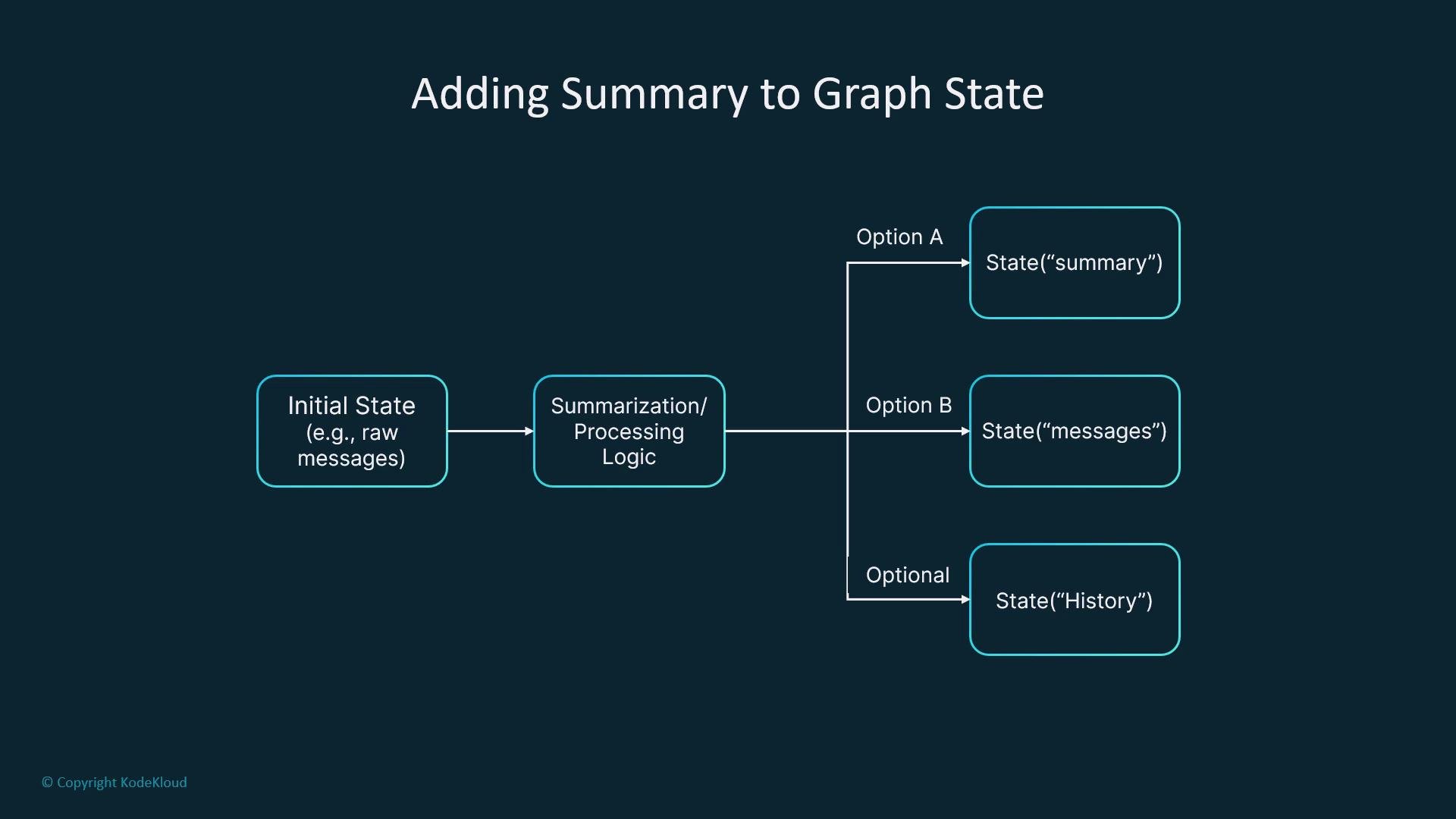
Advanced Summarization Strategies
To improve fidelity and downstream utility, consider:- Incremental summaries: update an existing summary after each turn rather than re-summarizing the whole history.
- Role-based summaries: generate separate summaries for user, assistant, and tool messages to preserve perspective.
- Structured summaries: produce JSON or key-value summaries to simplify downstream parsing and filtering.
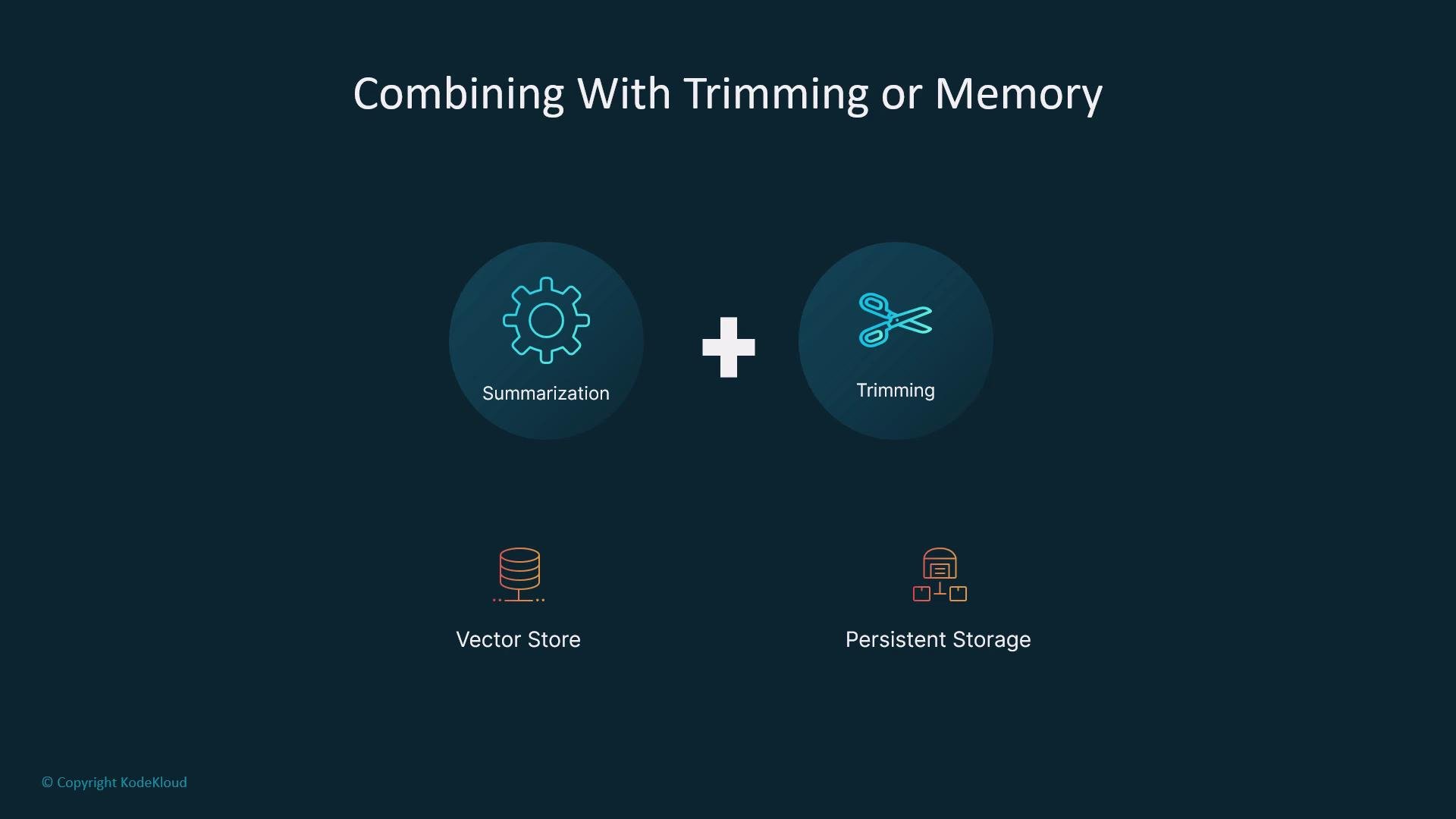
- Combine summarization with trimming: summarize the portion you plan to remove, then trim it from the message list.
- Persist summaries in a vector store or other long-term storage to reload compact history for new sessions.
Monitoring and Improving Summaries
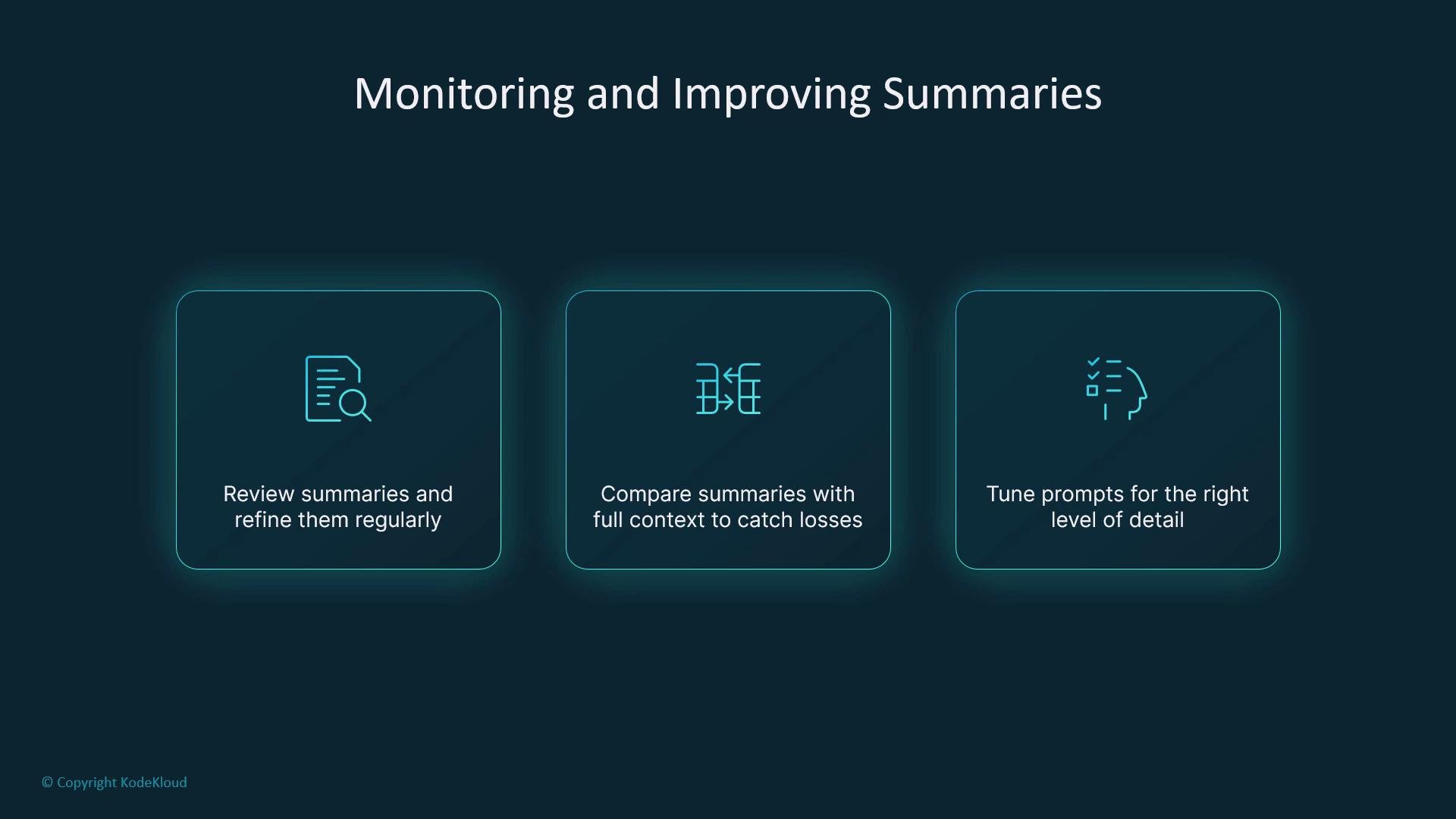
Summarization is not infallible. Implement monitoring and feedback to detect and correct information loss:- Log summary outputs and compare them periodically to raw history.
- Add explicit prompt instructions to preserve critical facts, goals, and action items (e.g., “Preserve any user goals and action items”).
- Use structured formats (JSON) to make validation and downstream processing deterministic.
- Consider human-in-the-loop review for mission-critical flows.
Trigger summarization at meaningful transition points (end of task cycles, before expensive reasoning, or when history size exceeds thresholds) to balance compute cost and context fidelity.
Always validate summaries periodically. Important facts can be lost in aggressive compression — monitor, log, and tune prompts accordingly.