Core skills (quick overview)
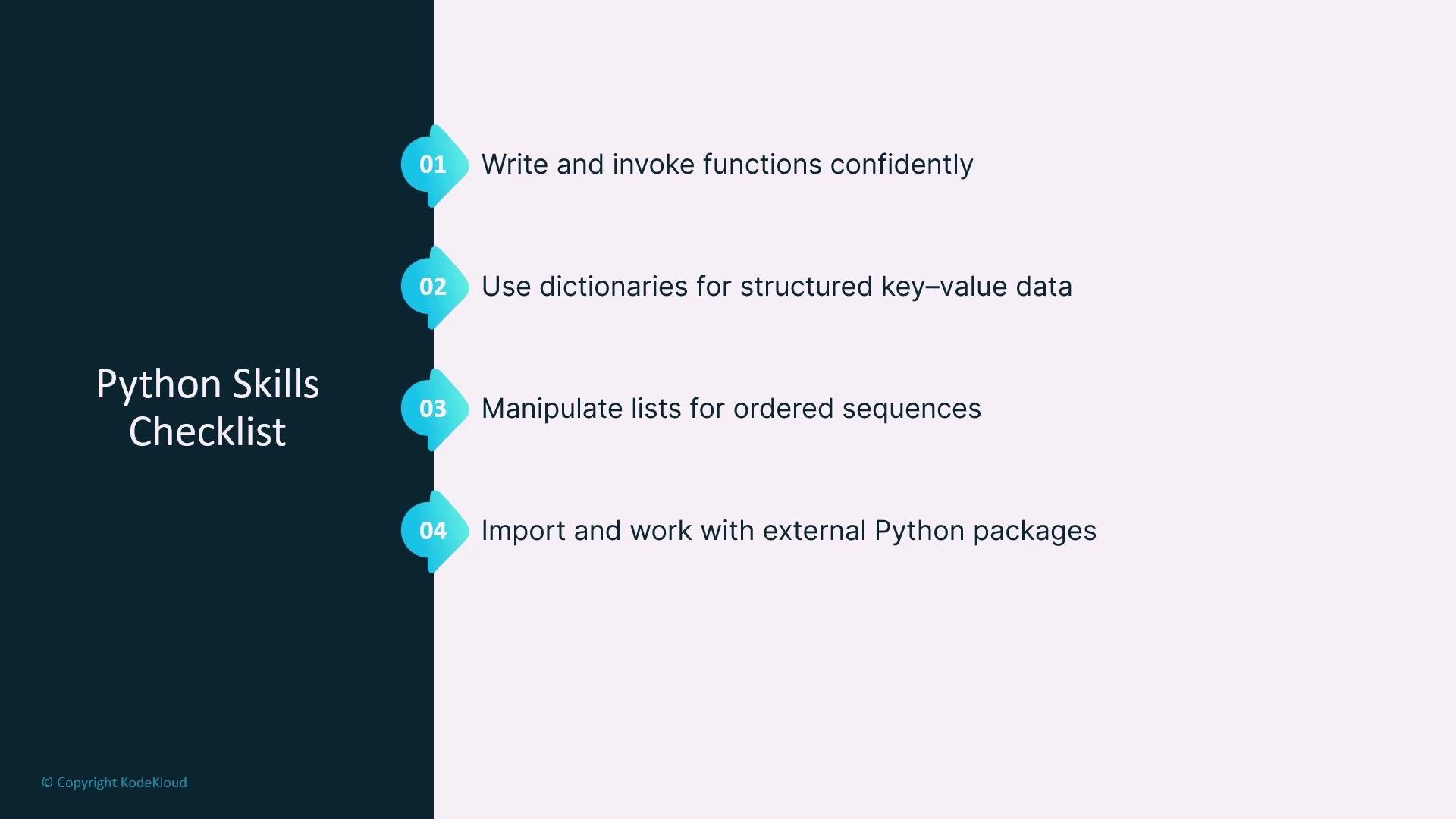
- Python fundamentals: writing and calling functions, working with dictionaries, and using lists to manage sequences of data.
- Package usage and typing: importing and using external packages (for example, LangChain) and annotating types with the
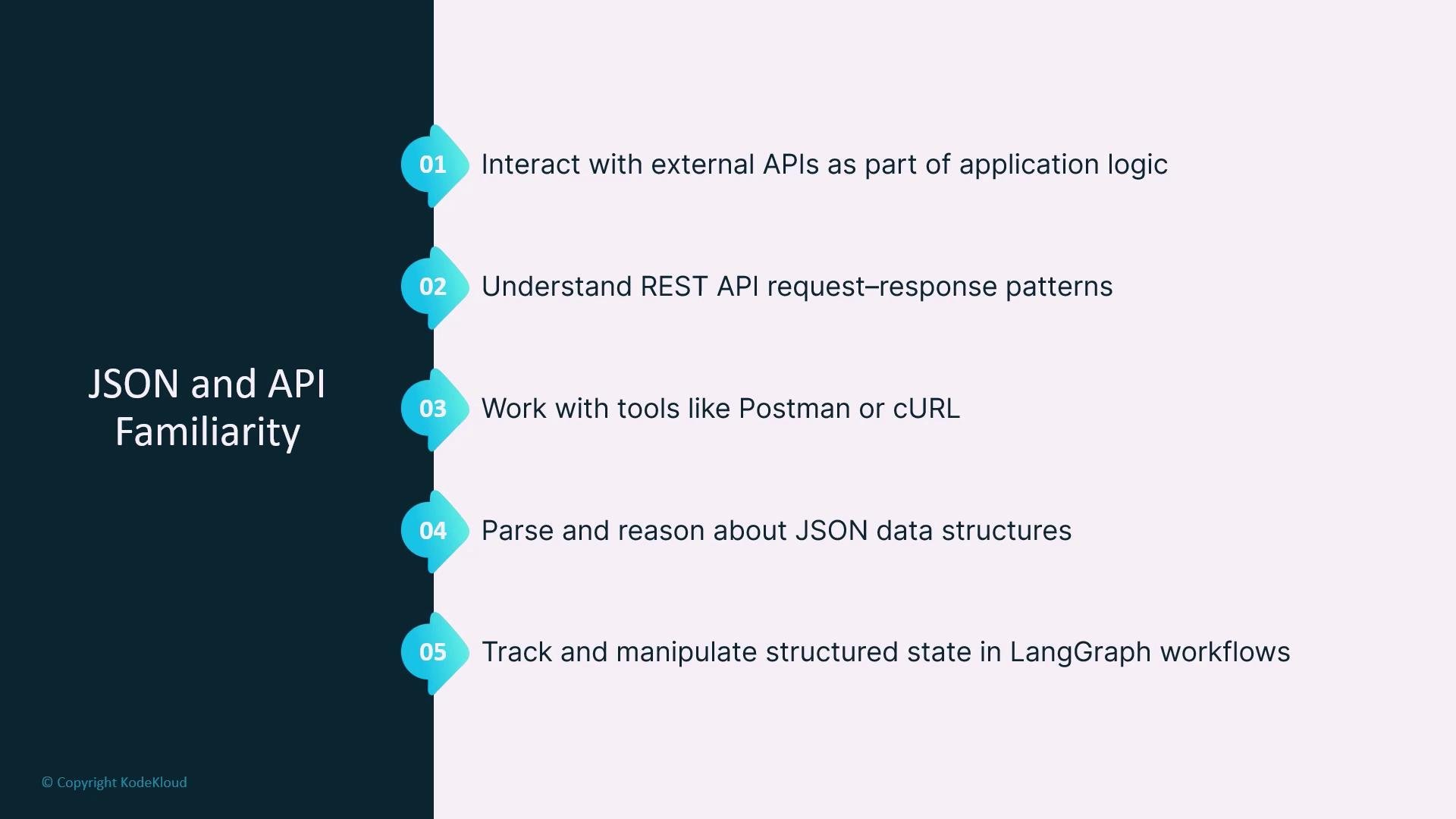
typingmodule. - APIs and structured data: familiarity with REST APIs and JSON payloads — reading, parsing, and transforming JSON (which maps naturally to Python dictionaries and lists).
You do not need advanced AI or graph-theory knowledge to follow this lesson. We’ll introduce required concepts as we go; curiosity and basic Python are the most important prerequisites.
Why these skills matter
- Python skills let you assemble nodes, functions, and data structures that form LangGraph workflows.
- Knowing how to import and work with third-party packages helps when integrating models, tools, or utilities.
- Comfort with JSON and APIs is essential because many LangGraph workflows exchange structured state with external services or tools.
Practical experience that helps
- Interacting with REST APIs using tools like Postman or cURL prepares you to inspect requests/responses and iterate quickly.
- Parsing nested JSON payloads into Python dictionaries and lists will be a frequent task when mapping external state to nodes in a graph.
- Understanding how to pass structured data between functions (or nodes) is directly applicable to designing LangGraph workflows.
If you’ve used LangChain before
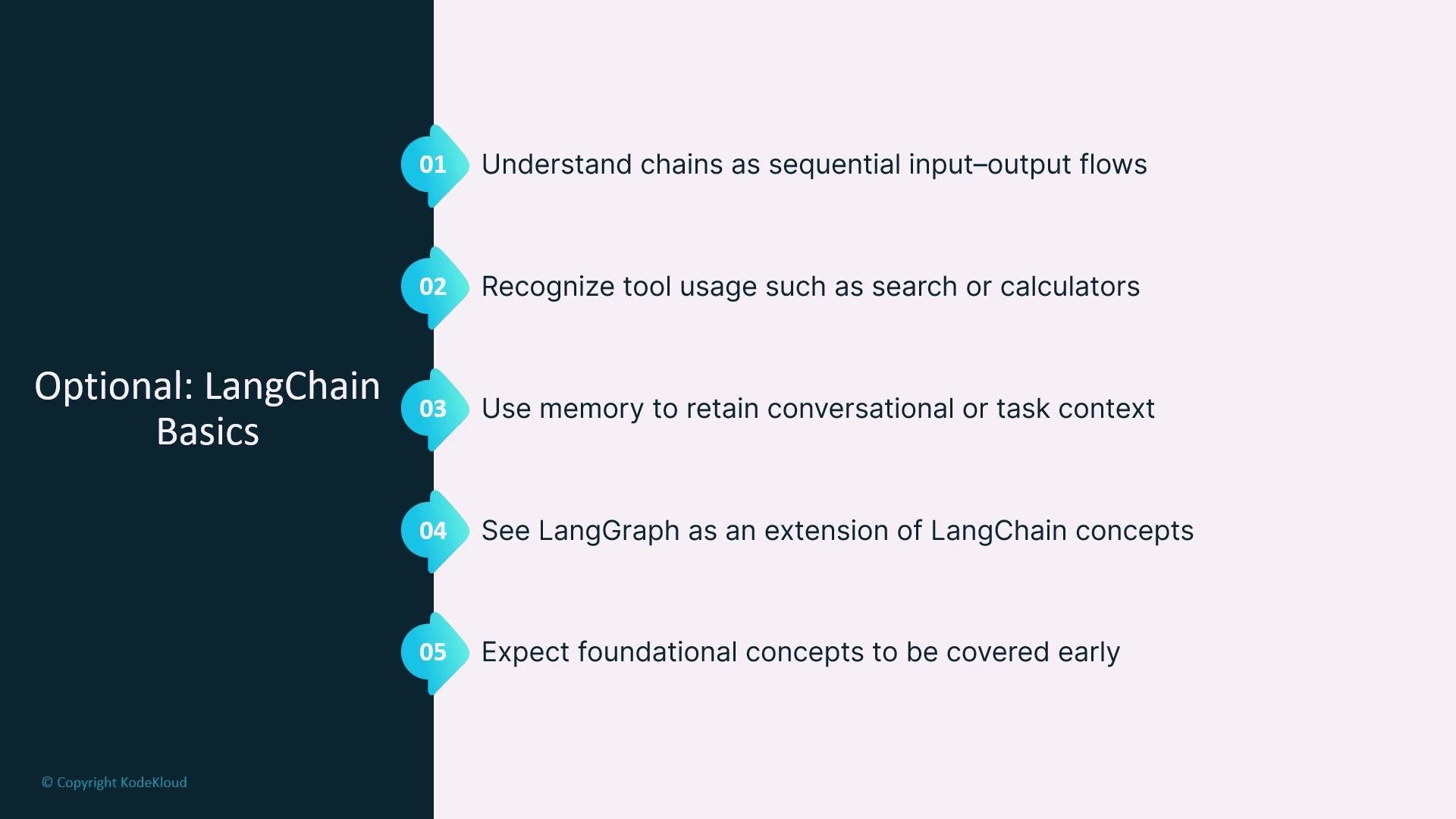
LangChain introduces chains: sequential processing patterns that pass input through a model and collect output. LangGraph builds on these same ideas but generalizes them into graph-structured workflows:- Chains → linear sequences of steps
- Tools & memory → external calls and state retention
- LangGraph → directed graphs of nodes, where state and control flow can branch, merge, and reconnect