

Code quality
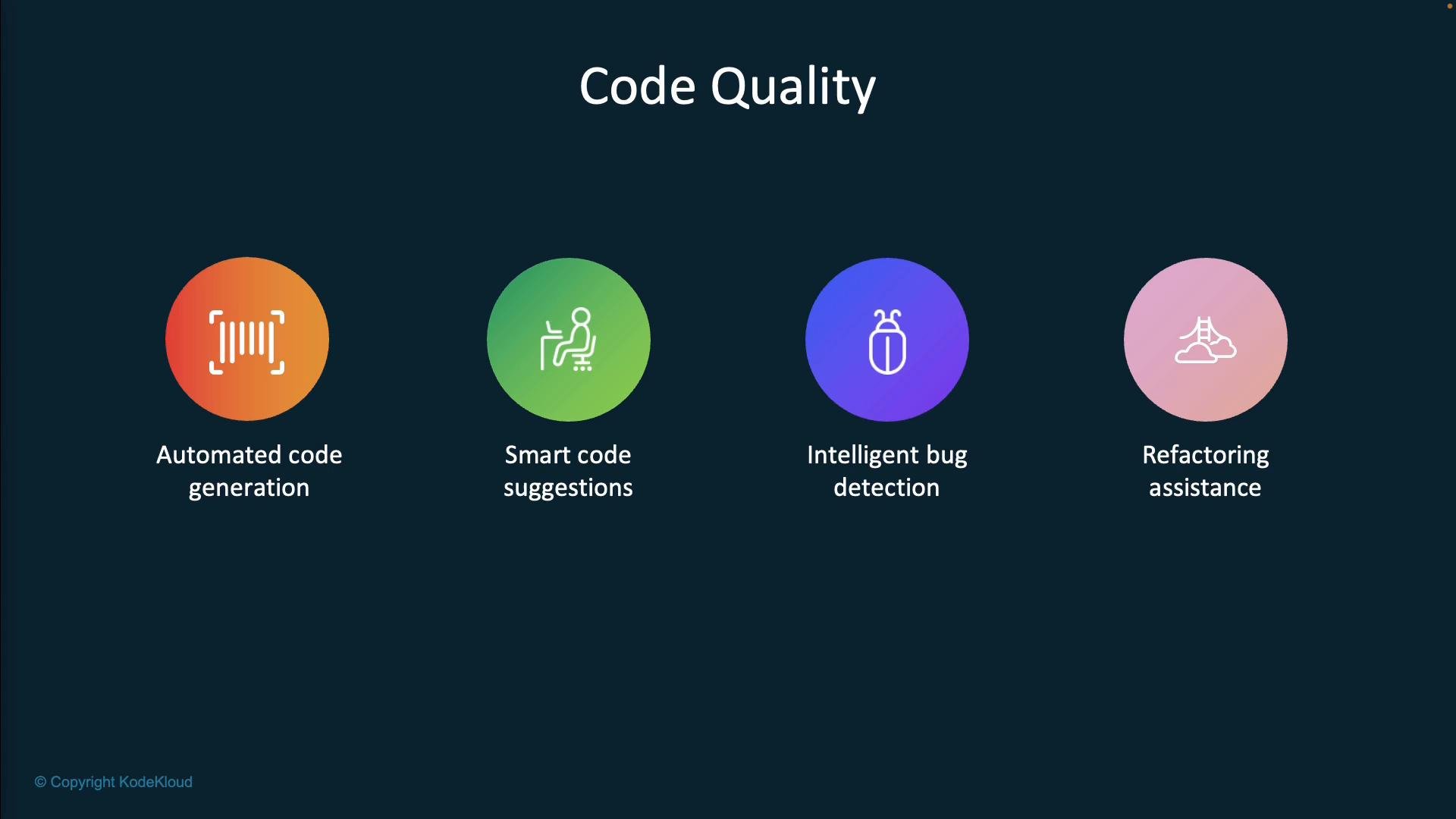
AI-assisted development improves code quality through several mechanisms:
- Automated boilerplate generation: Produce consistent scaffolding and repetitive code, reducing manual effort and enforcing uniform conventions.
- Contextual recommendations: Suggest idiomatic patterns and small improvements based on code context and best practices.
- Intelligent analysis: Surface potential bugs, type mismatches, or security issues earlier in the development lifecycle.
- Refactoring assistance: Propose safe refactorings to improve structure, readability, and modularity.
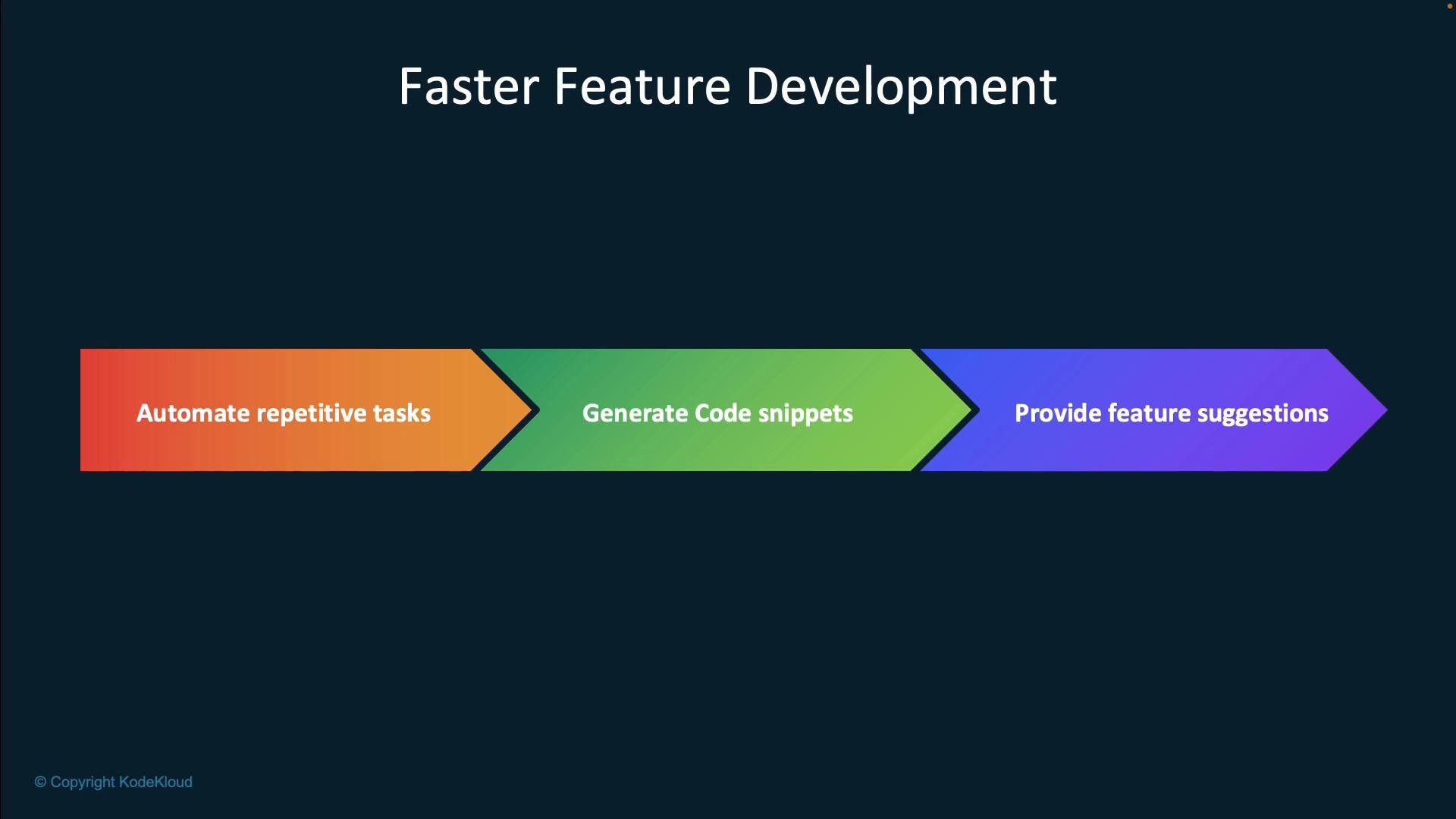
- Automating repetitive tasks such as scaffolding, formatting, and standard refactors so engineers spend less time on boilerplate.
- Producing functional code snippets from natural-language descriptions or example inputs, speeding prototyping and implementation.
- Suggesting features or improvements by analyzing requirements and user feedback, shortening the ideation cycle.
- Auto-generating and validating test suites to ensure changes are exercised before release.
- Creating deployment scripts or GitOps manifests consistently, reducing manual mistakes.
- Recommending infrastructure configurations that improve performance and reliability.
- Integrating into CI/CD pipelines to detect underperforming releases and optionally trigger rollbacks.
- Enhancing monitoring and incident detection so operational issues are identified and prioritized earlier.
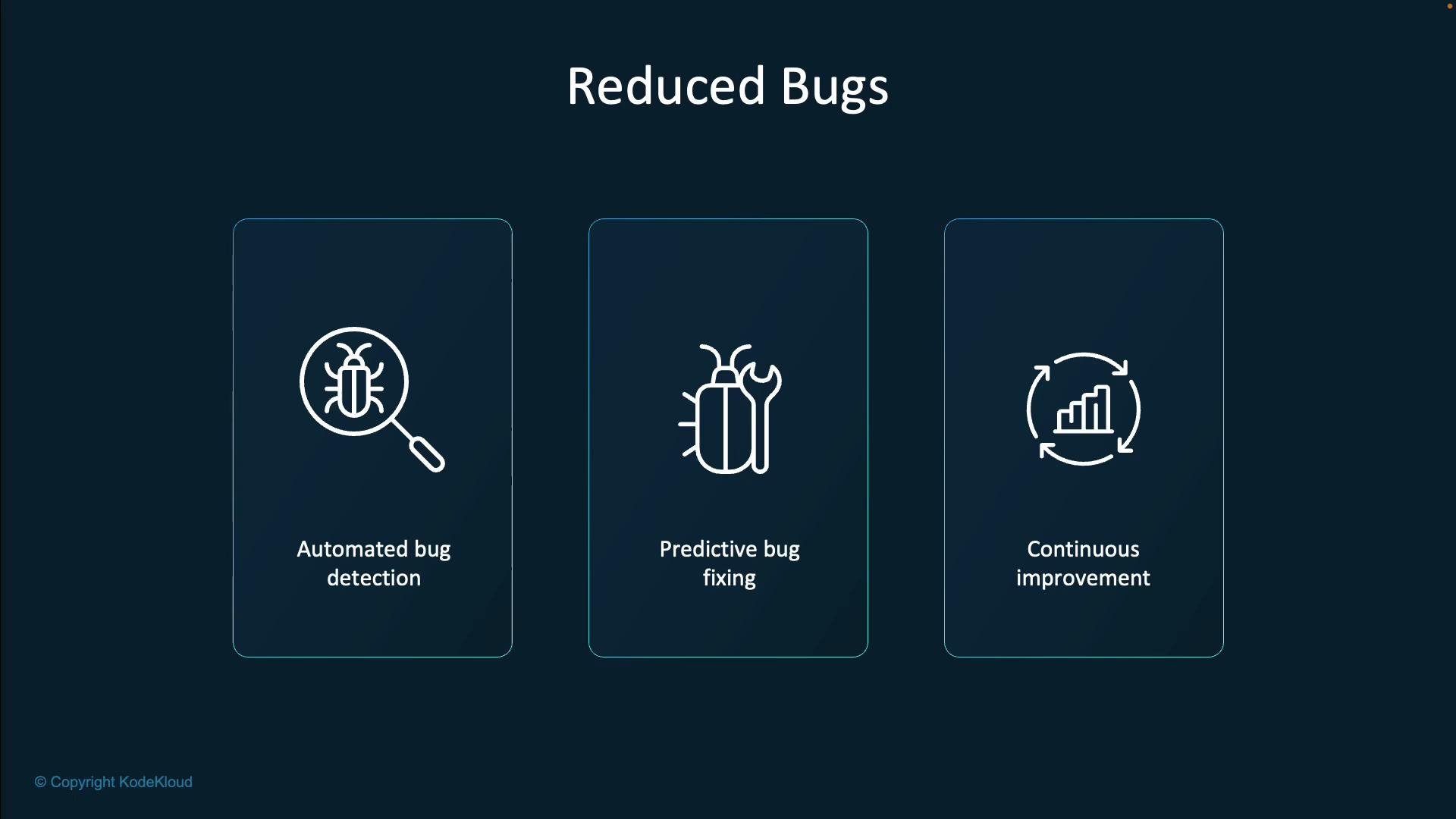
- Scanning code for logic errors, anti-patterns, and security vulnerabilities.
- Providing suggested fixes or patch examples that developers can review and adapt.
- Learning recurring fault patterns in a codebase and proposing preventive changes.
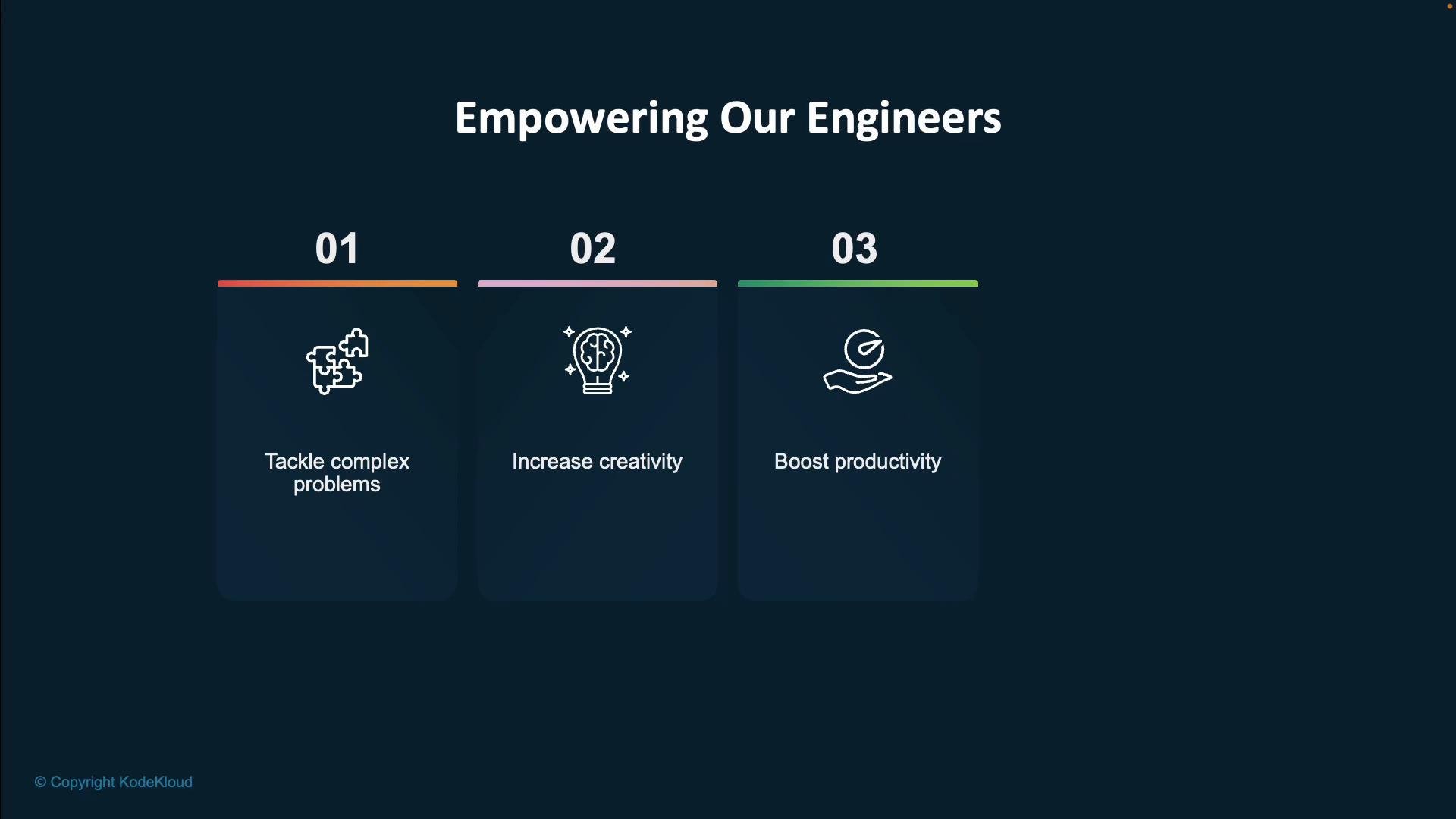
- Reduce time spent on repetitive tasks so teams can focus on architecture and design.
- Decrease context switching by providing immediate, relevant code suggestions and examples.
- Shorten the learning curve for junior engineers with in-context explanations and examples.
- Increase confidence for teams tackling complex problems by automating routine work.
- Scope: Will the tools be used by individuals, teams, or organization-wide?
- Outcomes: What do you expect (faster delivery, fewer regressions, improved onboarding)?
- Controls: What governance is required (data handling, model access, security scanning, code review gates)?
- Pilot: Start with a volunteer team and a well-defined project.
- Metrics: Capture cycle time, defects, review feedback, and developer satisfaction.
- Policy: Define data governance (what can be sent to models), access controls, and required review steps.
- Iterate: Refine prompts, templates, and integration points based on pilot feedback.
A practical adoption plan balances experimentation and governance: pilot with a small team, measure cycle time and defect trends, and evolve policies for data handling and model usage.
Be aware of risks like data leakage, hallucinated outputs, and overreliance on suggestions. Always validate AI-generated changes through testing, code review, and security scans.
- Kubernetes Basics
- GitOps workshop (KodeKloud)
- CI/CD pipeline course (KodeKloud)
- AIOps & monitoring with Prometheus/Grafana (KodeKloud)