

- Which lab environment is best: local or cloud-based? Why choose one over the other?
- How should you configure your lab environment to maximize learning?
- What steps can you take to overcome obstacles when transitioning from Windows to Linux?
- What essential networking concepts—like IP addresses, ports, and routing—do you need in order to set up Virtual Machines (VMs) effectively?
- How do you build, package, and deploy applications written in languages such as Java, NodeJS, or Python?
- What strategies will help you troubleshoot issues with web servers, application servers, and databases?
- How do you interpret and work with configuration files in JSON, YAML, or JSONPath format?
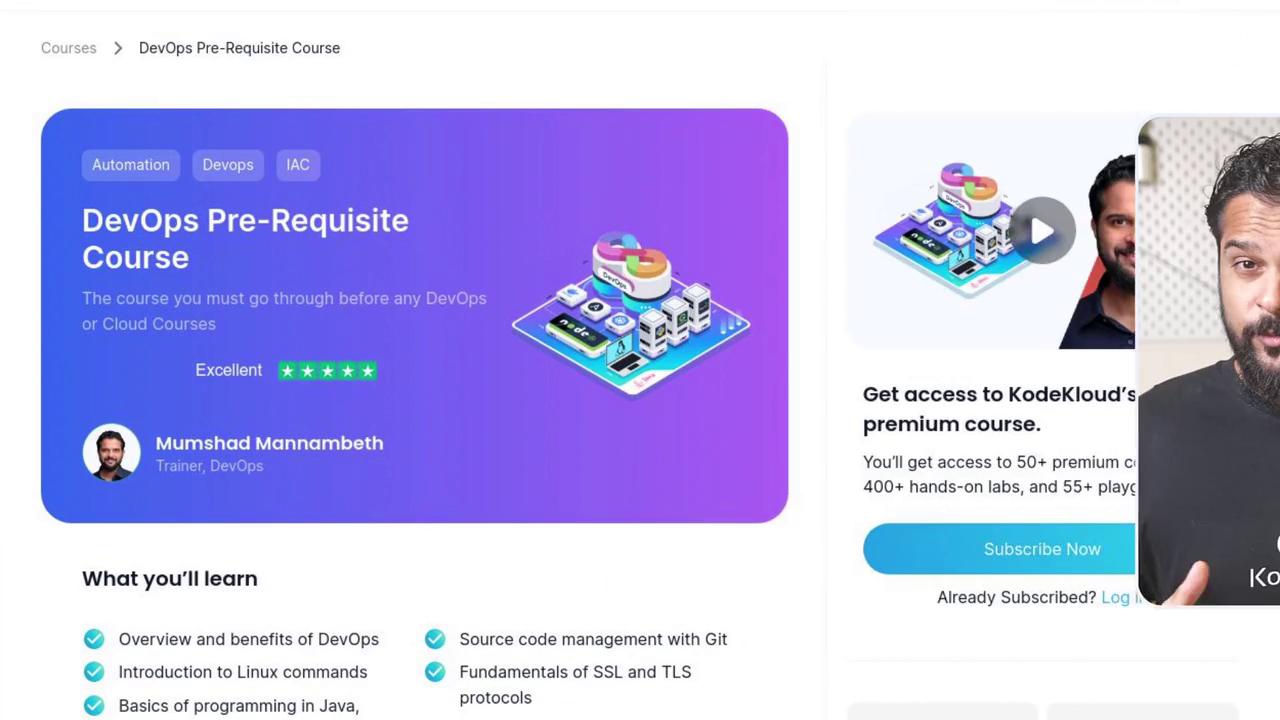
This course is crafted to answer these questions comprehensively. It serves as a foundation before you dive into advanced topics in DevOps and cloud computing. Think of it as a computer science crash course that equips you with the essential concepts for a successful career in these fields.
Course Topics
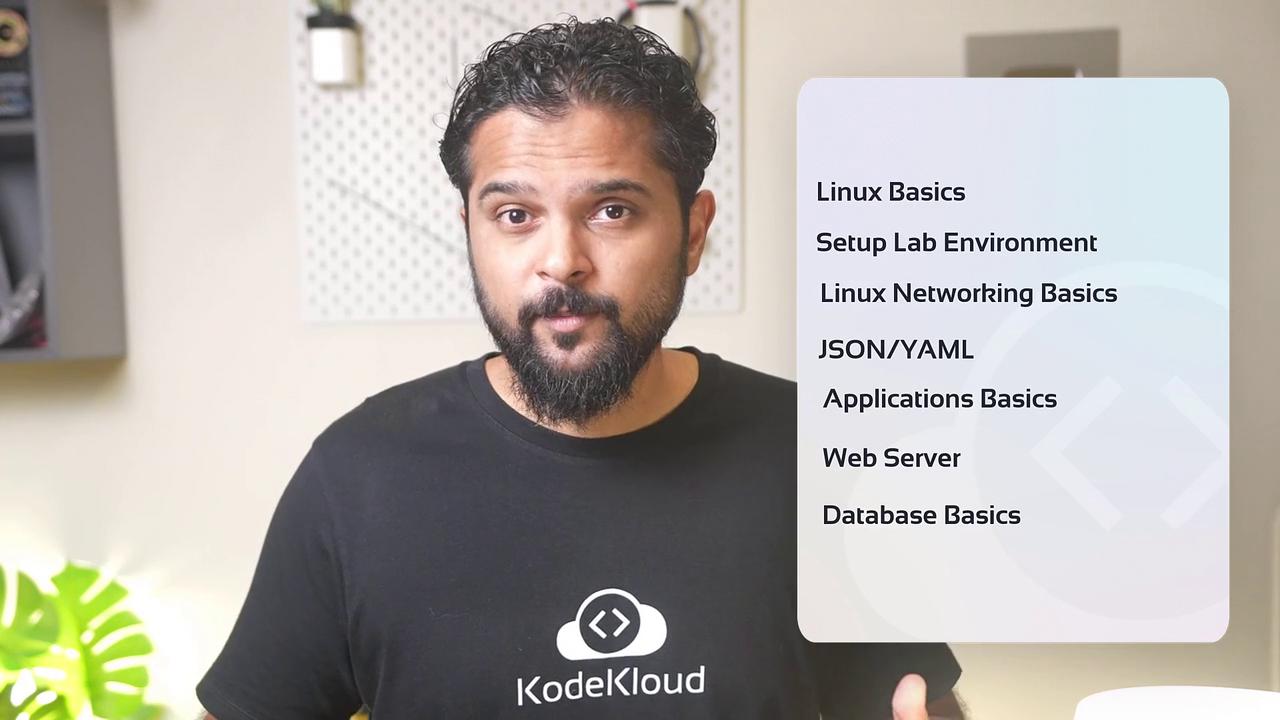
In this course, you will cover the following essential topics:- Linux Fundamentals: Gain an introductory understanding of Linux, including an exploration of various distributions and devices.
- Lab Environment Setup: Learn how to set up a basic lab environment, with practical guidance on using VirtualBox and troubleshooting common networking issues across multiple VMs.
- Linux Networking Basics: Understand crucial networking concepts such as IP addresses, ports, network interfaces, routing, and gateways.
- Data Formats: Explore common data formats like JSON, YAML, and JSONPath through engaging, hands-on labs.
- Applications and Servers: Get an overview of popular programming languages (Java, Python, NodeJS) from an operations perspective. This section covers tasks such as installing programming languages, downloading application code from GitHub, and configuring web servers (Apache, Tengine, NGINX, etc.).
- Database Fundamentals: Differentiate between SQL and NoSQL databases and learn how to install and configure database systems such as MySQL and MongoDB.
Before diving into advanced DevOps or cloud computing concepts, we highly recommend completing this prerequisite course to build a strong foundation.