


This course follows a question-driven, hands-on approach. Each module is organized around practical scenarios and end-to-end solutions so you can apply techniques directly to projects and assessments.
- Emphasis on retrieval-augmented generation (RAG) and vector search for real-world LLM applications.
- Practical coverage of prompt engineering, model selection, and evaluation strategies.
- End-to-end guidance that includes data preparation, fine-tuning techniques, deployment, and observability.
Course overview
Below is a concise summary of each major area covered in the course. Each section includes conceptual foundations and hands-on exercises to reinforce learning.Core Machine Learning and GenAI Concepts
- Fundamentals of modern LLMs and transformer architectures.
- Retrieval-augmented generation (RAG) patterns and vector search workflows.
- Text vectorization, similarity search methods, and evaluation metrics.
- Prompt engineering, model selection heuristics, and fine-tuning strategies.
- Data preparation, chunking strategies, and attention mechanisms.
Data Analysis
- Techniques for analyzing training and validation data to drive model decisions.
- Selecting appropriate models and metrics for imbalanced or sparse datasets.
- Interpreting attention maps and diagnosing data bias sources.
- Visualizing relationships between model metrics and dataset characteristics.
Experimentation
- Designing reproducible experiments for open-ended LLM tasks.
- A/B prompt testing, controlled ablations, and measuring hallucination rates.
- Statistical tests and structured human evaluation methodologies.
- Best practices for logging, tracking, and comparing model iterations.
Software Development
- Patterns for deploying GenAI systems to production: latency, throughput, and cost trade-offs.
- Memory management, efficient document chunking, and cache strategies for RAG systems.
- Building scalable services with observability and failure recovery in mind.
- Integration of key Python libraries and frameworks for model serving and orchestration.
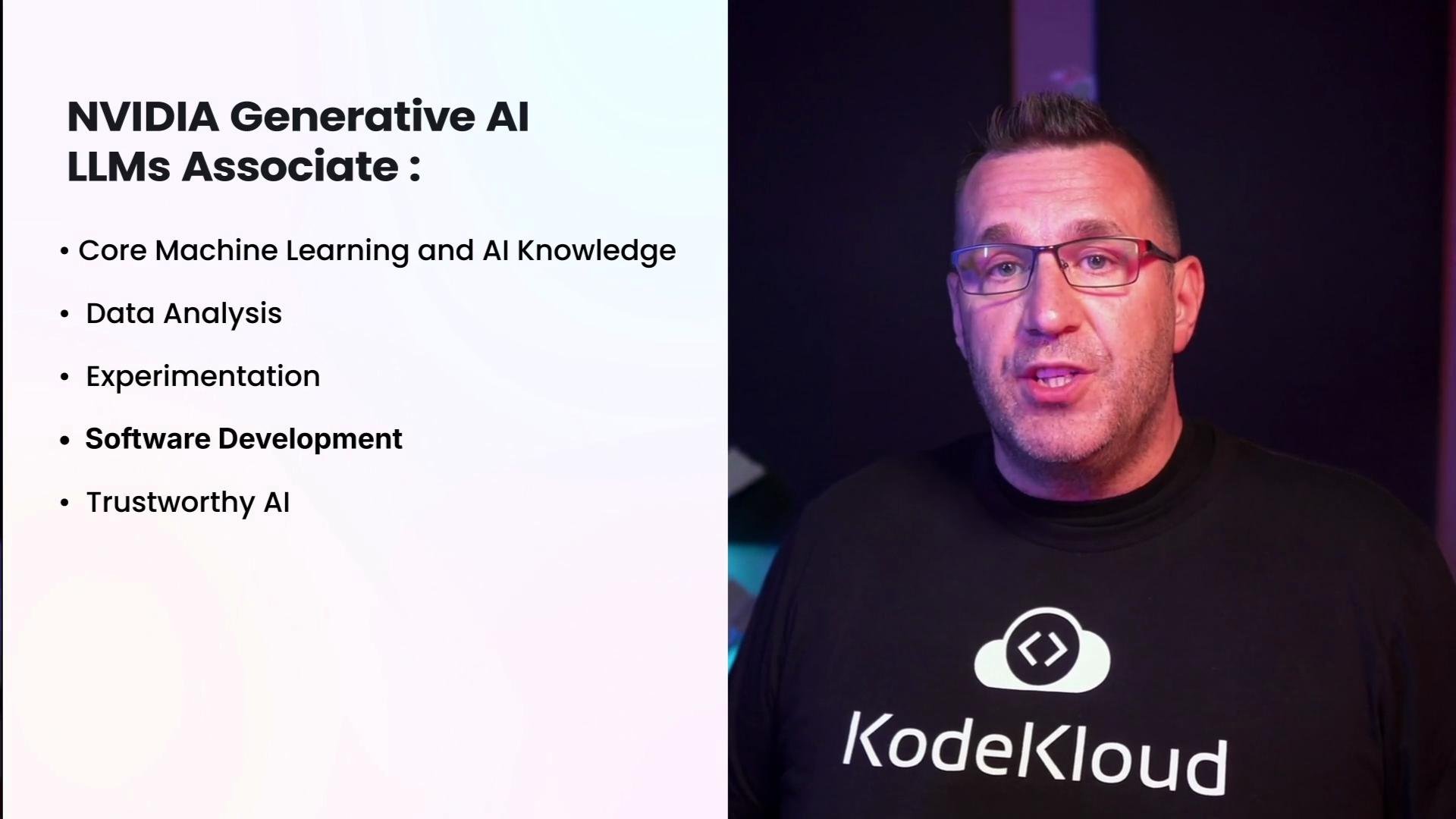
Trustworthy AI
- Principles for ethical, secure, and transparent GenAI systems.
- Techniques to minimize model bias, preserve privacy, and improve interpretability.
- Defenses against prompt injection, adversarial inputs, and injection-style attacks.
- Responsible deployment practices and governance for RAG and LLM-based systems.

Community and Collaboration
At KodeKloud we emphasize collaborative learning. Use the forums to discuss labs, troubleshoot real issues, and share best practices with fellow learners. Peer feedback and community-driven examples are integral to mastering practical GenAI skills.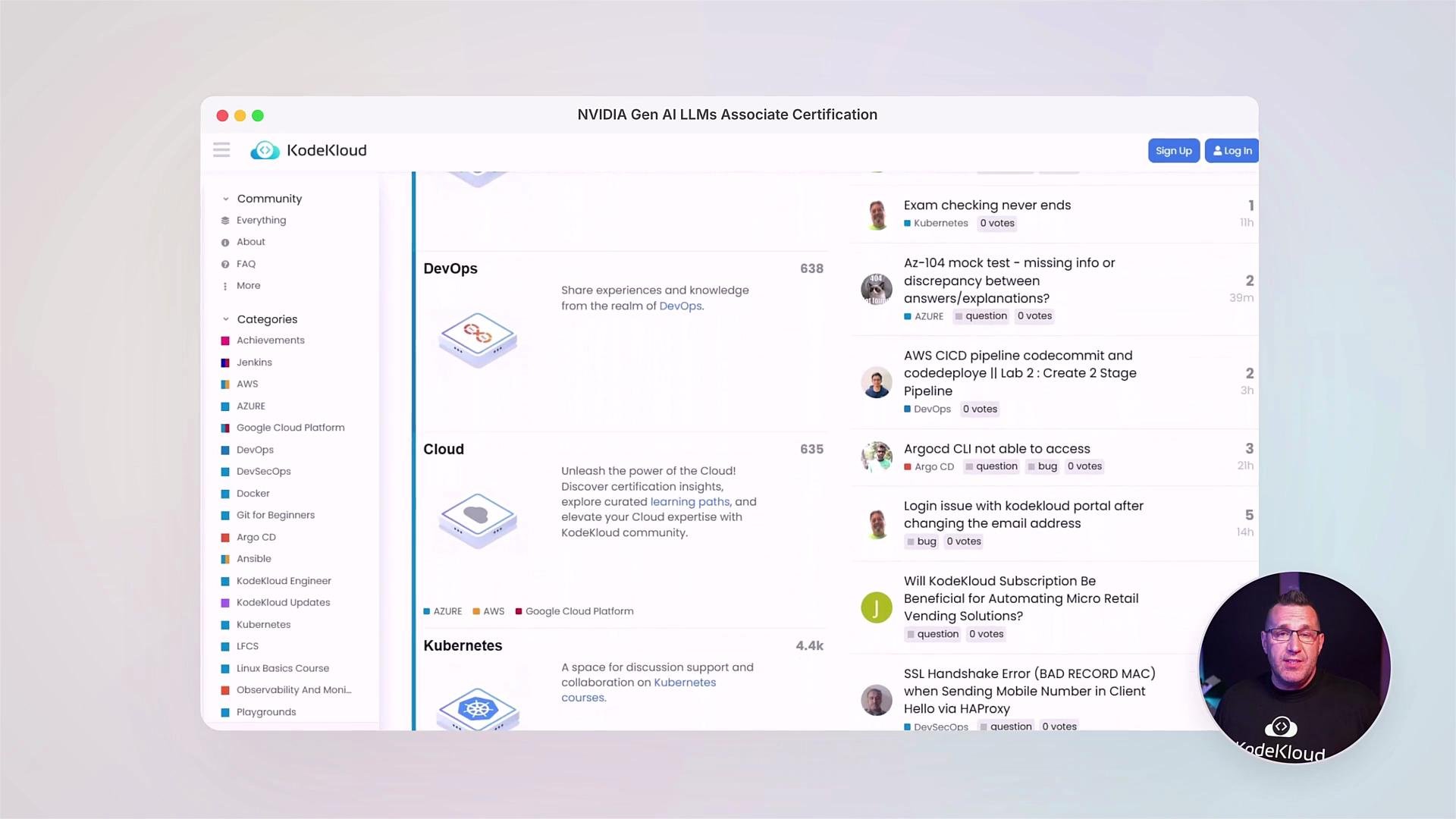
Course at-a-glance
When experimenting with real data, follow all applicable legal and privacy requirements. Avoid using personally identifiable information (PII) without consent and apply anonymization and access controls where required.
Recommended prerequisites
- Basic familiarity with Python and machine learning concepts.
- Understanding of neural networks and the transformer architecture.
- Comfort with command-line tools and version control (Git).
- Optional: experience with cloud GPUs or containerized deployments.
Links and references
- NVIDIA documentation and GenAI resources: https://developer.nvidia.com/
- AWS GPU and machine learning services: https://aws.amazon.com/machine-learning/
- KodeKloud community: https://kodekloud.com/
- NVIDIA certification information: https://www.nvidia.com/en-us/training/ (search for NCA-GenL and related tracks)