

Monolith
A monolithic architecture bundles the entire application into a single codebase and deploys it as one unit. All features—sign-up, photo upload, feed loading, likes, and comments—live in the same program and call each other directly via function calls. Example monolith implemented as a single file:Microservices
Microservices split the application into multiple small, independently deployable services. Each service owns its codebase and is deployed separately. For the photo app you might separate uploads, feeds, notifications, and likes into distinct services that communicate over the network. Example broken into services:For many small teams and moderate traffic, a monolith is simpler and faster to iterate on. Move to microservices only when you have clear, measurable reasons to do so (for example, independent scaling or team autonomy).
When to start with a monolith
Microservices are not always better. For a photo app with a few thousand users, a monolith is usually the better starting point. Advantages of beginning with a monolith:- Single codebase to learn, test, and debug.
- Direct function calls—no network overhead between modules.
- One deployment and one location to inspect when failures occur.
- Simpler CI/CD and development workflow for small teams.
Why split into microservices?
Two common motivations push systems from monolith → microservices: independent scaling and team autonomy.- Independent scaling
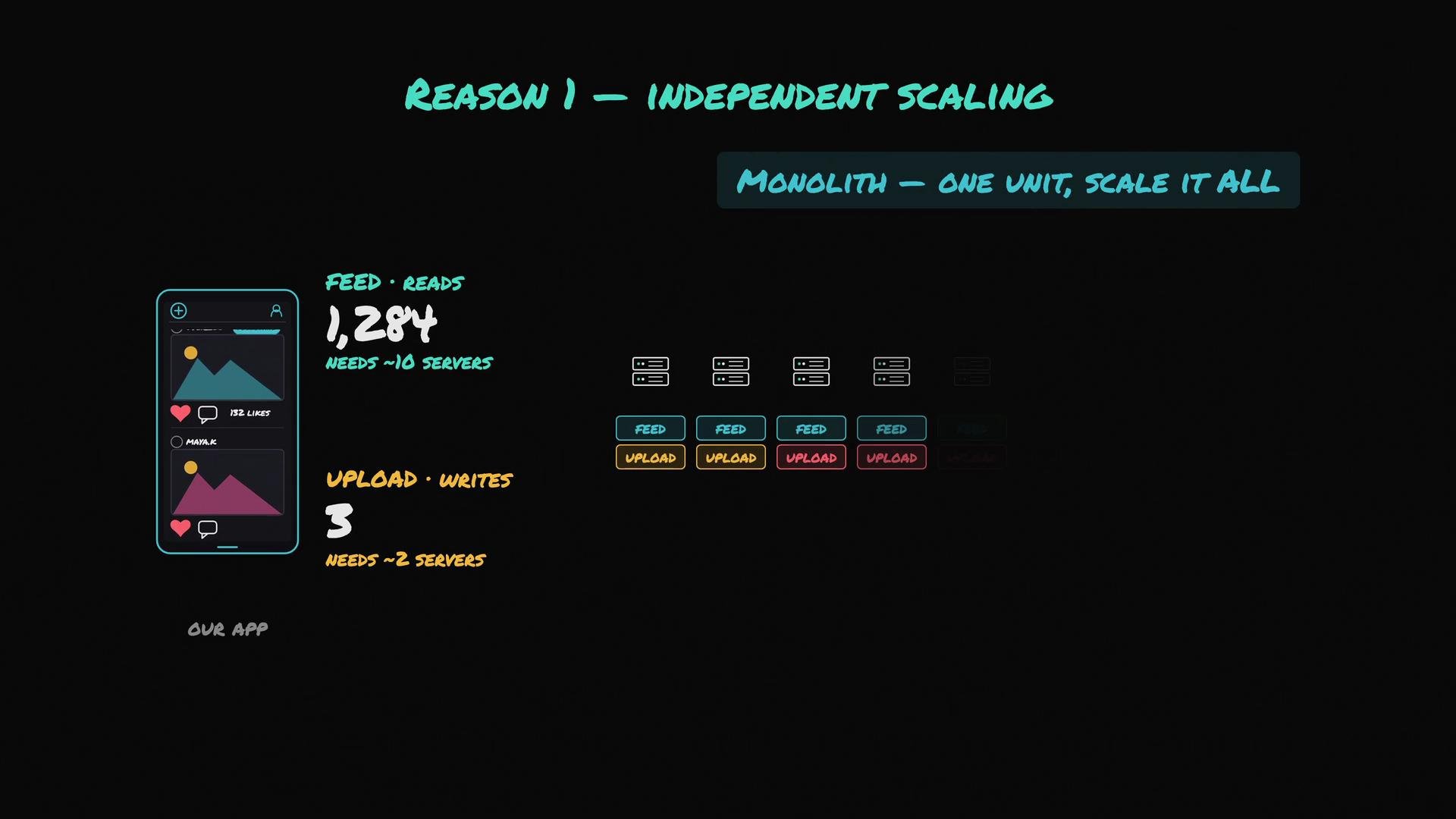
The feed is read-heavy: users scroll many photos (reads) but perform uploads far less often (writes). A monolith forces you to scale the entire application together. If the feed needs ten instances, the upload code is unnecessarily scaled to ten instances too.
- Team size and independent deploys
When many engineers work in one codebase, merges and deploys can block each other. Splitting services allows teams to own and deploy services independently, reducing coordination friction and accelerating delivery.
Trade-offs and operational complexity
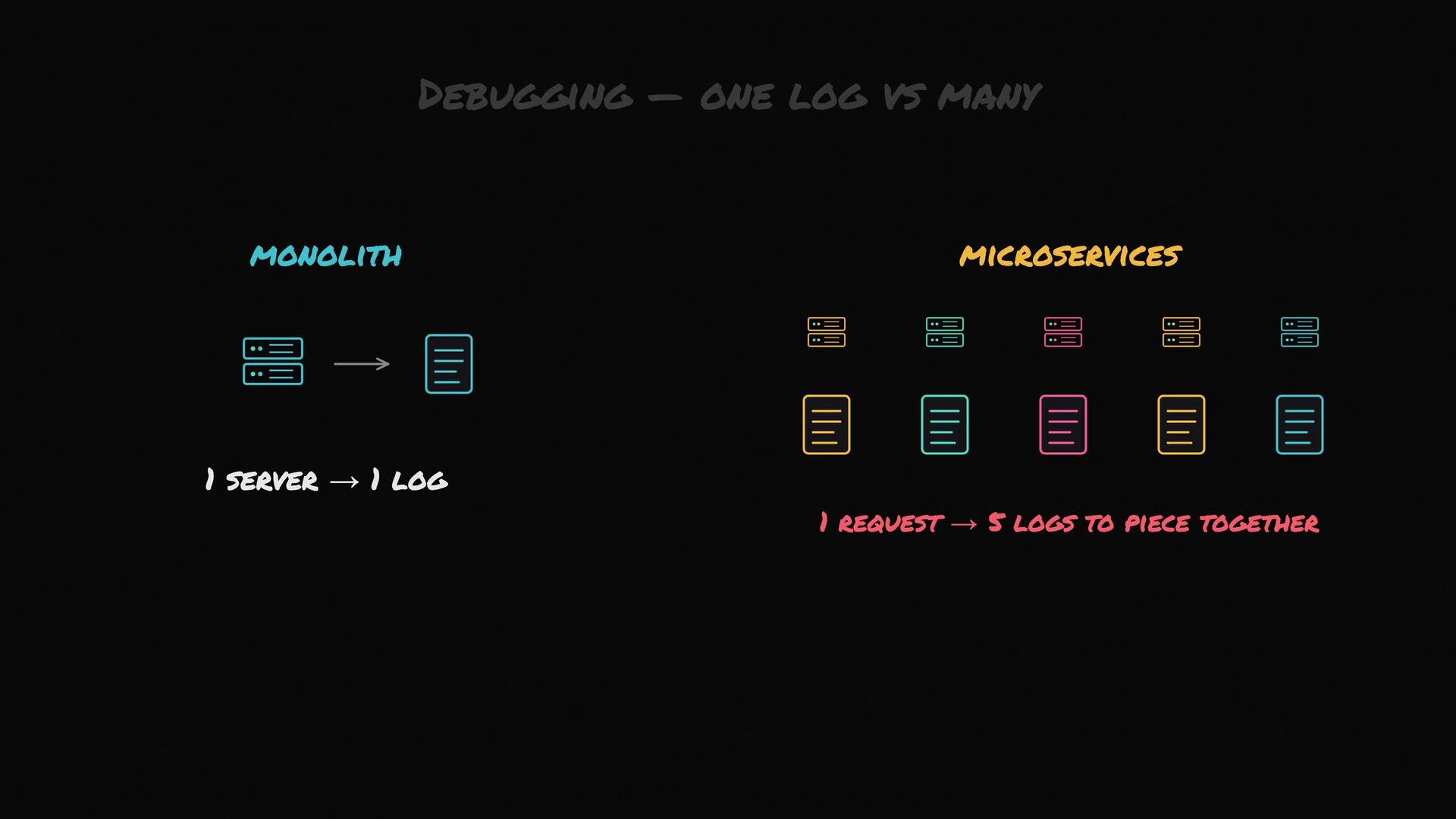
Microservices introduce operational overhead. Each inter-service interaction becomes a network call, which can be slow, timeout, or partially fail. Handling this requires retries, timeouts, circuit breakers, idempotency, and robust observability. Debugging becomes more complex: a single user request may traverse multiple services and you must correlate logs, traces, and metrics to diagnose problems.Microservices add operational cost. Ensure you have monitoring, tracing, and a proper deployment strategy before adopting them broadly.
Comparison at a glance
Conclusion
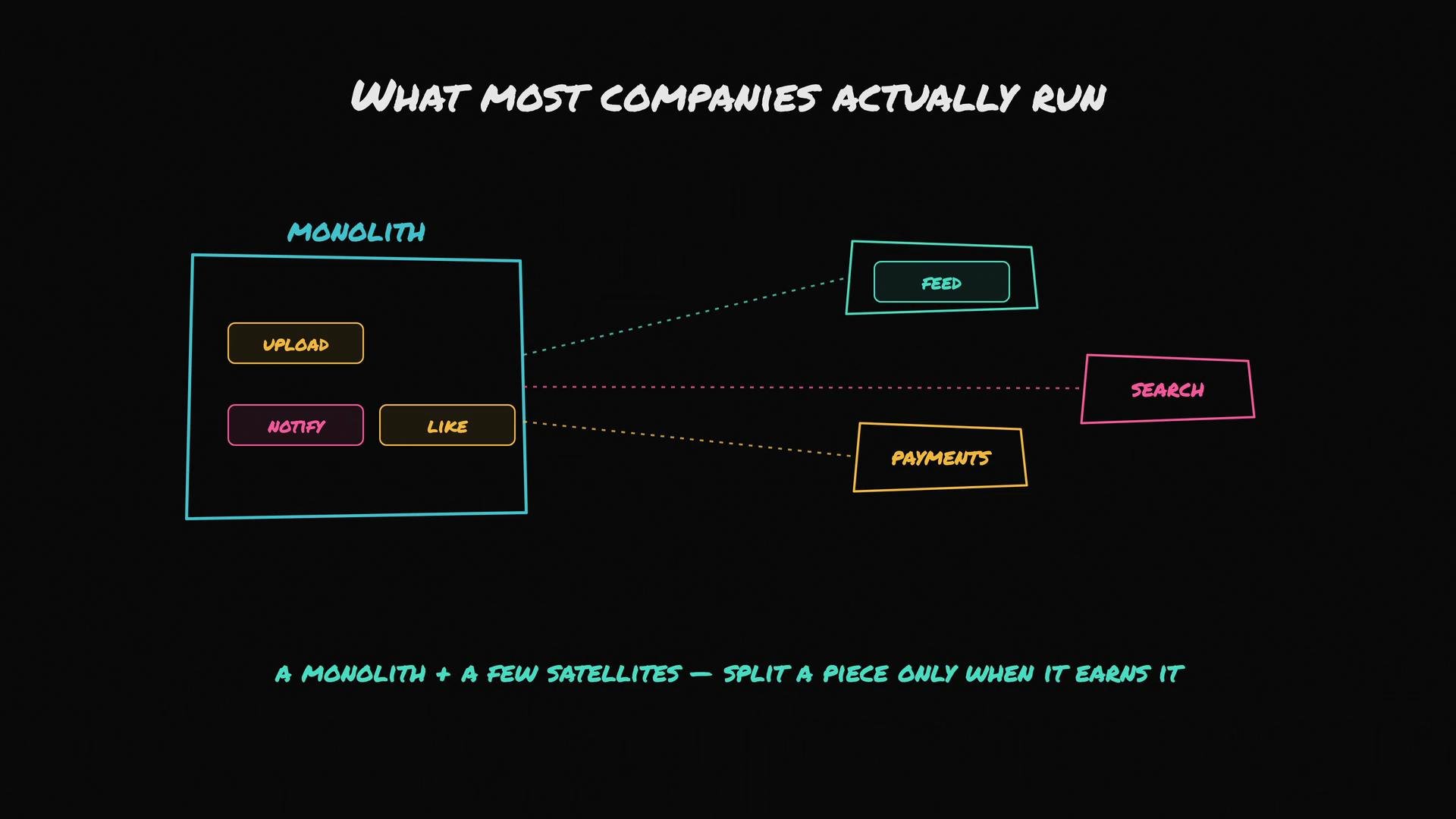
For the photo app: start as a monolith and split out services only when you can justify them with metrics or clear organizational needs—independent scaling, clear ownership boundaries, or performance bottlenecks. Prematurely converting to microservices can increase complexity faster than it increases value. I’ve seen small teams spend more time debugging inter-service networks than building features.Links and references
- Microservices vs Monoliths — Martin Fowler
- Kubernetes Documentation
- Designing Data-Intensive Applications — Patterns for scalable systems