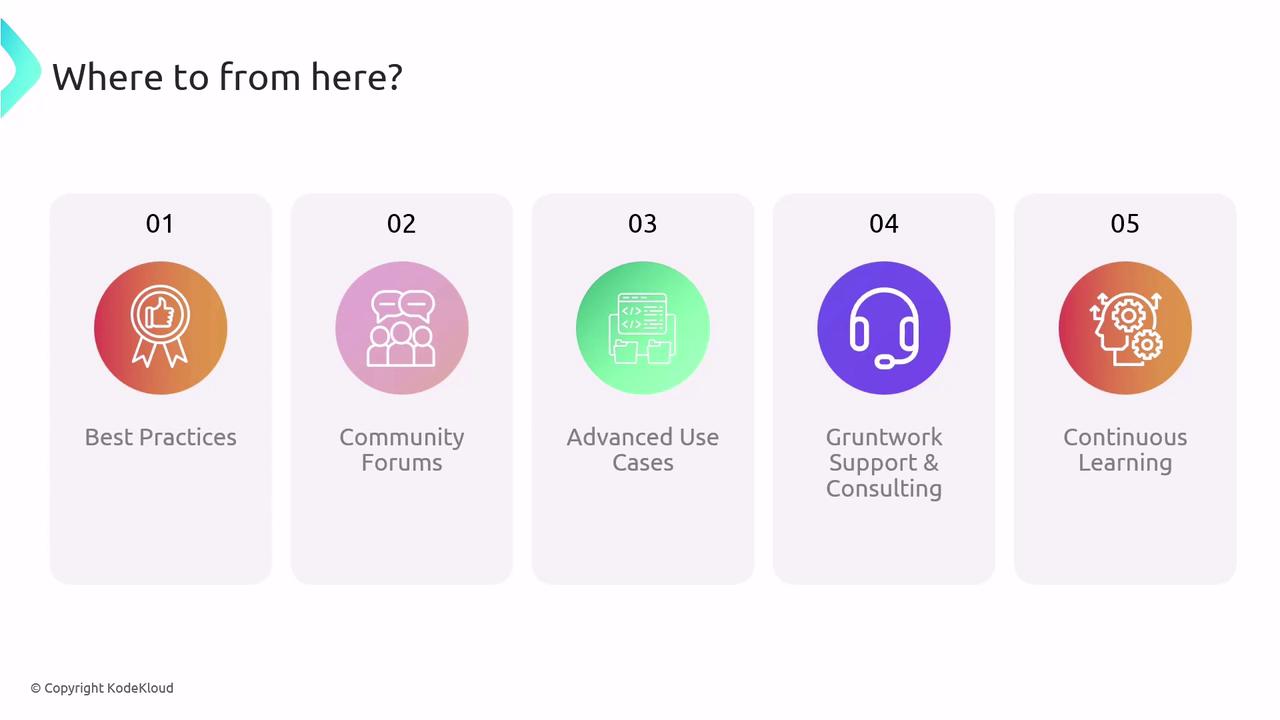
1. Official Terragrunt Documentation
Dive into the official docs for in-depth tutorials, configuration reference, and troubleshooting advice. This should be your go-to resource for mastering Terragrunt features like dependency management, locking, and remote state. Read the full documentation here:https://terragrunt.gruntwork.io/docs
2. Terraform Up & Running (eBook)
Expand your Terraform expertise with Yevgeniy Brikman’s Terraform Up & Running. This ebook covers real-world examples, best practices, and patterns that complement your Terragrunt workflows.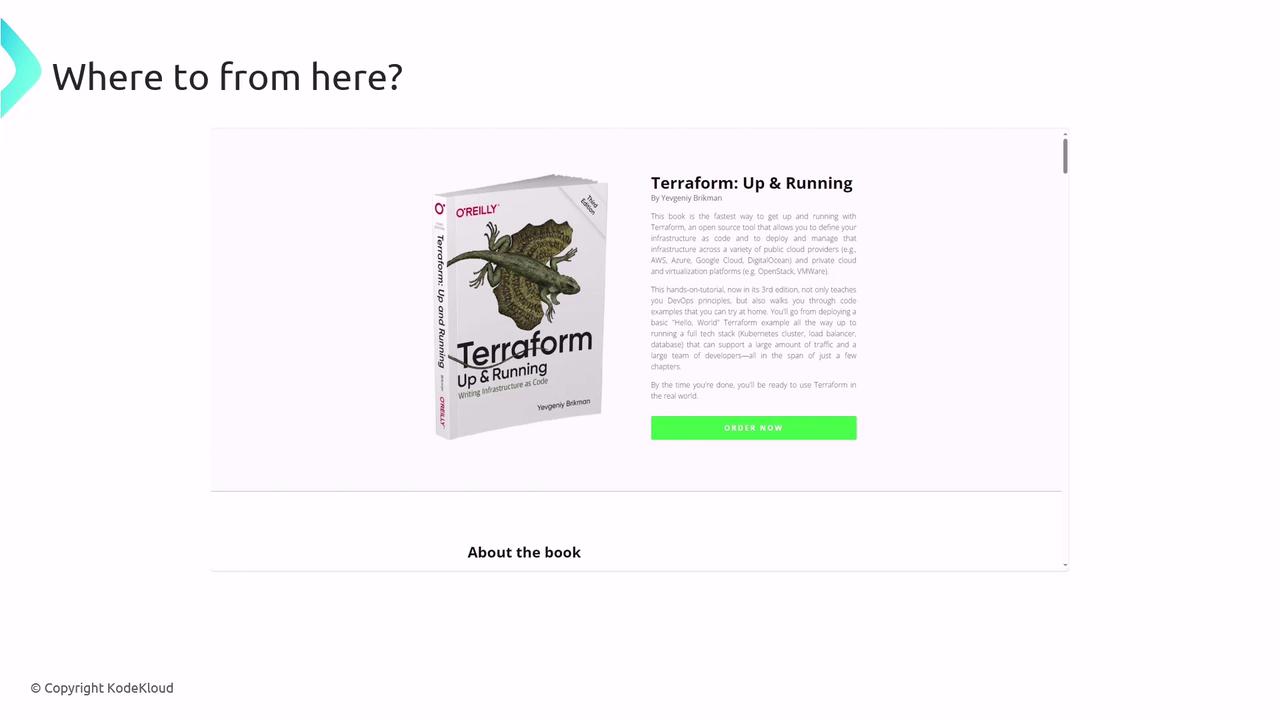
https://terraformupandrunning.com
3. Gruntwork Website
Explore Gruntwork’s platform for battle-tested IaC modules, reference architectures, and expert tutorials. Leverage their code libraries to accelerate provisioning on AWS, GCP, Azure, and more.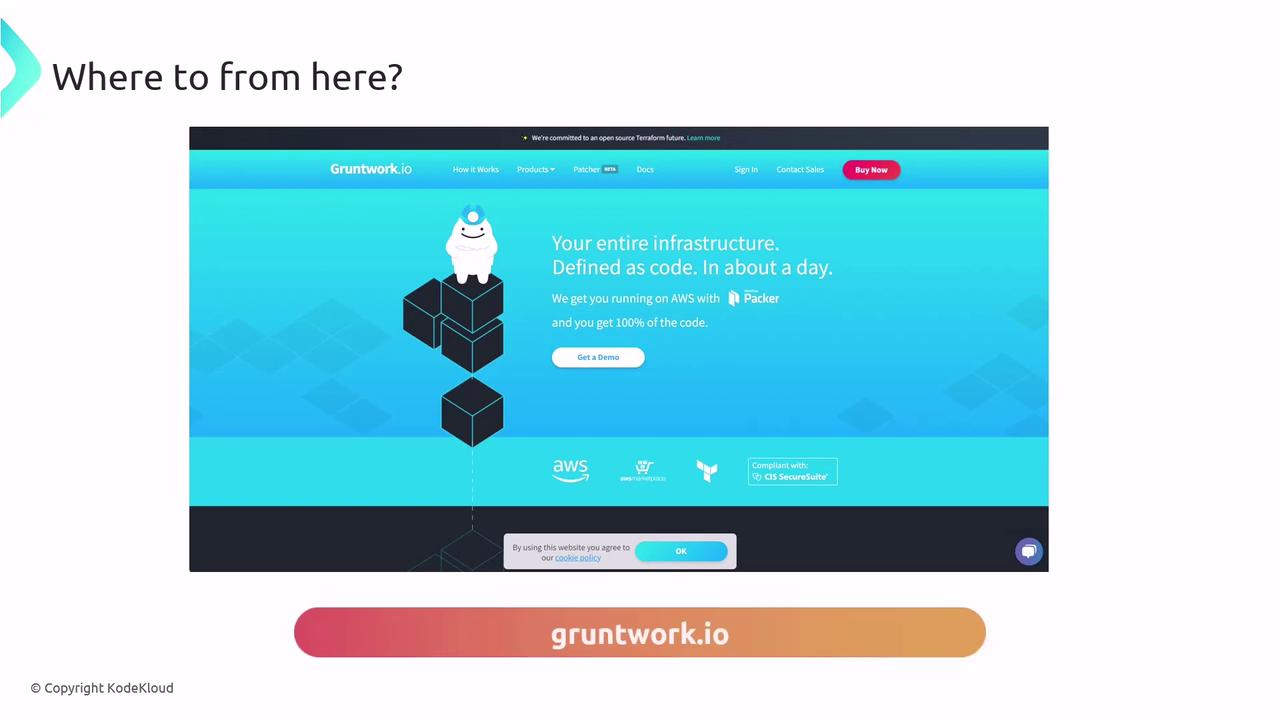
https://gruntwork.io
4. Terragrunt Best Practices
Adopt industry-proven patterns to keep your Terragrunt codebase maintainable, DRY, and scalable. Key topics include:- Enforcing DRY across modules
- Structuring live vs. non-live configurations
- Automating environment promotions (e.g., dev → staging → prod)
Avoid duplicating
terragrunt.hcl blocks across environments. Centralize shared logic in a single parent config to reduce errors.5. Community Engagement
Join the Terragrunt community to share experiences, ask questions, and stay current with new releases:- GitHub Discussions: https://github.com/gruntwork-io/terragrunt/discussions
- Slack Workspace: https://slack.gruntwork.io
Active participation in forums and Slack channels helps you discover real-world use cases and get fast troubleshooting support.
6. Advanced Use Cases
Take your skills to the next level by exploring:- Dynamic configurations with
generateblocks - Custom helper functions (
read_terragrunt_config,local_file) - Complex module composition and stacking
7. Gruntwork Support & Consulting
For enterprise-grade projects or tighter timelines, consider Gruntwork’s professional services. Their team offers hands-on assistance, architectural reviews, and custom module development. Learn more:https://gruntwork.io#consulting
8. Continuous Learning
Keep up with Terragrunt and Terraform updates to maintain an agile IaC practice:- Subscribe to release notes: https://github.com/gruntwork-io/terragrunt/releases
- Follow community blogs and webinars
- Watch for new Terraform providers and Terragrunt features