

- Structure reusable modules to eliminate redundancy
- Centralize and abstract variables for consistency
- Inherit shared settings through a hierarchical layout
- Streamline maintenance and promote changes safely
This article assumes basic familiarity with Terraform and HCL. For a Terraform refresher, see Terraform Overview.
1. Modular Configuration
By encapsulating common resources in Terragrunt modules, you define infrastructure blocks once and reuse them across environments. This approach reduces code duplication and speeds up delivery. Example module call in your environment folder: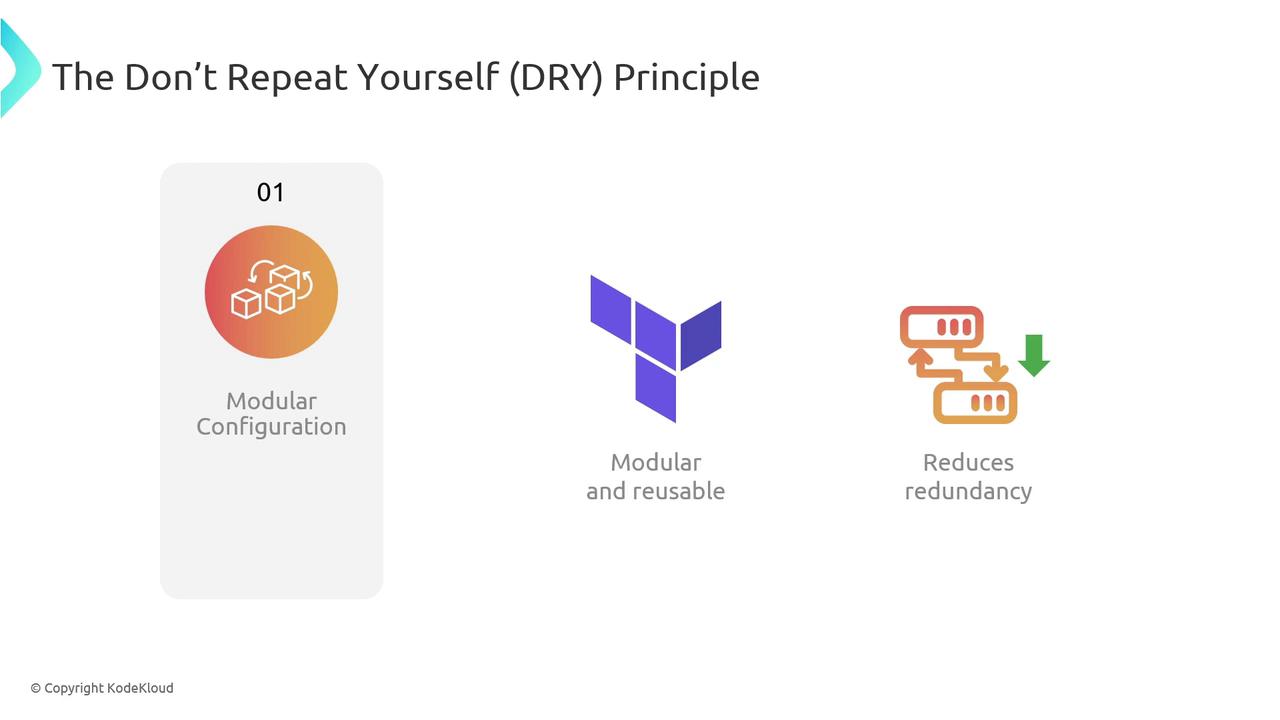
2. Variable Abstraction
Terragrunt centralizes variable definitions into shared files, preventing hard-coded values and scattered overrides. Reuse a singlevariables.hcl across modules:
3. Hierarchical Configuration Inheritance
Terragrunt’s directory structure supports inheritance of configuration blocks. Define global settings at the root, then override or extend them in child folders: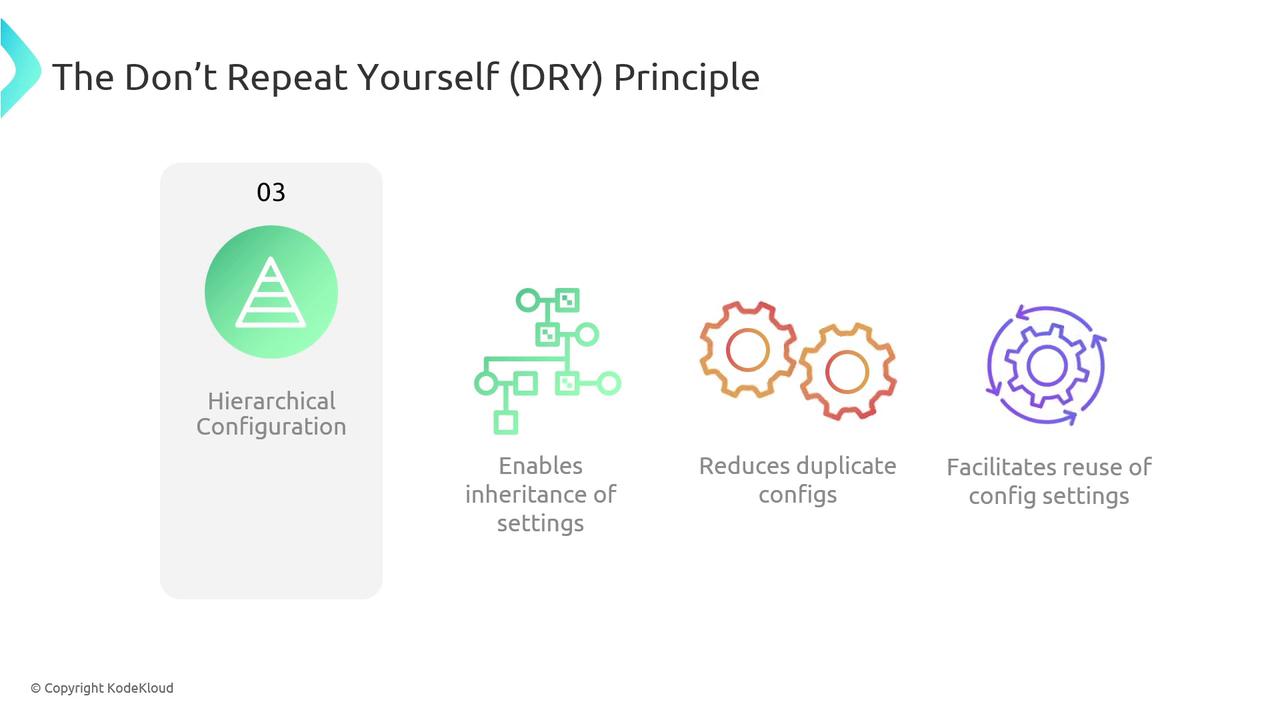
4. Simplified Maintenance and Promotion
With DRY in place, updating modules or variables in one location propagates changes everywhere they’re used. This reduces configuration drift, lowers the risk of errors, and accelerates promotions across dev, staging, and prod.
Links and References
- Terragrunt Documentation
- Terraform Registry
- Infrastructure as Code Best Practices
- HCL Language Reference