In this lesson, we’ll combine Terragrunt and AWS to build a sample project that demonstrates core infrastructure-as-code concepts. By the end, you’ll have a fully deployed AWS demo showcasing Terragrunt’s power. Our primary objectives include:
Ensure your AWS credentials are configured correctly before you begin. Missing or misconfigured credentials will prevent Terragrunt from accessing AWS resources.
Next, create a new terragrunt.hcl file with these steps:
  1. Define input variables to parameterize your AWS resources.
  2. Reference modules from the public Terraform Registry or Git repositories.
  3. Use variables to keep your infrastructure reusable and flexible.
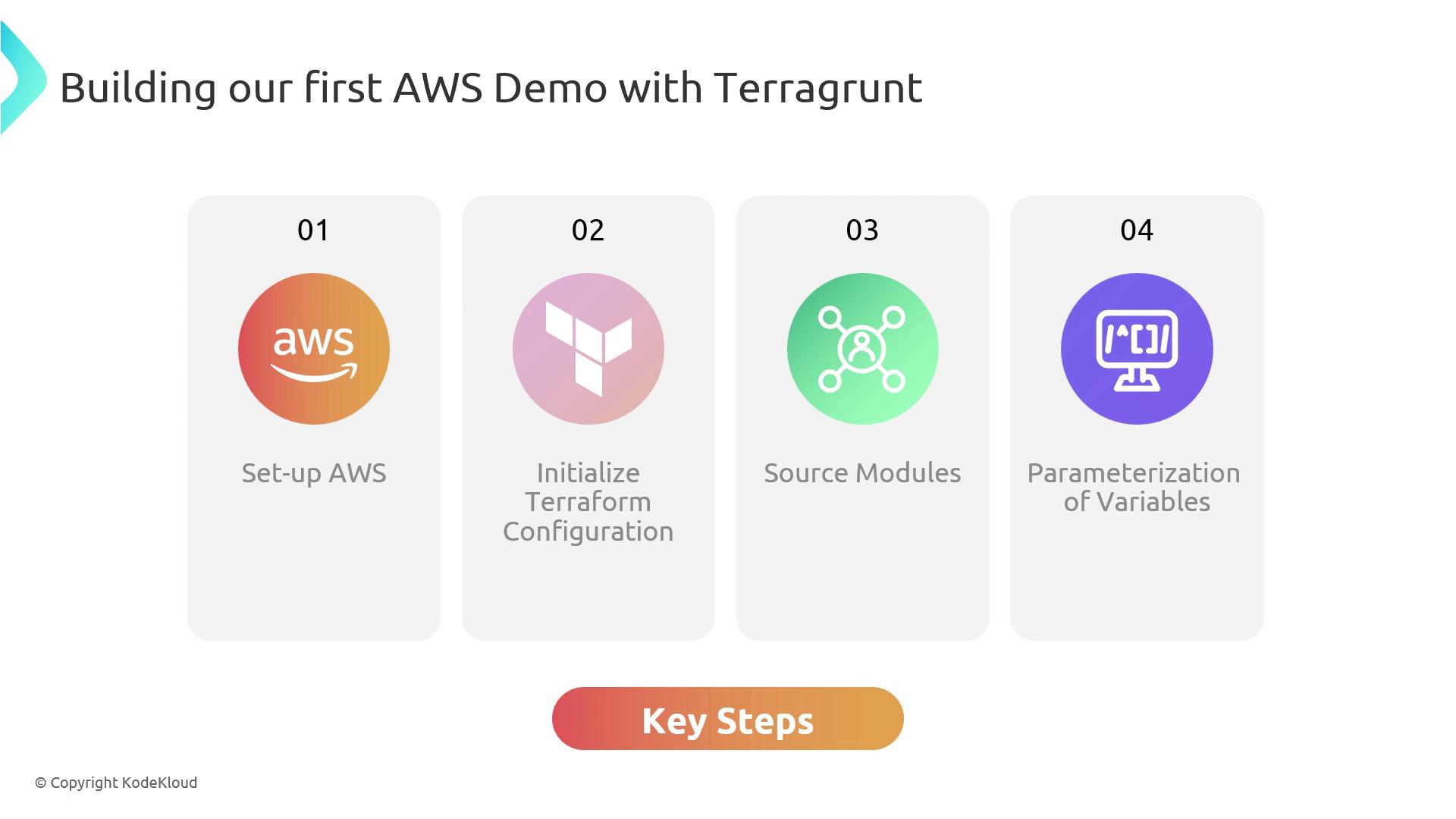
The image outlines four key steps for building an AWS demo with Terragrunt: setting up AWS, initializing Terraform configuration, sourcing modules, and parameterizing variables.

Security & Module Sourcing

  • Configure IAM roles in Terragrunt to enforce least-privilege access.
  • Integrate community-built modules from the Terraform Registry.
  • Source custom modules from private Git repositories, handling authentication and secure access.
Always follow the principle of least privilege. Overly permissive IAM roles can expose your AWS account to security risks.
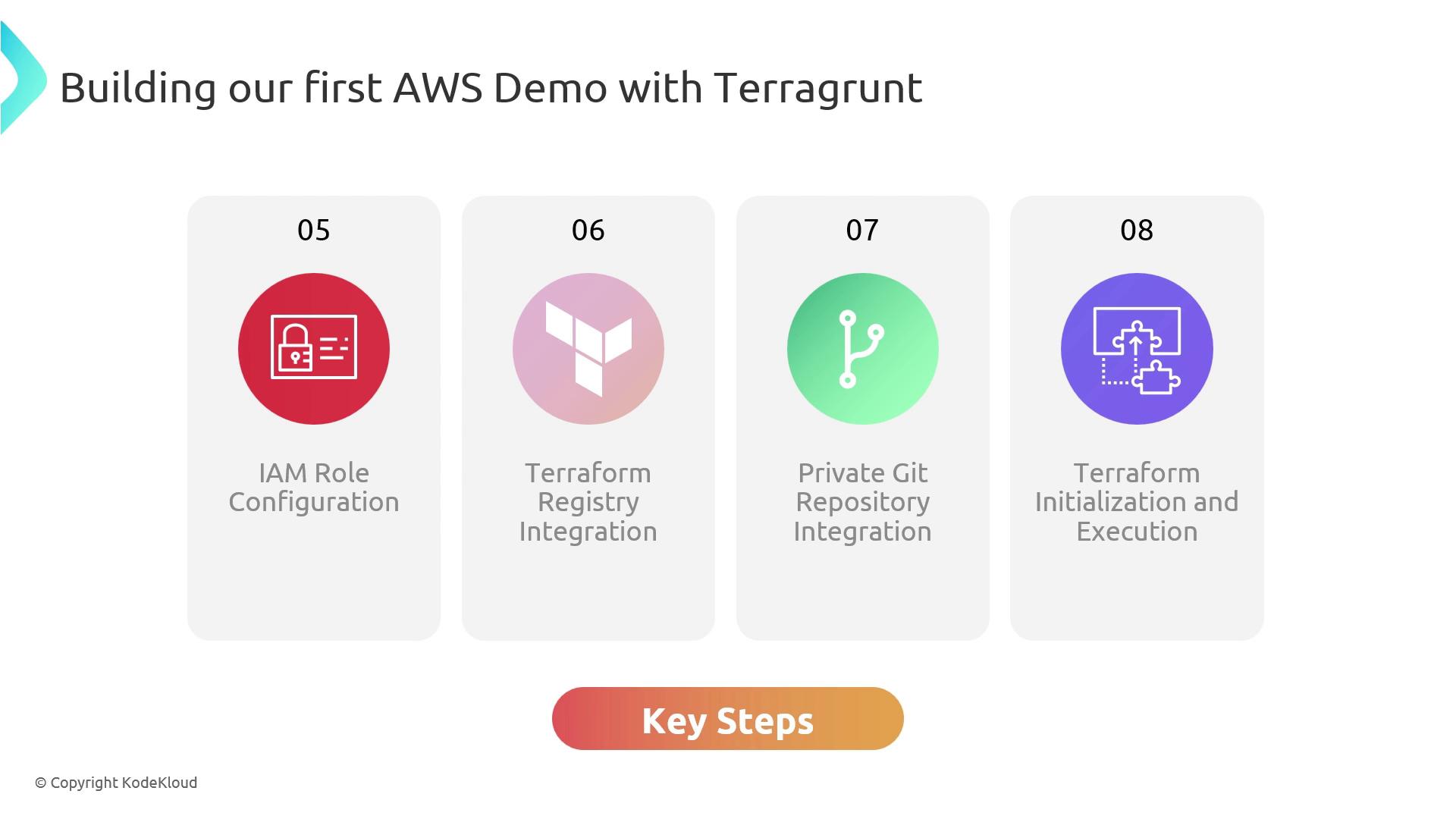
Once your configuration is ready, initialize and deploy:
The image outlines key steps for building an AWS demo with Terragrunt, including IAM role configuration, Terraform registry integration, private Git repository integration, and Terraform initialization and execution.

Versioning, Testing & Documentation

To ensure stability and reproducibility:
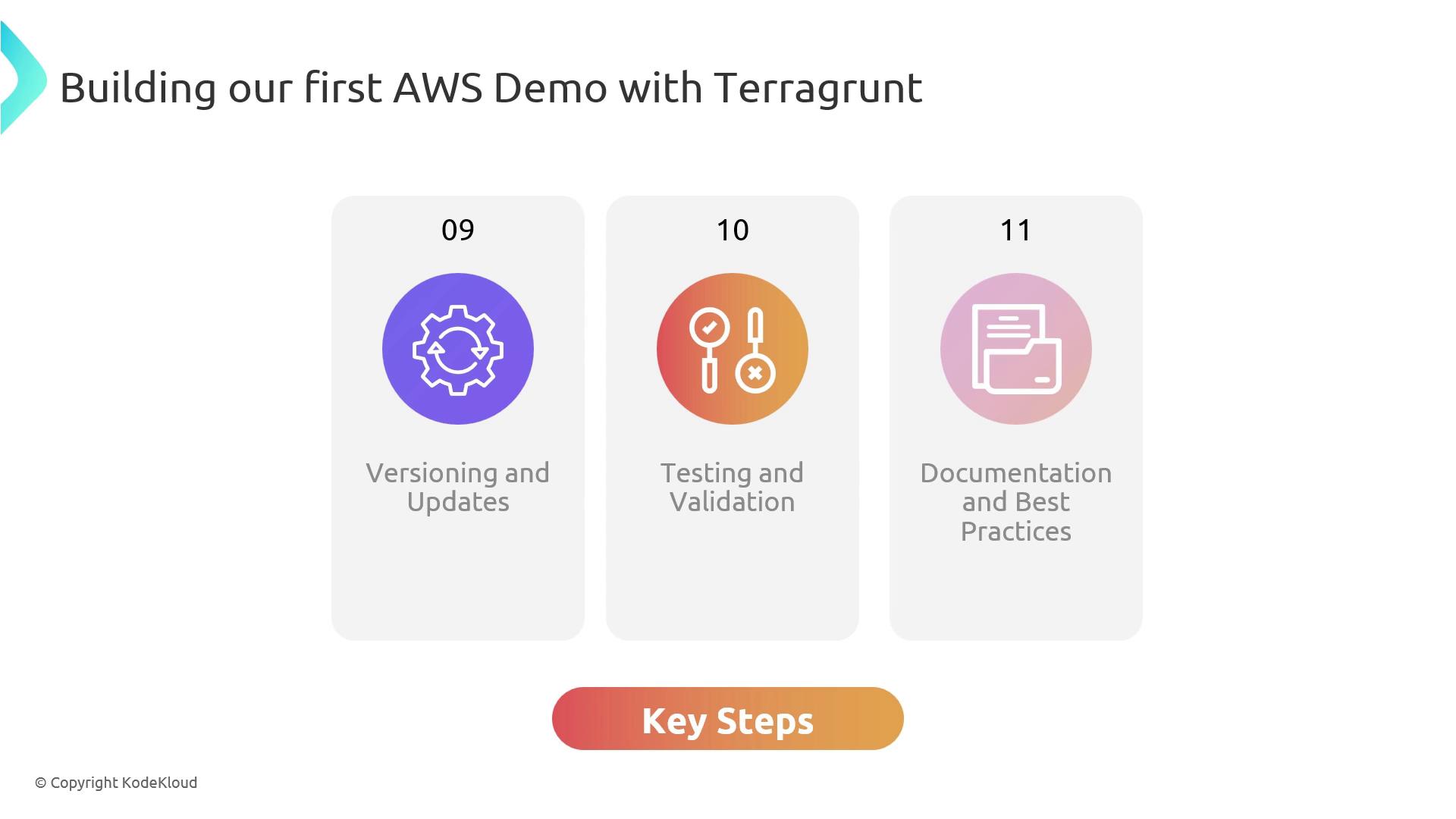
The image outlines key steps for building an AWS demo with Terragrunt, focusing on versioning and updates, testing and validation, and documentation and best practices.
By following these steps, you’ll deploy a fully functional AWS demo project that highlights practical Terragrunt usage for infrastructure as code. Let’s get started and build something awesome together!

Watch Video