

Availability Zones vs. Regions
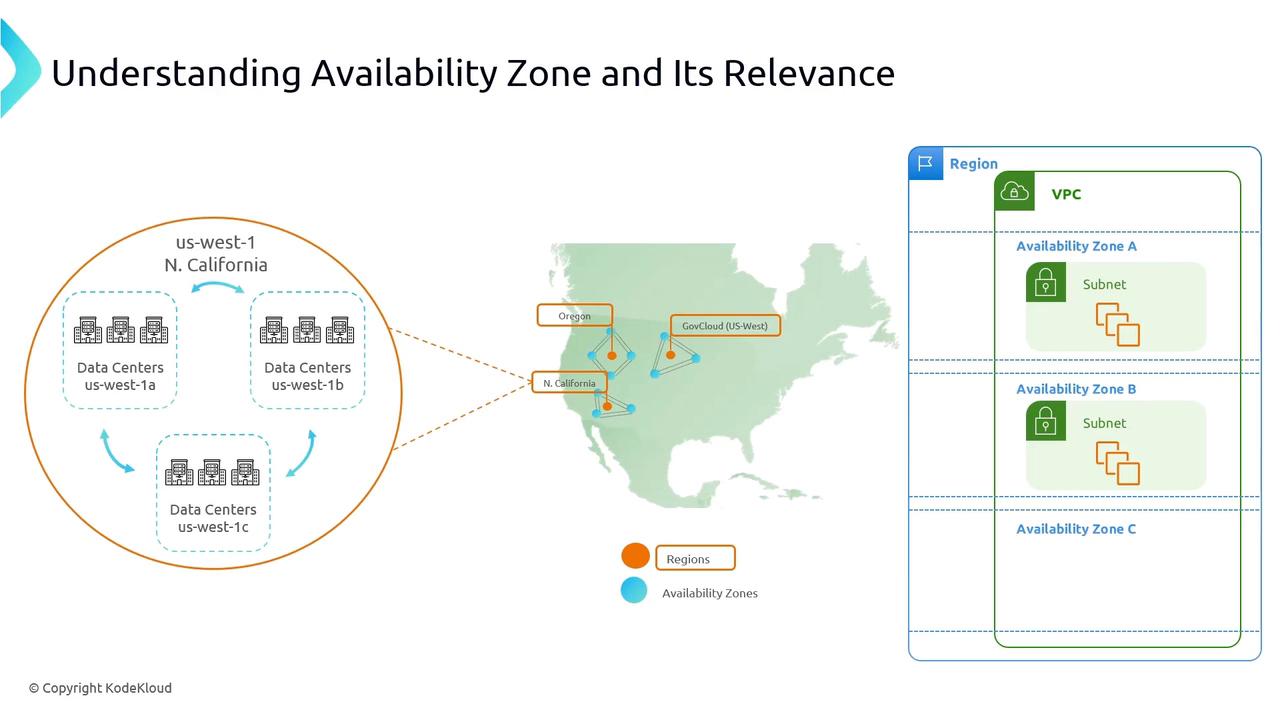
An AWS Region is a geographically isolated area containing multiple, physically separate Availability Zones. Each AZ has its own power, cooling, and network infrastructure, minimizing correlated failures. Key characteristics:- Region: A collection of AZs in the same geographic area (e.g., US West – Northern California
us-west-1). - AZ: A standalone data center within a region, labeled like
us-west-1a,us-west-1b,us-west-1c.
- Fault tolerance: If one AZ suffers a power failure, other AZs in the same region continue operating normally.
- Isolation from regional disasters: An earthquake affecting one region won’t impact other AWS Regions.
By default, AWS resources are created in the region you select. To replicate resources across regions, you must enable features like S3 Cross-Region Replication or RDS Read Replicas.
AWS Global Regions
AWS operates multiple Regions around the world. Each Region is fully isolated to maximize fault tolerance:
If an entire Region (for example, US West 1) experiences an outage, workloads in other Regions (such as US West 2) remain unaffected.
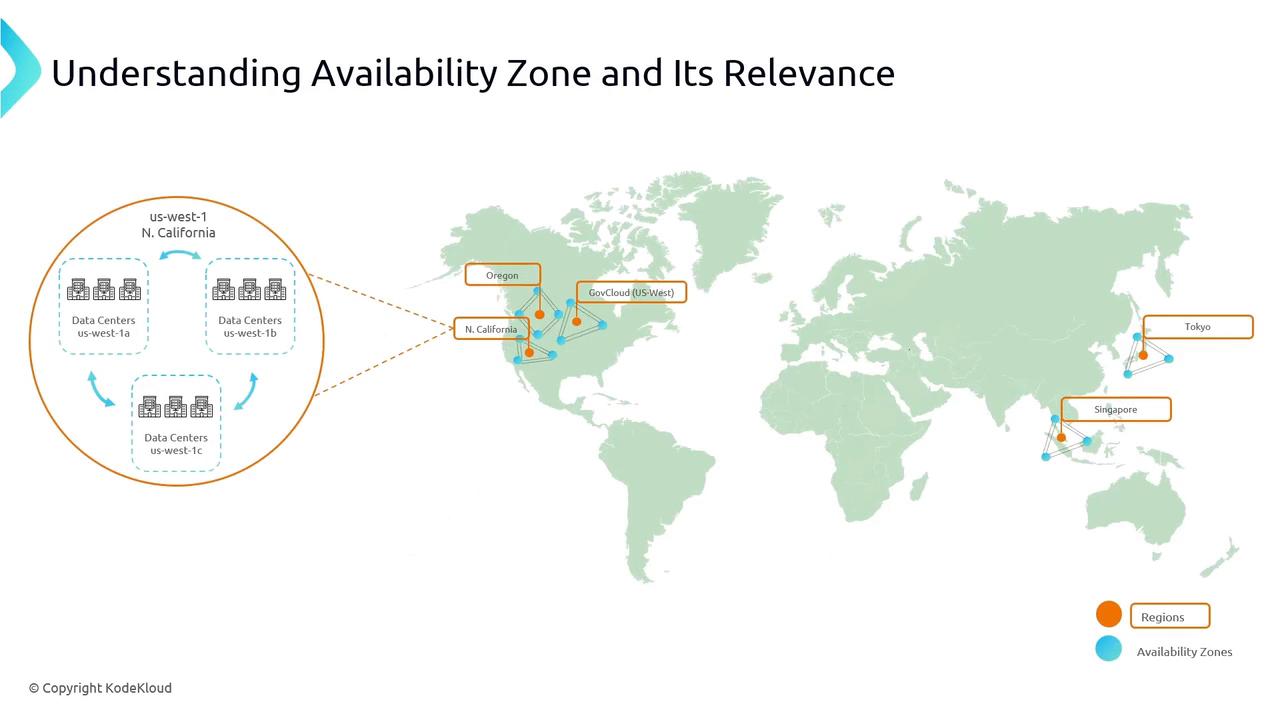
While cross-region architectures deliver maximum resilience against geographic disasters, distributing resources across multiple AZs within a single Region often provides sufficient high availability and lower latency for most applications.
Links and References
- AWS Regions and Availability Zones
- Amazon S3 Cross-Region Replication
- Amazon RDS Read Replicas
- Kubernetes Basics