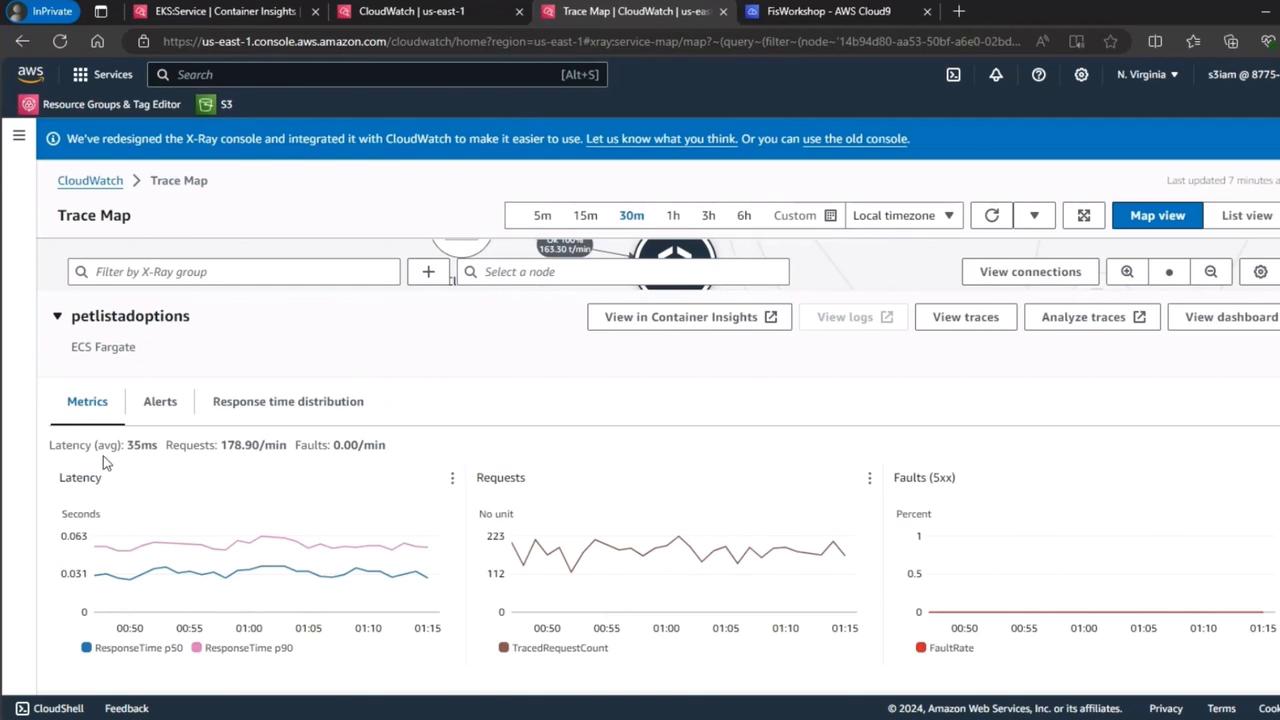
1. Observe Container Insights Performance
Begin by reviewing your Amazon EKS service metrics with CloudWatch Container Insights. Track these core indicators: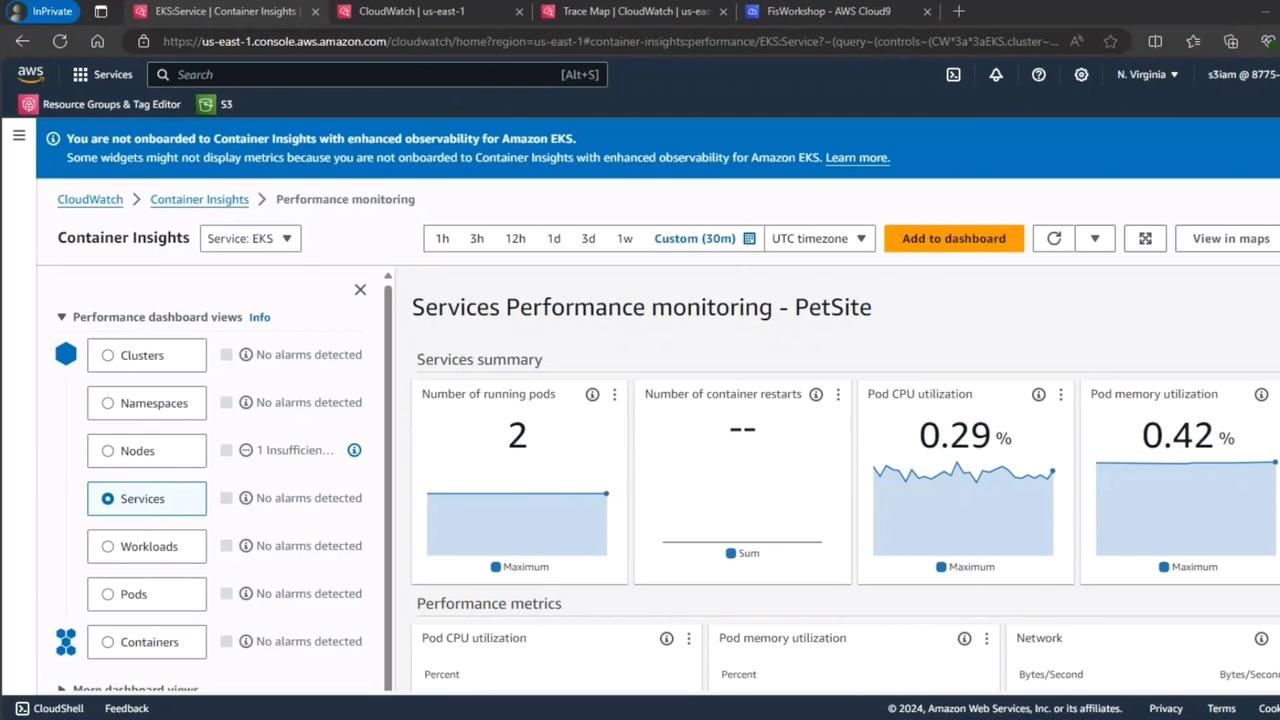
These charts represent the steady state of the
PetSite service under normal conditions.2. Verify End-User Experience with CloudWatch RUM
Next, validate real user metrics using CloudWatch RUM. This helps you understand page load performance and client-side errors: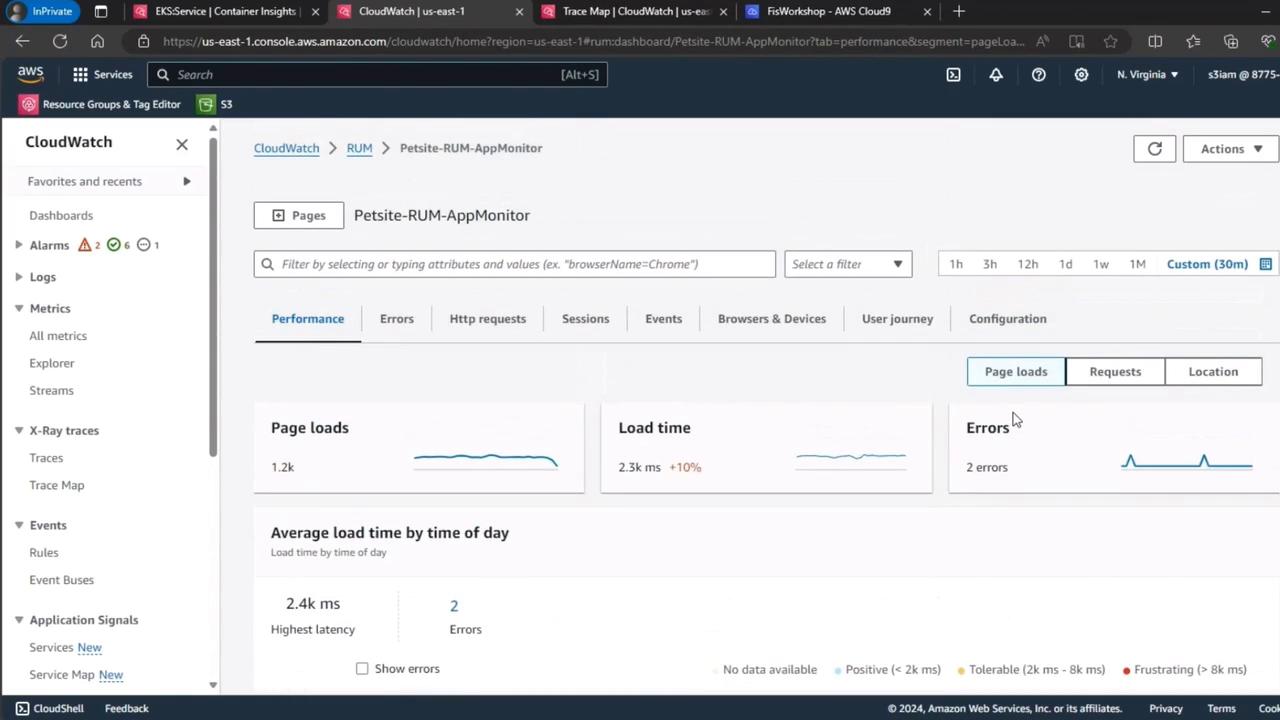
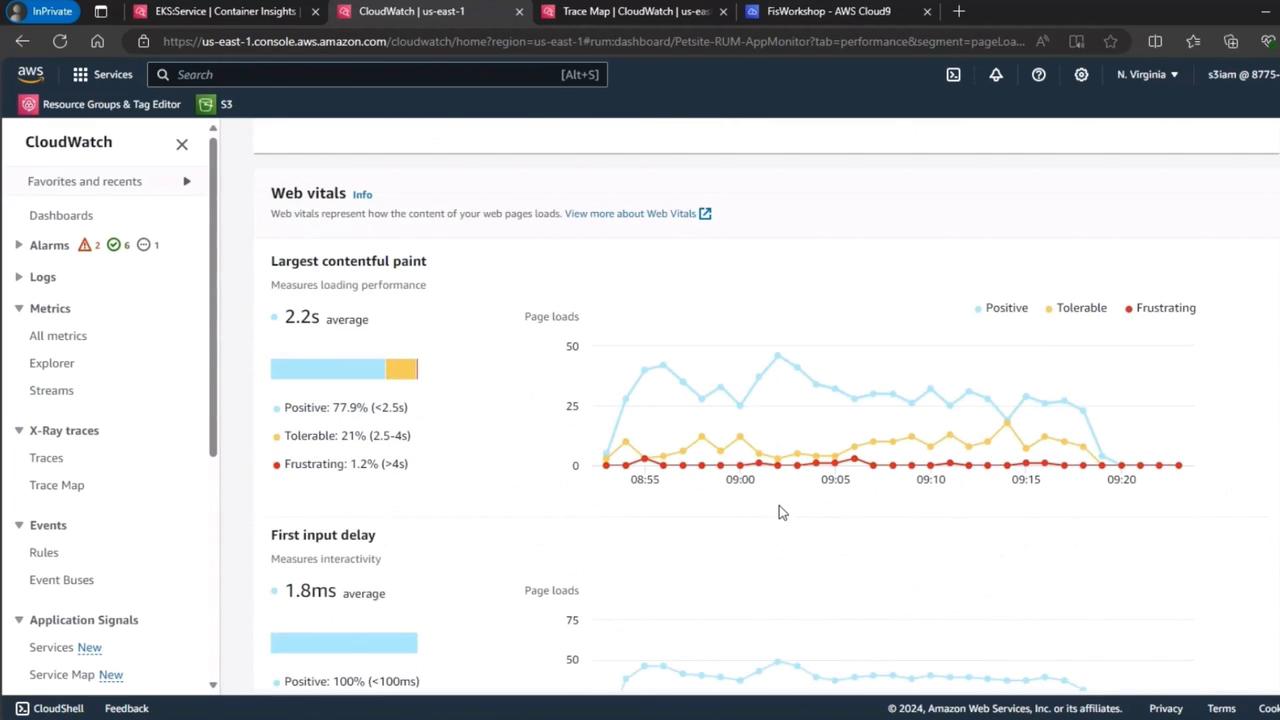
3. Simulate Load with k6
Generate realistic user traffic using k6 to ensure the baseline reflects production behavior. For example:Approximately 1% of virtual users experienced frustration, while the rest saw positive load times.
4. Inspect Distributed Tracing with CloudWatch Trace Map
Capture end-to-end request performance for thepetlistadoptions endpoint on EKS Fargate: