

1. Generating Adoption Traffic
To emulate real-world user interactions, we’ll place multiple pet adoption orders:- Navigate to the pet adoption page.
- Select pets and complete the adoption form.
- Refresh the listing to confirm adoption status.
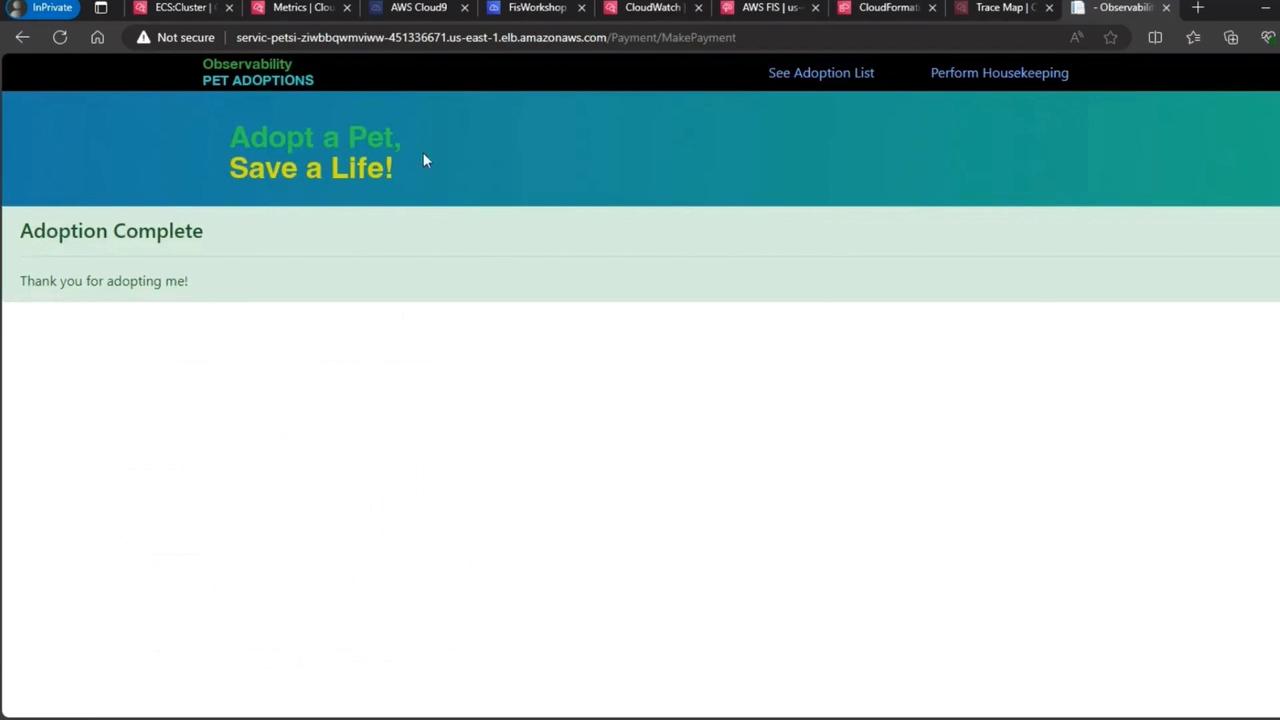
Generating concurrent adoption events helps ensure your application can handle spikes in user requests without degradation.
2. Monitoring Real User Metrics (RUM)
Next, we’ll inspect the CloudWatch RUM dashboard over the last ten minutes to detect any user frustration signals: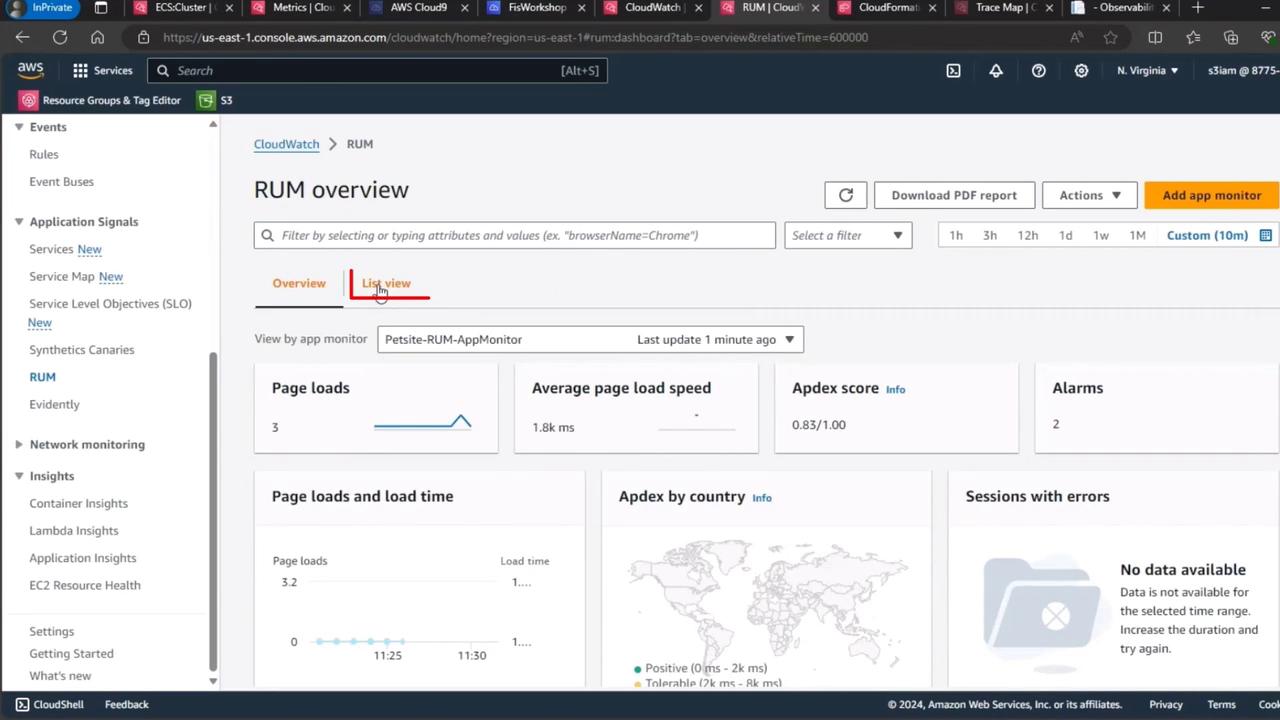
An Apdex score above 0.85 and zero frustrated sessions confirm a smooth user experience. For more details, see the CloudWatch RUM User Guide.
3. Inspecting ECS Service Metrics
Finally, let’s review our ECS service dashboard for thepay-for-adoption task to observe CPU, memory, and network activity during the I/O stress period:

Keep an eye on sustained CPU and memory drops—they may indicate resource throttling or misconfiguration in your task definition.