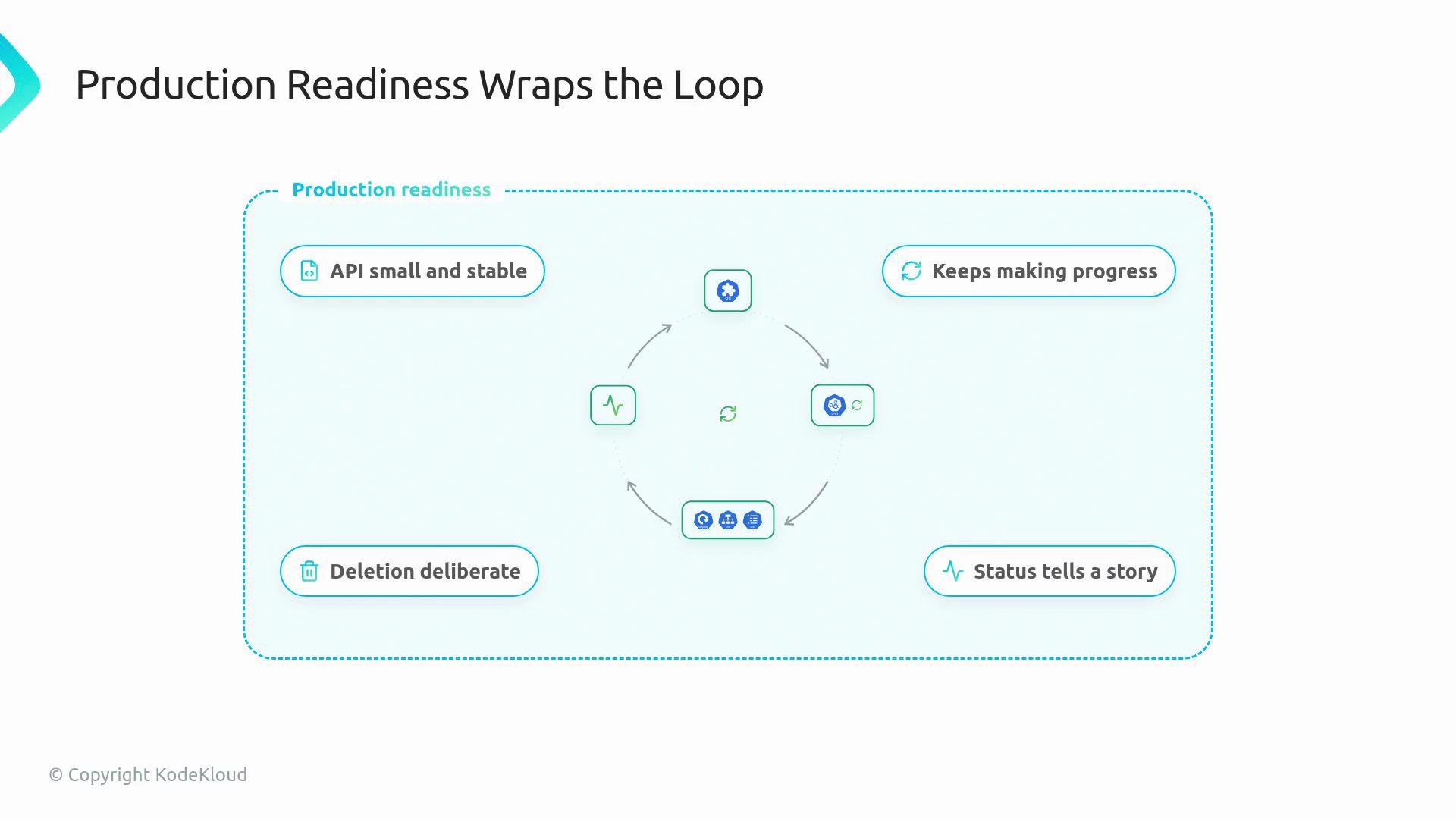
- The Custom Resource (CR) is the contract describing user intent.
- The reconcile loop is the convergence and repair mechanism that turns intent into reality.
- Deployments, Services, ConfigMaps, and other Kubernetes resources are the managed “real-world” work.
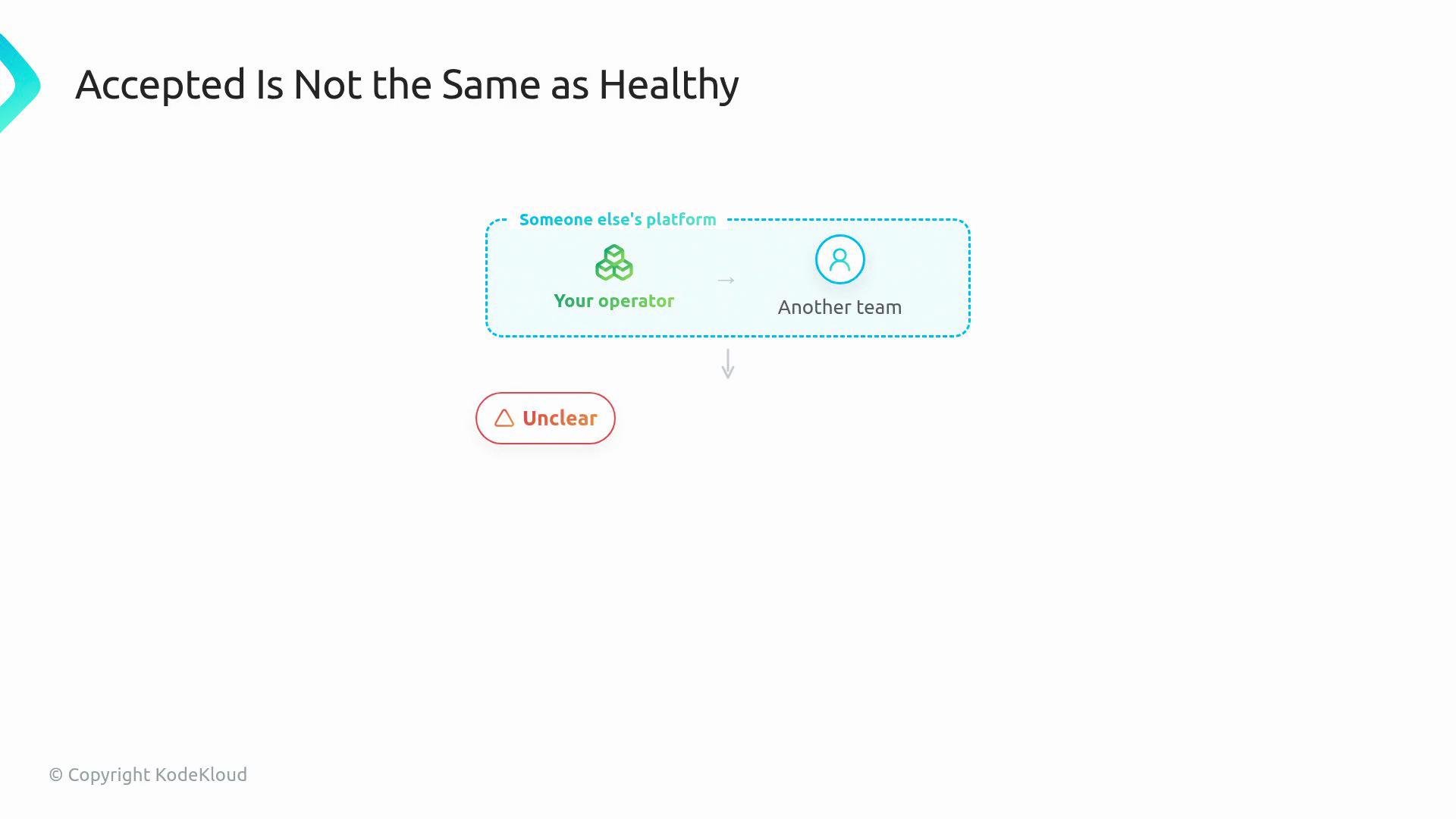
- Status fields and Kubernetes Events are the signals that users and platform operators read to understand changes.
Production-readiness checklist (practical items to include):
- Unit and integration tests that validate the reconcile loop and failure cases.
- Least-privilege RBAC and a clear, documented permissions model.
- Metrics, liveness/readiness probes, and health endpoints for observability.
- Upgrade and rollback strategies for both CR schemas and controller versions.
- Intuitive status fields and user-facing Kubernetes Events that explain state changes.
Helpful references:
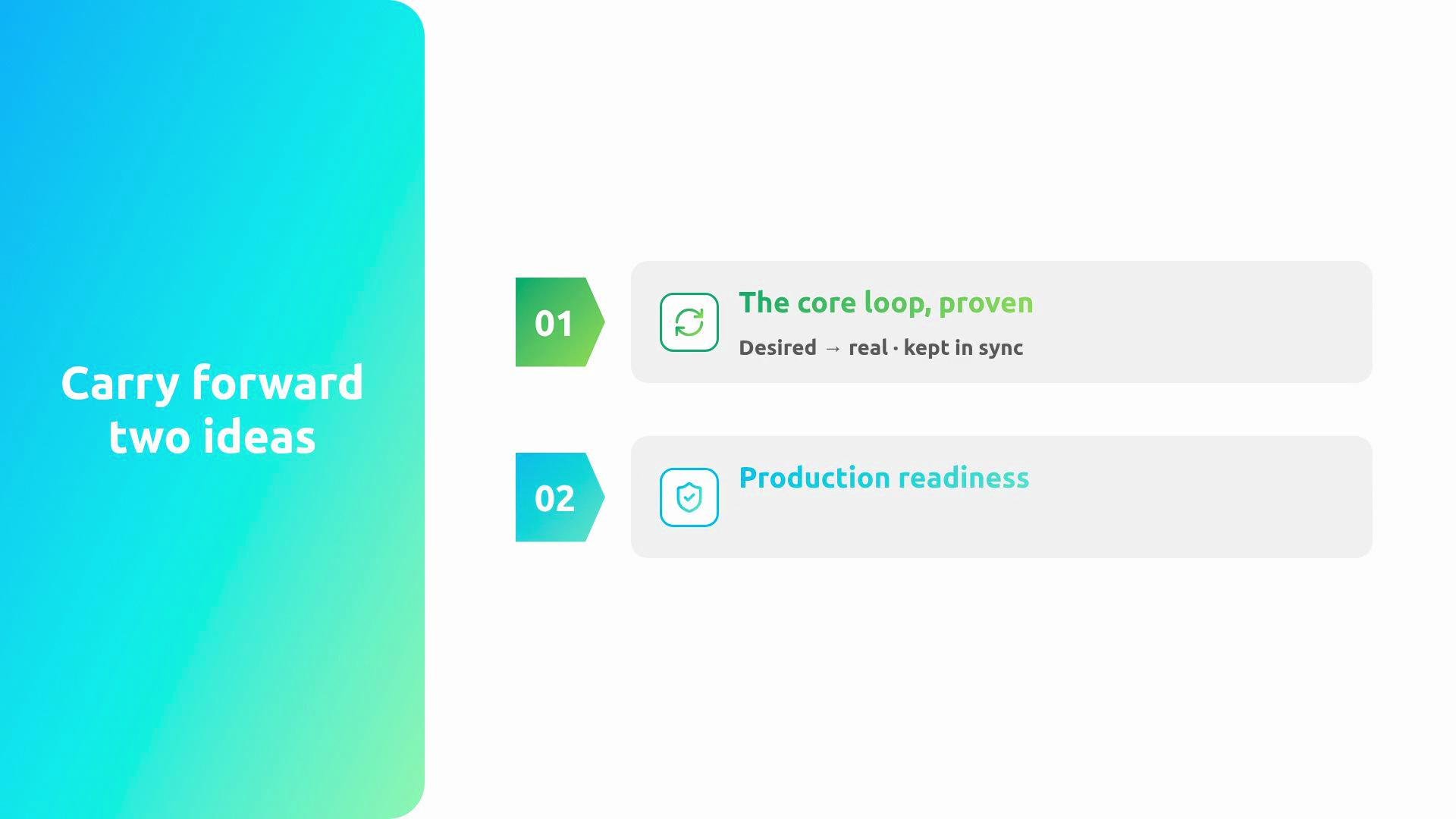
Carry forward two main ideas.
First, the web-app operator proves the core loop: desired state is expressed via a Custom Resource and the controller keeps real resources aligned with that request.
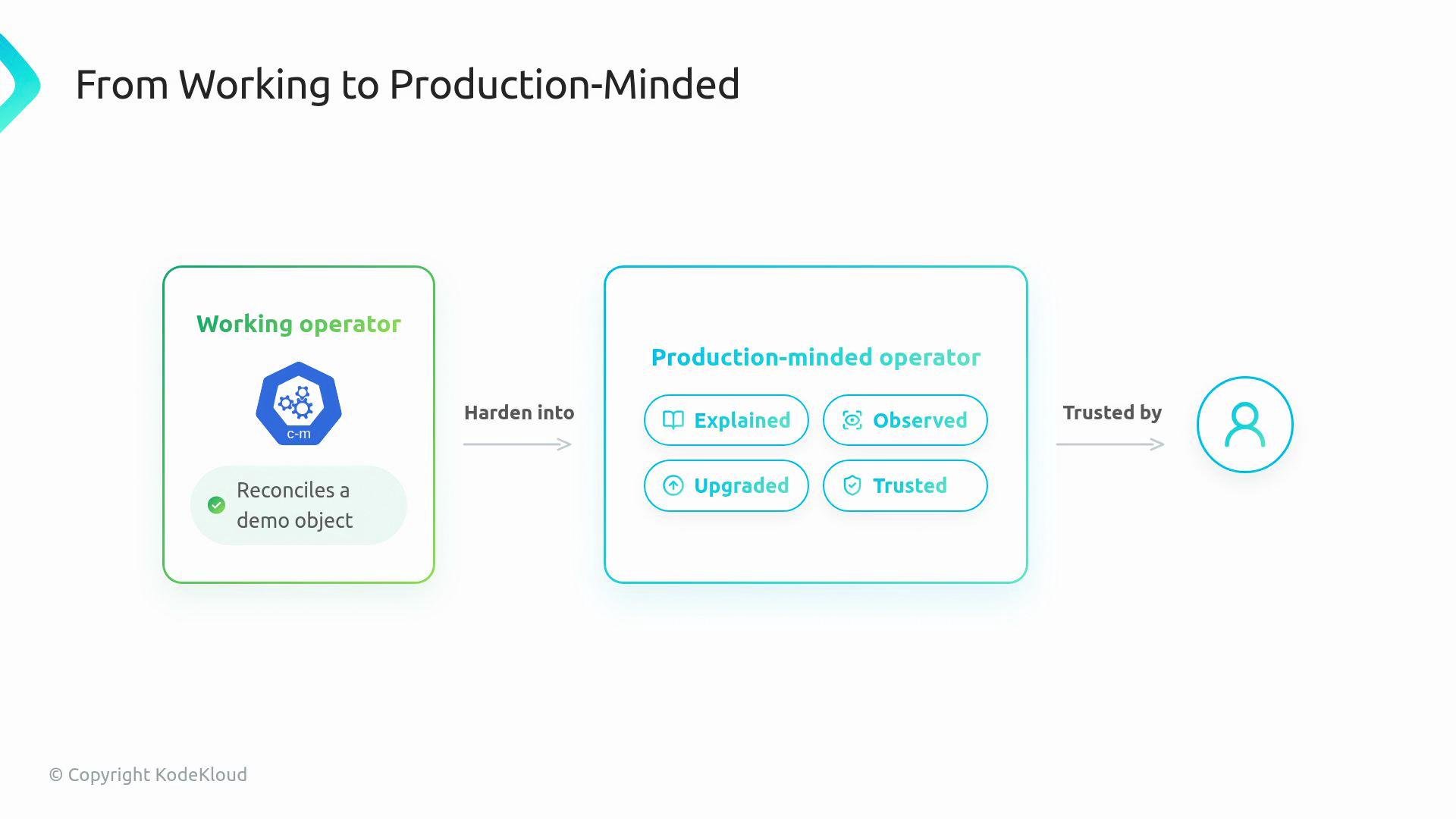
Second, production readiness is the discipline of making that loop understandable and trustworthy for the next person who will operate or inherit the system.