

- Single-turn Q&A (one input, one output).
- Completion tasks (continue a partial text).
- Multi-turn conversations (iteratively refining requests and replies).
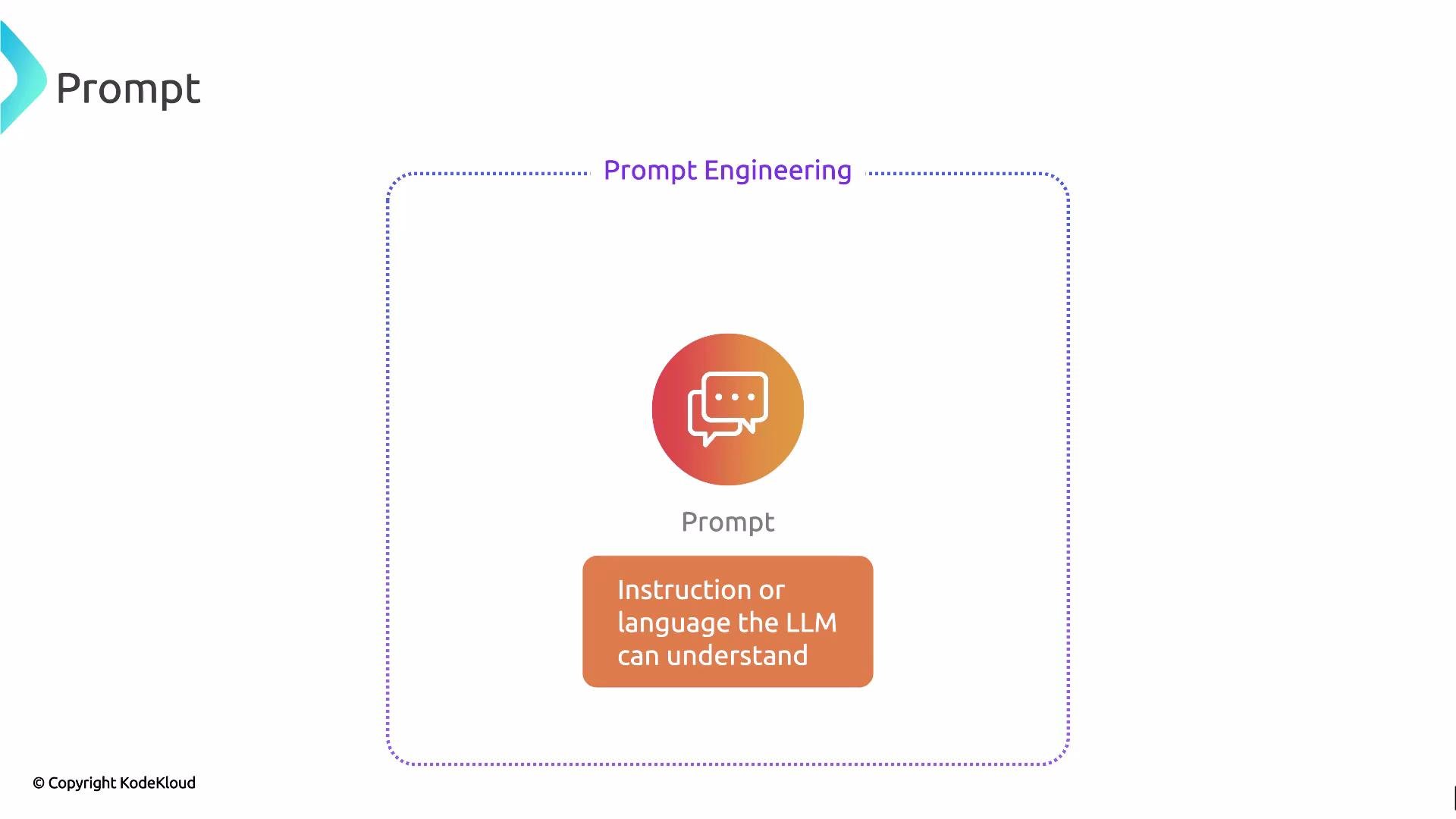
- Instruction: A clear directive of the desired task (e.g., “Summarize the following report in two paragraphs.”).
- Context: Relevant information, documents, or examples the model should use.
- Constraints: Output format, length limits, style, or safety rules (e.g., JSON output only).
- Demonstrations: Few-shot examples showing input → desired output (helps when you need specific structure).
- Role or persona: Framing the model as an expert or role (e.g., “You are a senior data scientist.”).
Clear, concise prompts with explicit output constraints (format, examples, length) consistently produce more reliable model responses. Use few-shot examples when you need a strict or unusual output structure.
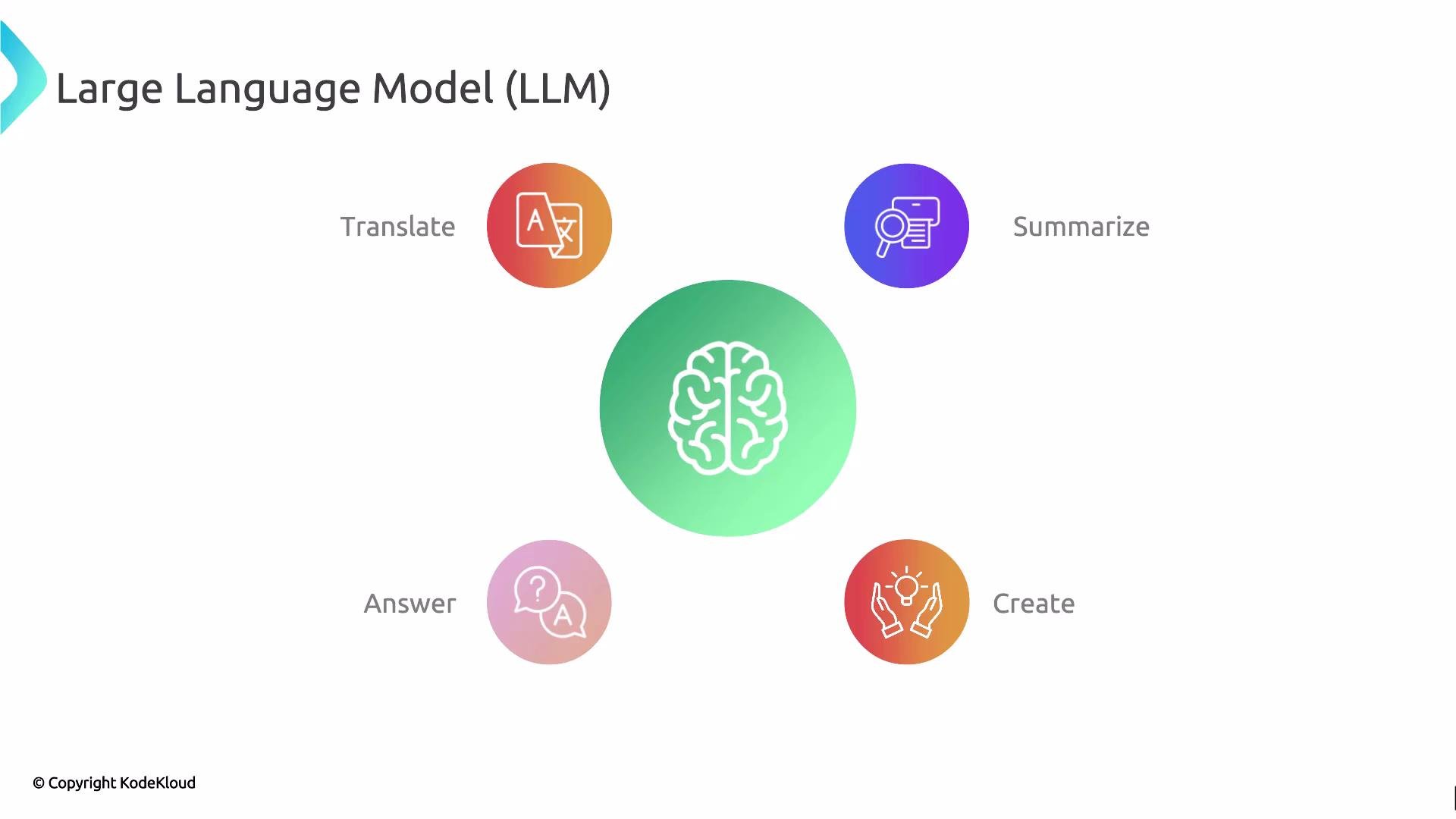
- Text generation and completion
- Summarization and paraphrasing
- Question answering over provided context
- Translation between languages
- Instruction execution (e.g., code generation, data transformation)
- Start with a clear instruction and measurable constraints (e.g., “Produce 3 bullet points”).
- Provide context/contextual documents for factual tasks (e.g., relevant paragraphs or data).
- Use few-shot examples when structure matters.
- Specify format explicitly (e.g., JSON, Markdown, CSV).
- Iterate and test—small wording changes often produce big differences.
- Add safety constraints and content filters when exposing models to public inputs.
- Ambiguous prompts yield inconsistent or vague outputs.
- Models can “hallucinate” confidently—generate plausible but incorrect facts.
- Sensitive or private information should not be passed to third-party models without review.
- Overly long or noisy context can dilute the model’s ability to prioritize relevant facts.
LLMs may produce incorrect or fabricated information. Always validate model outputs against trusted sources for critical or factual tasks, and implement guardrails for sensitive use cases.
- Evaluate outputs with metrics relevant to your use case (accuracy, BLEU/ROUGE for translation/summarization, human review).
- Use automated checks for format and basic correctness (e.g., schema validation for JSON).
- Maintain a feedback loop: collect user corrections and refine prompts and examples.
- LangChain — integration utilities and prompt templates.
- OpenAI Prompting Guide — best practices and examples.
- Prompt Engineering Resources — community-curated techniques.