

LangChain makes it easy to experiment and iterate: swap models, vector stores, or search providers with minimal changes to application code while keeping data flows and business logic intact.
Core value: portability and composability
The GenAI ecosystem includes many language models, embedding services, and data connectors. Directly wiring each provider into your app quickly becomes complex and brittle. LangChain provides consistent primitives (chains, agents, tools, retrievers, etc.) so you interact with a stable API rather than every vendor-specific SDK. This is particularly important when you must integrate on-prem or cloud-hosted enterprise data: databases, CSV/JSON exports, PDFs, Office documents, web pages, and third‑party APIs. LangChain centralizes the plumbing needed to ingest, transform, and inject that context into model prompts.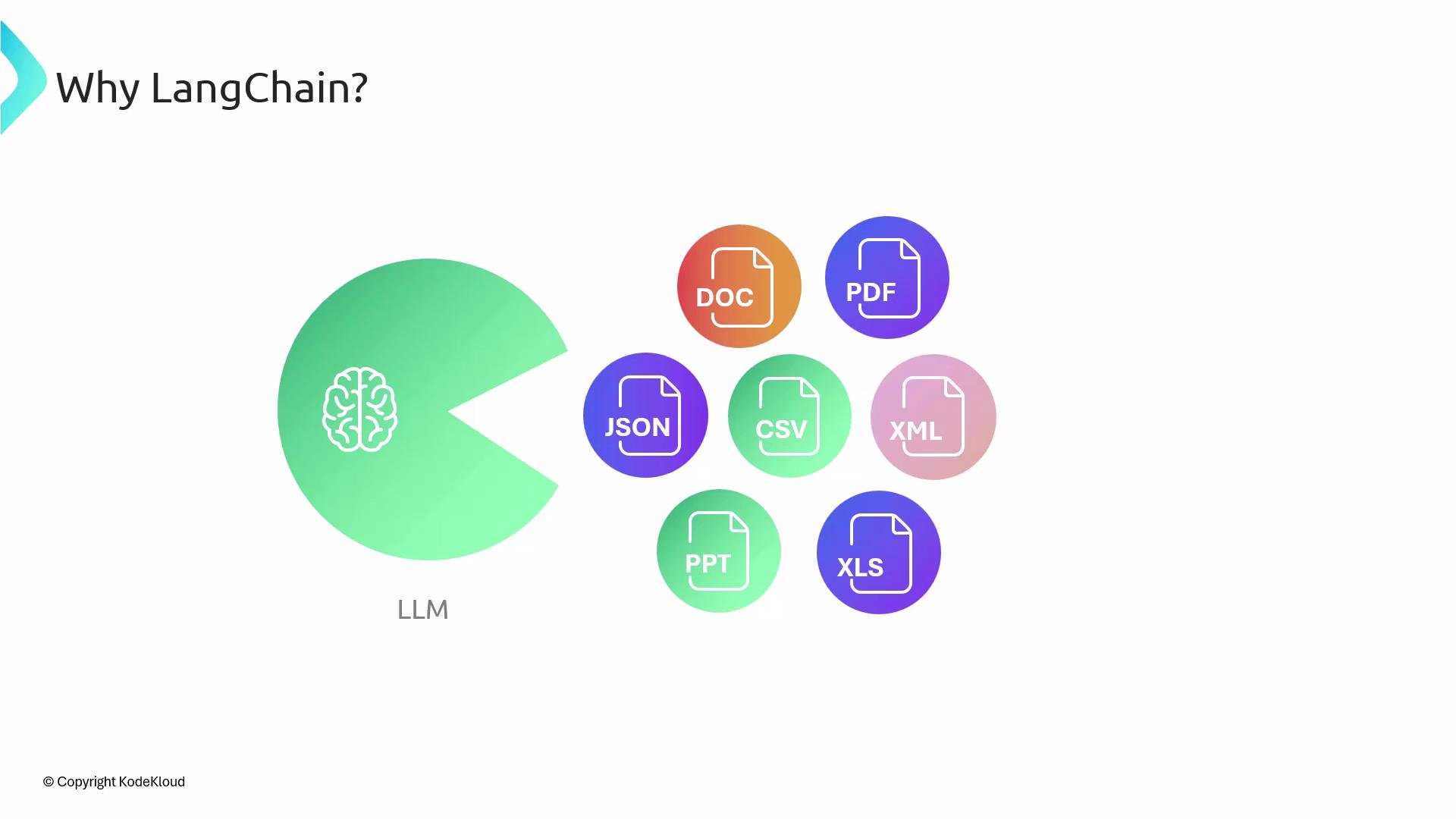
Integrations: one API for many data sources
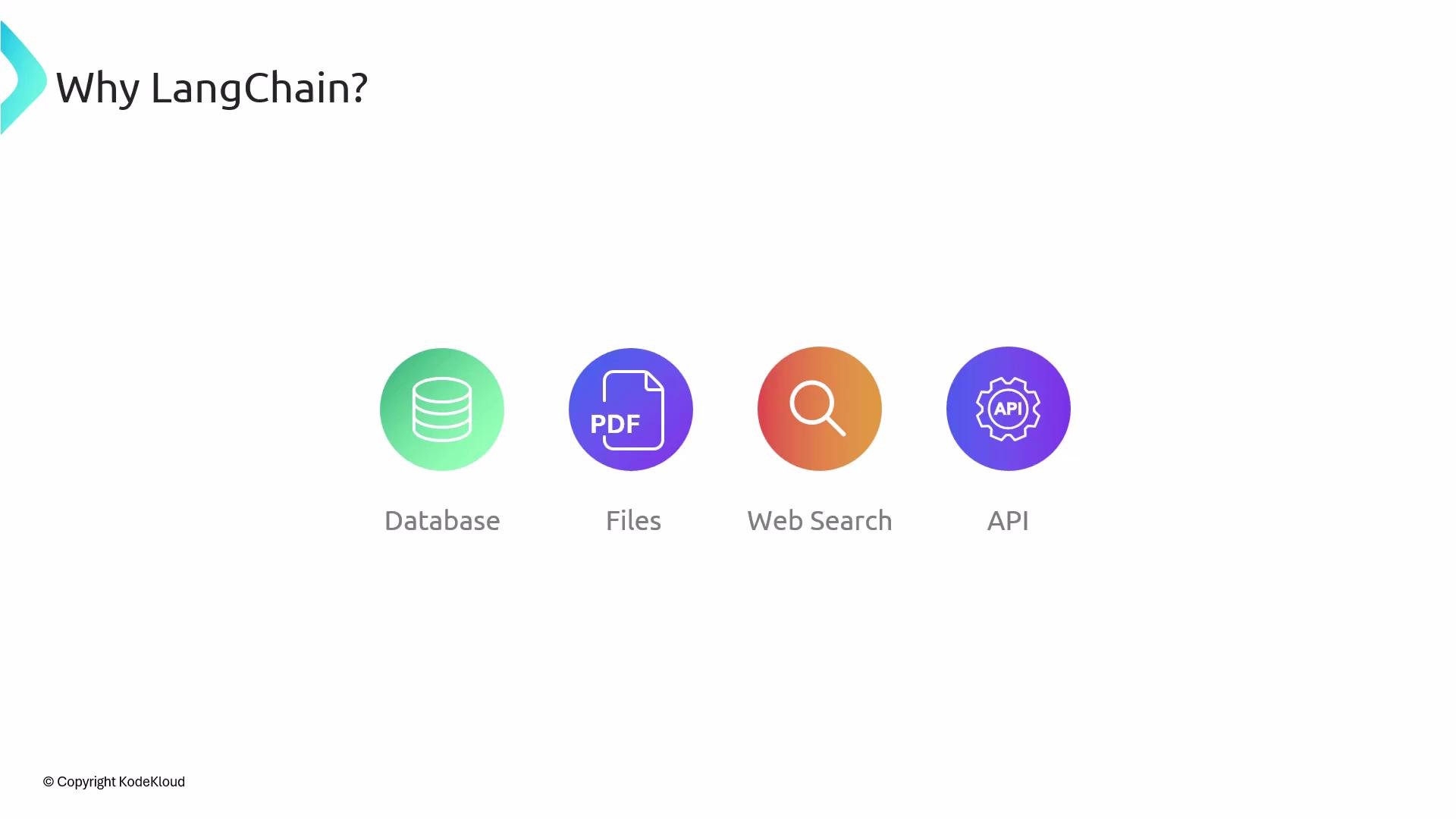
LangChain lets you connect to diverse data sources without hardcoding each integration into your business logic. Examples include:- Databases (SQL, NoSQL)
- Local or cloud-hosted files (PDFs, Word, PowerPoint, Excel)
- Web pages and search engines
- External REST/GraphQL APIs and custom tool endpoints
Swap providers easily
Because LangChain abstracts provider details, you can swap search or model backends without changing your chaining, prompting, or retrieval logic. For example, swap between: Such interchangeability accelerates A/B testing, cost optimization, and resilience.
Simplifying prompts, transforms, and response handling
LangChain provides utilities for advanced prompt engineering, response parsing, and output formatting. Rather than handling these aspects ad hoc, LangChain offers reusable components:- Prompt templates and prompt chains
- Output parsers and schema validation
- Data transforms (text chunking, embeddings, reranking)
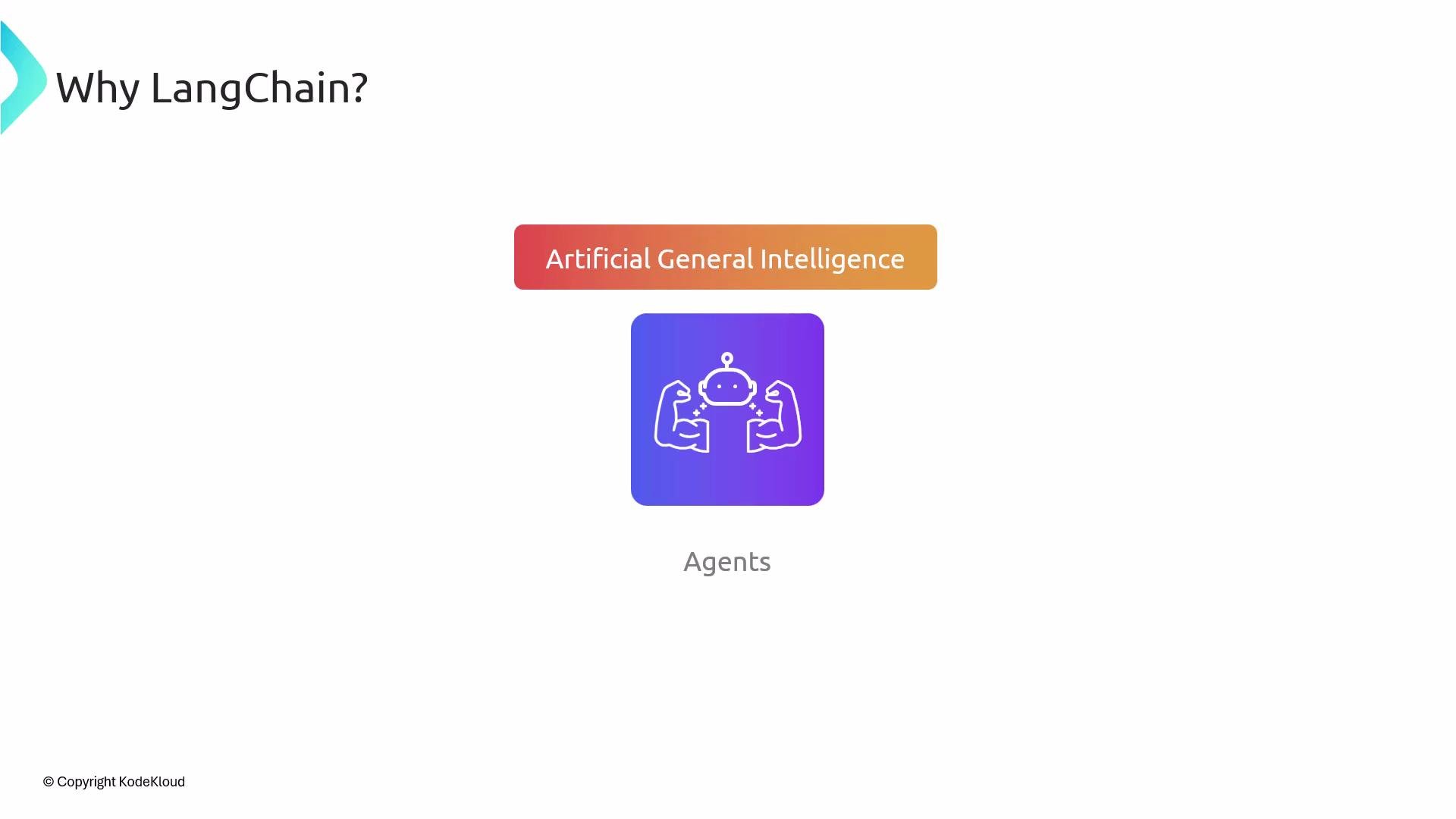
Closing the loop: from assistants to autonomous agents
LangChain enables building agents that do more than single-turn Q&A. Agents can:- Plan multi-step actions
- Orchestrate tool calls (APIs, database lookups, web searches)
- Maintain state and follow multi-step reasoning
- Execute tasks on behalf of users
Quick reference — Where LangChain helps most
This article will continue with concrete examples and a tutorial on building agents using LangChain—showing how the framework helps you build robust, production-ready intelligent applications.