

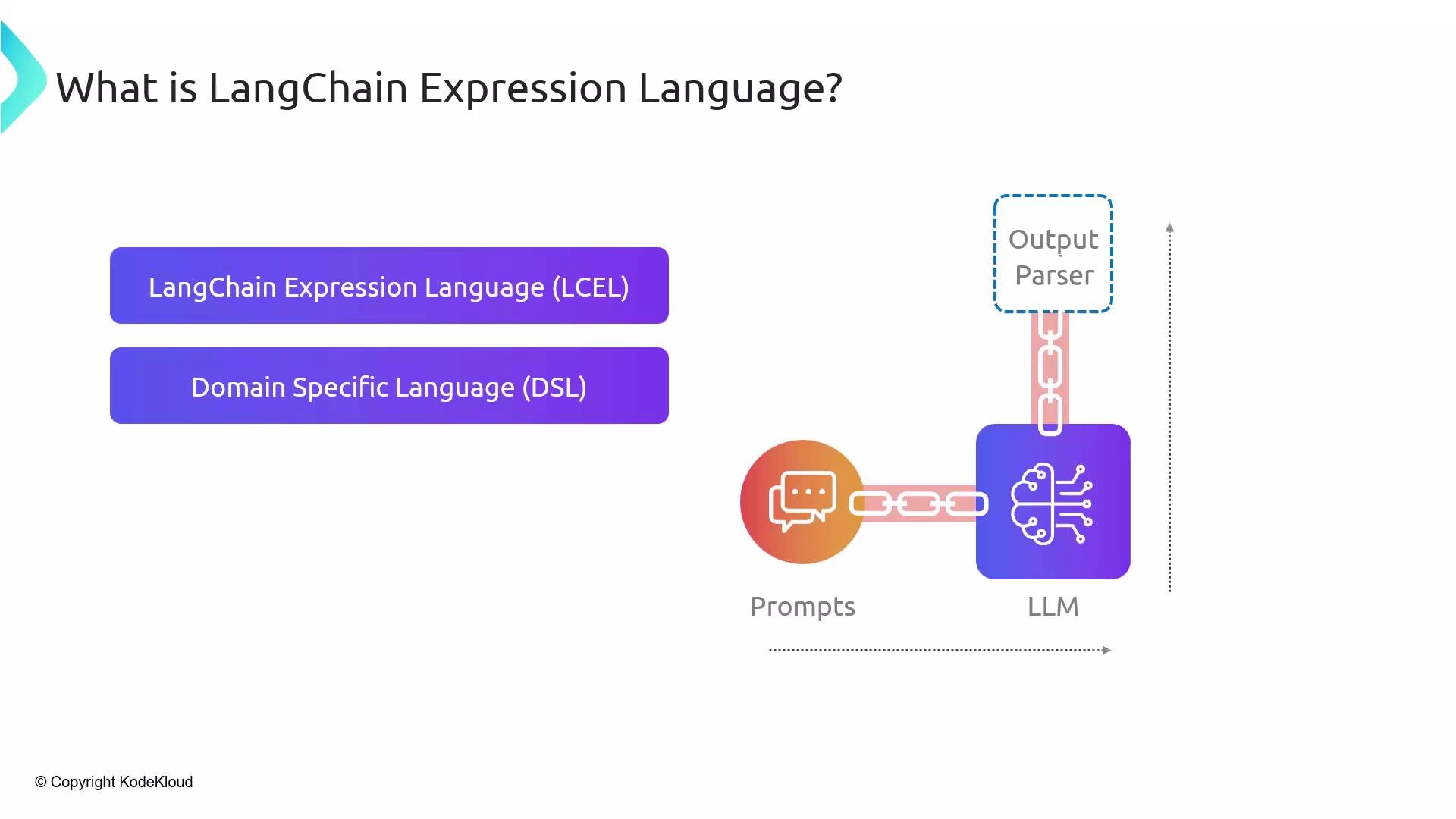
- LCEL is a domain-specific language (DSL) designed for composing LLM-centric pipelines declaratively.
- It models LangChain components (prompts, LLMs, retrievers, output parsers, custom functions, etc.) as composable Runnables with well-defined inputs and outputs.
- Using a pipe operator, LCEL chains components so the output of one step becomes the input to the next, enabling readable, maintainable, and testable workflows.
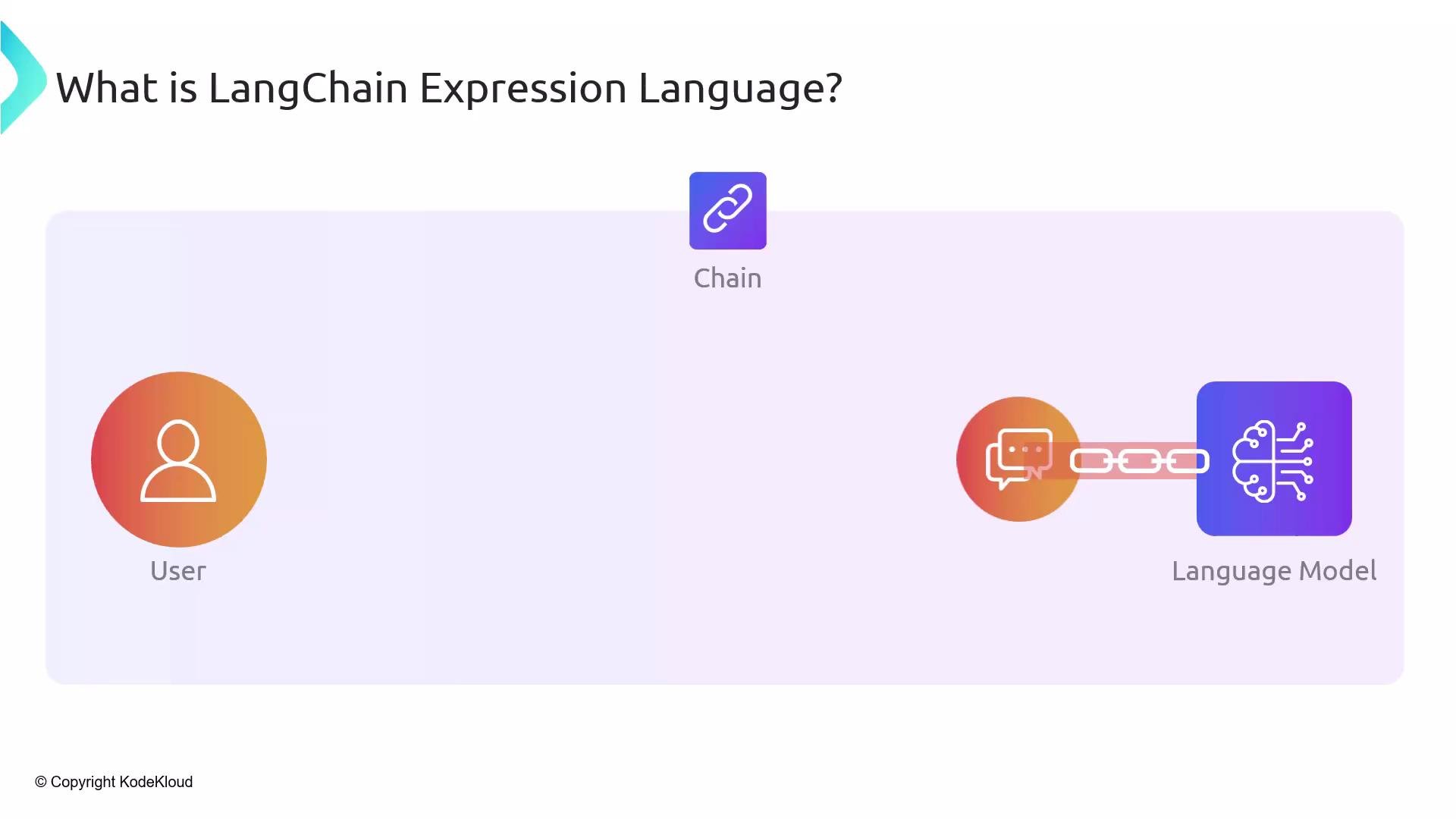
|, LCEL uses the same mental model to connect LangChain components.
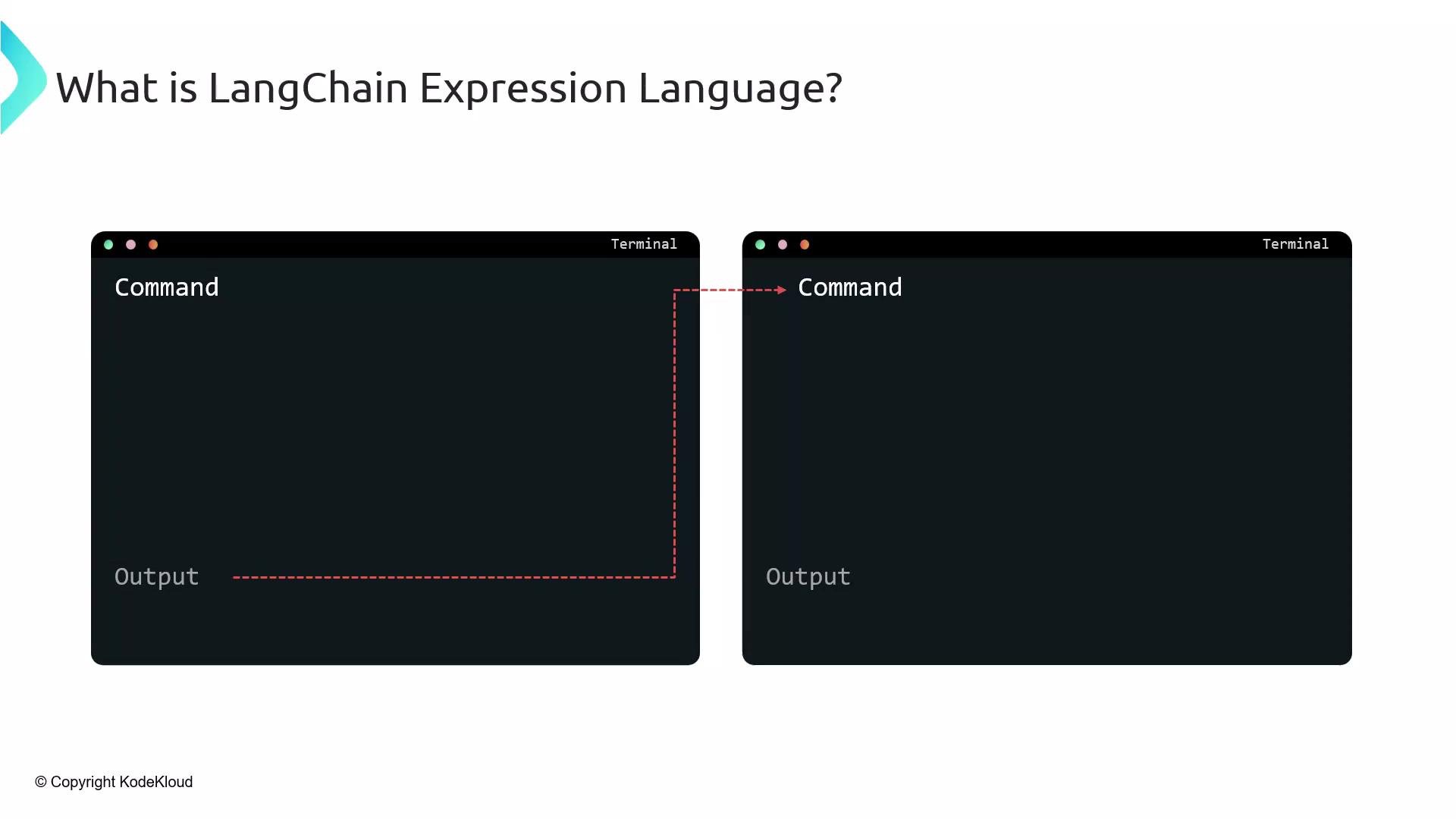
file.txt and counts them. The pipe operator makes the composition concise and expressive.
LCEL applies the same pattern to LLM workflows: connect prompts, transformations, retrievers, LLMs, and parsers into a single pipeline that flows from input to final output.
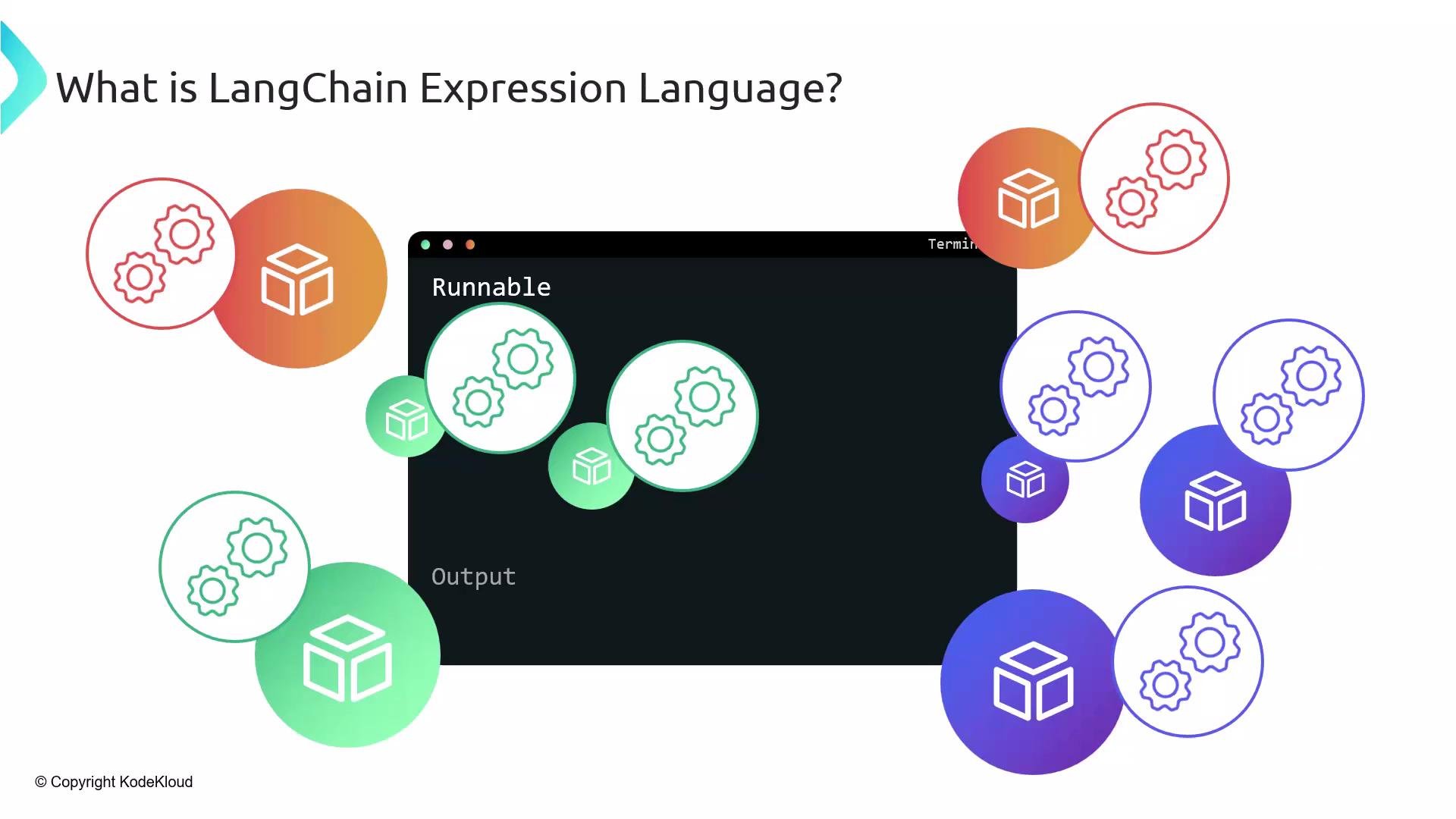
- The Runnable interface is the common abstraction that enables composability. Any component that implements Runnable can be piped into LCEL chains.
- Runnable specifies how a component accepts input, executes, and returns output — allowing components to fit into pipelines predictably.
- Declarative composition: define what you want to run, not how to wire objects together imperatively.
- Readability: pipelines read left-to-right like data flow.
- Reusability: chains are values you can store, reuse, or nest.
- Extensibility: custom Runnables (functions, retrievers, formatters) plug directly into pipelines.
- Unix pipe example (shell)
- Equivalent LCEL-style composition (Python pseudocode)
- A prompt or input-producing Runnable emits a string or structured payload.
- Optional transformers or enrichment functions modify or augment the payload (e.g., add context).
- A retriever fetches external knowledge (documents, embeddings, KBs) and enriches the prompt.
- The enriched prompt is passed to the LLM Runnable, which returns raw model output.
- An output parser or post-processor transforms the raw output into structured data or final results.
- Compose smaller chains into larger workflows.
- Build hierarchical or meta-chains for complex systems.
LCEL is increasingly the canonical way to express LangChain workflows. For a detailed comparison between imperative chain construction (e.g.,
LLMChain) and LCEL, see the official LangChain documentation for API examples, best practices, and custom Runnable implementations.- Building QA systems that combine retrievers, LLMs, and post-processors.
- Orchestrating complex pipelines with conditional logic and nested chains.
- Rapid prototyping of LLM-powered microservices and production systems.
- Practical demos and hands-on labs that demonstrate creating Runnables, building LCEL pipelines, and composing chains of chains.
- Examples will cover retriever-augmented generation, output parsing with structured types, and deploying LCEL workflows in production.