

- What Manus AI is and its core mission
- How Manus is architected and its main components
- Feature set and agent capabilities
- Manus as an AI operating system (OS) for long-running agents
- Interoperability with LLMs and external tools
- Developer experience, observability, and example configuration
- Practical use cases and real-world applications
- How Manus compares to other agent platforms
- Limitations, risks, and future directions
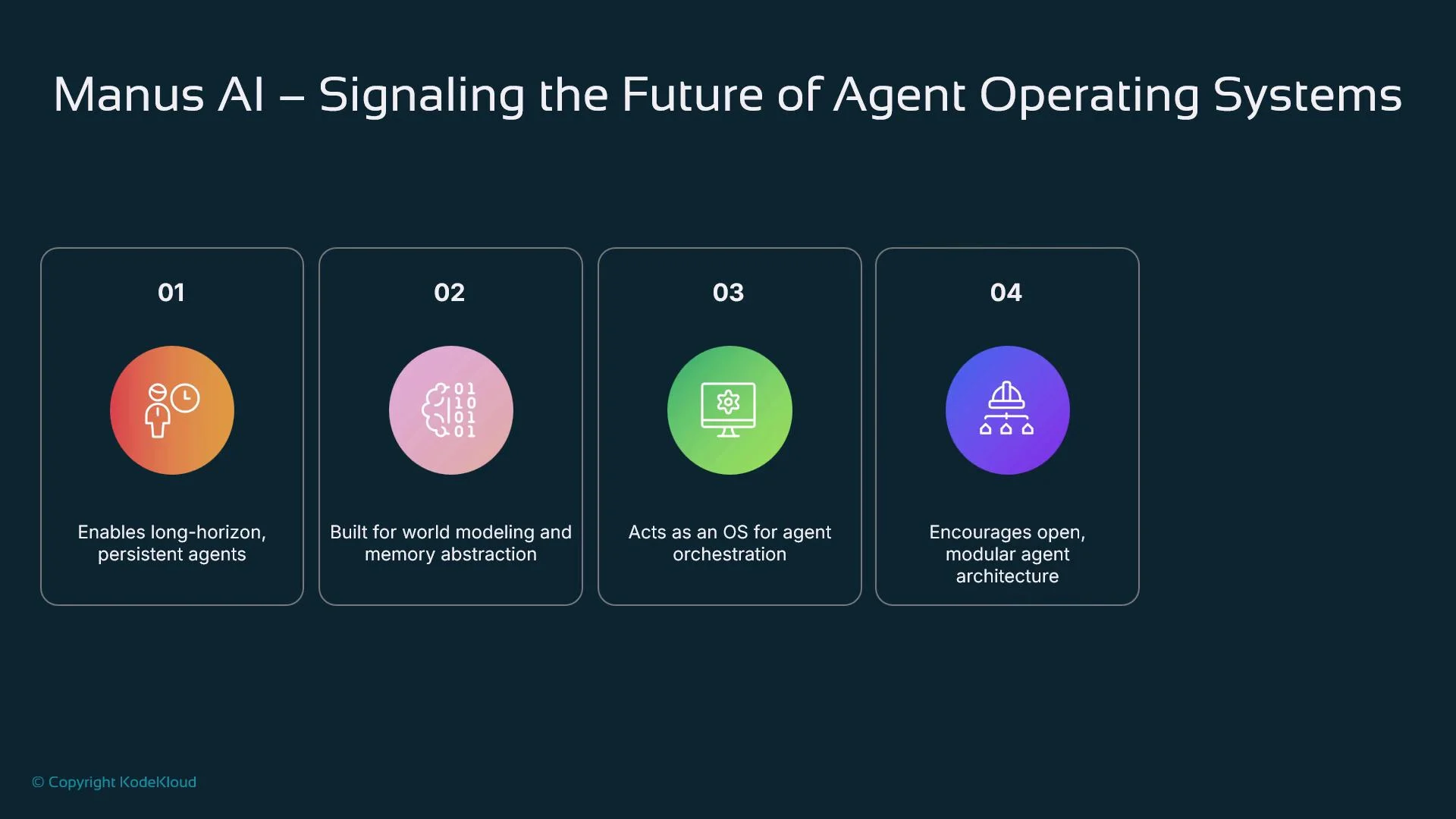
What is Manus?
Manus is a full-stack, open-source framework tailored to build intelligent, persistent agents — not just another orchestrator or prompt wrapper. It behaves like an operating system for agents, designed for continuous adaptation and long-horizon planning. The design draws inspiration from cognitive cycles: reflect → remember → act → adapt. Manus agents run over extended timeframes (hours to weeks) by using:- persistent, vector-backed memories,
- structured planners and execution graphs,
- evolving world models.
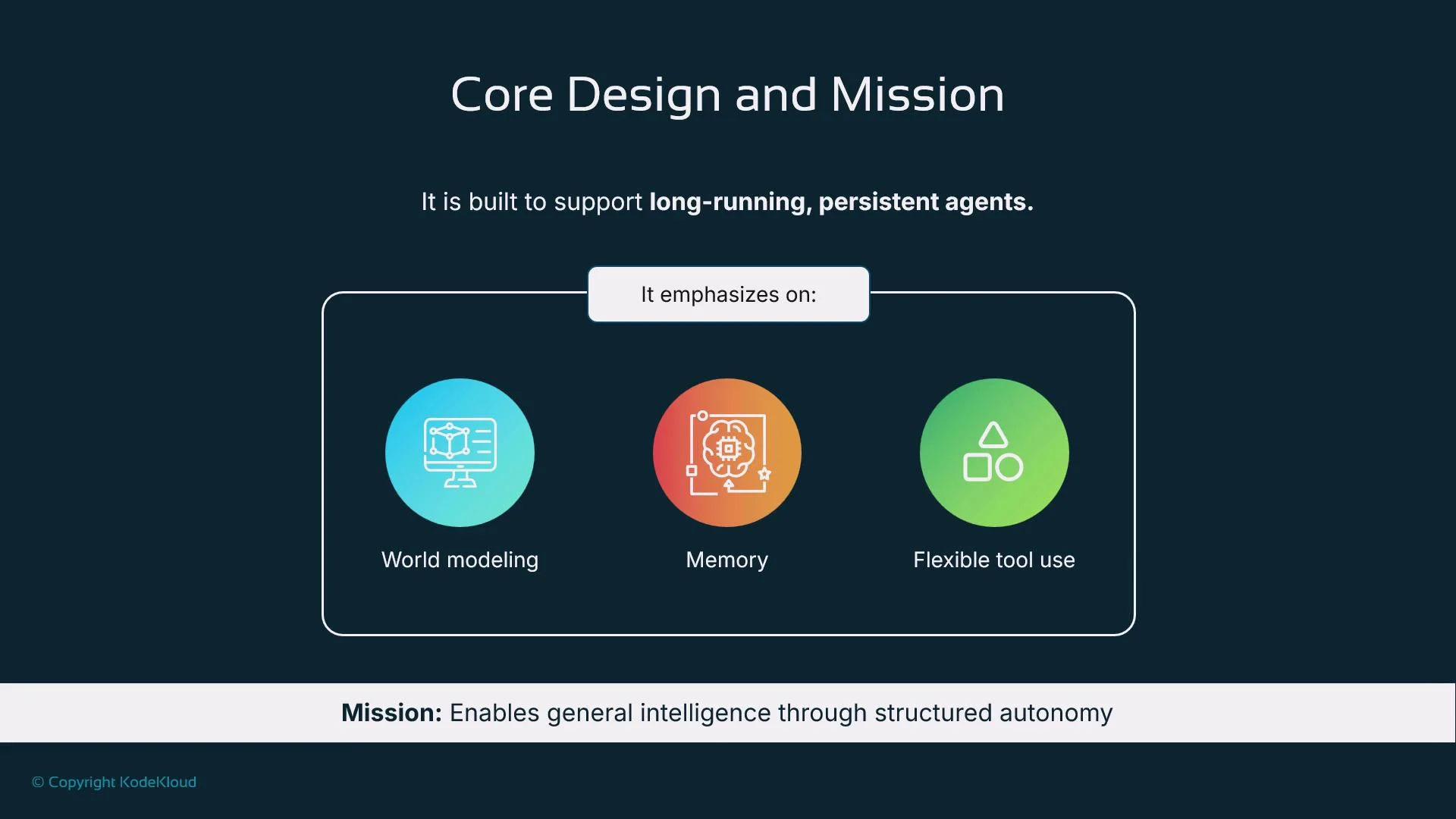
Mission: world modeling and persistent cognition
Manus reframes agents as thinking systems rather than stateless tools. Agents maintain internal world models that are continuously updated as conditions change. Core design goals include:- Long-running persistence across sessions
- Durable memory that survives restarts
- Primitives for constructing and evolving world models
- Structured autonomy via tool selection and API calls
Architecture and core components
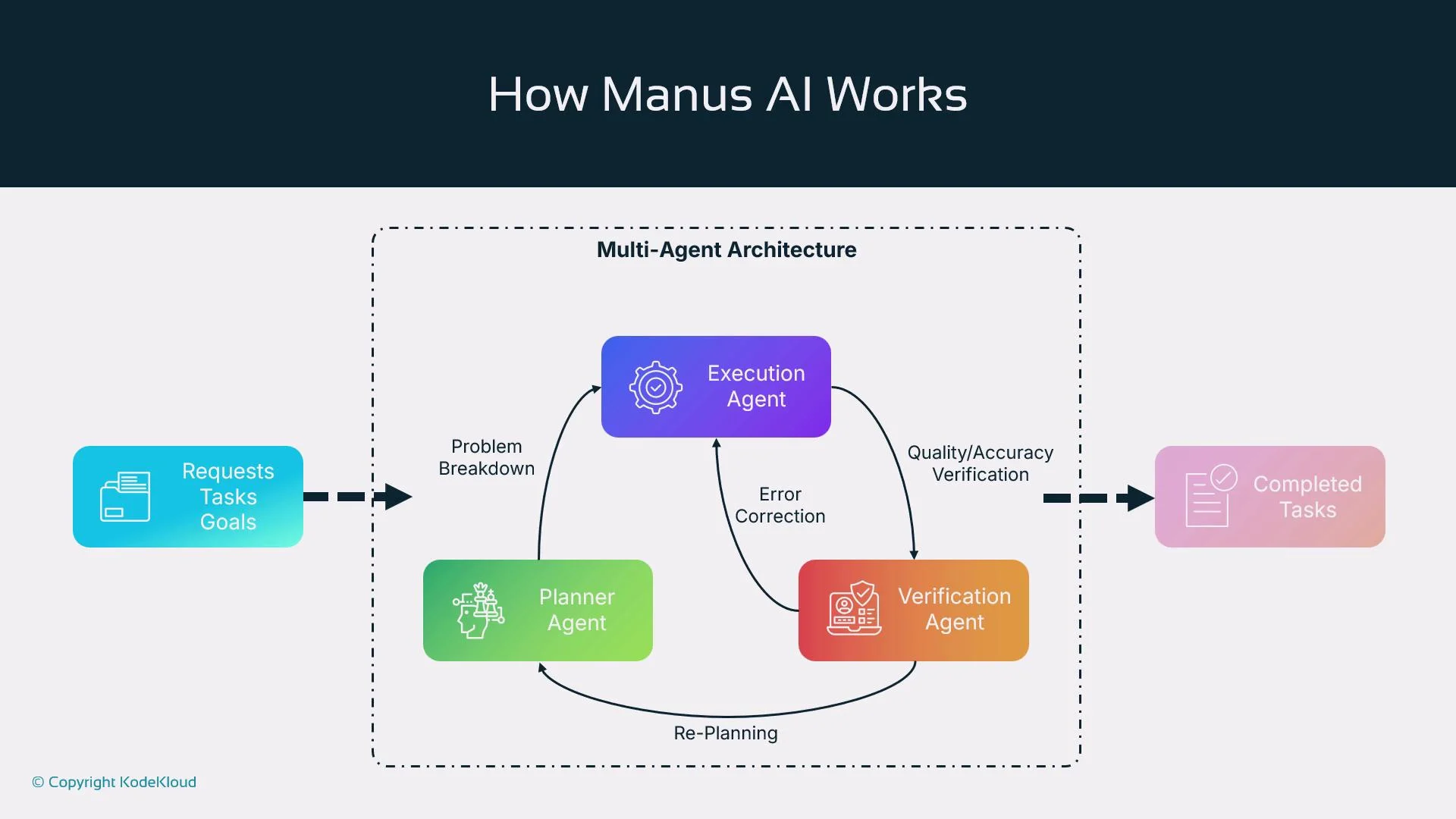
Manus is modular around a central execution graph that models agent behavior as a network of planned steps and decision points. The canonical Manus cycle is: observe → plan → act → reflect. Main components include:- Execution graph (planner + execution + verification)
- Persistent memory (vector-backed long-term store)
- Tool integration layer (abstracted external actions)
- World-state manager (evolving internal model)
- Observability/tracing components
- Planner agent: decomposes goals into tasks
- Execution agent: performs actions and calls tools
- Verification agent: checks outcomes and triggers corrections
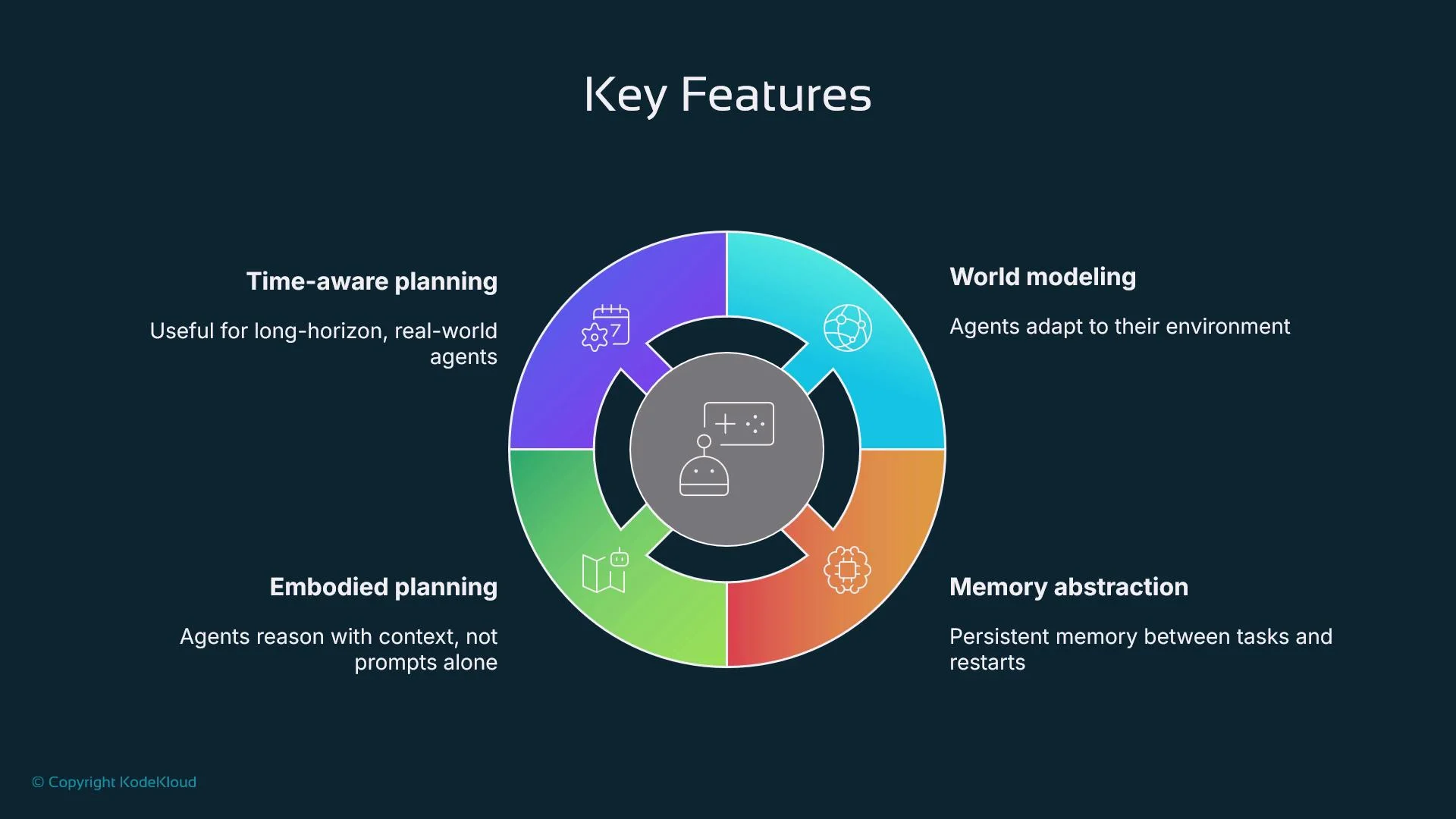
Key features — what Manus provides
Manus elevates agents beyond single-shot generation by providing:- World modeling: persistent, evolving internal representations of environments and entities
- Memory abstraction: retrievable long-term context that endures restarts
- Embodied planning: decisions that combine objectives, memory, and environment state
- Time-aware planning: schedule-aware reasoning over hours, days, or weeks
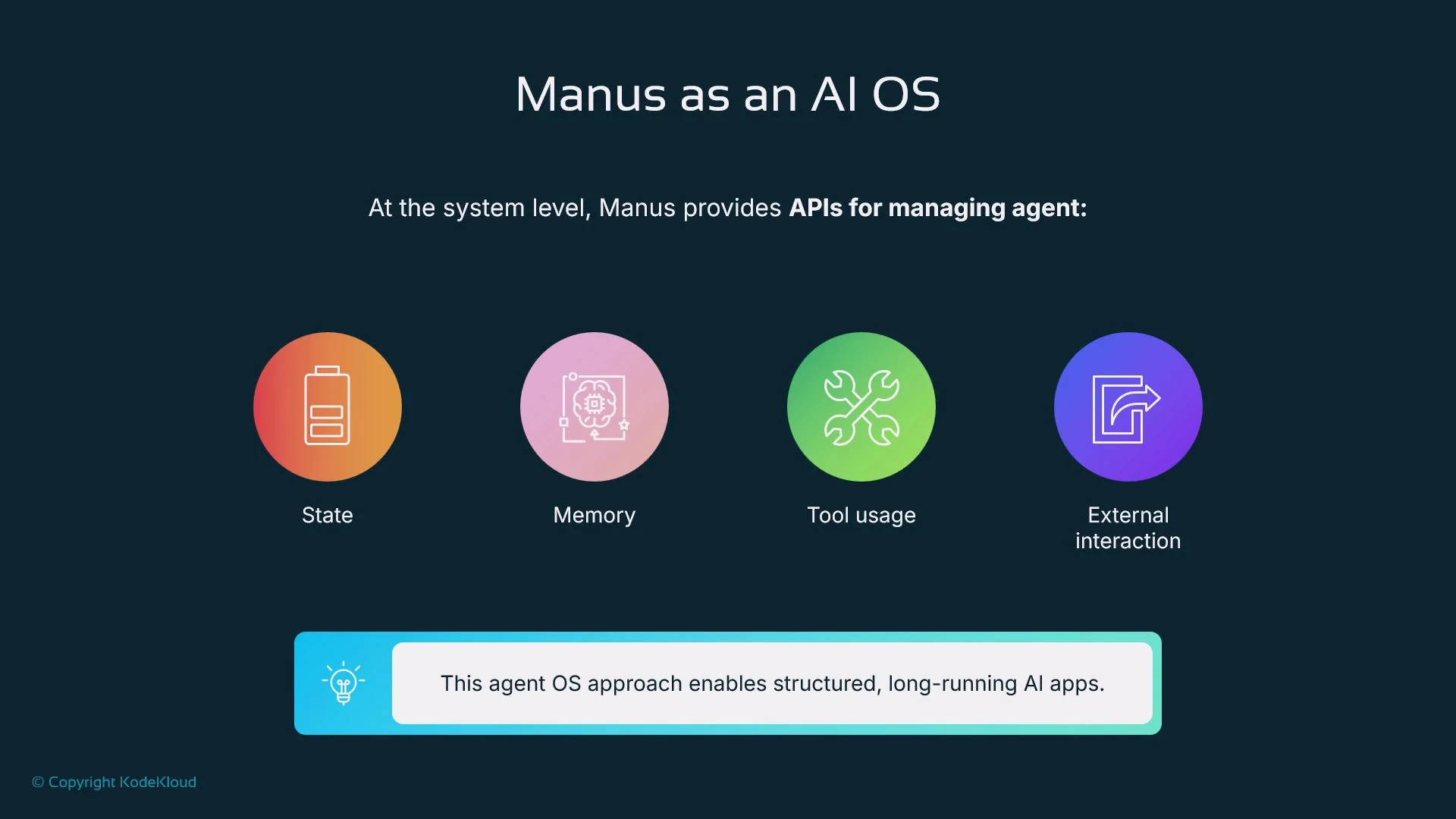
Manus as an AI operating system
Manus treats agents as first-class processes: pause, resume, delegate, and hand off tasks across agents or services. At a system level, Manus exposes APIs to:- Manage agent lifecycle and state
- Read/write persistent memory
- Register and call tools or external APIs
- Trace execution and observe agent decisions
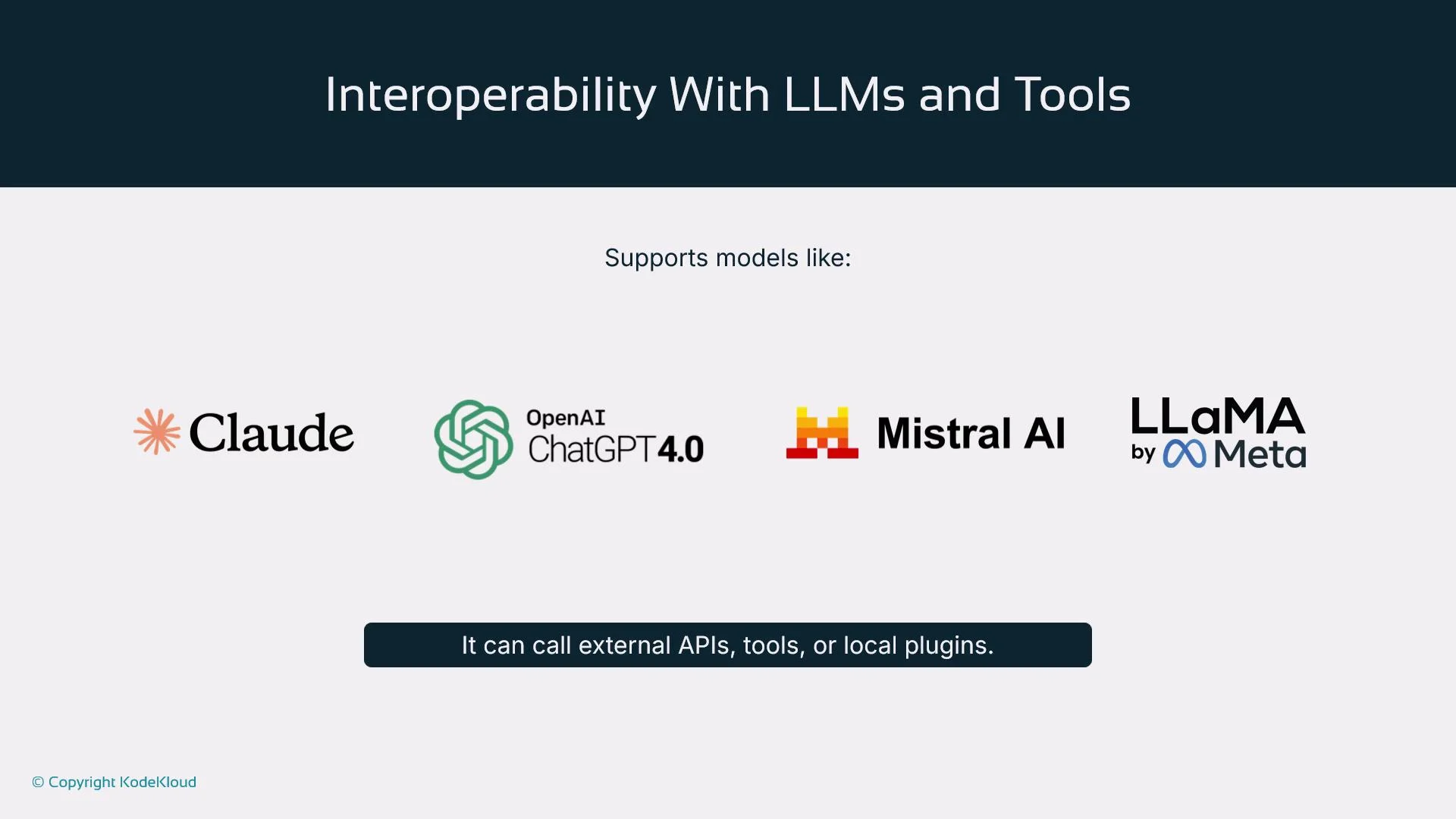
Interoperability with LLMs and external tools
Manus is model-agnostic and separates reasoning from tool execution. Typical setup:- LLMs (e.g., Claude, GPT-4, Mistral, LLaMA) provide inference and planning guidance
- Tools (APIs, browser automations, local plugins) are abstracted into callable modules
- Runtime selects tools dynamically based on planner decisions
Developer experience, observability, and example configuration
Manus provides a Python implementation and is distributed under an open-source license. Developers declare agents with declarative configuration files to improve reproducibility and version control. Observability features include logging, state tracing, and debugging tools that fit typical DevOps workflows. Example minimal agent declaration (YAML):Use declarative agent configs for reproducibility. Store them in Git and pair with CI/CD to control agent versions and rollout.
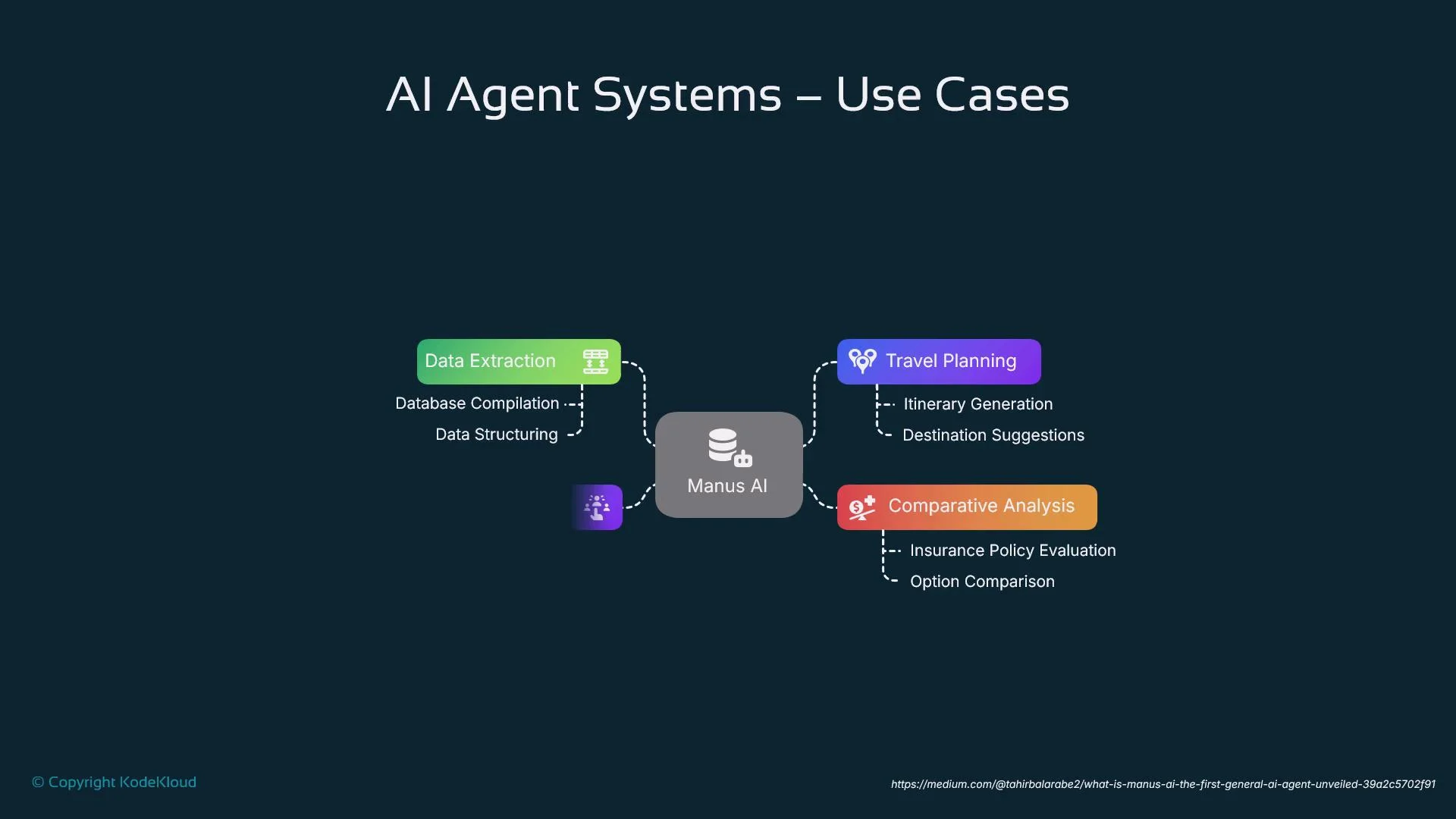
Typical use cases
Manus excels in scenarios that require sustained planning and memory:- Research assistants that replan experiments over time
- Product/design agents that track decisions across a project lifecycle
- Autonomous QA agents that adapt testing strategies as the codebase evolves
- AI DevOps agents that monitor infrastructure, schedule interventions, and collaborate with other agents
Manus vs. other agent frameworks
The table below summarizes differences between Manus and typical prompt-chain frameworks (example: LangChain).
For a broader introduction to prompt-chain tools, see LangChain docs.
Limitations, risks, and operational considerations
Manus is powerful but early-stage. Key concerns when adopting Manus:- Engineering complexity: stateful services, distributed components
- Infrastructure cost: vector DBs, persistent stores, monitoring
- Security and governance: access control, data privacy, and auditing
- Safety: guardrails to prevent runaway or unsafe automation
Manus enables powerful, long-running agents, but with that power comes responsibility: design for observability, resource limits, access controls, and safe failover behavior to avoid runaway automation or data leakage.
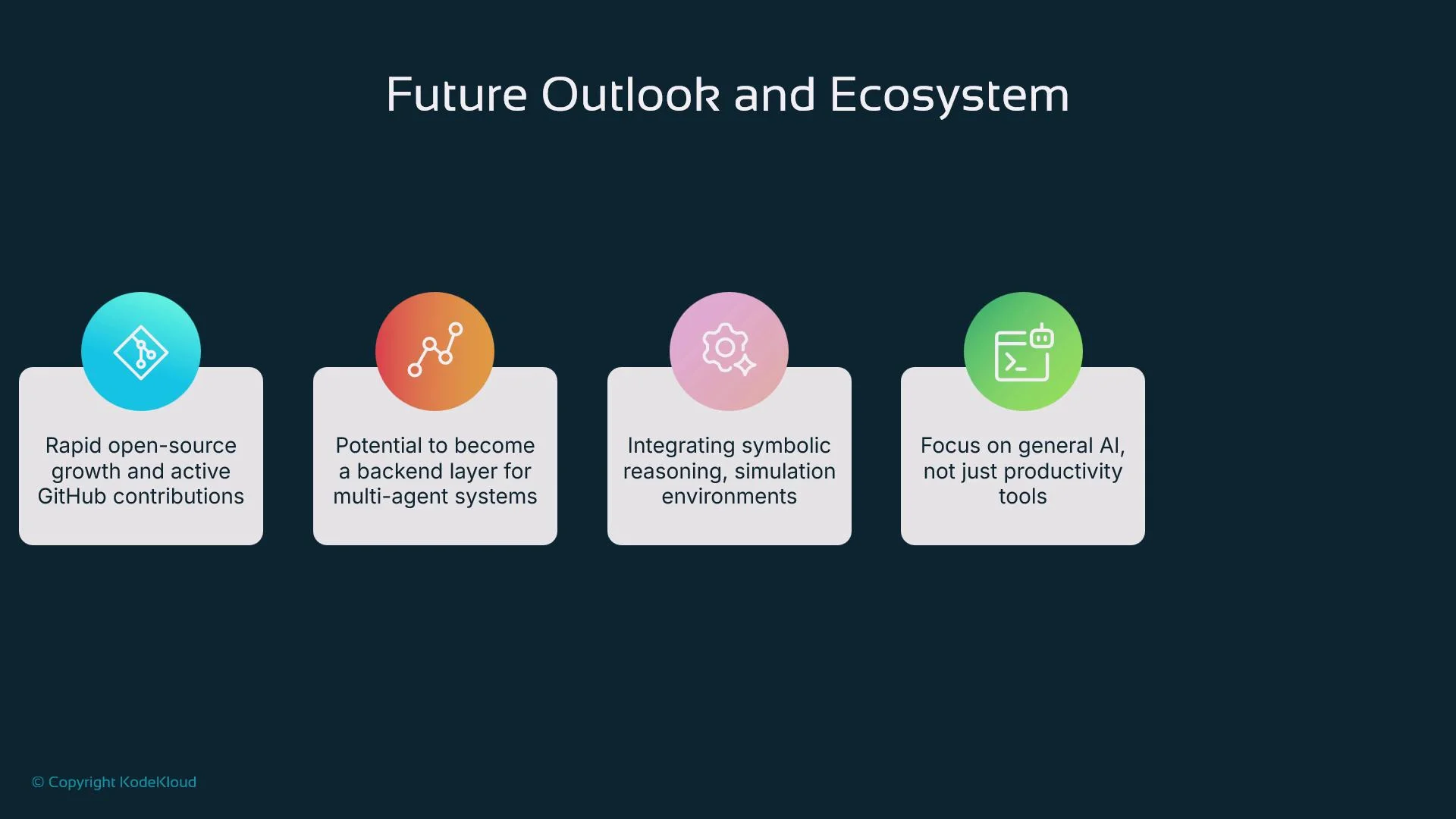
Future outlook and ecosystem
The Manus open-source ecosystem is maturing: contributions, plugins, and integrations are expanding. Roadmap directions include:- Tighter simulation and robotics integration
- Symbolic reasoning modules and hybrid approaches
- Tooling for self-improving agents and automated fine-tuning
- Richer UI and management tooling for multi-agent orchestration
Conclusion
Manus is a foundational framework for building agents that think, persist, and coordinate over time. For teams building adaptive, stateful agents, Manus offers primitives and architectural patterns that support long-term autonomy, observability, and modular reasoning. Adopting Manus requires investment in stateful infrastructure and governance, but it unlocks capabilities beyond short-lived prompt workflows.Links and references
- LangChain documentation (example)
- Vector DBs and memory stores: Weaviate, Pinecone, Milvus, Faiss
- Open-source agent frameworks and research papers (search for “long-horizon agents”, “world modeling”, “agent operating system”)