

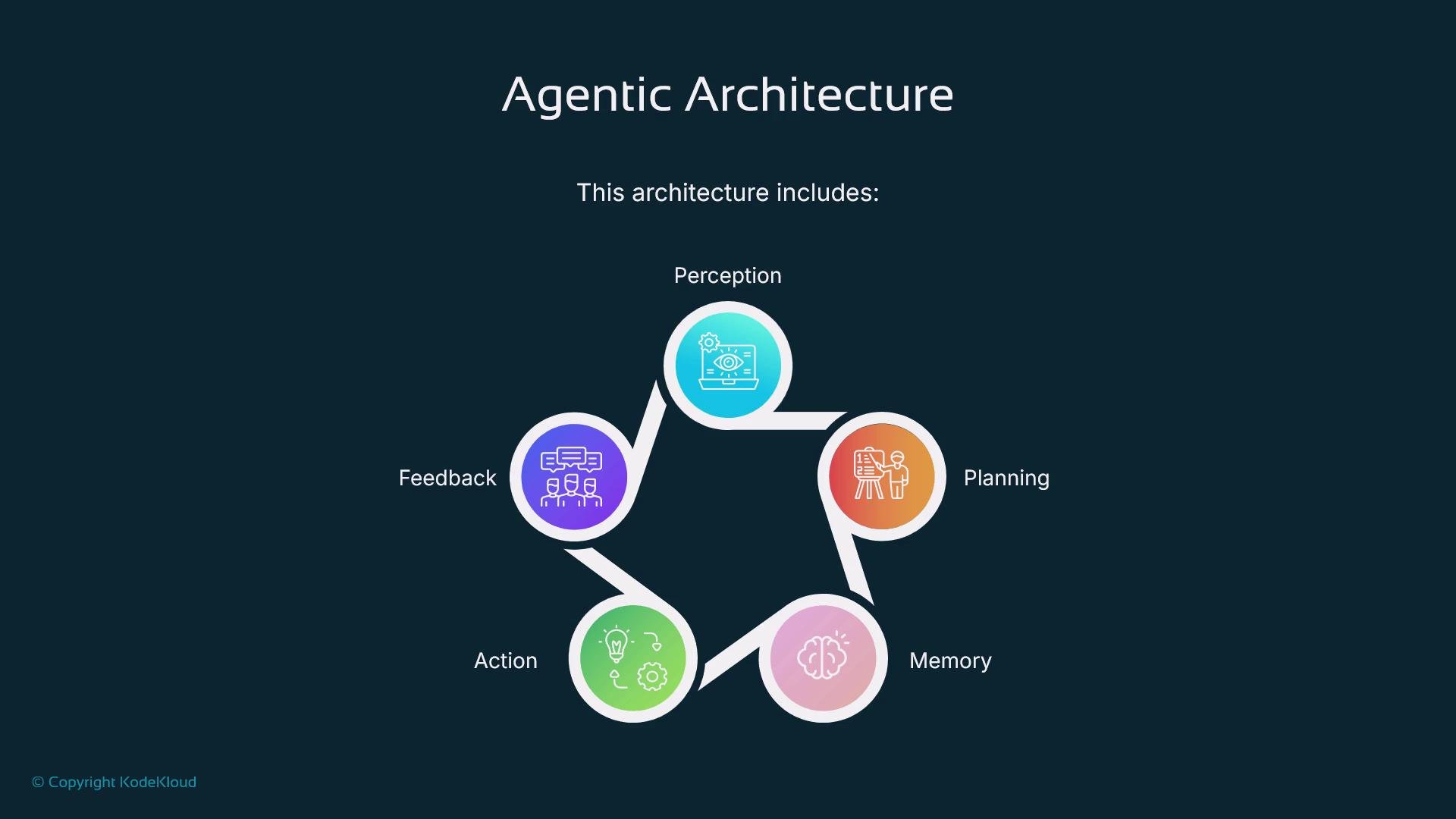
Four core layers of agentic systems
Four key layers commonly found in Agentic AI systems are described below. Each layer is responsible for discrete concerns, which simplifies testing and targeted scaling.
These layers let agents perceive, reason, act, and communicate in dynamic environments while keeping responsibilities separated.
Modular components of an agent runtime
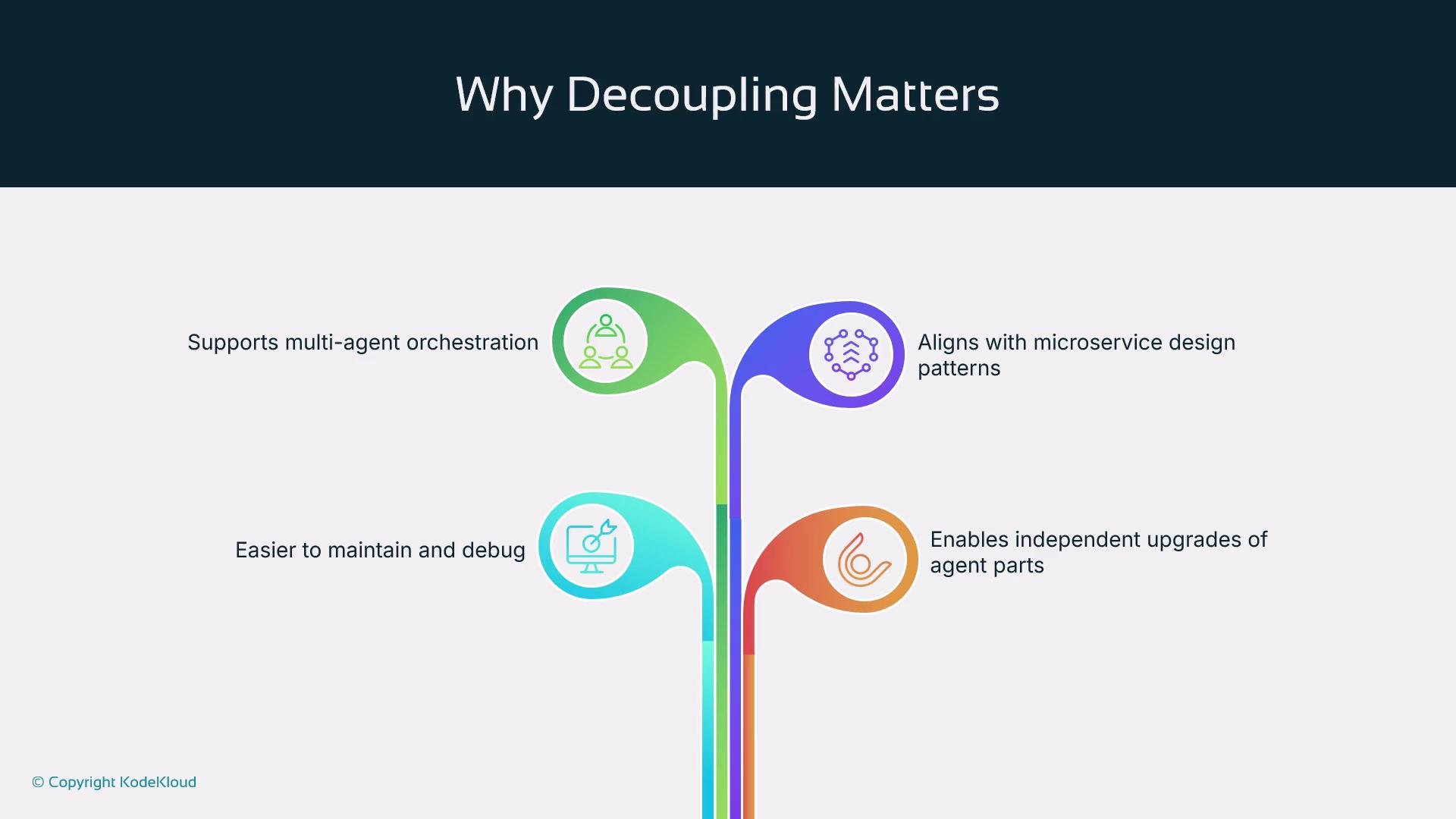
A practical agent system is composed of modular components with clear responsibilities:- Controller / Planner: decomposes high-level goals into actionable tasks and routes work to agents or tools.
- Tool Executor: manages external API integrations, sandboxed function calls, and runtime tools.
- Memory System: stores and retrieves context and long-term state; often uses vector stores for embeddings and semantic search.
- Interface Layer: exposes agent capabilities to users or other systems via APIs, WebSockets, or SDKs.
- Agent Runtime Orchestrator: coordinates planning, tool invocations, retries, and response synthesis.
Inter-agent communication methods
Inter-agent communication enables delegation, knowledge sharing, and collaboration. Choose mechanisms based on latency, reliability, and coupling goals: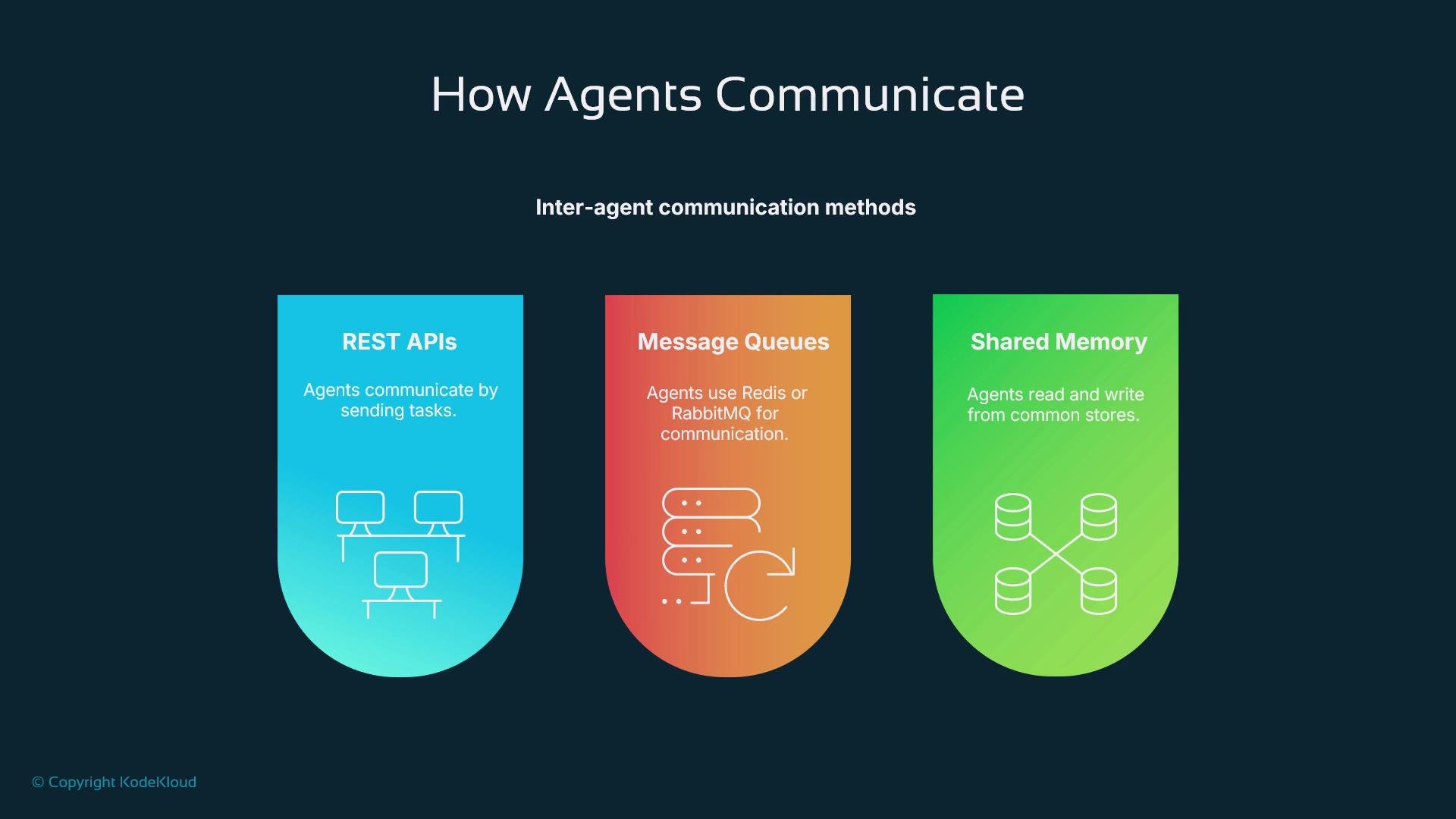
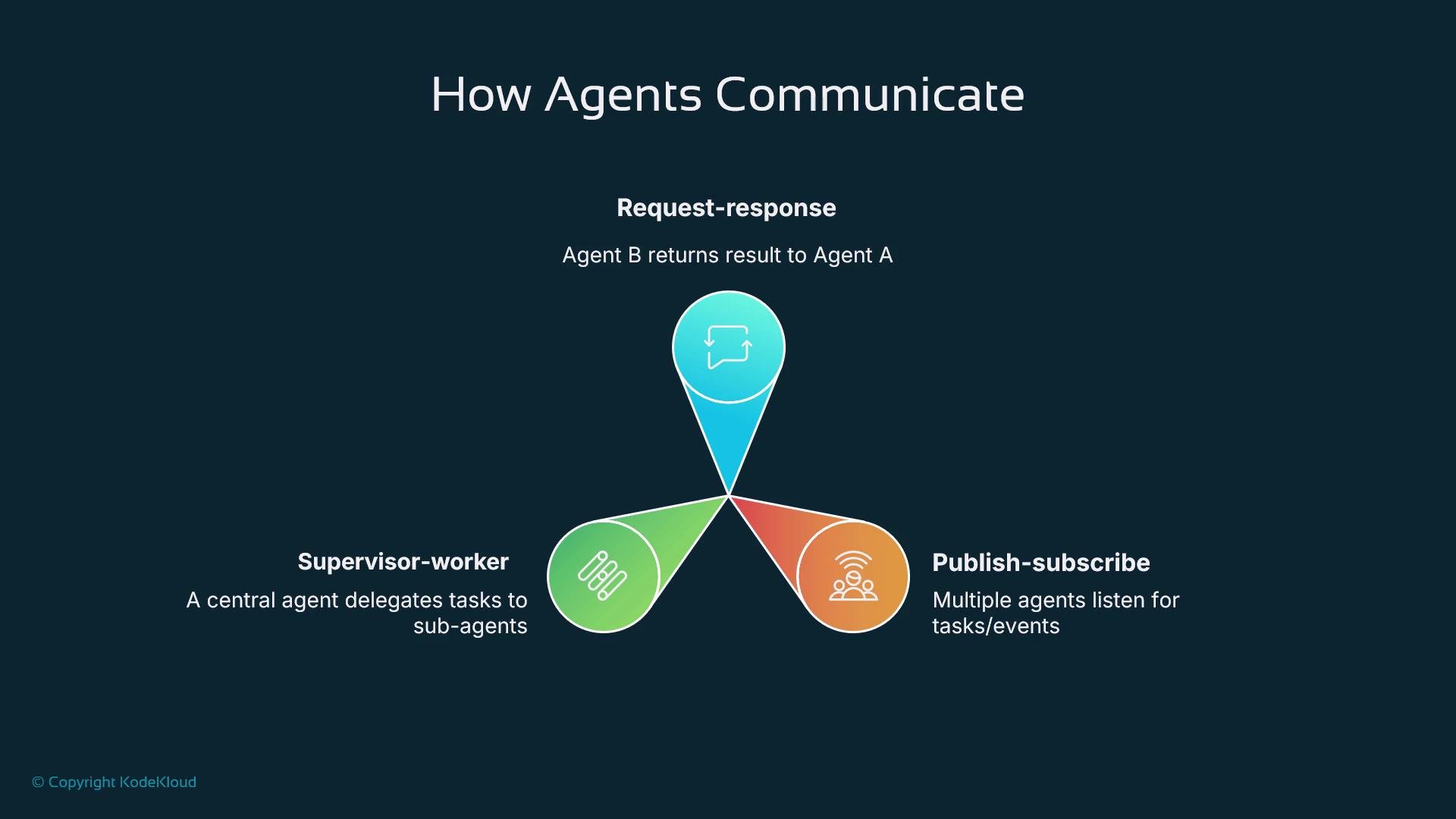
Communication patterns
Common patterns for composing agent interactions:- Request–Response: Agent A asks Agent B to perform work and waits for a result.
- Publish–Subscribe: Agents publish events or tasks; multiple subscribers react or process work.
- Supervisor–Worker: A coordinating agent delegates tasks to worker agents and aggregates results.
Choose communication patterns based on latency, reliability, and coupling requirements. Use REST for simple synchronous calls, message queues for decoupled and resilient workflows, and shared stores for collaborative memory and caching.
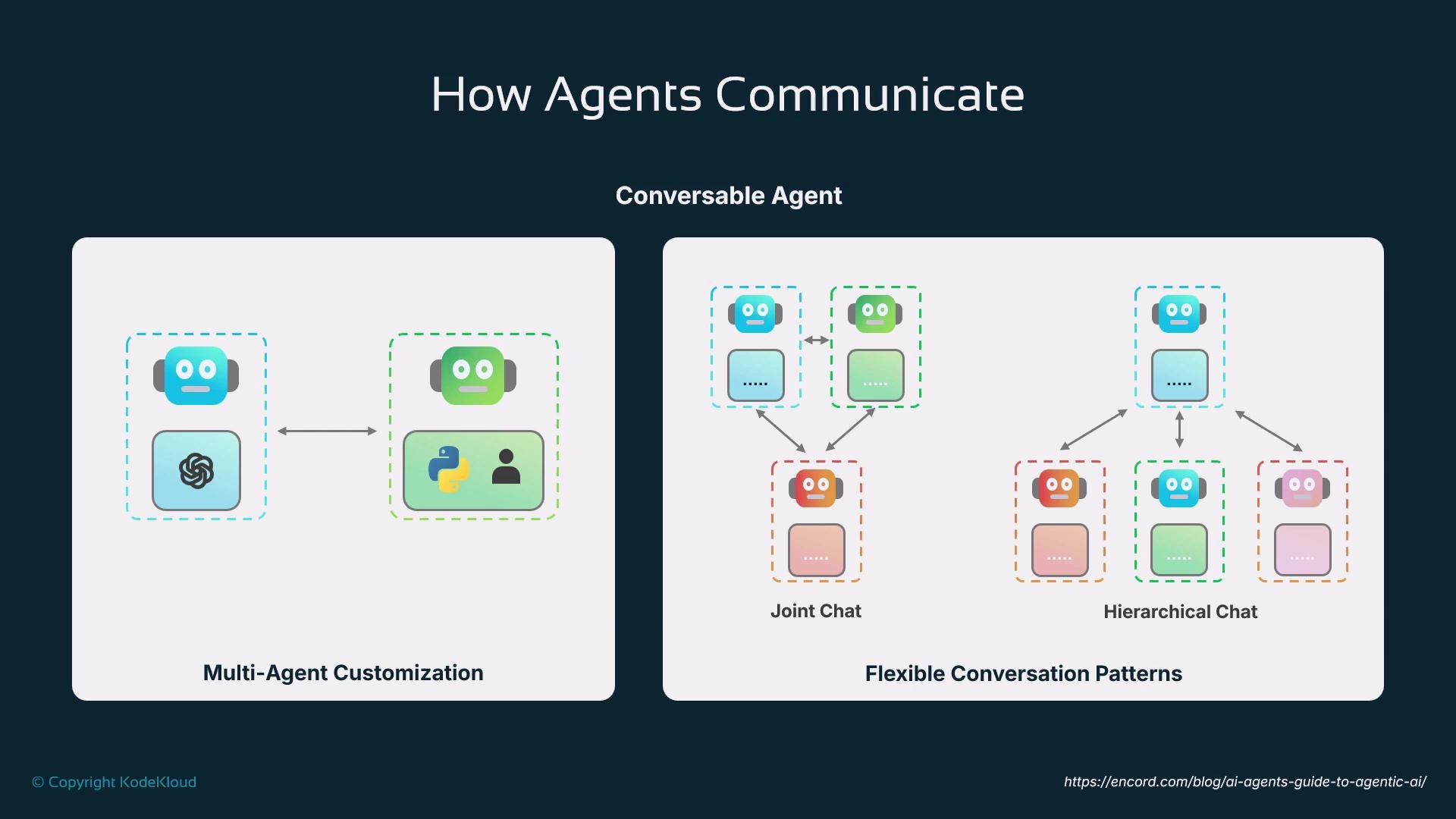
Conversable and collaborative agent capabilities
Key capabilities that enable agents to work together and interact with users:- Agent customization: personalize agents with domain-specific tools, personas, plugins, or scripts.
- Multi-agent conversations: agents exchange messages for joint reasoning, handoffs, or validation.
- Flexible conversation patterns: support joint chat (a shared channel where all agents contribute) and hierarchical chat (a lead agent delegates to sub-agents).
Practical multi-agent workflows
Common real-world workflows for multi-agent systems:- Role-based teams: specialized agents (researcher, writer, fact-checker) collaborate to complete complex tasks.
- Escalation flows: when an agent cannot proceed, it calls a helper or supervisor agent.
- Negotiation: agents propose and score options, exchanging proposals until consensus.
- Pipeline chaining: one agent handles preprocessing and passes results to downstream agents (summarizer → verifier → publisher).
FastAPI for exposing agent capabilities
FastAPI is a modern, high-performance Python framework ideal for exposing agent capabilities. Reasons to use FastAPI:- Asynchronous endpoints to integrate with async LLM calls and background tasks.
- Automatic OpenAPI / Swagger documentation generation.
- Strong input validation with Pydantic.
- Easy dependency injection for authentication, policy checks, and observability.
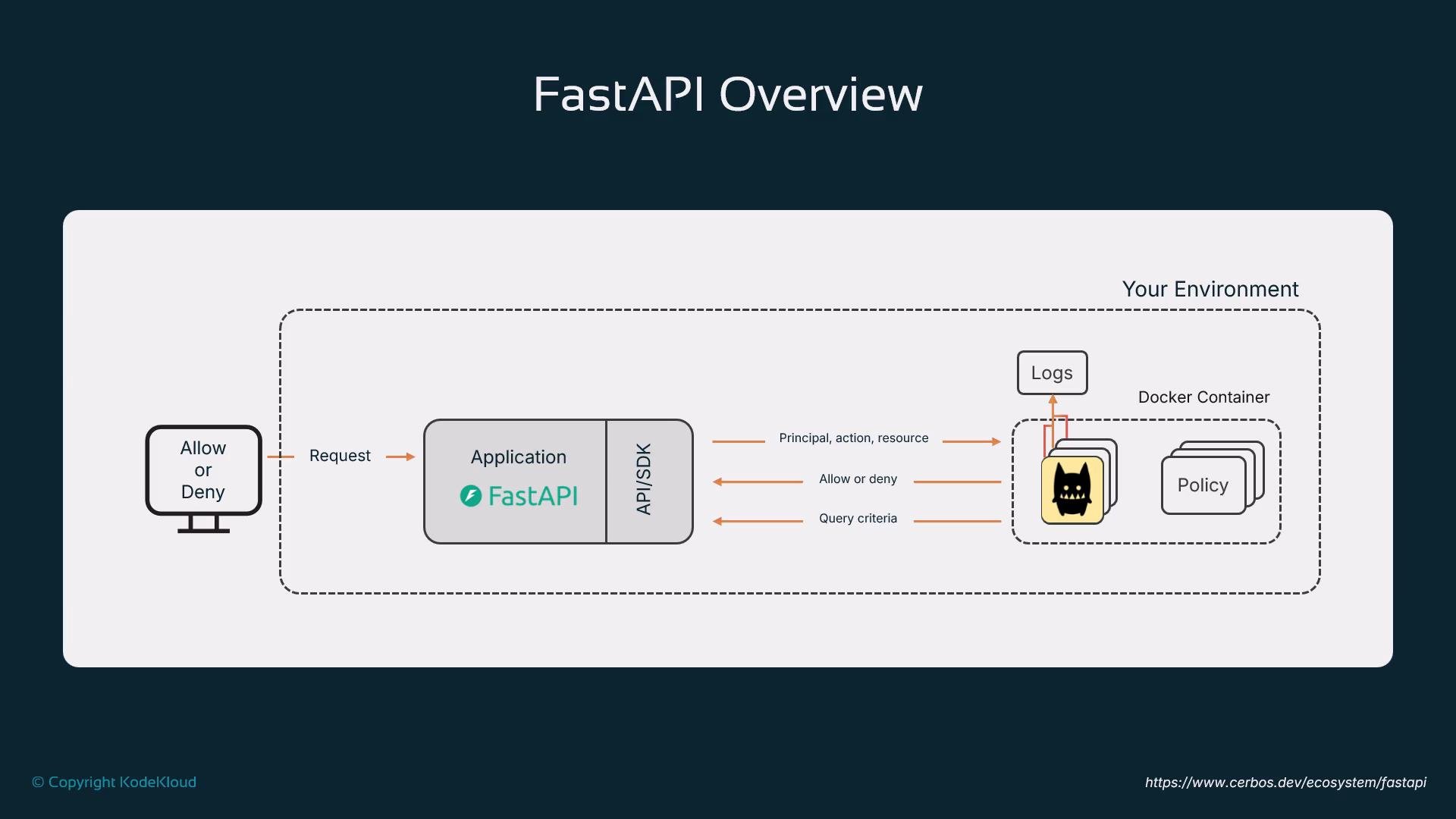
- Client (user, web app, or another agent) sends a request to the FastAPI service.
- FastAPI validates the request body with Pydantic models.
- The application queries an external policy engine (HTTP or SDK) with inputs such as principal, action, and resource.
- The policy engine returns allow/deny decisions; the application enforces the decision.
- The decision and relevant metadata are logged for auditing.
Example FastAPI endpoint (agent interface)
Below is a minimal FastAPI example demonstrating a Pydantic request model, async handler, and a placeholder policy check. Use this pattern to validate inputs and gate agent execution behind policy decisions.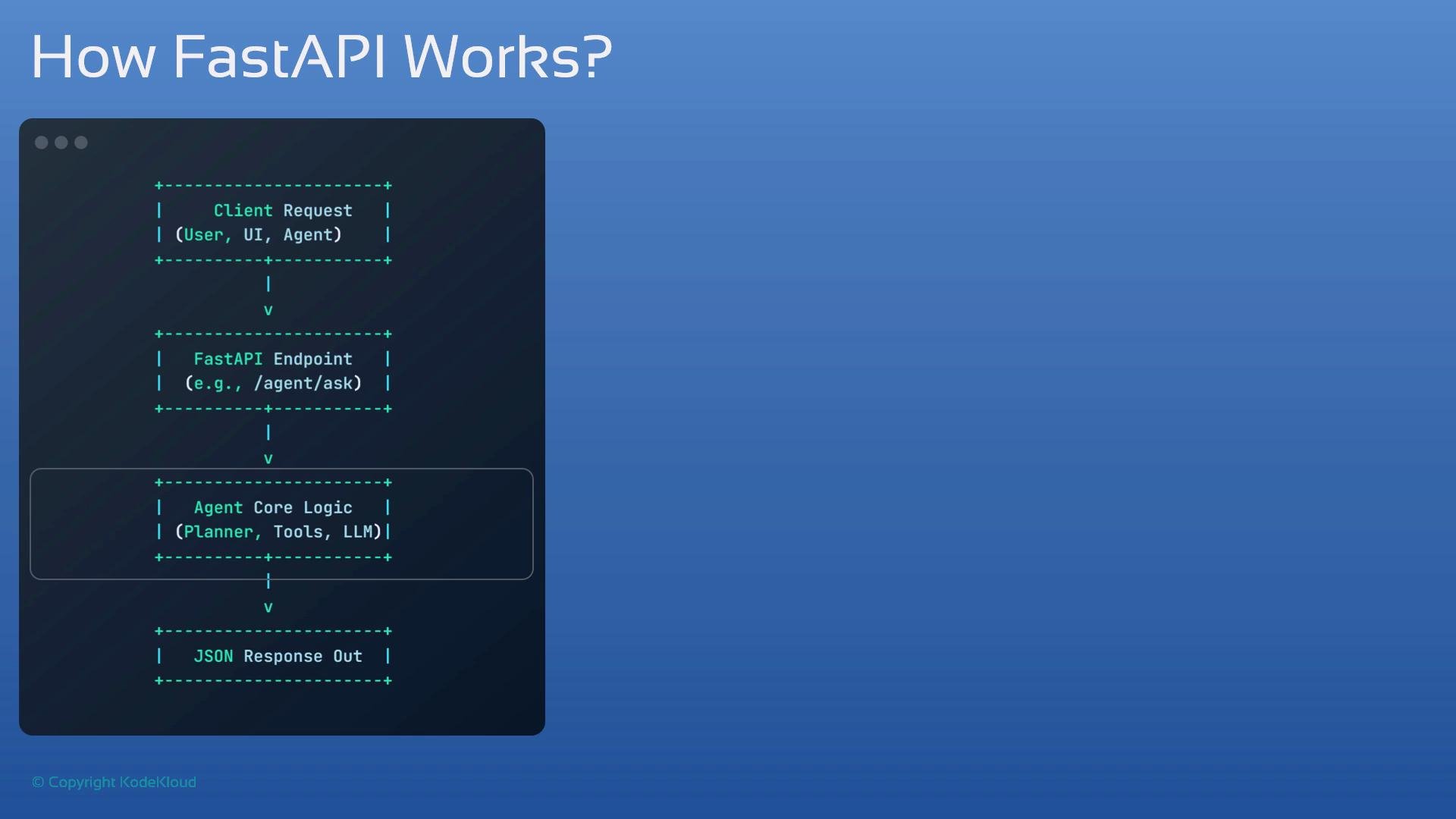
How FastAPI fits into agent architectures
Typical integration points and deployment patterns:- Client sends requests: frontends or other agents call REST endpoints.
- FastAPI endpoints receive validated payloads via Pydantic schemas.
- Agent logic executes: planners, memory lookups, tool executors, and LLM calls run—often asynchronously or via background tasks.
- Response returned: structured JSON responses; auto-generated docs help developer onboarding.
Deployment and scaling strategies
Common deployment and scaling approaches for agent systems:- Horizontal scaling: multiple worker instances behind a load balancer for stateless agents.
- Service separation: isolate planner, memory, and tool executors into separate services for targeted scaling.
- Async task queues: use Celery, RQ, or cloud-native job queues for long-running or retryable tasks.
- Observability: structured logging, distributed tracing, and metrics for debugging and performance tuning.
- Security and policy enforcement: centralize access control policies, use mTLS, API gateways, and rate limiting.
Security and observability are critical. Enforce least-privilege access, validate inputs thoroughly, log decisions for audits, and instrument distributed traces to troubleshoot inter-agent workflows.
Quick reference: communication selection guide
Links and references
- FastAPI docs and tutorials
- Pydantic documentation
- Redis Streams
- RabbitMQ
- Kafka event streaming course
- Kubernetes basics
- Docker primer