

- What conversational AI includes and why it matters
- Chatbot vs conversational agent
- Conversation theories: turn-taking, grounding, and intent
- Core system components: NLU, Dialogue Manager, NLG, Memory/Context, and Tools/APIs
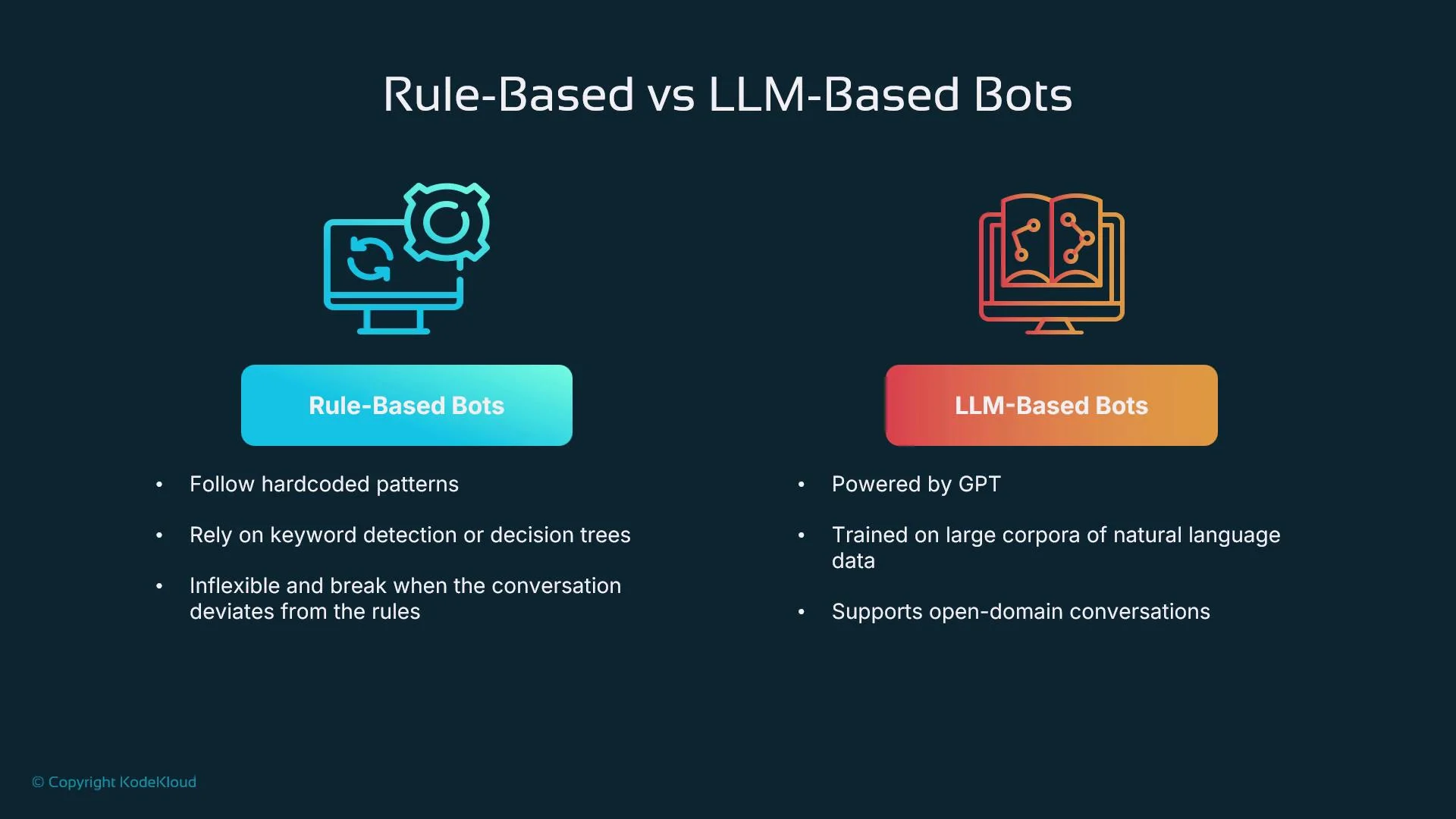
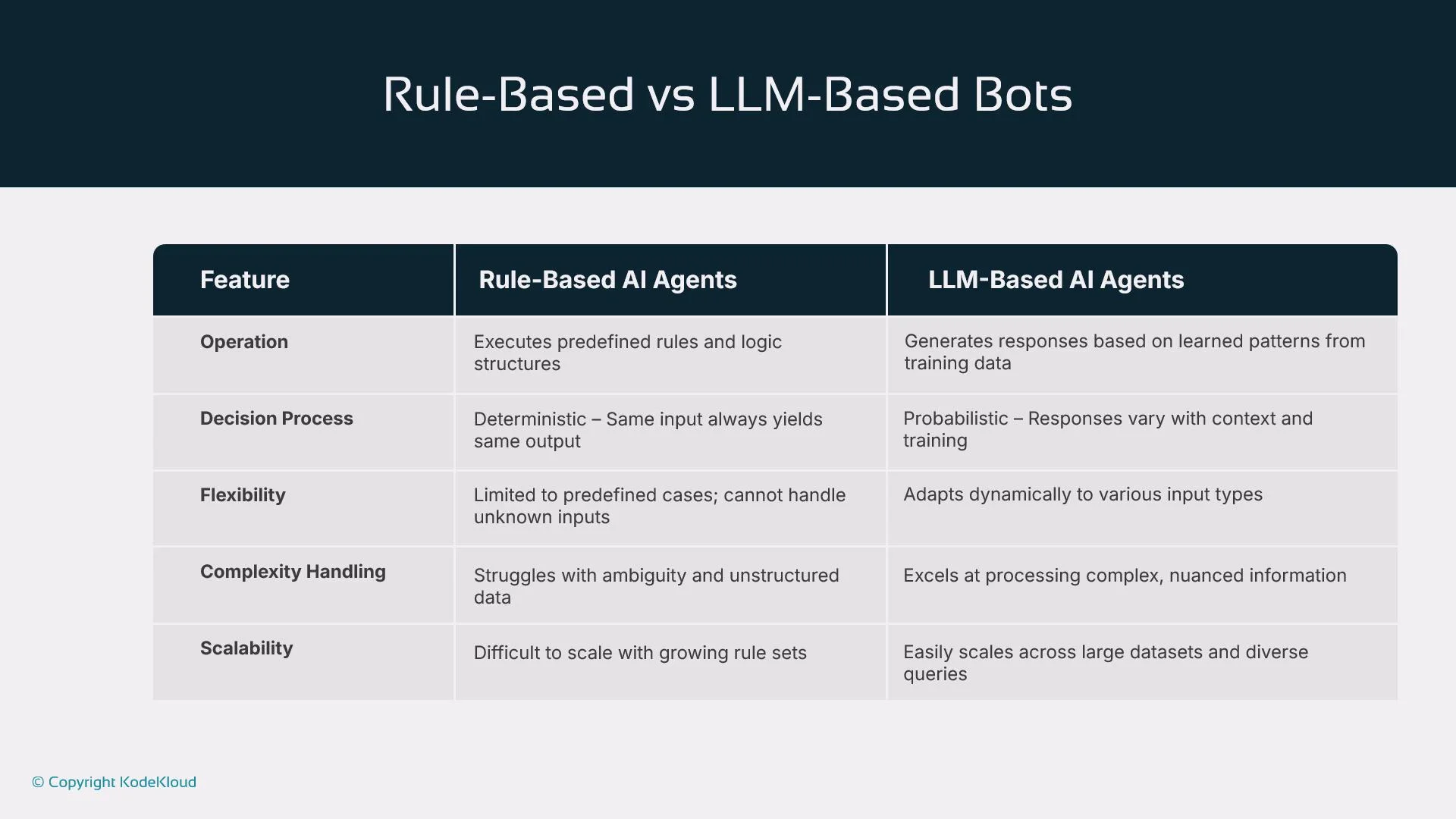
- Rule-based, LLM-based, and hybrid approaches
- Intent recognition, dialogue management, and state/memory strategies
- Conversation design: prompts, fallbacks, tone, and UX
- Use cases and design best practices for agent systems
What is Conversational AI?
Conversational AI refers to technologies that allow machines to converse with humans using natural language. This includes chatbots, voice assistants, multimodal dialogue systems, and autonomous AI agents. The fundamental subcomponents are:- Natural Language Understanding (NLU)
- Intent recognition and entity extraction
- Natural Language Generation (NLG)
Chatbots vs Conversational Agents
- Chatbots: Typically scripted, built for defined flows (menu-driven IVR, decision trees). Best suited to predictable, structured tasks.
- Conversational agents: More autonomous. Accept broader inputs, maintain memory, reason about goals, and can take actions across systems (for example: gather details, book a pickup, and confirm in one session).
Core Conversation Theories That Inform Design
Designers borrow from linguistics and cognitive psychology. The main concepts to apply:- Turn-taking: Conversations are organized into alternating turns. Agents must detect when to speak, when to listen, and when to yield.
- Grounding: Shared understanding is built incrementally. Agents should confirm critical facts and request clarifications when necessary.
- Intent theory: Utterances are goal-driven. Agents must infer the user’s intention (the goal behind the text), not just parse literal words.
Core System Components
A typical conversational AI architecture includes the following components and responsibilities: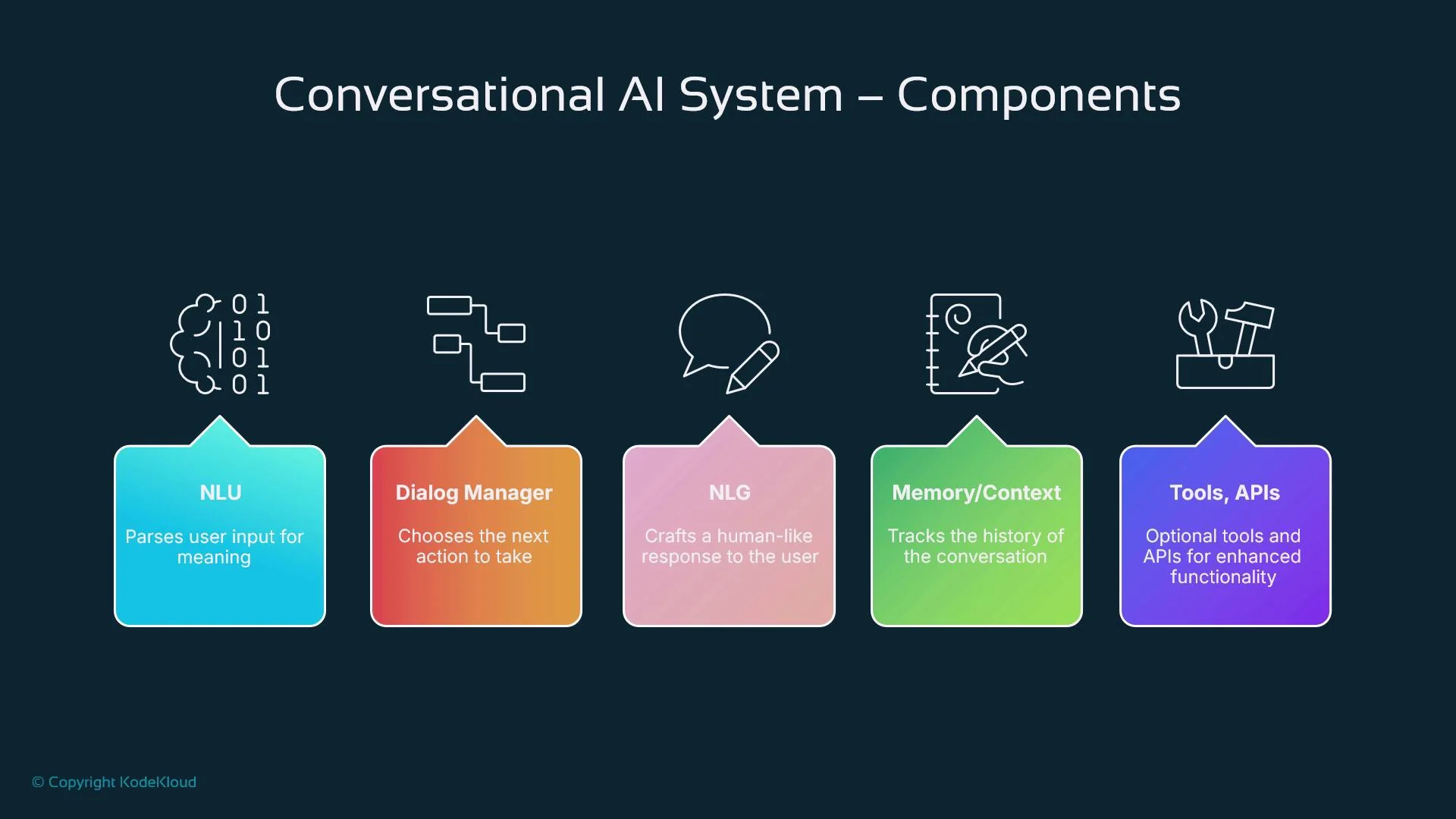
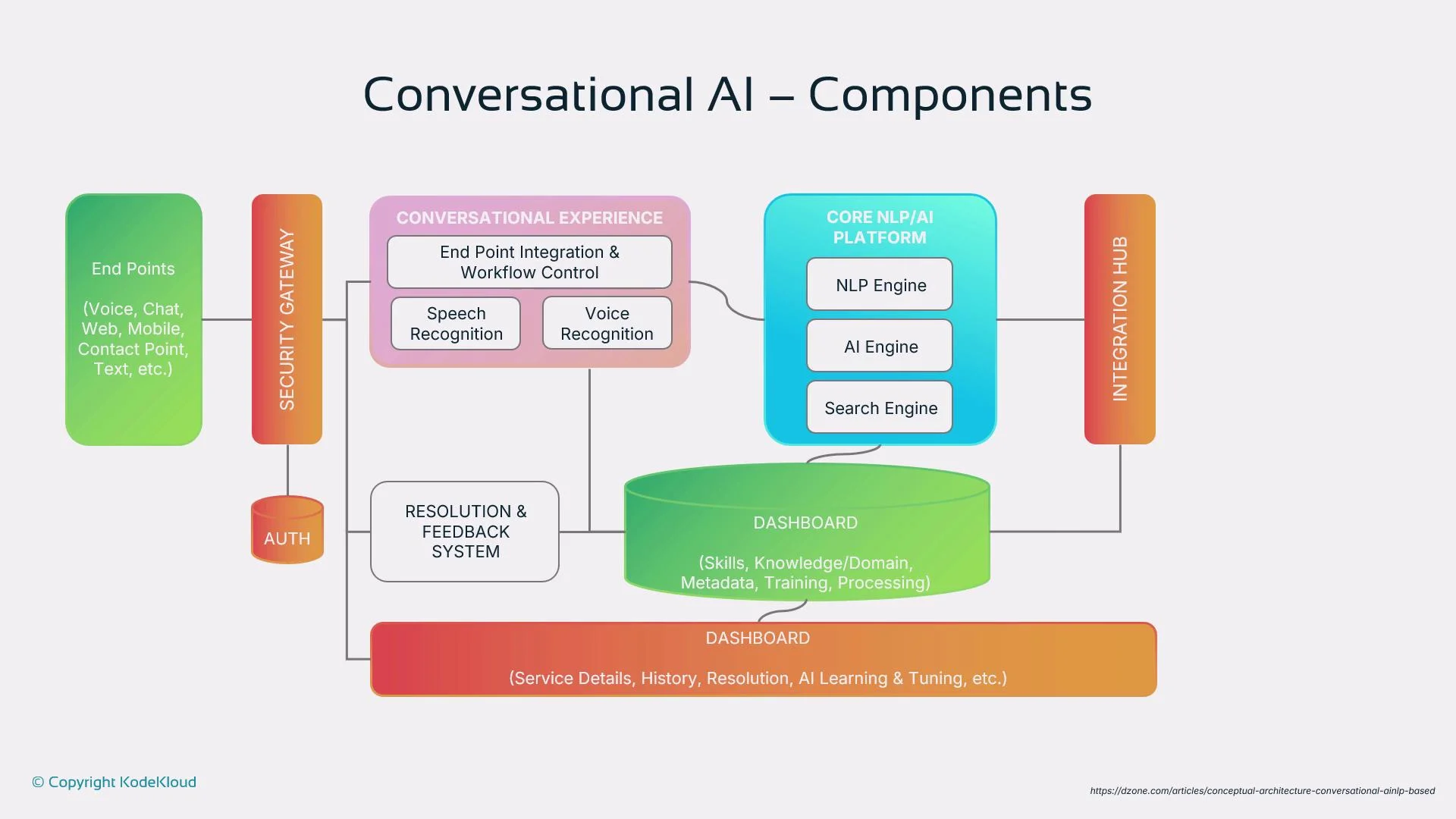
System Architecture and Integration
Enterprise platforms typically route users (voice, chat, web, mobile) through secure endpoints into a conversational experience layer that handles speech recognition, session routing, and orchestration. The core NLP/AI platform (NLU, LLM or ML engine, semantic search) drives interpretation and responses. A central knowledge store holds domain metadata, training data, and persistent memory. Integration hubs connect backend services (CRM, ticketing), while dashboards provide monitoring and tuning. Key integration points:- Authentication and secure endpoints
- Orchestration and session management
- Knowledge retrieval and tool invocation
- Feedback and telemetry for continuous improvement
Rule-based vs LLM-based Bots (and Hybrids)
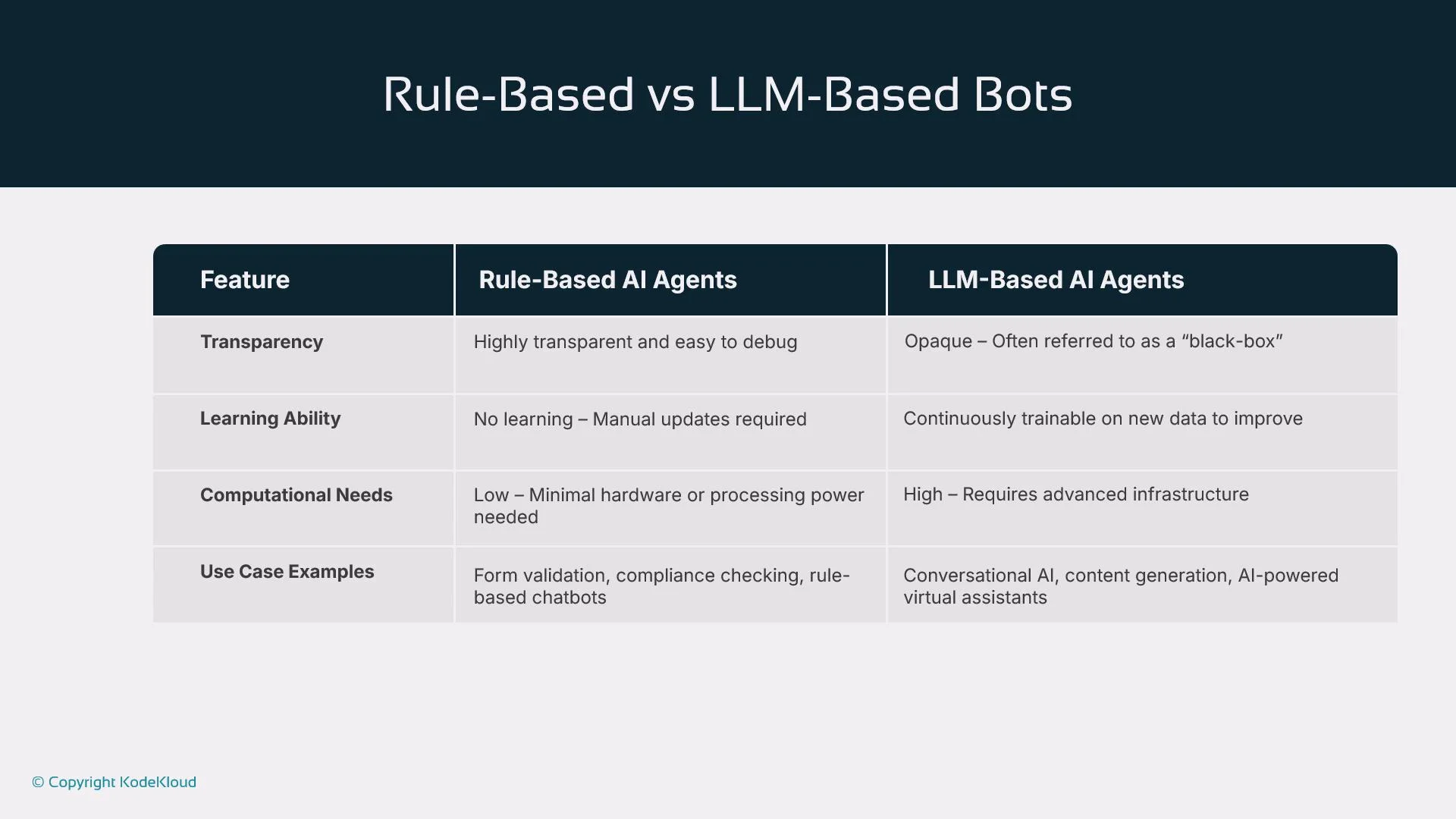
- Rule-based bots: Use explicit rules, patterns, and decision trees. Predictable, transparent, and easy to debug—but brittle outside of expected flows.
- LLM-based bots: Use large language models to interpret and generate text. Flexible and better at handling open-domain or unstructured queries but probabilistic and prone to hallucination without grounding.
- Read about practical LLM design patterns in prompt engineering and retrieval-augmented generation.
- Consider vector databases for semantic memory storage.
Intent Recognition and the Dialogue Manager
Intent recognition converts a user utterance into a structured intent (e.g.,cancel_order, check_balance, book_flight) and extracts entities. The Dialogue Manager then applies policies—rule-based, learned, or hybrid—to select the next action:
- Ask for missing information (slot-filling)
- Call an external API or tool
- Confirm completion and close the task
State Management and Memory
Agents typically use two memory horizons:- Short-term / session memory: Tracks the current conversation state (filled slots, recent prompts, temporary context).
- Long-term memory: Persists across sessions for personalization (user preferences, past transactions). Long-term memory is often stored in semantic stores such as vector databases for retrieval.
Context Pipeline for LLM-driven Agents
A standard LLM-driven agent context pipeline:- Context manager gathers relevant data from persistent stores (session state, long-term memory, external sources).
- The compiled context is prepared as the LLM input (context window).
- The LLM generates an action or response.
- Any state updates are written back to the persistence layer.
Conversation Design: Prompts, Tone, and Fallbacks
Design practices that improve task success and user satisfaction:- Keep prompts concise and informative.
- Match tone to the domain: casual for retail, professional for finance or healthcare.
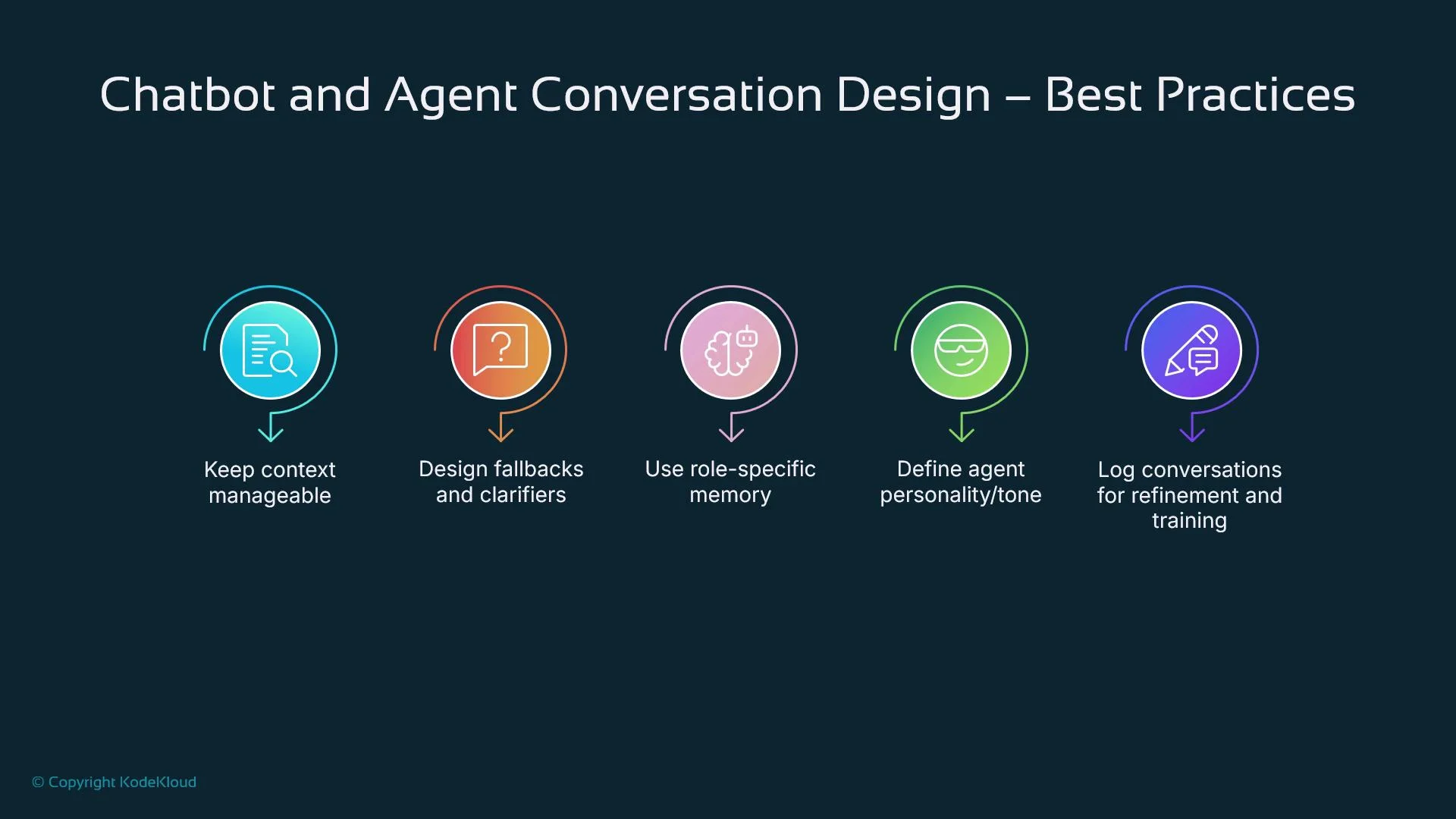
- Provide explicit fallbacks and clarifying prompts: e.g., “I didn’t understand that. Did you mean X or Y?”
- Design for edge cases and graceful failures—avoid dead-ends.
- Partition memories by agent role to avoid leaking irrelevant or sensitive data.
- Give agents a consistent personality (cheerful, professional) to increase trust.
- Log and analyze interactions to iteratively improve prompts and policies.
Design for both the ideal path and common deviations. Short confirmations and clarifying questions reduce misunderstandings and improve task completion rates.
Use Cases and Agent Ecosystems
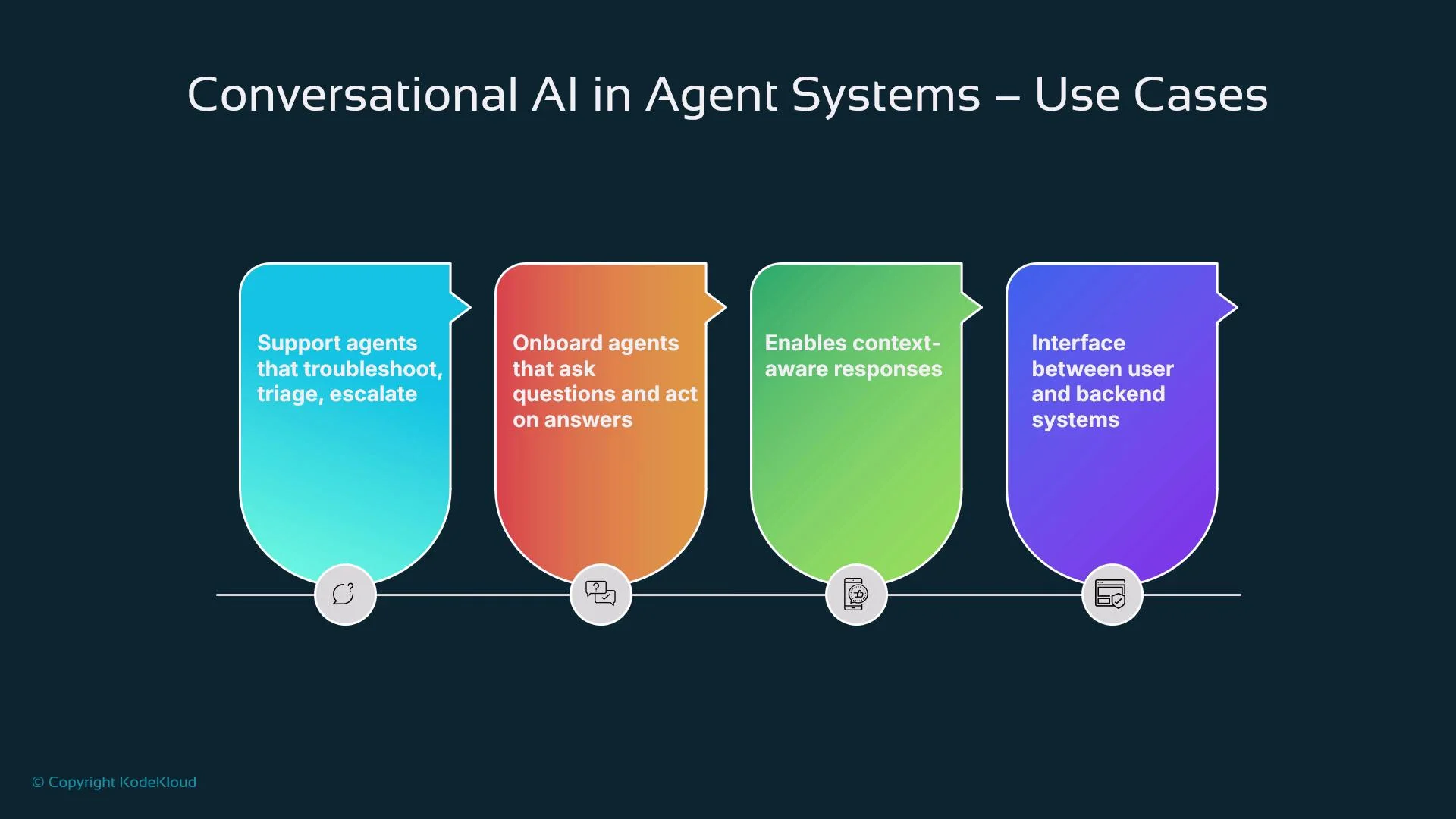
Common applications:- Support agents: Diagnose issues, guide troubleshooting, and escalate when needed.
- Onboarding agents: Collect configuration data and guide initial setup flows.
- System interfaces: Provide conversational front-ends to backend services.
- Agent chains: One agent collects/refines information and passes it to another for synthesis or execution.
Best Practices and Resilience
Practical guidance for production-grade systems:- Limit context to what’s relevant: oversized context windows increase costs and complexity.
- Implement structured fallbacks and clarifiers for ambiguous inputs.
- Separate memories by agent role to reduce leakage of irrelevant or sensitive data.
- Instrument consistent logging and monitoring, especially during early rollout.
- Monitor for failure modes such as hallucination, privacy leaks, or unsafe actions and implement rule-based safeguards.
LLM-driven systems can hallucinate or infer incorrect facts. Use grounded retrieval, verification, and rule-based constraints for critical actions and data-sensitive tasks.
Summary
Conversational AI blends linguistic theory, system engineering, and user-centered design. Applying turn-taking, grounding, and intent principles improves conversational behavior. Typical architectures combine NLU, dialogue management, NLG, and memory stores, while integration hubs and dashboards enable production operations. Choose rule-based, LLM-based, or hybrid architectures based on task complexity, risk tolerance, and available resources. Robust state management, concise prompts, fallbacks, and ongoing telemetry are essential to build reliable, trustworthy conversational agents. Further reading and resources:- Conversational AI fundamentals and design patterns
- Prompt engineering and retrieval-augmented generation
- Vector databases and semantic retrieval for long-term memory