

- What agentic agents are
- How they compare to standard AI systems
- Core architecture and modular components
- Types of agentic behavior (goal-oriented, tool-using, self-improving)
- Practical, real-world use cases and a working agent loop example
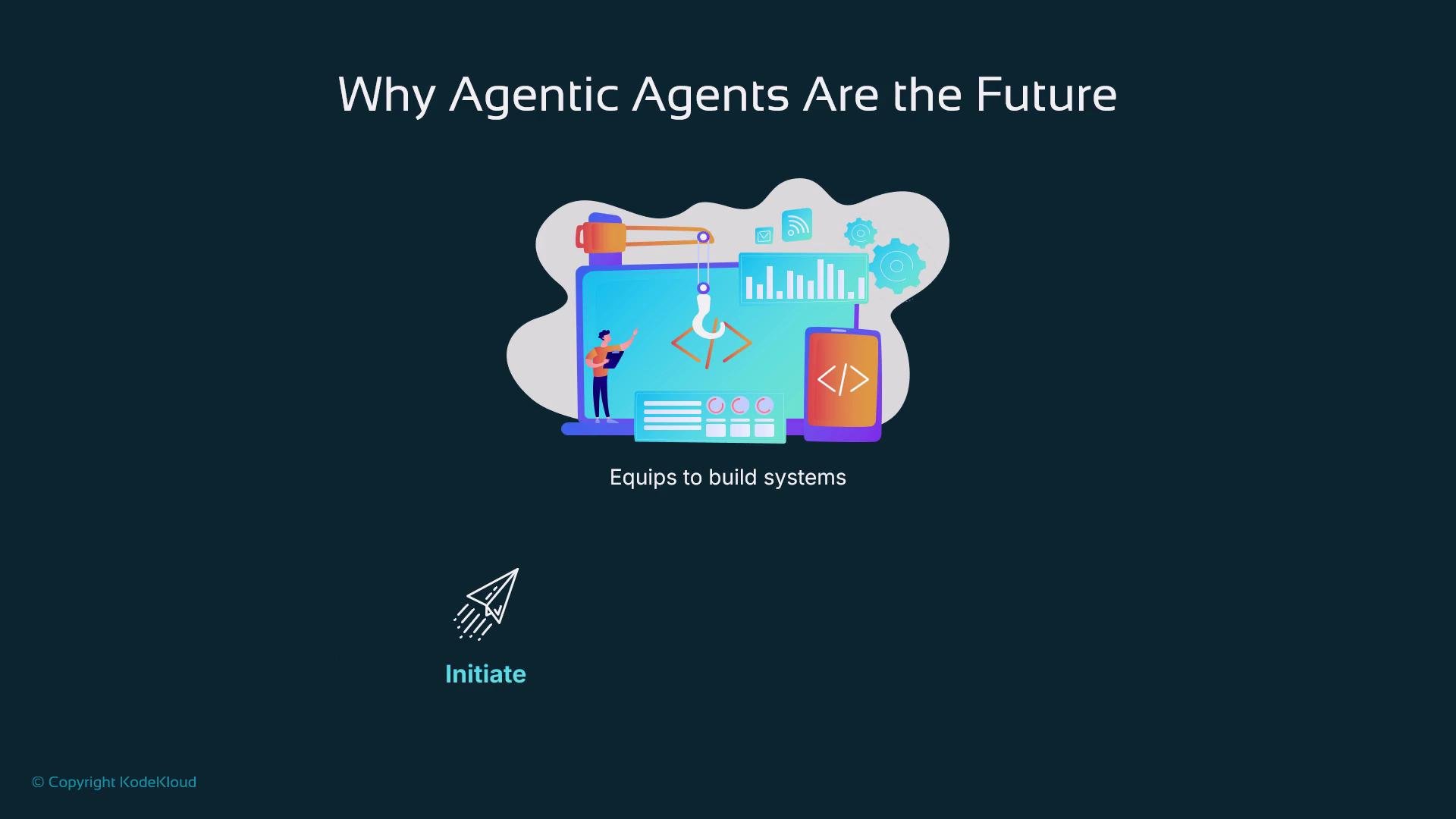
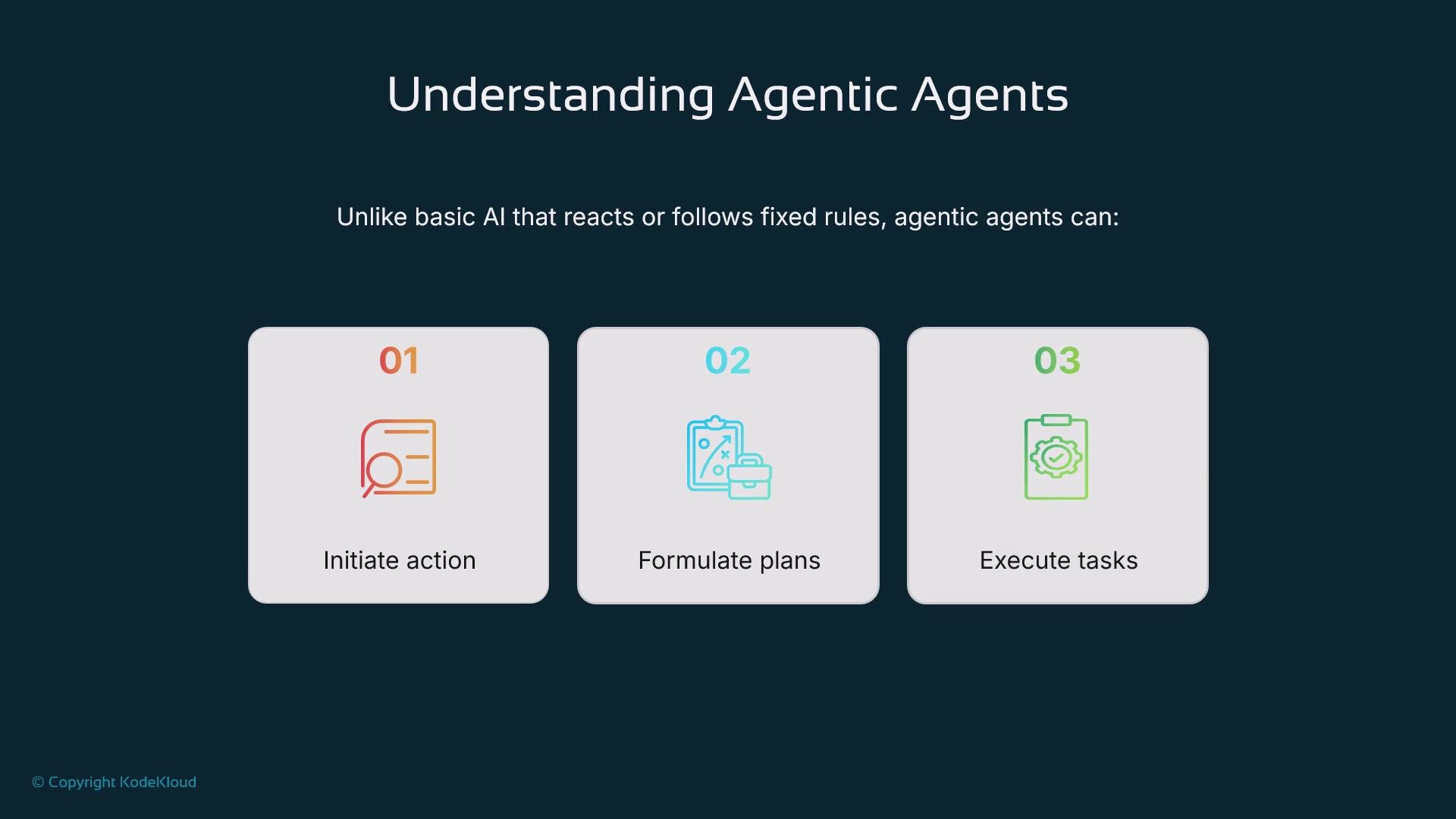
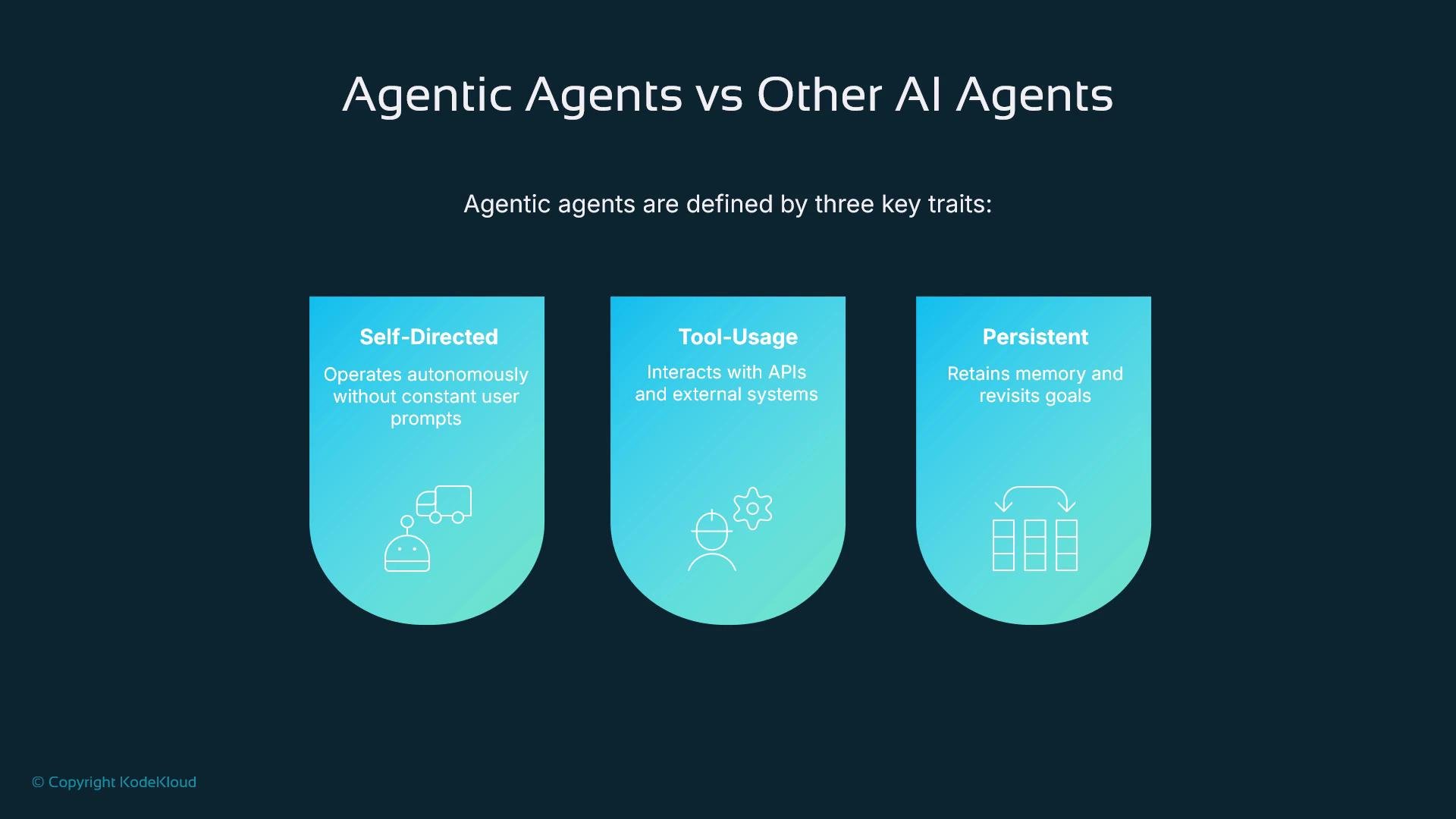
- Initiate actions without explicit prompt for each step
- Formulate and adapt plans
- Sense and reason about their environment
- Execute tasks using available tools and services
- Learn and refine strategies over time
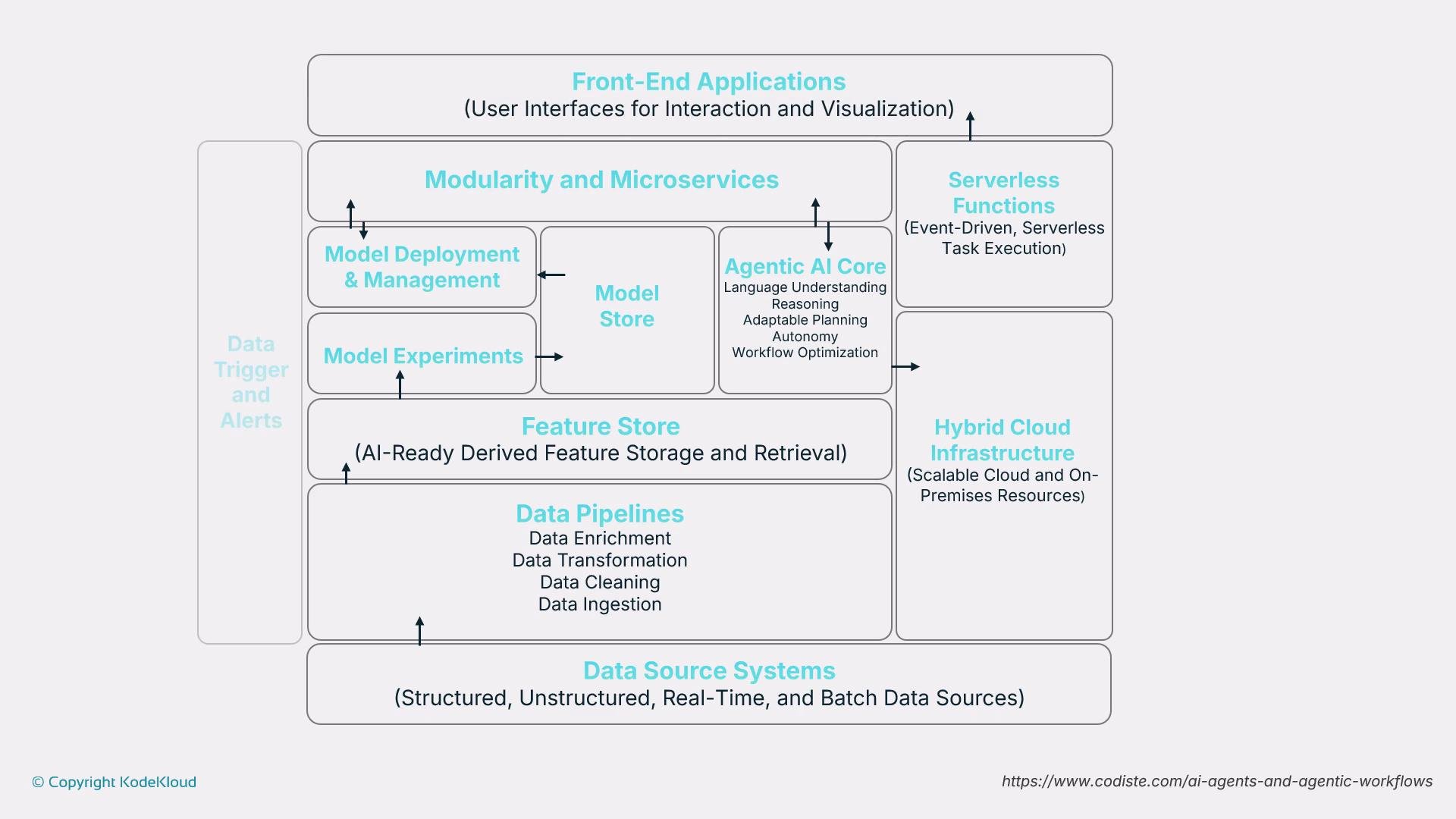
- Data pipelines ingest and clean structured and unstructured sources.
- A Feature Store provides reusable, versioned features.
- Model experimentation and a model store support reproducibility.
- The Agentic AI Core handles language understanding, planning, and decision-making.
- Microservices and serverless functions enable event-driven, modular execution.
- Hybrid cloud infrastructure supports scale, locality, and compliance.
- Logging, auditing, monitoring, and front-end applications provide observability and human-in-the-loop controls.
Because of these traits, agentic agents act more like collaborators: they can decompose open-ended tasks, iterate on feedback, and coordinate with other systems or agents.
- Standard chatbot: answers a given question and stops.
- Agentic system: given “produce a market research report,” it decomposes the task, collects data, synthesizes findings, and outputs a formatted report—adapting along the way as new information appears.
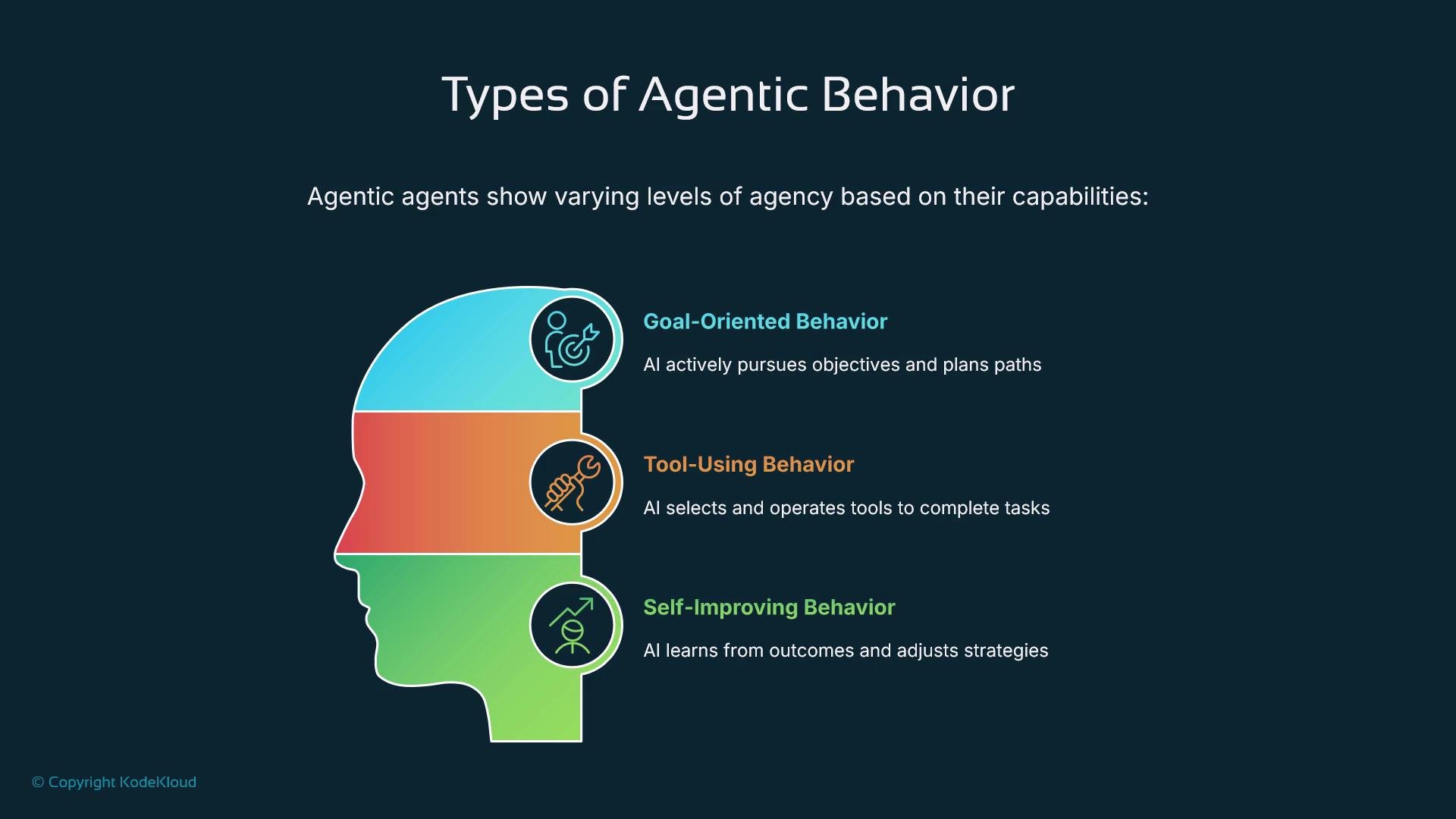
- Goal-oriented: set objectives, plan steps, re-evaluate strategies.
- Tool-using: select and operate tools such as web search, databases, or code execution.
- Self-improving: learn from outcomes, monitor metrics, and refine strategies over time.
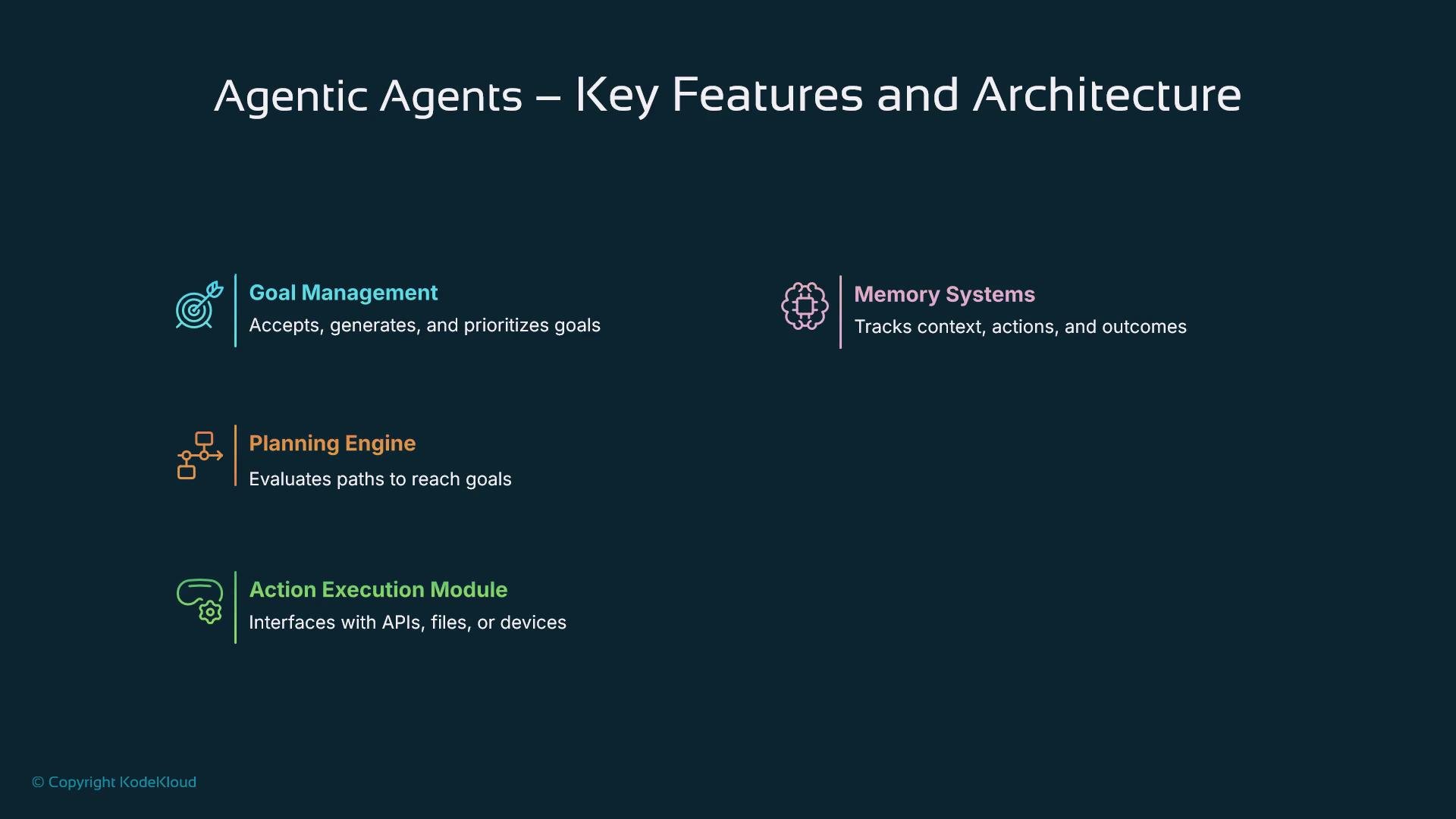
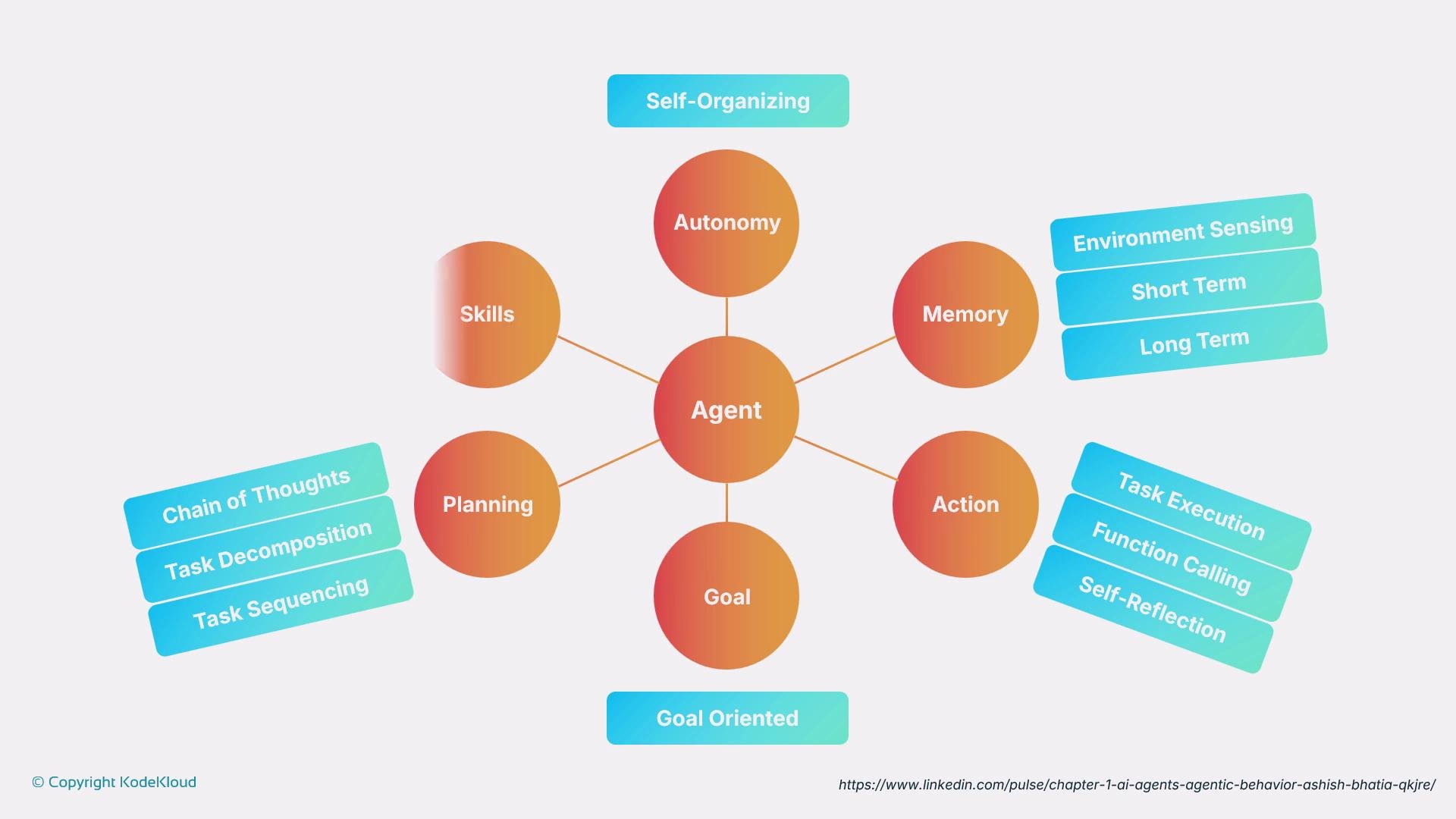
- Autonomy: self-organization and independent operation.
- Memory: short-term and long-term contextual storage.
- Action: execute tasks, call functions, and reflect on outcomes.
- Goal focus: maintain objectives and respect constraints.
- Planning: chain-of-thought reasoning, task decomposition, sequencing.
- Skills: access tools such as web search, code execution, summarizers, and data retrieval.
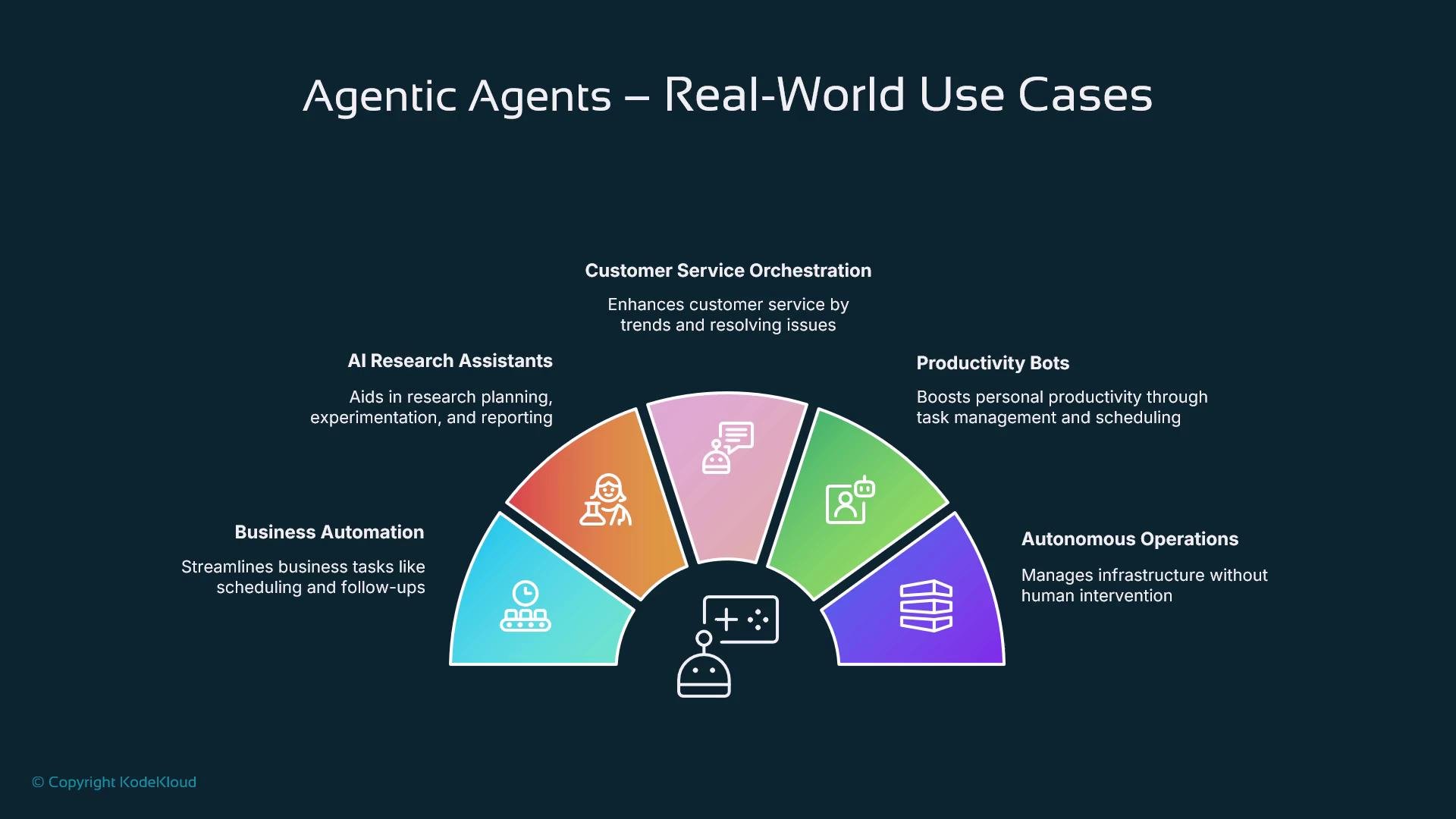
- Business automation: schedule coordination, meeting summaries, automatic follow-ups.
- AI research assistants: plan experiments, search literature, debug code, produce reports.
- Customer service orchestration: detect trends, escalate issues, draft stakeholder communications.
- Productivity bots: personal assistants that plan calendars, book appointments, summarize emails.
- Autonomous operations: monitor infrastructure, restart services, report anomalies.
- Goal Initialization — Agent receives or generates a goal (e.g., “Summarize the top five AI news articles”).
- Environment Sensing — Collect data from APIs, web, or files.
- Planning & Reasoning — Decompose the goal into subtasks (LLM + logic engine).
- Tool Selection & Action Execution — Run searches, call APIs, execute code, summarize results.
- Memory Update — Log context, actions, and outcomes.
- Evaluation & Feedback — Measure success, adjust approach, iterate.
Agentic systems are most effective when goals, constraints, and evaluation metrics are well defined. Observability (logging, monitoring) and safe tool access controls are critical for reliable deployments.
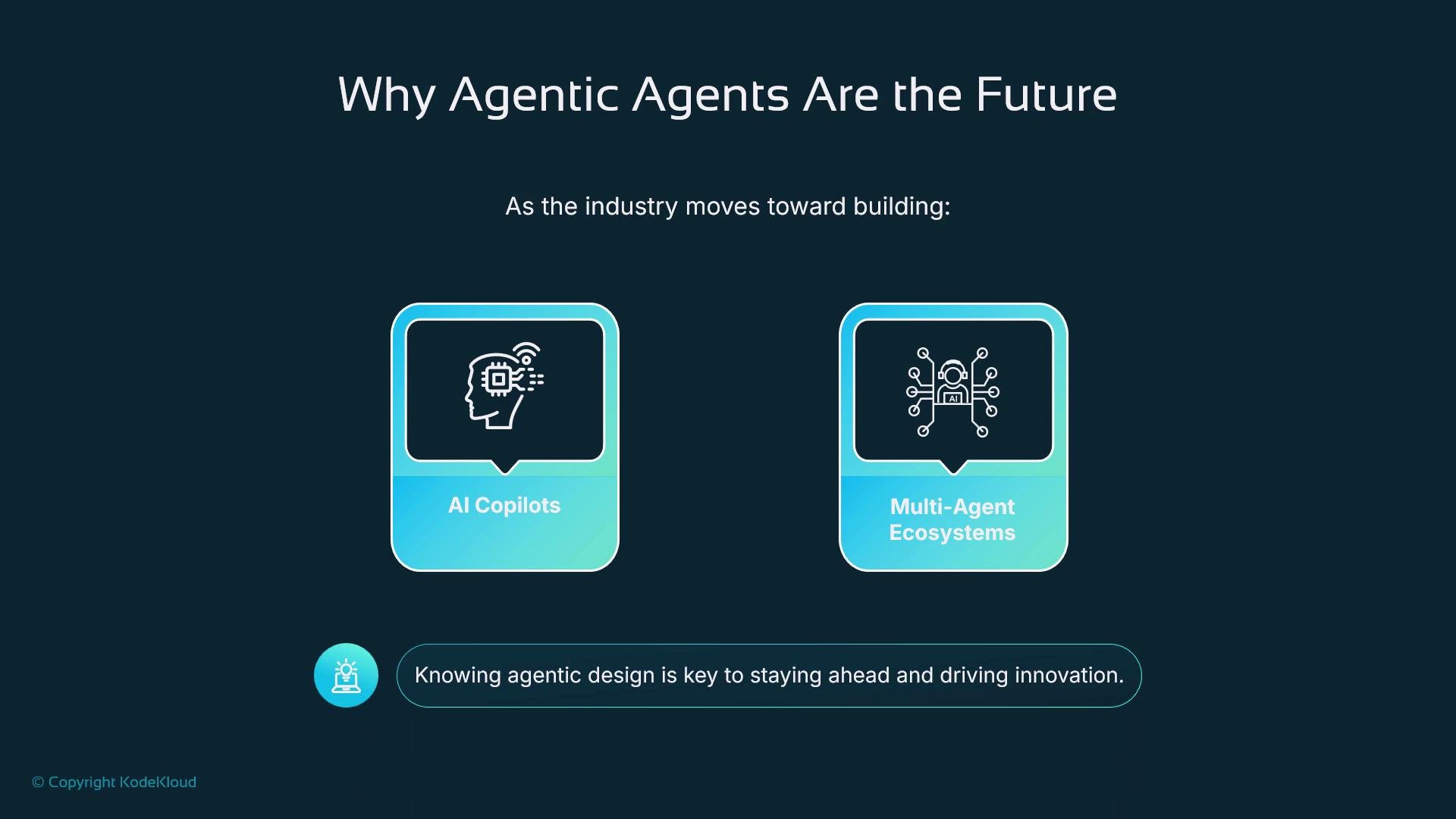
- Multi-agent systems (overview)
- Designing autonomous agents (research & best practices)
- LLM-based agents and tool use