

- What MAS are and why they matter
- Key characteristics and emergent behavior
- Centralized vs decentralized architectures (pros/cons)
- Agent roles and responsibilities
- Communication and coordination models
- Common application and workflow patterns
- Planning, task allocation, and memory
- Tools, frameworks, and integration examples
- Design challenges, observability, and best practices
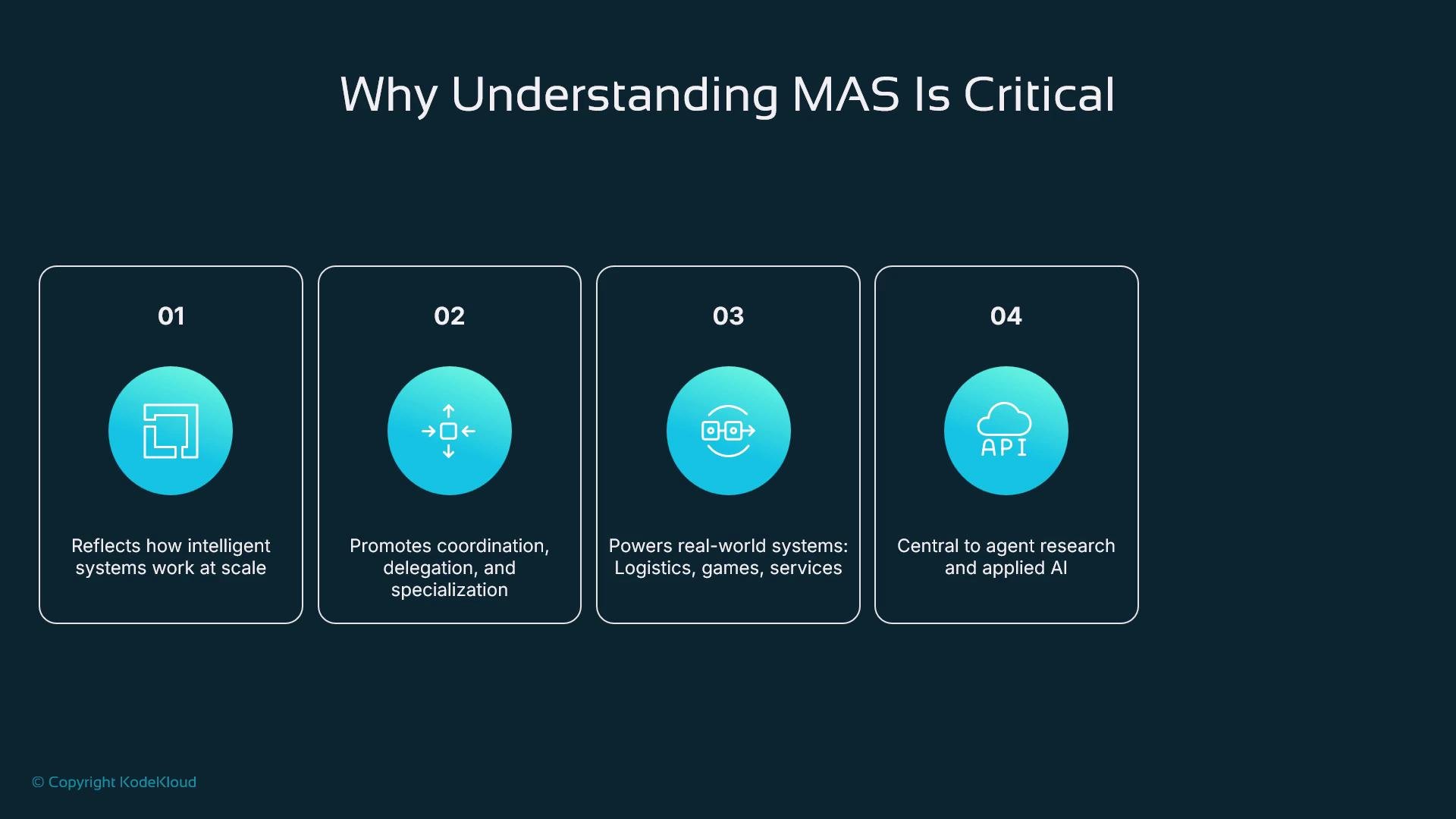
Core concepts
At its core, a multi-agent system consists of multiple agents that operate autonomously — each with its own goals, decision logic, and (often) private state. Typical agent capabilities include:- Communicating, negotiating, and coordinating with peers
- Working independently or collaboratively on subtasks
- Calling external tools and services (search APIs, databases, LLMs, solvers)
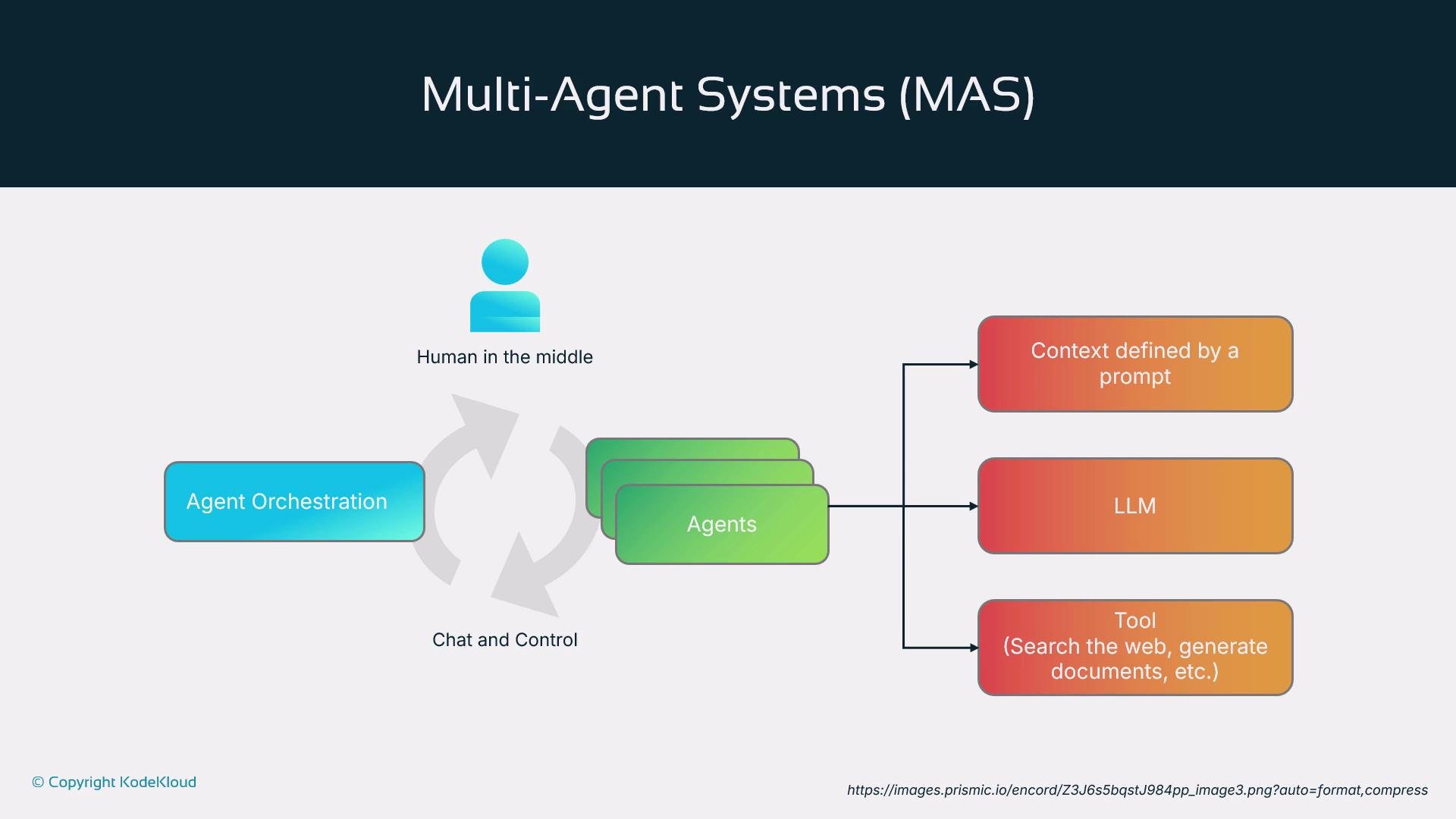
Distribution, homogeneity, and communication
Multi-agent systems are typically distributed — there is no single inherent point of control unless you introduce a centralized orchestrator. Agents can be:- Homogeneous: identical architecture and function
- Heterogeneous: different capabilities, specializations, or trust levels
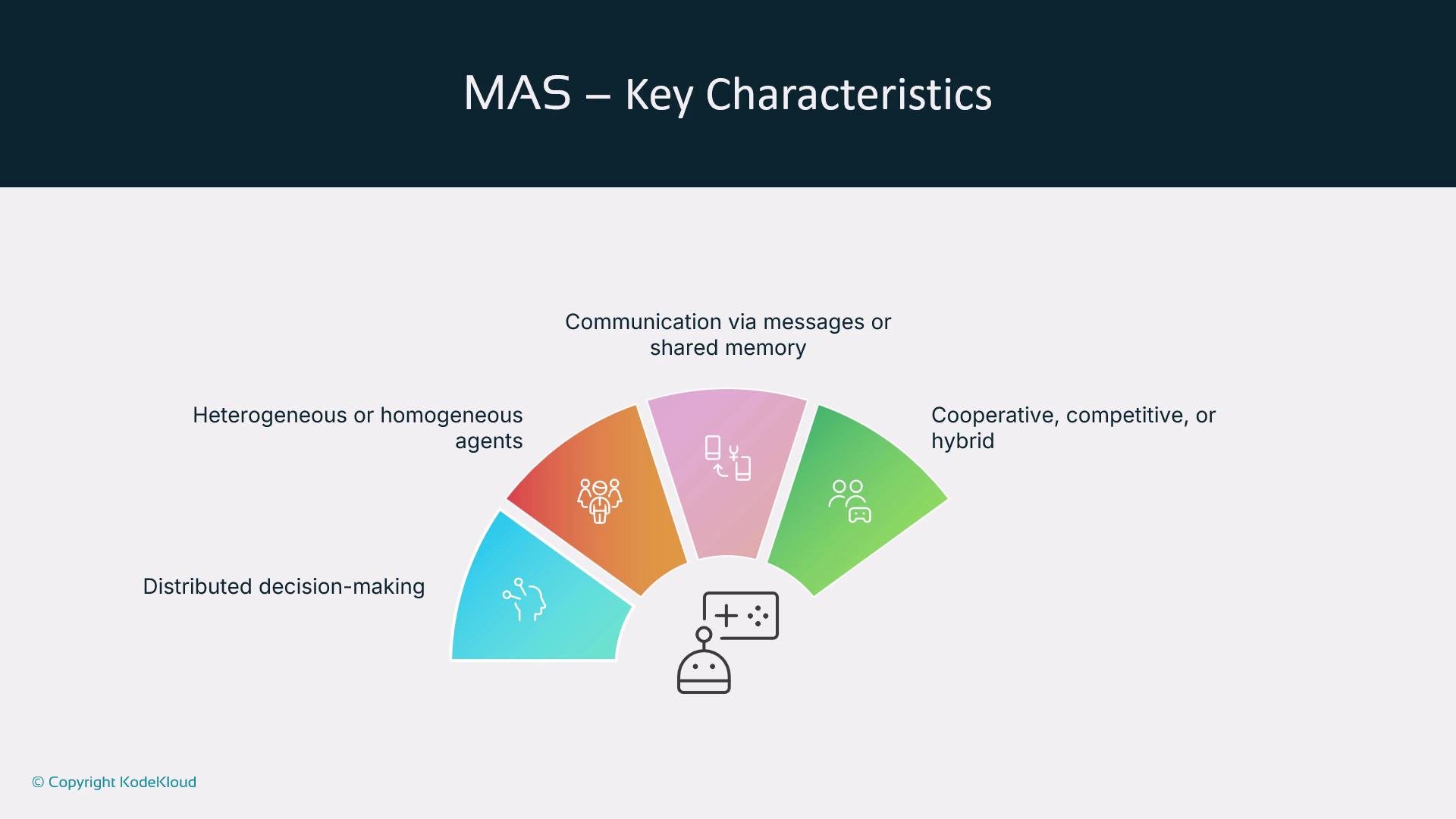
Common application patterns
Typical MAS patterns let teams of agents specialize and compose capabilities to solve complex tasks:- Solver workflows: Agents with analysis or numerical solver skills collaborate to process inputs, run solvers, and validate results.
- Coding workflows: A planner decomposes tasks and assigns CodeWriter and Reviewer agents; a safety guard verifies results.
- Conversational workflows: Multiple agents manage multi-party dialogues for AI tutors or advanced chat assistants.
- Business automation: Agents interact with APIs, databases, and spreadsheets to automate processes (invoicing, onboarding).
- Online decision-making: Agents perform web searches, aggregate API results, and return recommendations.
- Retrieval-augmented generation (RAG): Agents query knowledge bases and incorporate retrieved evidence into generated outputs.
- Custom domain flows: Specialized agents access centralized tool layers to interact with external systems.
In practice, most systems combine central planners (meta-agents) with specialist worker agents.
Agent roles and coordination mechanisms
Agent roles typically fall into two buckets:- Specialist agents: Narrow, repeatable functions (parsing, summarizing, classification). Efficient and reliable within a scoped domain.
- Generalist agents / planners: Higher-level reasoning and decomposition. They assign subtasks, restructure plans, and handle exceptions.
Choose coordination based on latency, consistency needs, and trust assumptions. Clear protocols avoid task overlap, conflicting actions, and resource contention.
Design challenges and observability
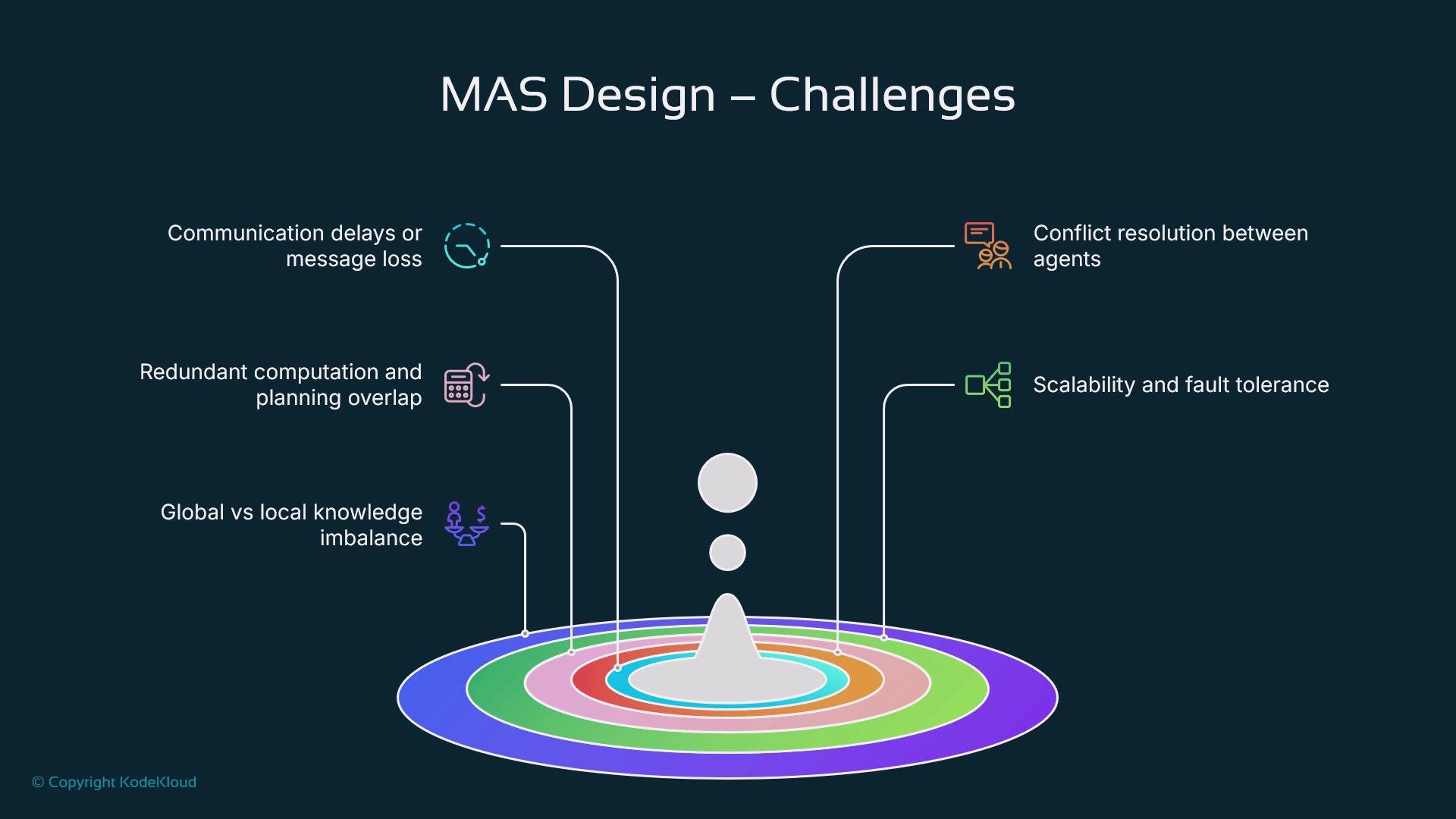
MAS introduce unique challenges:- Communication delays and message ordering issues
- Inconsistent state across distributed agents
- Unclear ownership of tasks and responsibilities
- Redundant computation and wasted cycles
- Conflict resolution complexity and race conditions
- Scaling and observability concerns
- Define clear, well-scoped agent roles and interfaces
- Favor modularity so agents are developed and tested independently
- Implement comprehensive logging of messages, plans, and tool calls
- Use capability schemas or contracts to align expectations between agents
- Limit agent scope to reduce state conflicts and simplify reasoning
- Standardize prompt templates and memory formats across agents
- Stage testing in simulated environments to expose coordination issues before production
Planning, task allocation, and memory
A common decomposition pattern:- Planner agent breaks a high-level goal into subtasks.
- Subtasks are routed to worker agents — either by the planner or via a bidding/negotiation process.
- Worker agents execute tasks, call external tools, and return results.
- Planner aggregates, validates, and finalizes outputs.
Tools, frameworks, and ecosystems
Modern frameworks simplify MAS design and orchestration: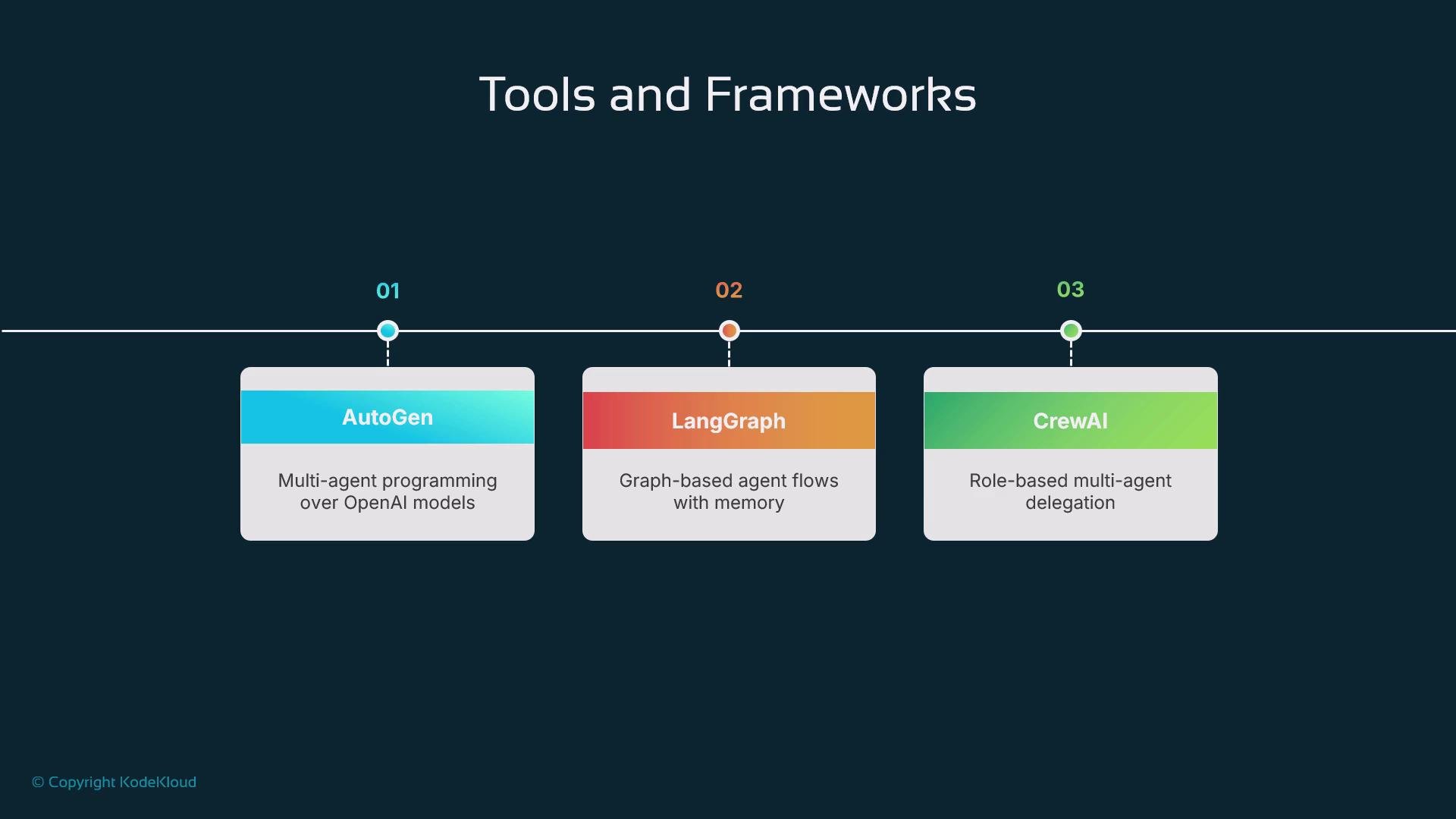
- AutoGen — orchestrate role-based agent workflows and OpenAI model integrations: https://github.com/microsoft/autogen
- LangGraph — graph-based programming model for agent flows, memory, and tool use: https://learn.kodekloud.com/user/courses/langgraph
- CrewAI and role-assignment interfaces — delegate work across agent roles
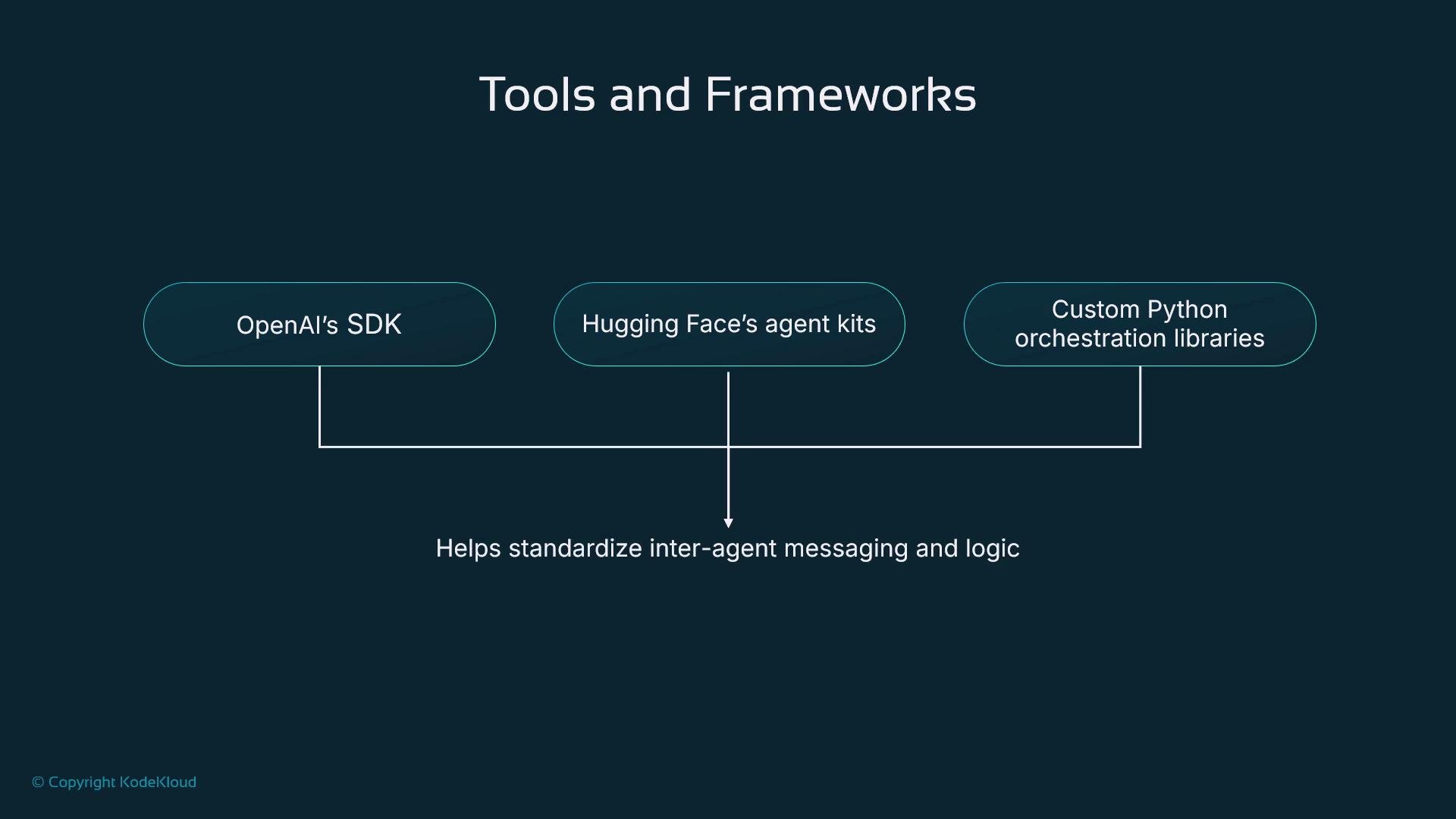
- OpenAI SDKs, Hugging Face agent kits, and custom orchestration libraries provide messaging and tools primitives
Example research pipeline (pattern)
A typical multi-agent research pipeline:- User requests a summary of the state of AI research.
- Planner decomposes the request into subgoals (scope, time range, topics).
- Research agent scrapes scholarly sources and extracts citations.
- Summarizer condenses findings; Writer produces a coherent narrative.
- Parallel execution accelerates throughput, while memory tracks sources and biases.
MAS best practices checklist
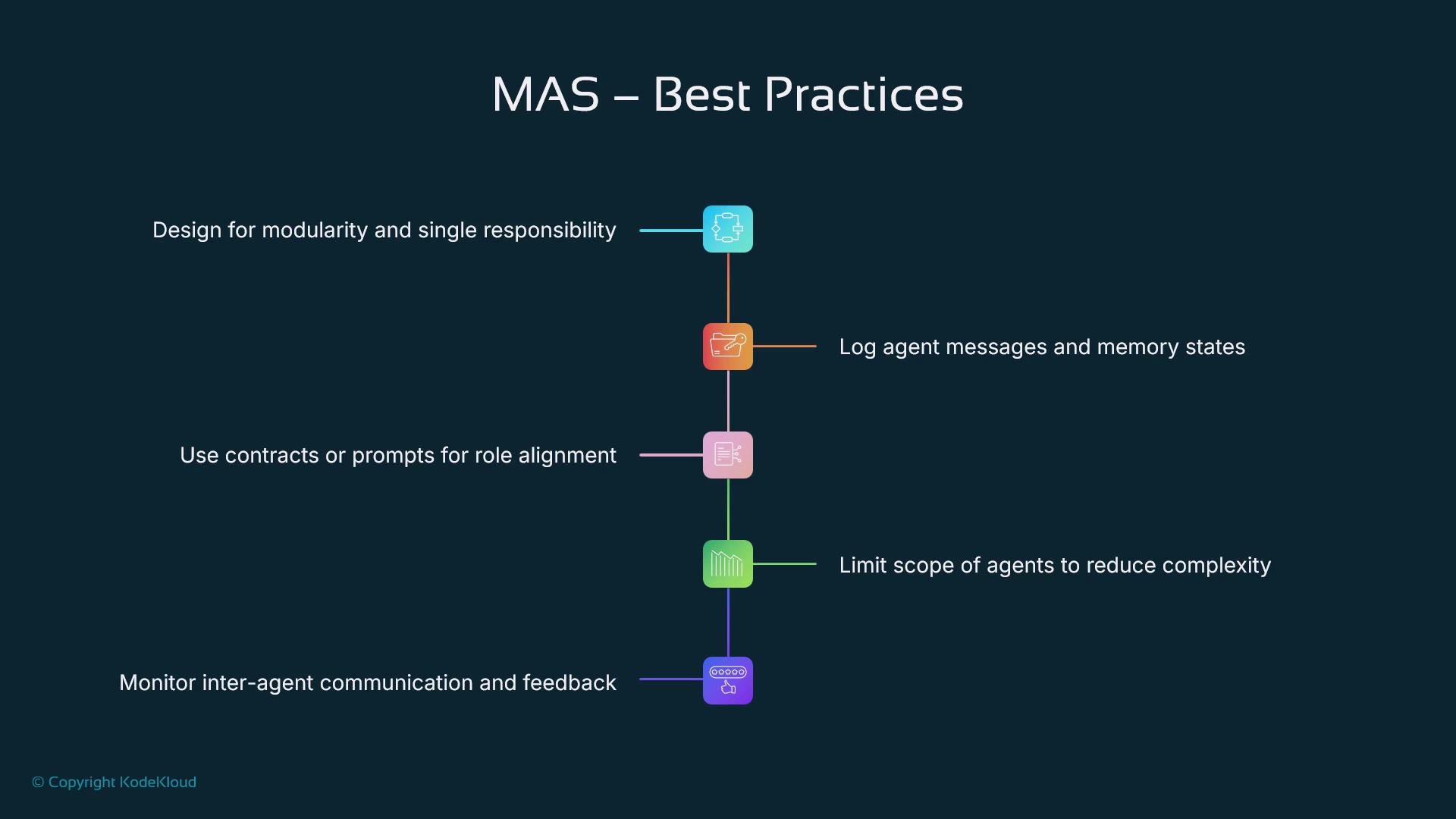
- Define clear interfaces and capability contracts between agents
- Modularize agents for independent development and testing
- Log messages, tool calls, and state transitions for observability
- Limit scope per agent to simplify reasoning and reduce conflicts
- Use versioned prompt templates and shared memory schemas
- Simulate interactions and failure modes before production rollout
- Bake in retry logic, graceful degradation, and circuit breakers
When designing MAS, invest early in observability: traceable messages, centralized or distributed tracing, and reproducible test scenarios make debugging and safe deployment far easier.