

What is a multi-agent system (MAS)?
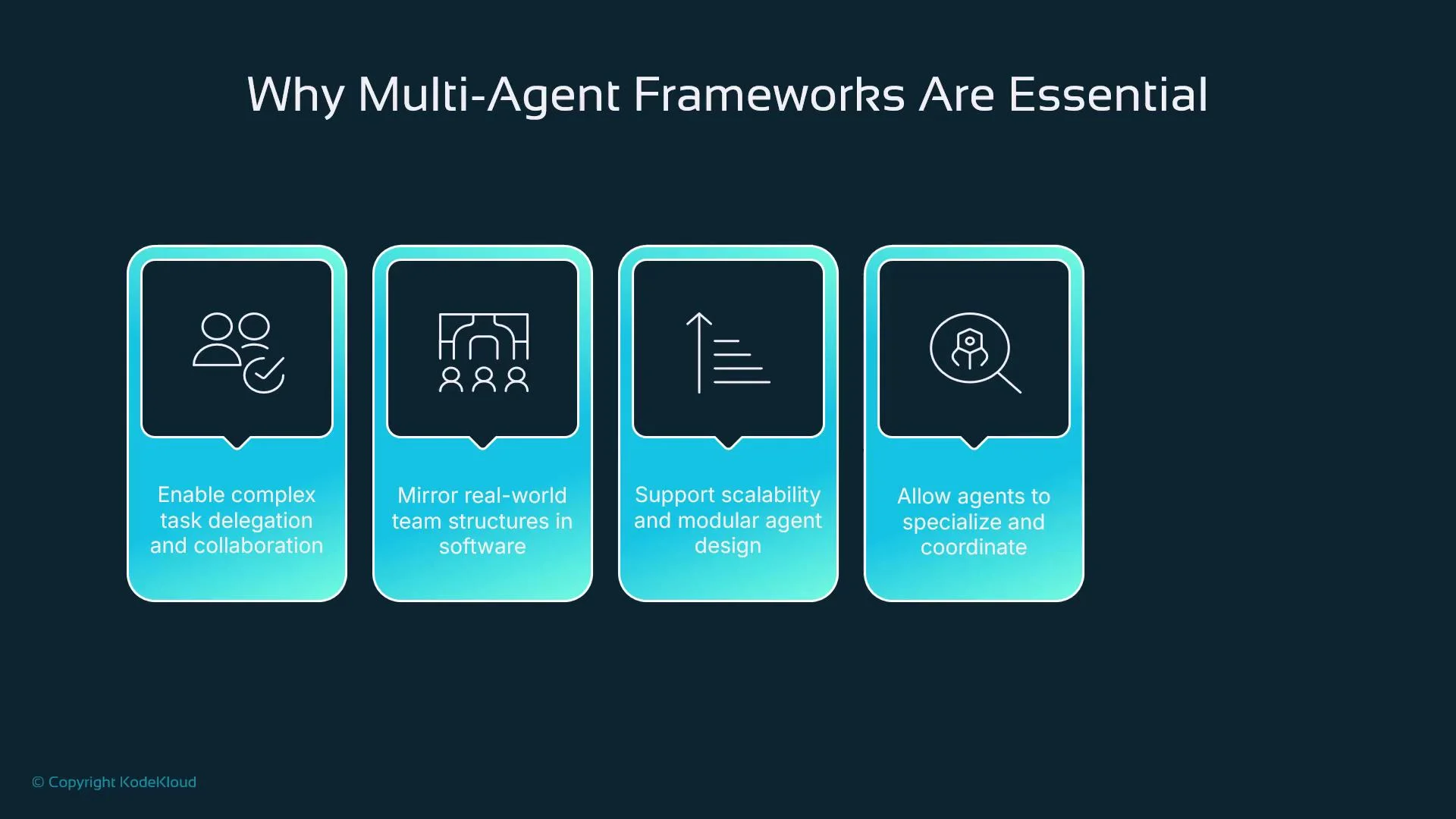
A multi-agent system (MAS) is a distributed network of autonomous agents that interact to accomplish tasks that are difficult or inefficient for a single agent. Each agent may have distinct goals, memory, tools, or reasoning models; agents communicate and coordinate to complete a mission. Key characteristics:- Autonomous actors with private state and capabilities.
- Distributed decision-making and parallel execution.
- Communication via messages, events, or shared stores.
- Role specialization (planners, executors, verifiers, tool handlers).
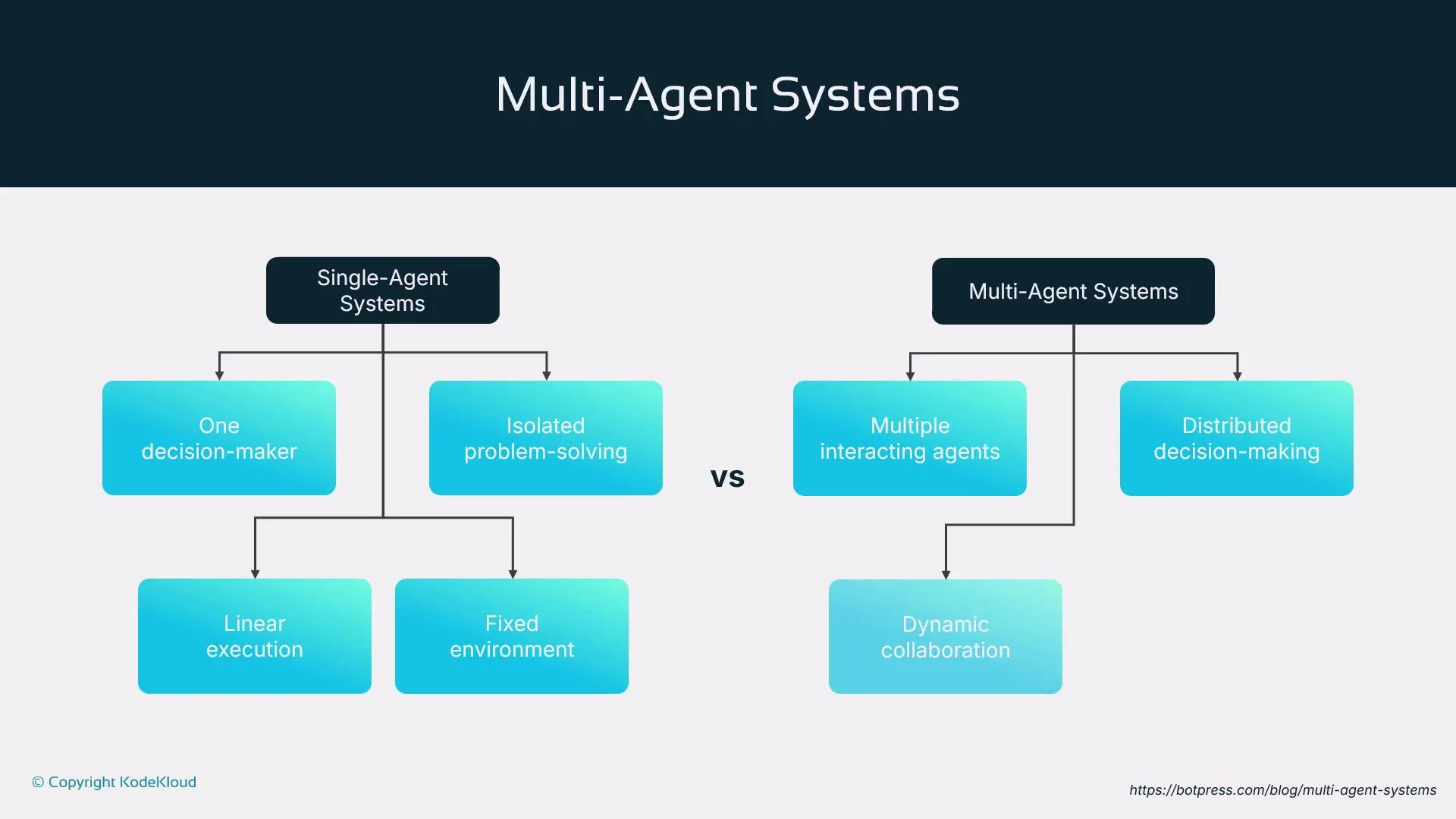
Single-agent vs multi-agent
- Single-agent systems: one decision maker; actions executed sequentially; simpler to design and debug; best for constrained or linear tasks.
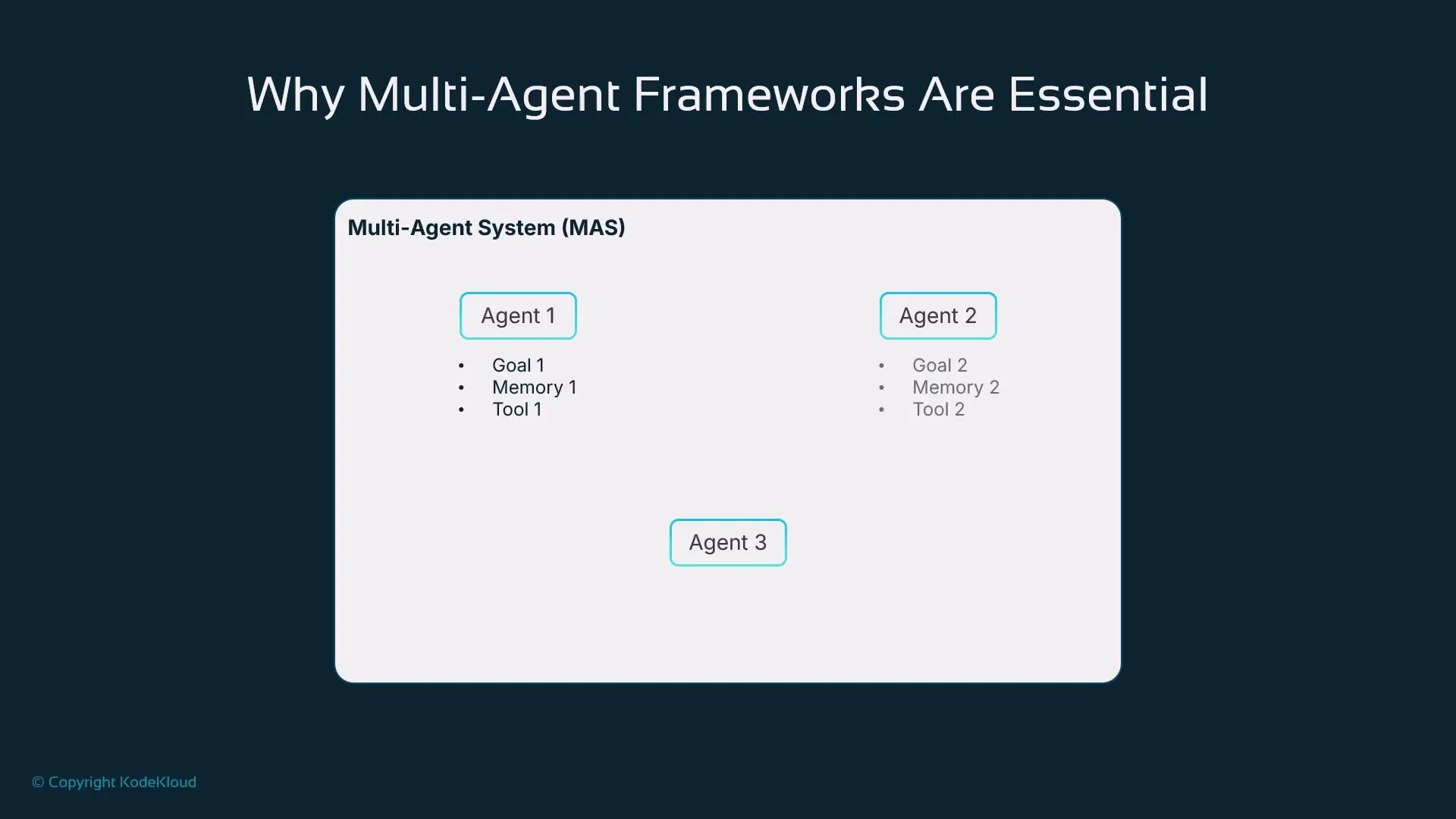
- Multi-agent systems: multiple interacting agents; distributed decision-making; parallel task execution; more flexible and scalable for dynamic, large-scale, or heterogeneous environments.
Supervisory (Coordinator) Agent Architecture
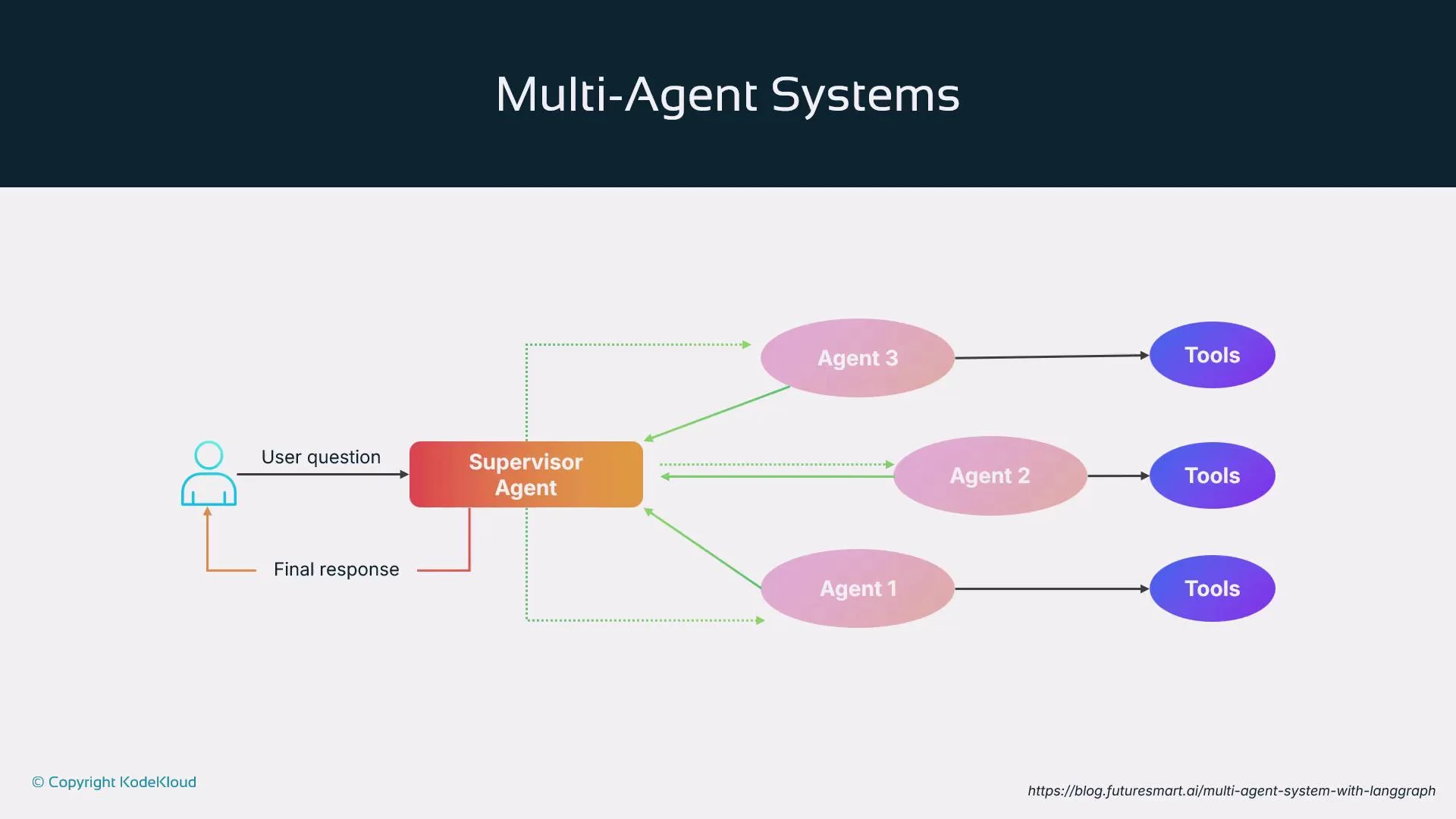
A common MAS pattern uses a supervisory (or coordinator) agent. Typical workflow:- A user request arrives at the supervisor.
- The supervisor decomposes the task and delegates subtasks to specialized agents.
- Sub-agents run independently or collaboratively, query tools, or access data sources.
- Agents return results to the supervisor.
- The supervisor aggregates, reconciles, and composes a final response.
Key benefits of multi-agent systems
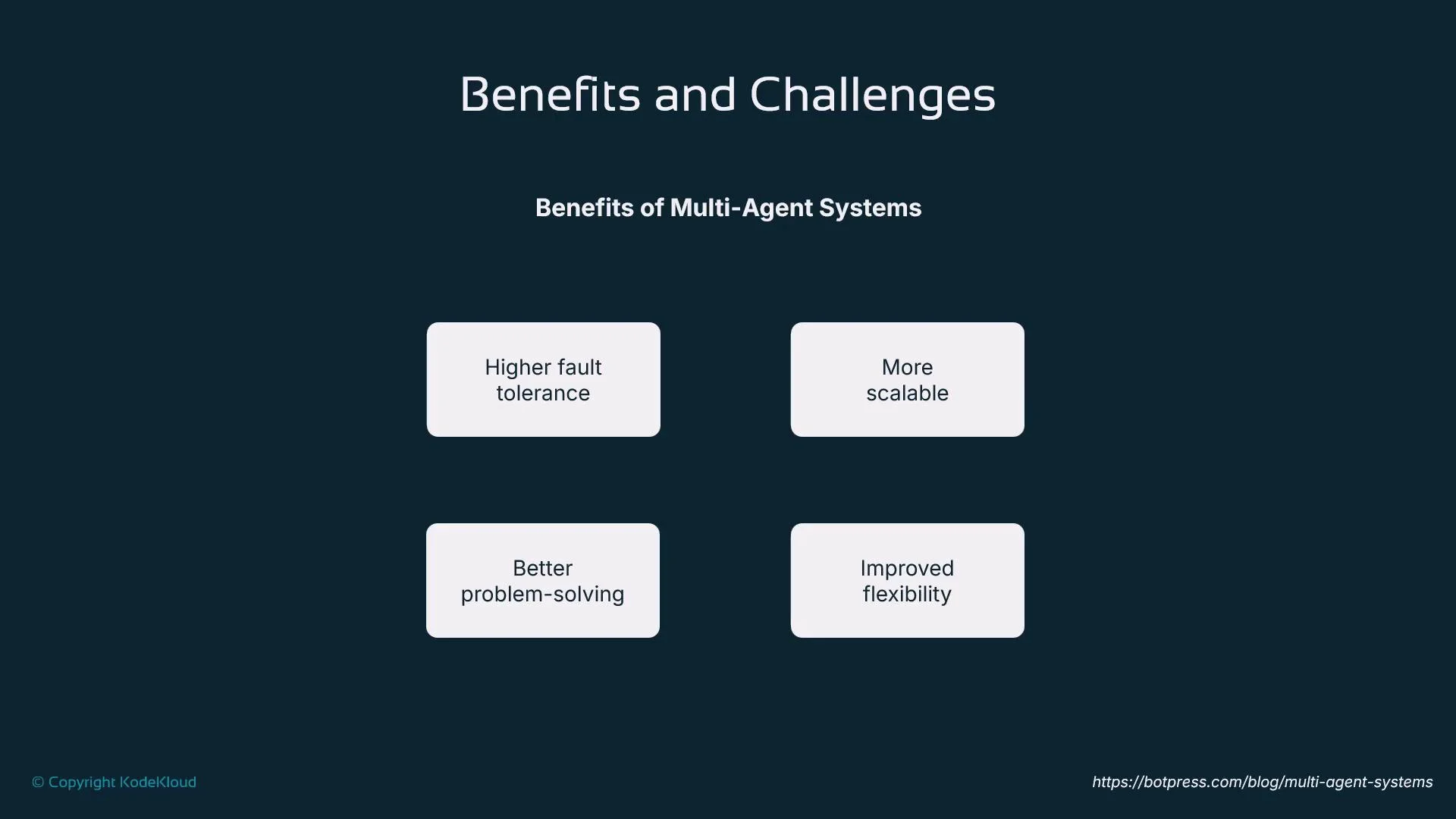
- Parallelism: execute tasks concurrently.
- Specialization: agents optimized for specific skills or tools.
- Robustness and fault tolerance: agents can fail without collapsing the whole system.
- Scalability: add agents with minimal reconfiguration.
- Improved problem solving: decomposition and parallel processing speed solutions.
- Flexibility: update or replace agents independently.
Challenges and trade-offs
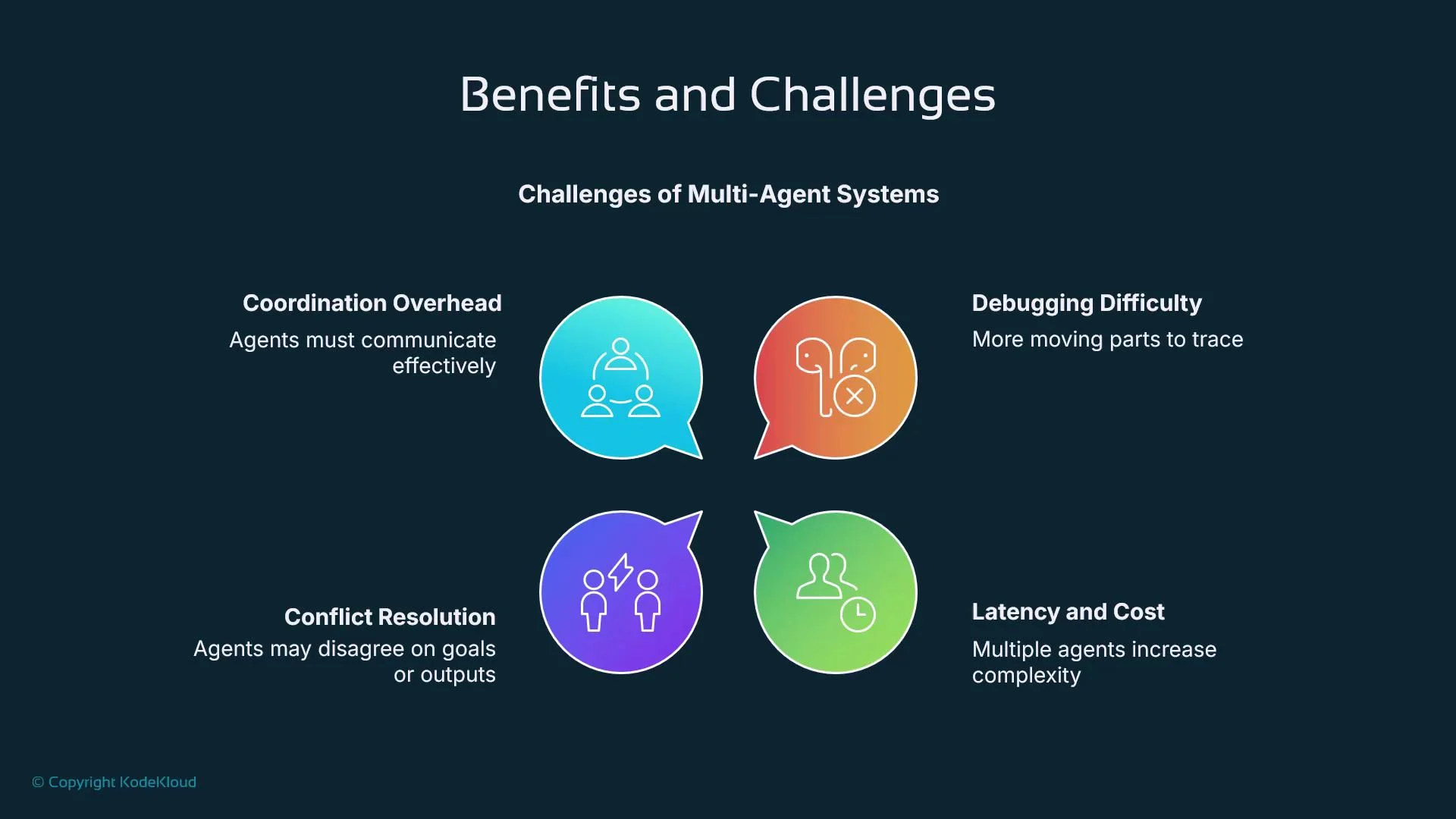
- Coordination overhead: communication and synchronization add complexity and CPU/network usage.
- Conflict resolution: inconsistent outputs or competing goals must be reconciled.
- Latency and cost: distributed operation can increase response time and infrastructure costs.
- Debugging and observability: tracing distributed state and interactions is harder.
Distributed coordination increases operational complexity: invest early in logging, tracing, and fault-injection tests to avoid brittle deployments.
Interaction patterns in MAS
Common organizational and interaction patterns:Communication mechanisms
Agents communicate using multiple primitives depending on latency, throughput, and coupling needs:- Message passing: direct messages via queues or actor systems (synchronous or asynchronous).
- Publish/Subscribe: decouples producers and consumers with event brokers.
- Shared data store / blackboard: common repositories for state and intermediate artifacts.
- RPC/HTTP (REST, gRPC): integrate with external services and tools.
- Event streaming: high-throughput interactions using Kafka, Pulsar, or similar platforms.
Leading frameworks and tools
Choose a framework based on language, integration needs, deployment model, and communication primitives.Role assignment & team coordination strategies
- Static assignment: roles fixed at design time — simple and predictable.
- Dynamic assignment: runtime allocation based on load, capability, or context.
- Auction/bidding: market-driven task allocation for flexible load distribution.
- Consensus protocols: required when agents must agree on shared state (e.g., replication).
- Supervisor-driven coordination: centralized assignment and reconciliation to enforce global constraints.
Where MAS shine (use cases)
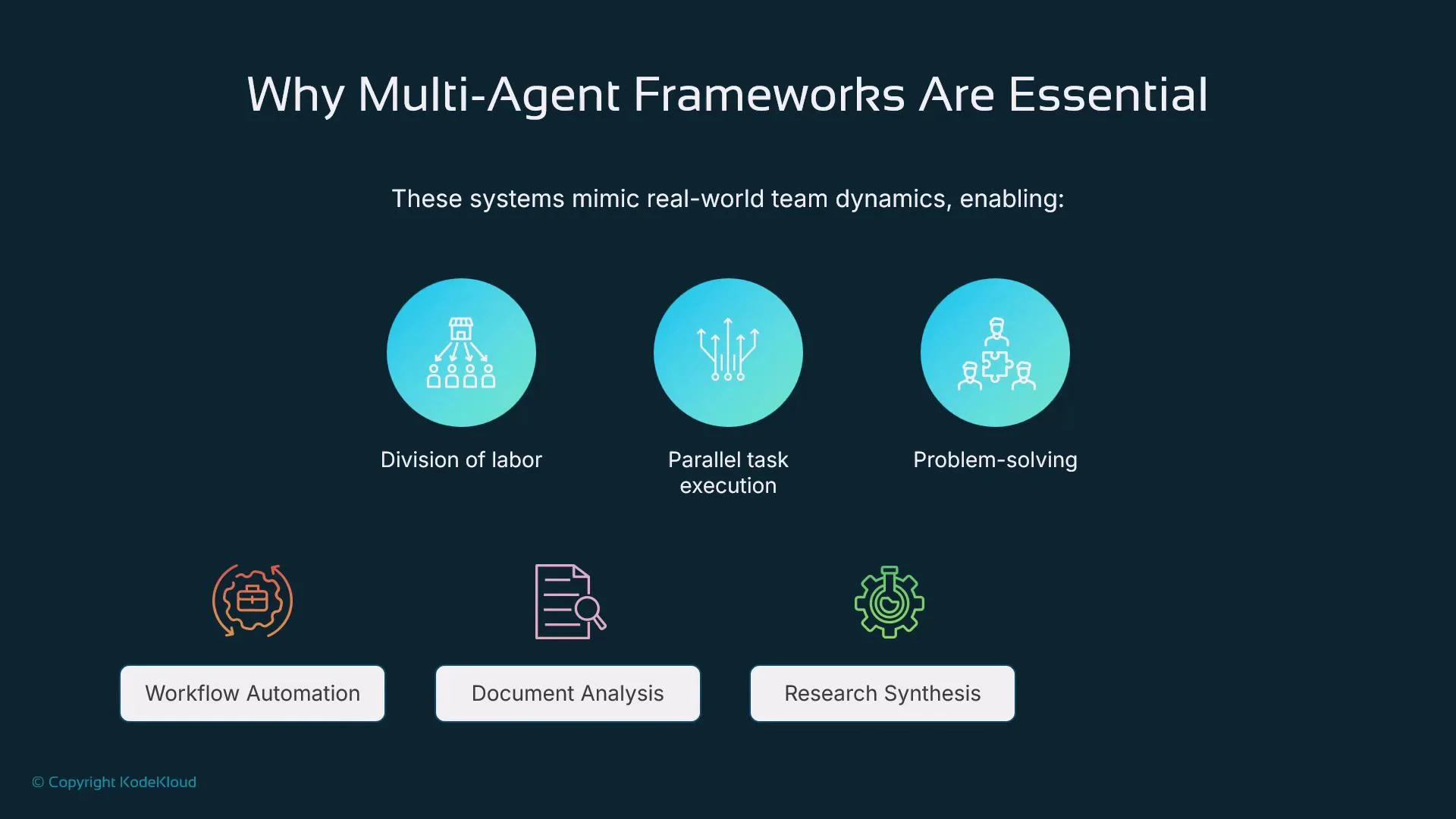
- Complex workflows requiring multiple specialized skills (e.g., document processing pipelines).
- Research synthesis and knowledge aggregation from heterogeneous sources.
- Multi-step decision-making with modular tool access (e.g., LLM chains + external tools).
- Game AI and simulations with many autonomous actors.
- Distributed optimization and control systems.
Best practices for building scalable MAS
- Define clear responsibilities and contract-driven agent interfaces.
- Keep agents loosely coupled and standardize messaging formats.
- Use robust communication middleware and service discovery.
- Implement centralized logging, metrics, and distributed tracing to ease debugging.
- Design graceful degradation and redundancy to handle failures.
- Start with simple coordination patterns and iterate toward more complexity.
- Automate tests with simulation environments and scenario-based testing.
When designing MAS, prioritize observability and contract-driven interfaces. These reduce debugging complexity and make it easier to evolve the system over time.
Summary
Multi-agent architectures enable modular, scalable, and resilient systems by splitting complex tasks across specialized agents. While MAS introduce coordination and observability challenges, careful design—clear interfaces, appropriate communication patterns, and robust monitoring—lets MAS deliver significant gains in capability and scalability for real-world problems.Links and references
- Kubernetes Documentation
- Event Streaming with Kafka
- LangChain course
- Ray: https://www.ray.io/
- JADE: https://jade.tilab.com/