

What is an AI agent?
An AI agent is a system that perceives its environment, reasons about observations, and takes actions to achieve defined goals — often autonomously. Agents can call APIs, browse the web, manipulate files, trigger other systems, and interact with people to complete multi-step tasks.An AI agent follows a human-like problem-solving cycle: observe, decide, act. It combines goals, prior knowledge, and capabilities to produce autonomous, goal-directed behavior.
How AI agents differ from traditional AI
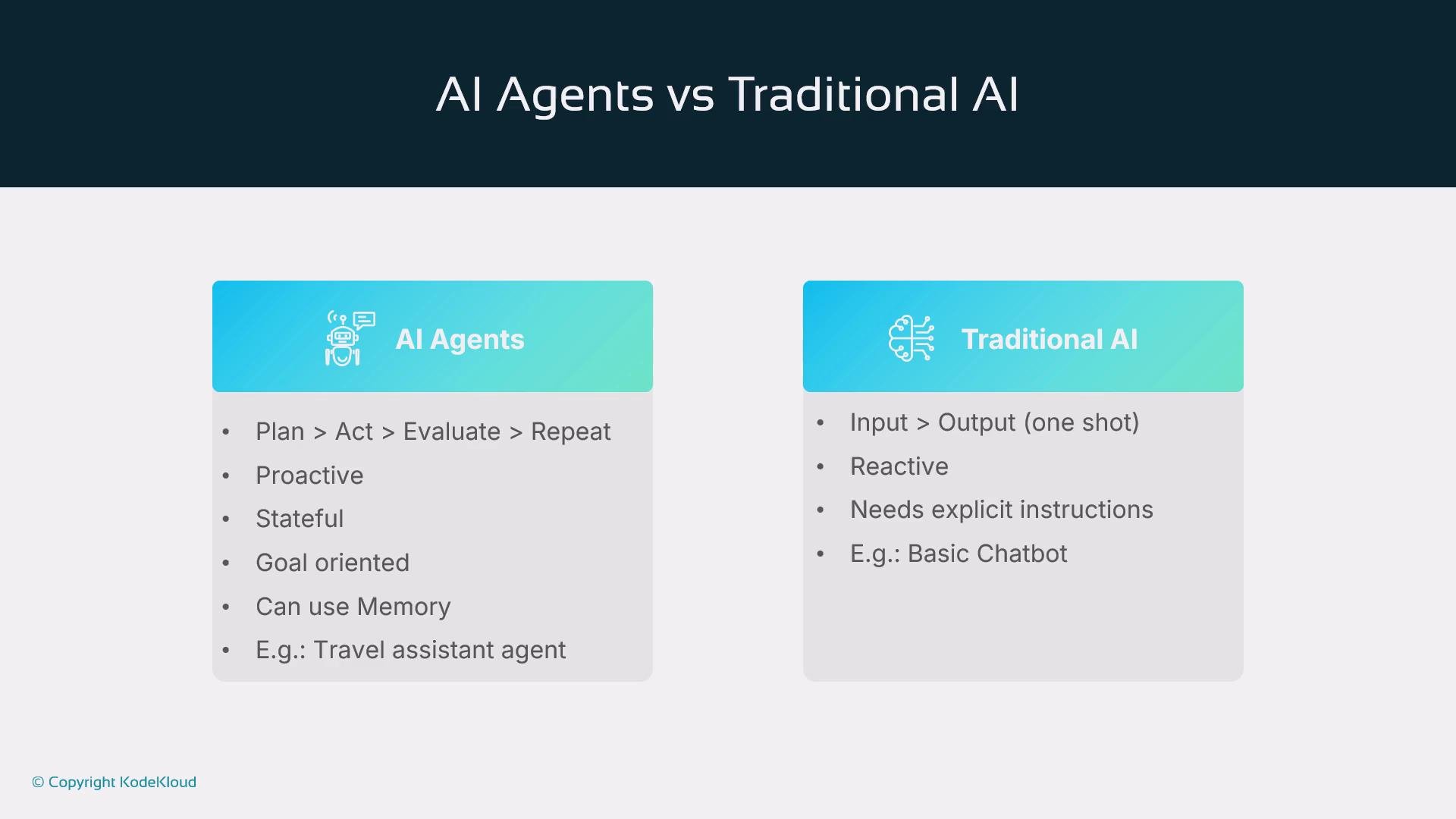
Traditional AI systems are typically reactive: provide an input and receive an output (for example, a classification or a computed result). AI agents are proactive: they can initiate work, decompose tasks, track progress, recover from failures, and take independent multi-step actions.- Traditional AI: stateless, prompt-and-response, one-step outputs.
- AI agents: stateful, goal-driven, multi-step workflows, tool-enabled.
Core components of an AI agent
A typical agent architecture includes modular components that together enable perception, reasoning, planning, action, and learning.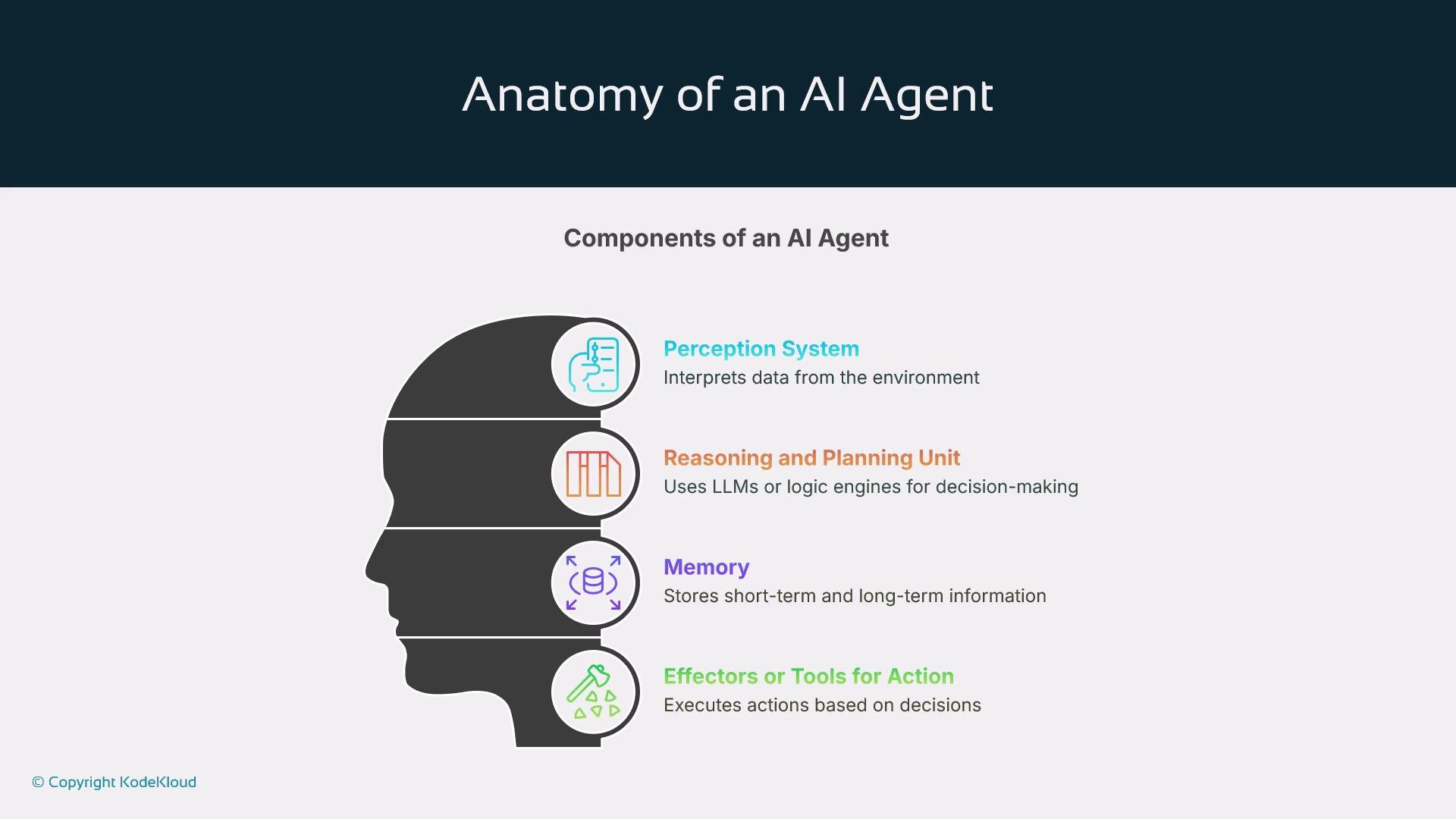
How an agent thinks and acts (anatomy in practice)
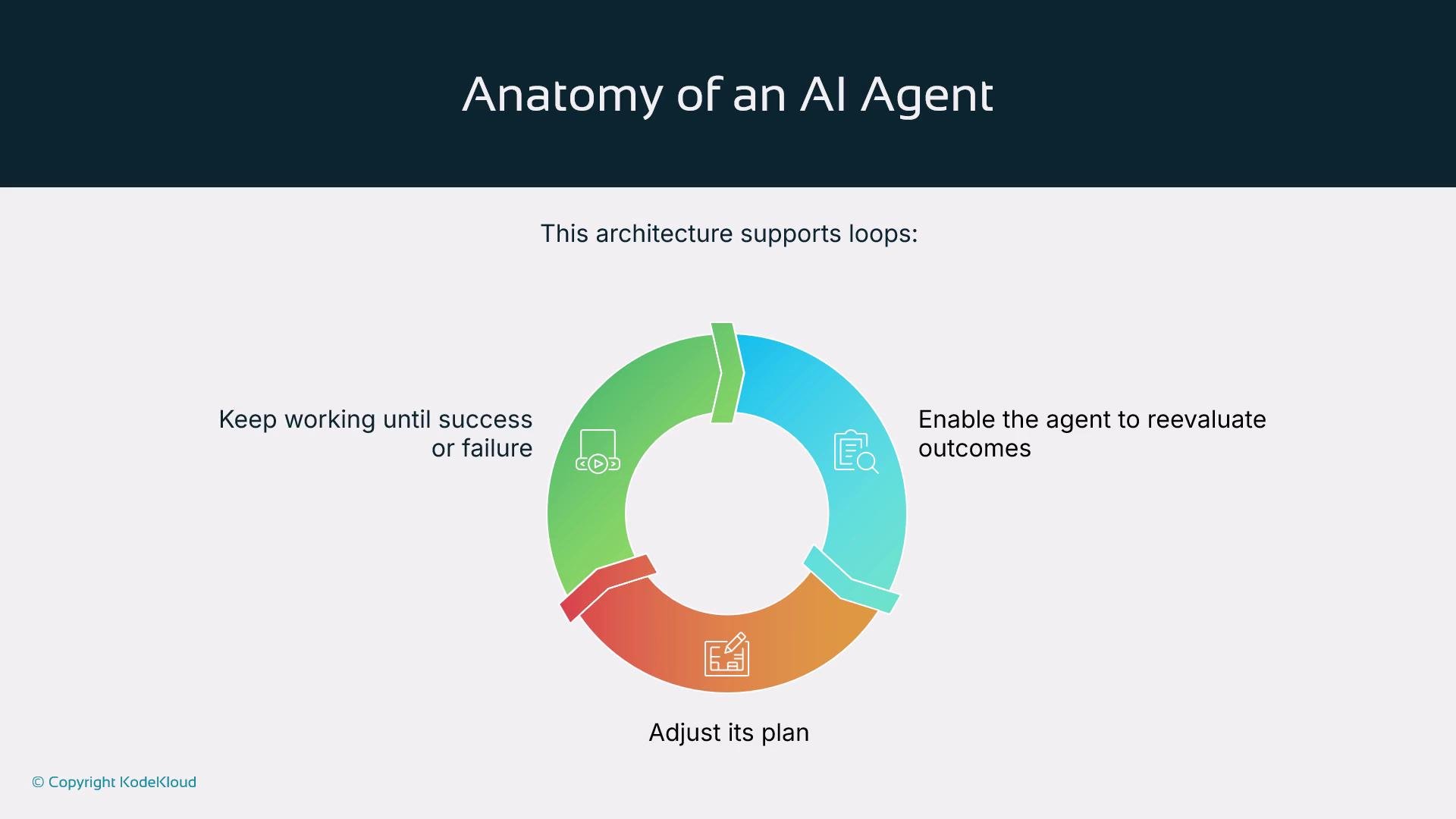
At the center of the system is the reasoning engine — often a Large Language Model (LLM) — which interprets goals, generates plans, and issues commands to tools. Planning typically involves sub-goal decomposition, self-reflection, and critique loops; execution involves calling tools and updating memory.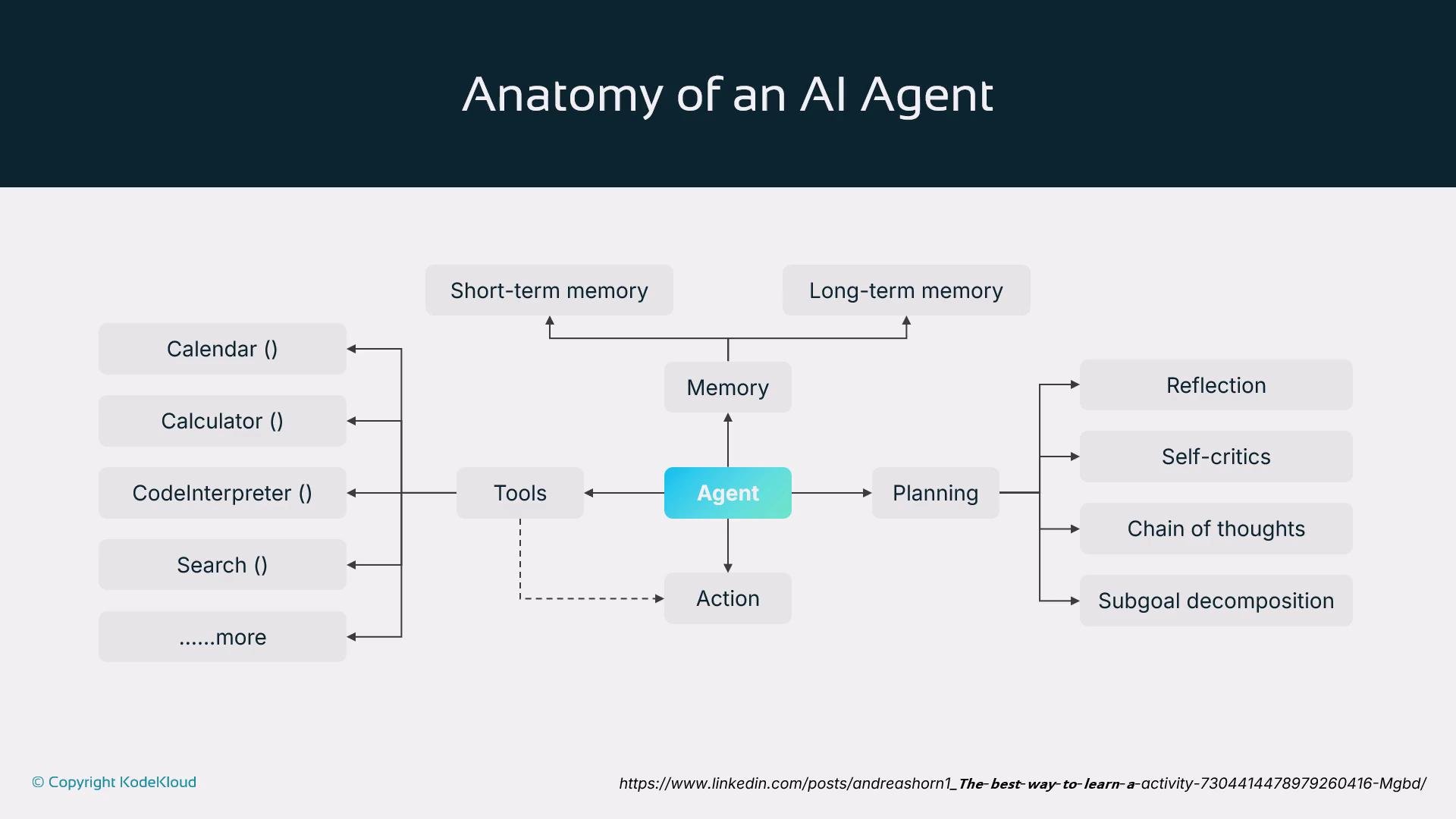
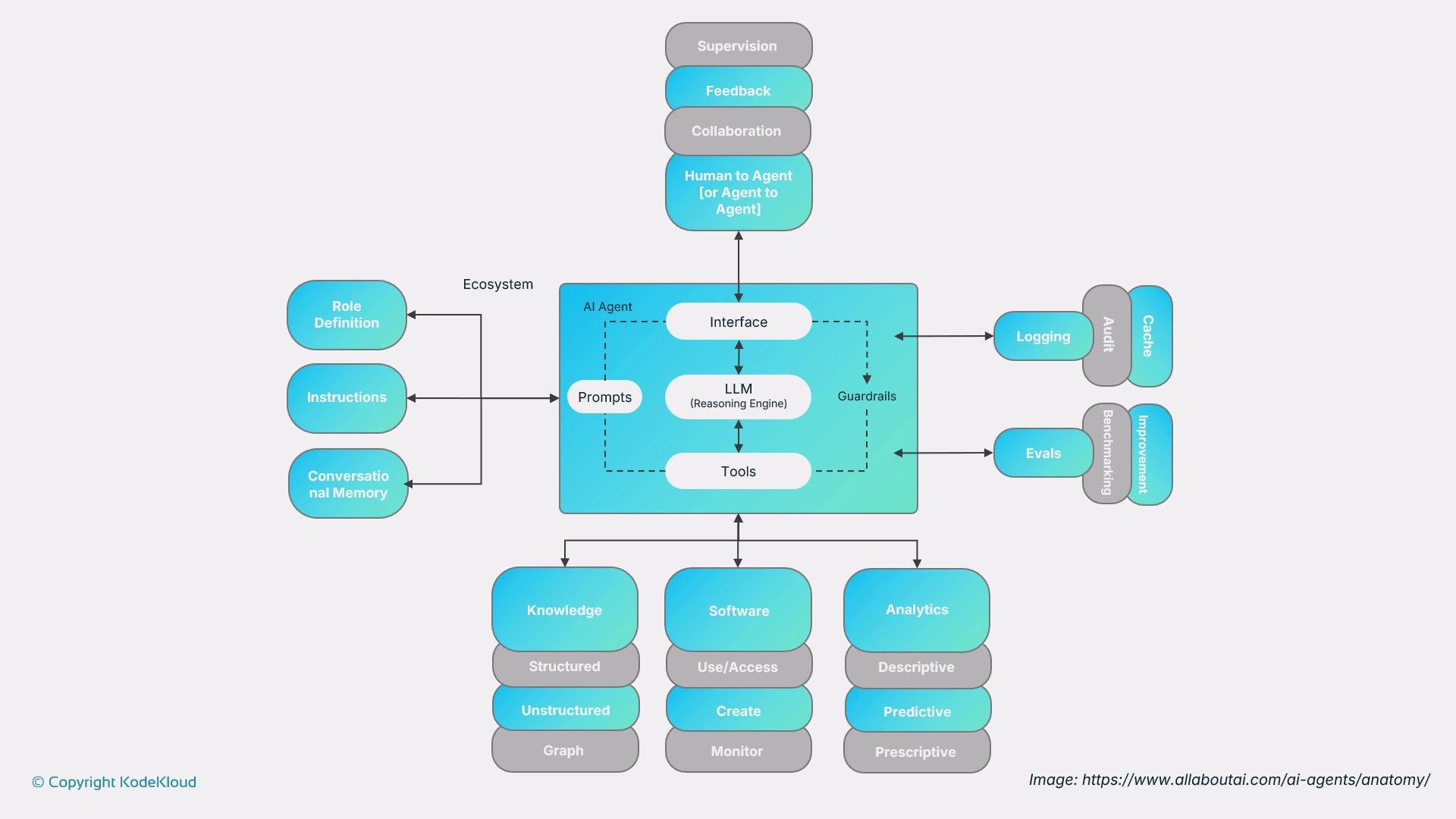
AI agents interacting with external systems require robust guardrails: access control, logging, audit trails, and human-in-the-loop review to maintain safety, compliance, and traceability.
Modern AI agent capabilities
Modern agents go beyond language understanding to interact with tools, maintain goals over time, and connect to live data sources. Key capabilities: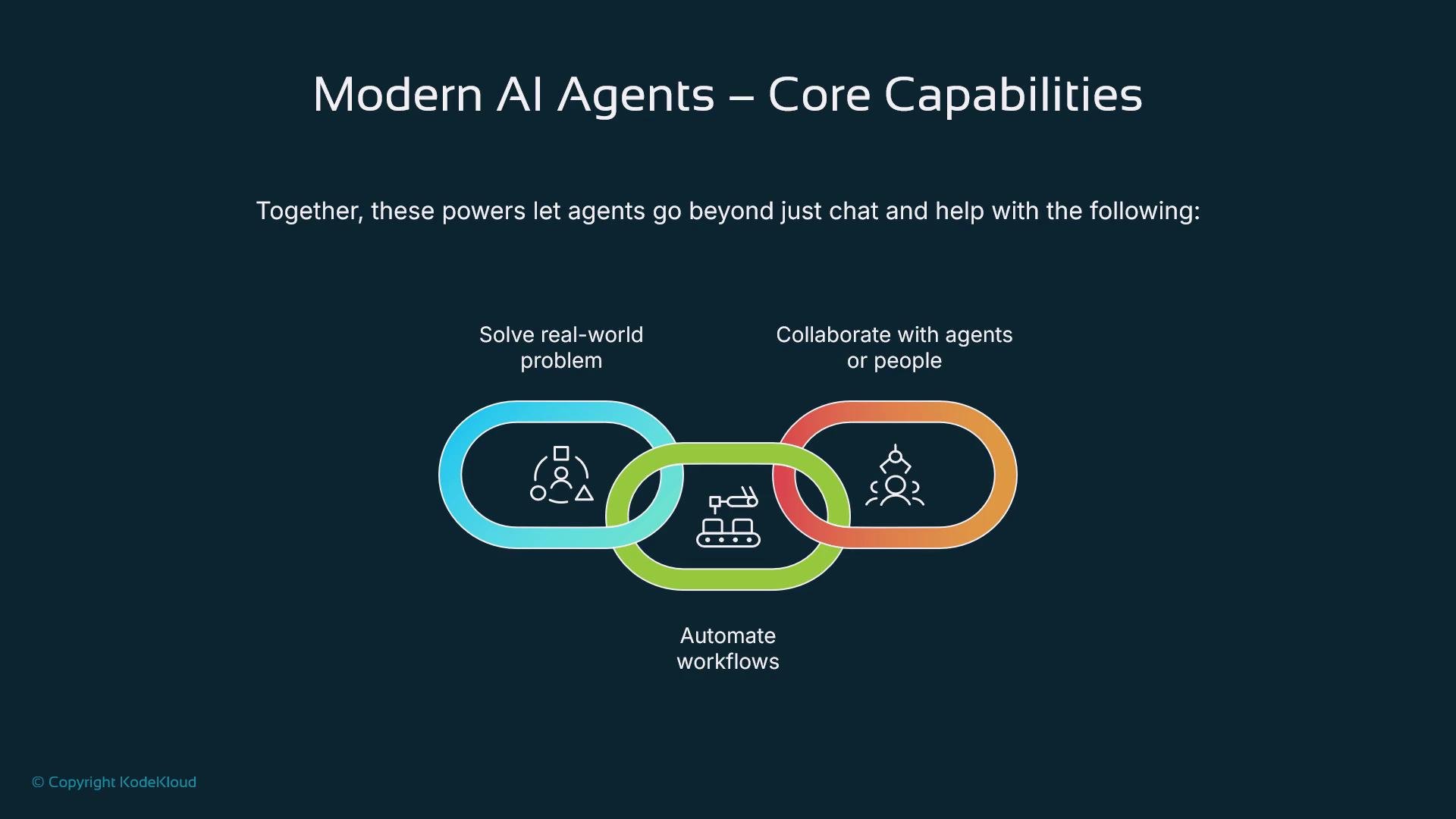
Real-world use cases
Agents are already deployed across many industries. Representative use cases: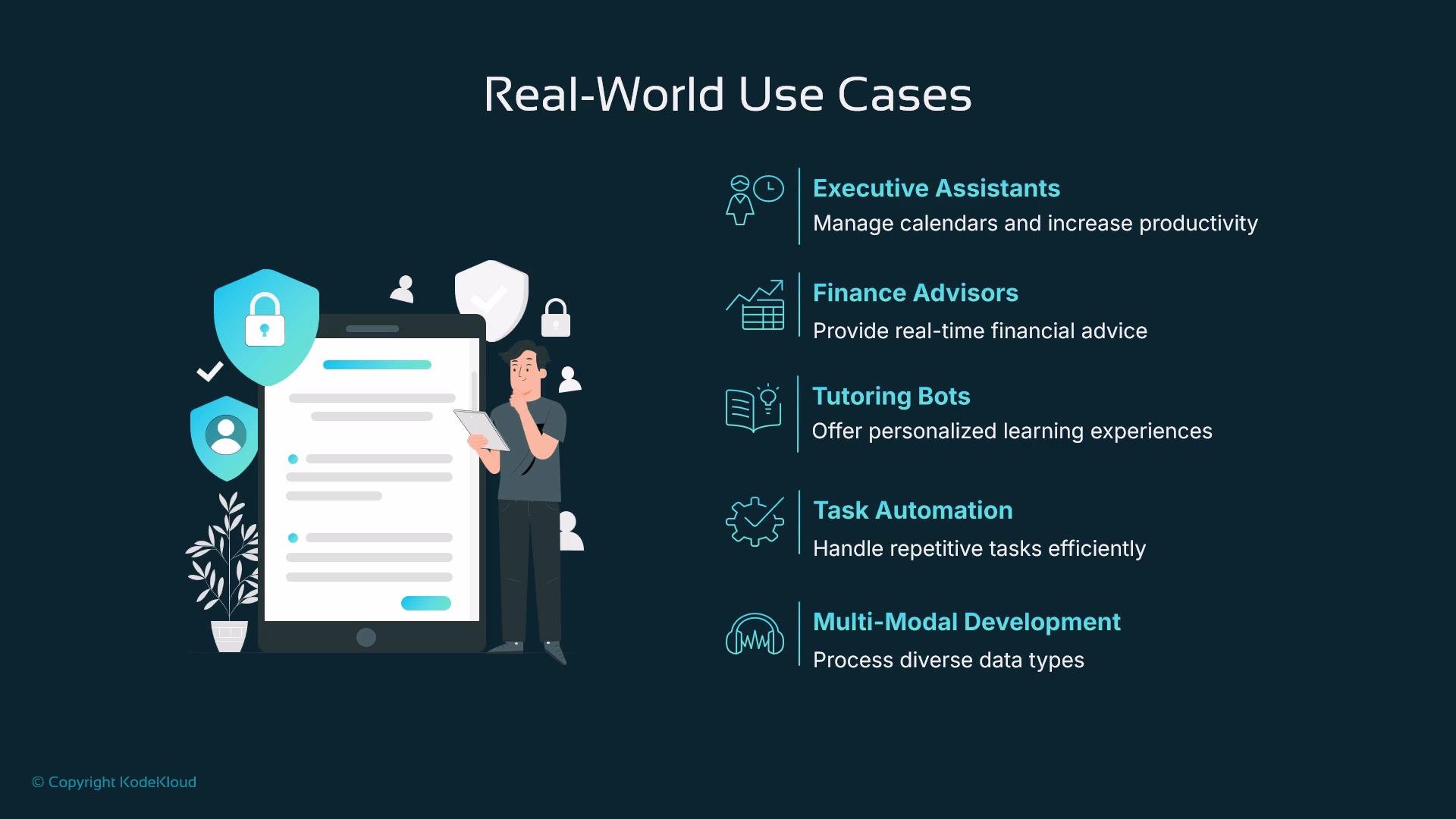
Evolution of AI agents
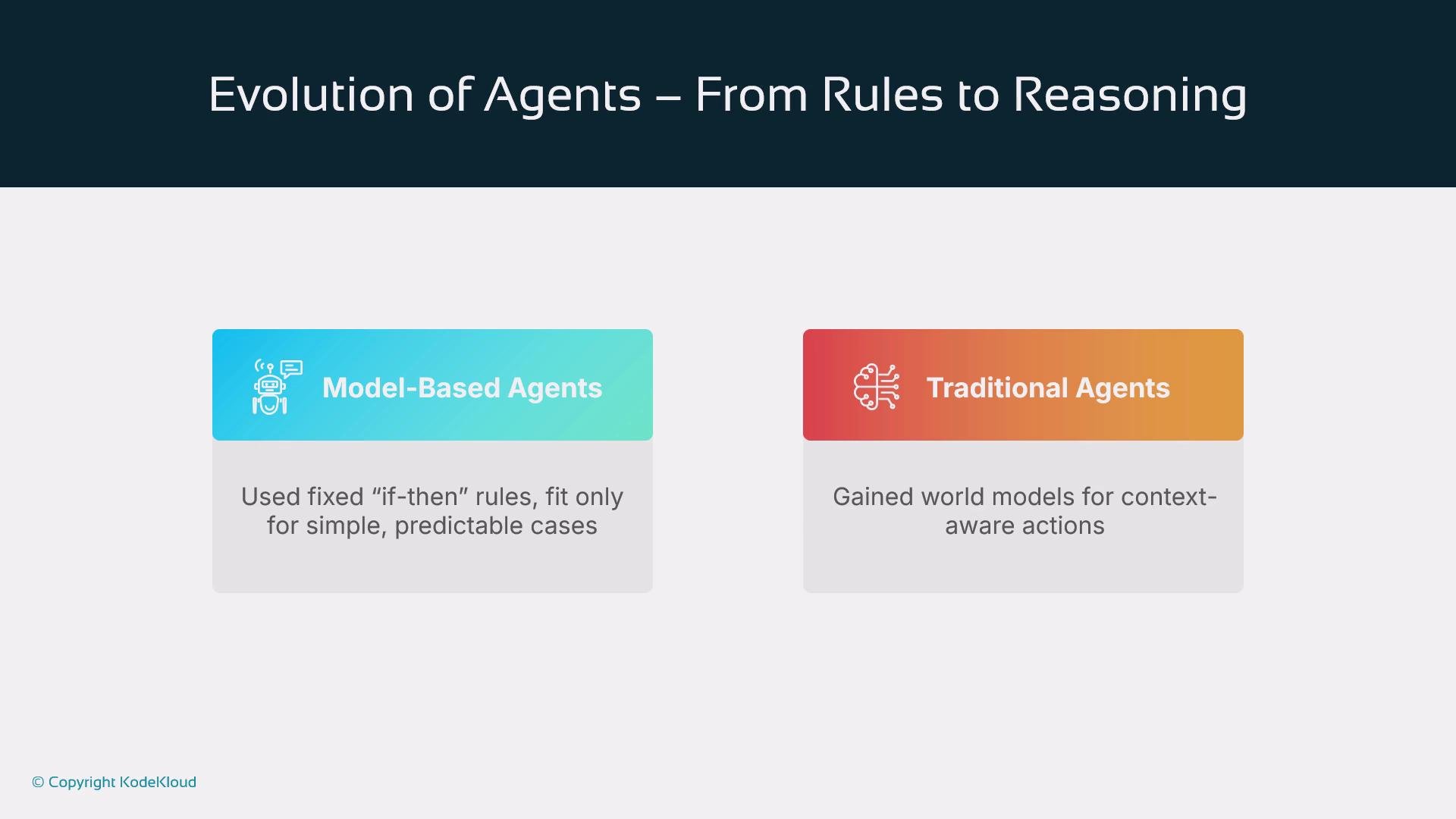
Agent architectures have progressed from simple, rule-based systems to sophisticated, learning-enabled agents:- If-then rule systems: predictable but brittle in dynamic environments.
- Model-based agents: internal world models for better context handling.
- Goal-based & utility-based agents: planning and outcome evaluation.
- Learning agents: adapt via experience and data-driven policies.
- Modern agents: multi-step reasoning, tool use, and autonomous initiation.
Why AI agents matter
AI agents unite decision-making, learning, and autonomous action. They reduce human cognitive load, automate complex workflows, and scale intelligent assistance across domains such as business, healthcare, and research. When combined with robust controls and human oversight, agents become indispensable collaborators rather than simple task executors.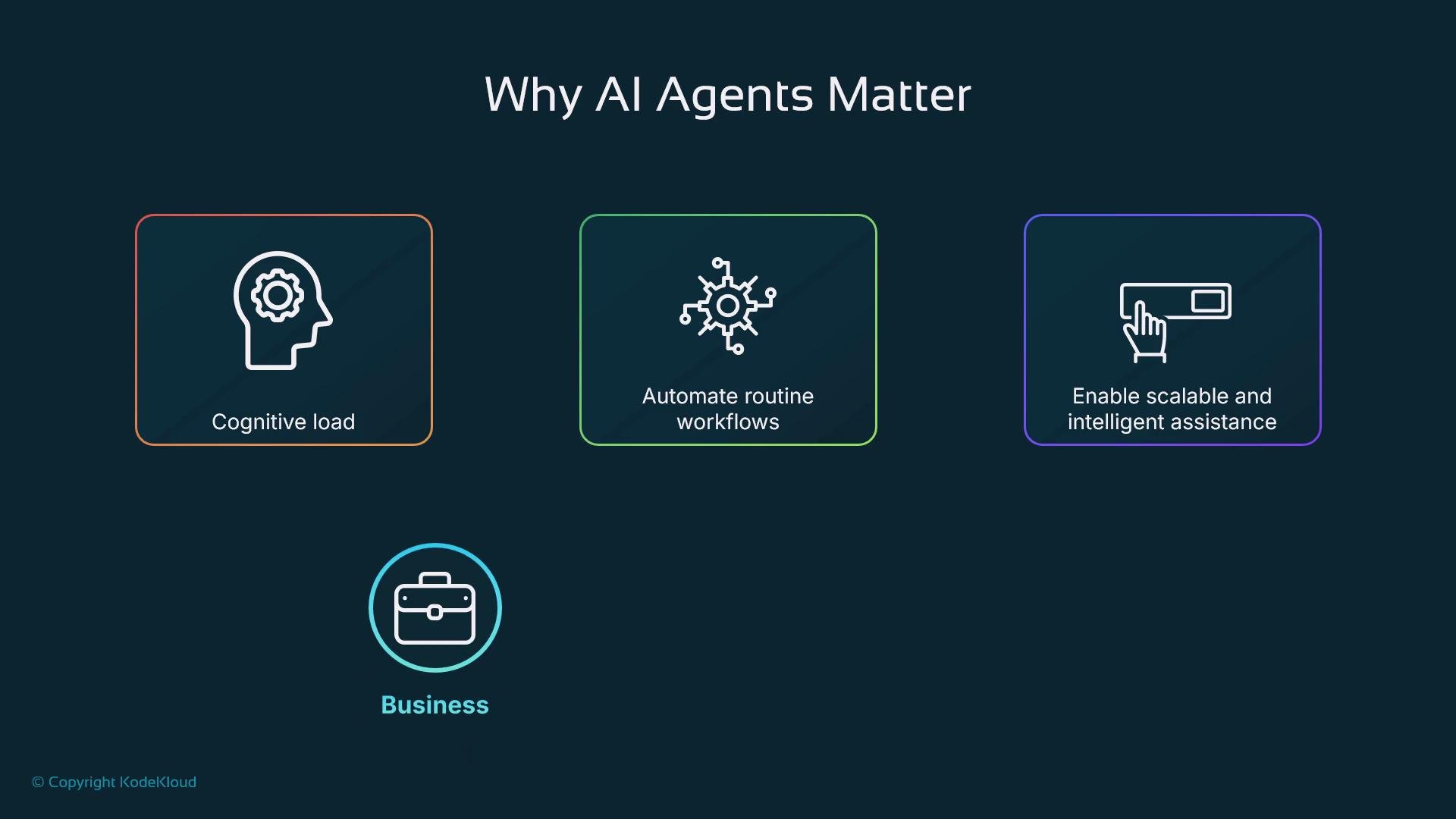
Links and references
- Large language model (LLM) — Wikipedia
- Autonomous agent — Wikipedia
- For best practices on safe agent deployment, consult provider documentation and industry guidelines on auditability, access control, and human oversight.