1. GitHub’s Four Core Privacy Principles
GitHub’s privacy program is built on four foundational principles that guide every decision:
These pillars form the basis of GitHub’s user-centric approach to safeguarding data.
2. Key Privacy Features on GitHub
GitHub provides a suite of features designed to give you control over your account and projects.2.1 Account Control and Authentication
- Role-based access permissions let you assign precise rights to collaborators.
- Two-factor authentication (2FA) adds an extra layer of security for every login.
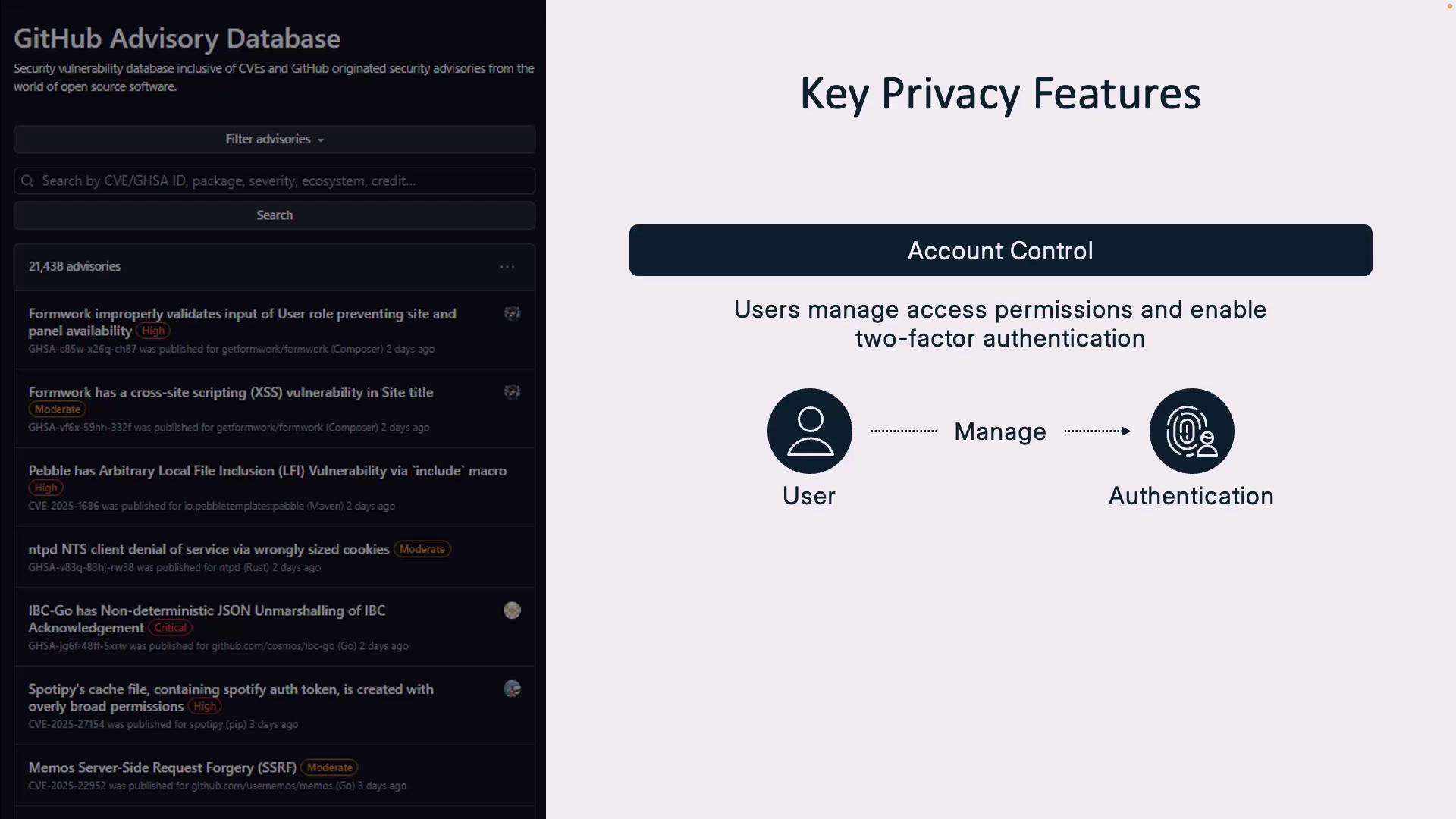
Enable two-factor authentication to protect your account from unauthorized access. Learn more at GitHub Docs.
2.2 Repository Privacy
- Private repositories let you decide exactly who can view or contribute.
- GitHub staff access to private repos is strictly limited to troubleshooting verified issues.
GitHub staff only access private repositories under explicit user consent or when required to resolve a support ticket.
2.3 Data Collection and Use
GitHub only collects the minimum data required to operate and improve services:- Usernames and email addresses
- Payment and billing information for paid plans
2.4 Third-Party Integrations
When you authorize apps or OAuth integrations:- Permissions are clearly defined upfront.
- You can review or revoke access at any time via your account settings.
3. Compliance and Security Measures
GitHub implements robust controls and adheres to international frameworks: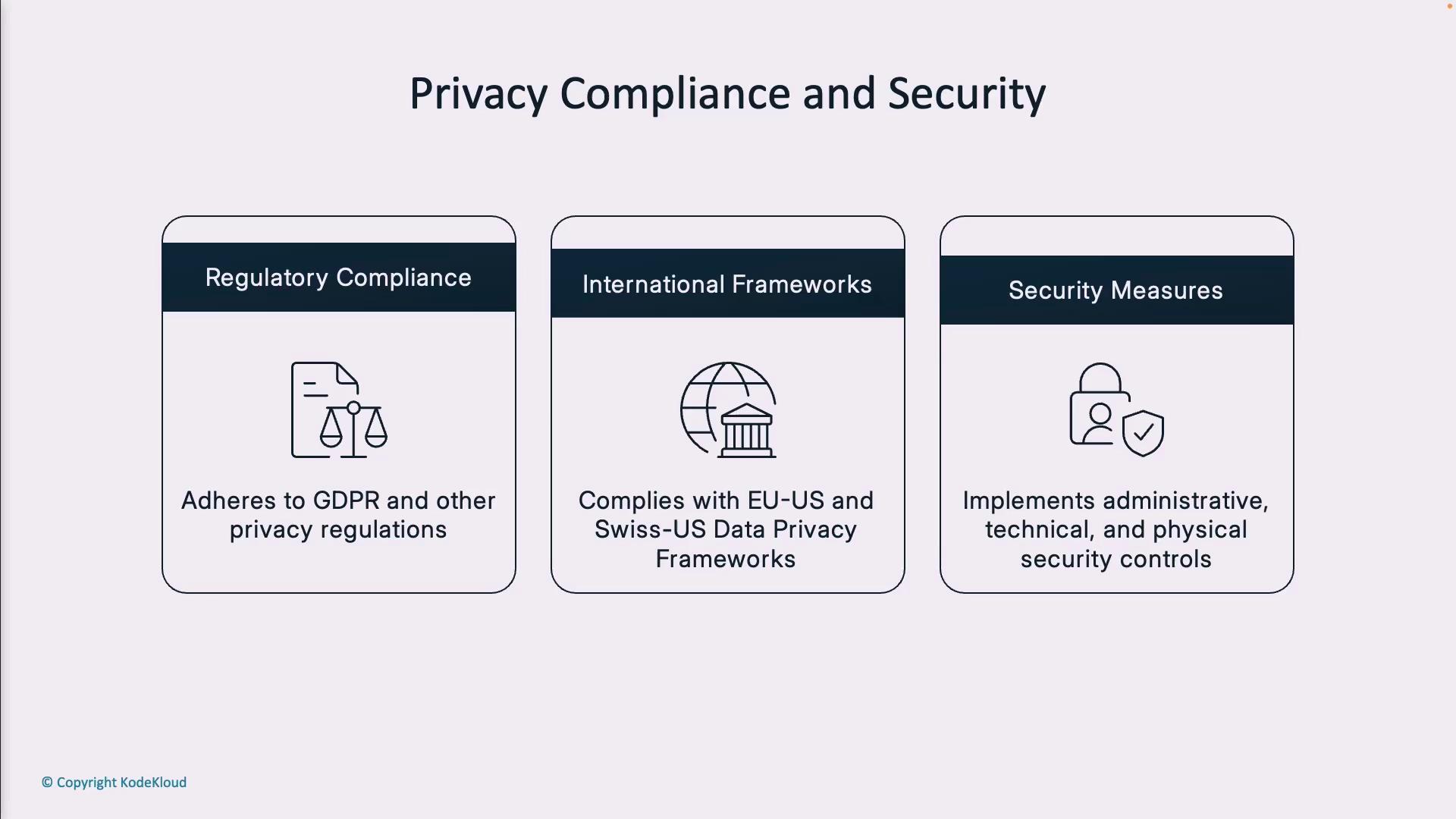
4. Continuous Improvement and Conclusion
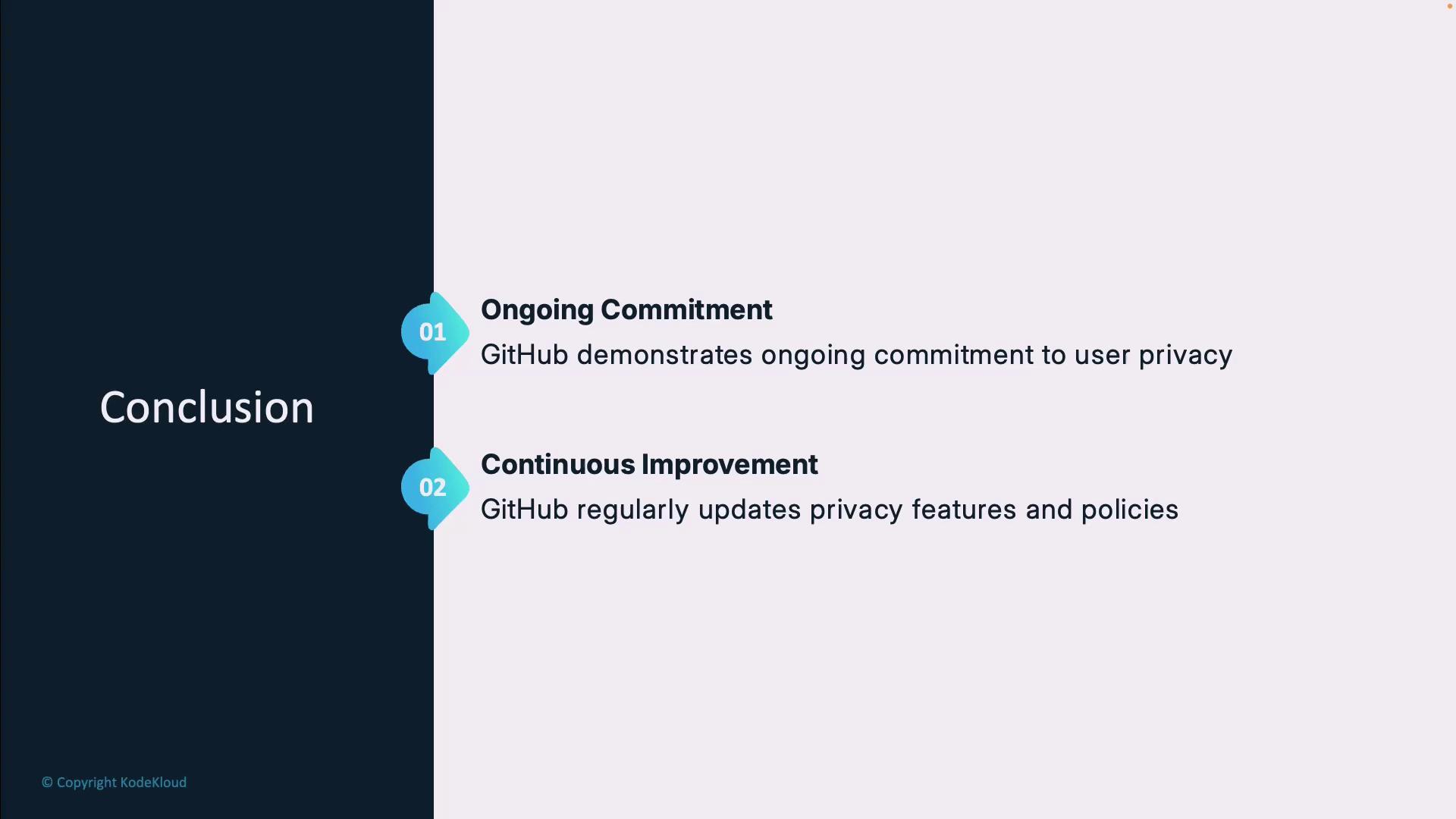
GitHub views privacy as an ongoing commitment. The platform regularly updates features, policies, and controls to address:- Evolving regulations
- New security threats
- User feedback
5. Additional Resources
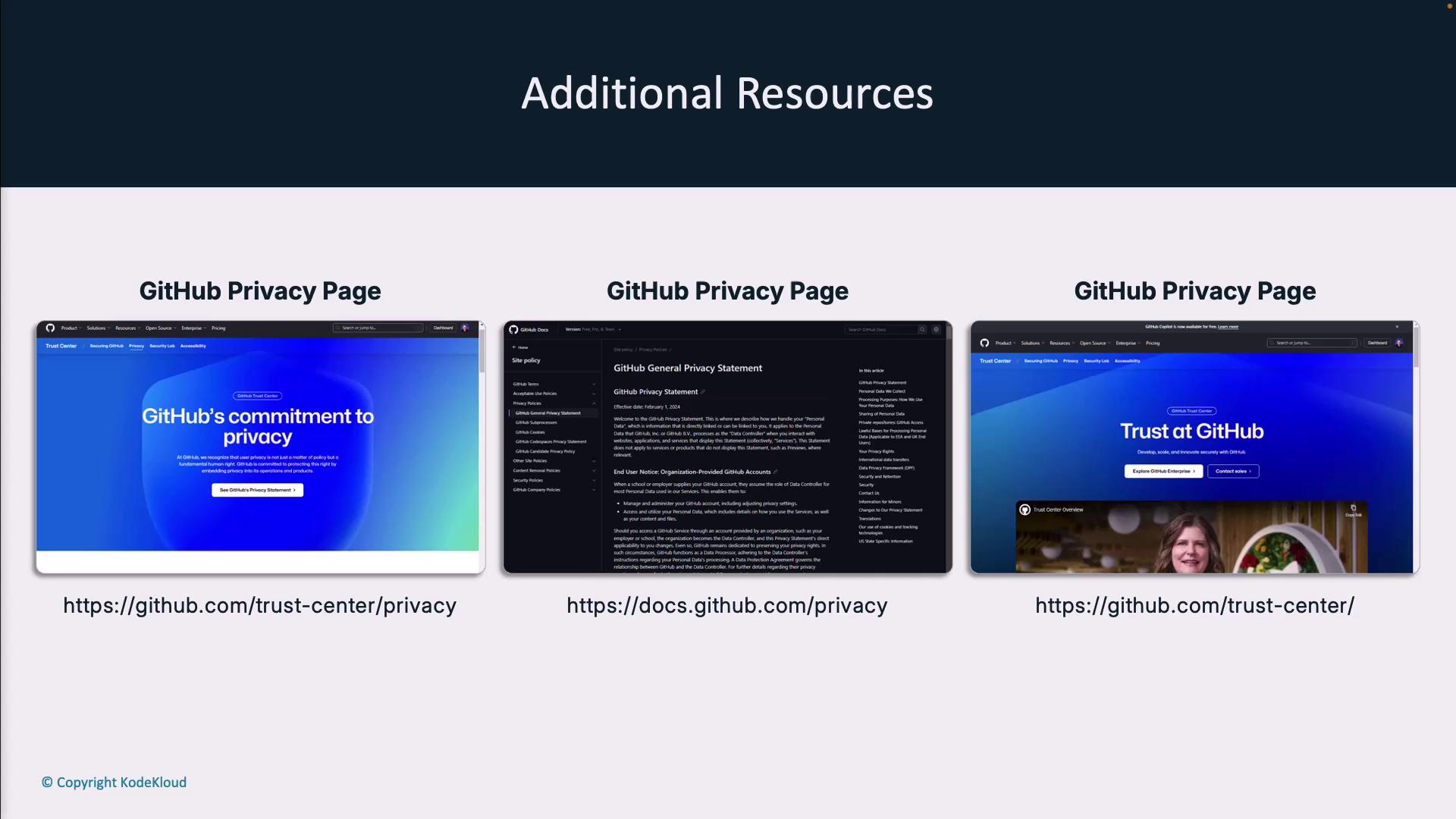
- GitHub Privacy Page: Comprehensive overview of data handling practices
- GitHub Documentation: Step-by-step tutorials on privacy settings
- GitHub Trust Center: In-depth info on security, compliance, and privacy