

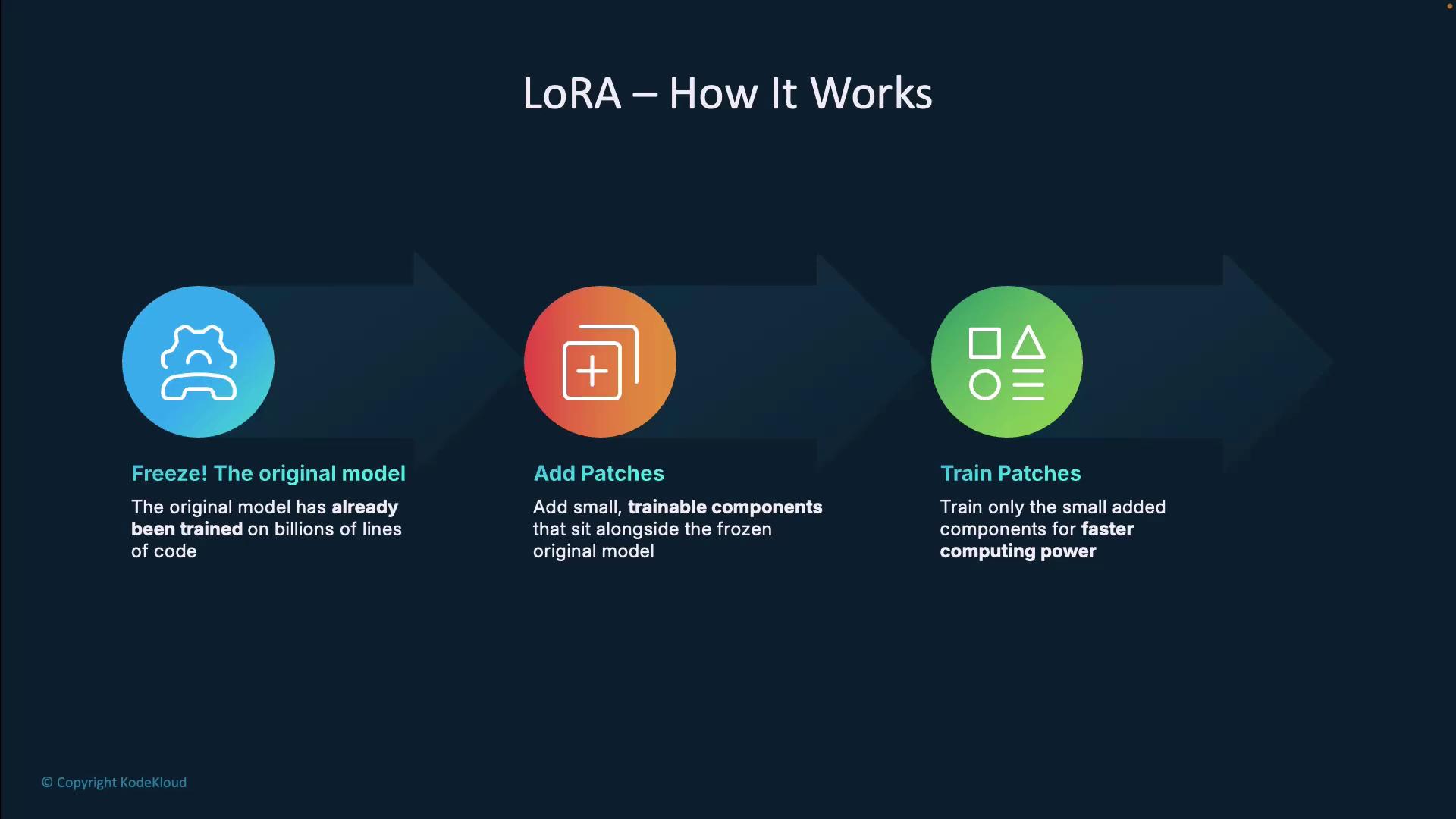
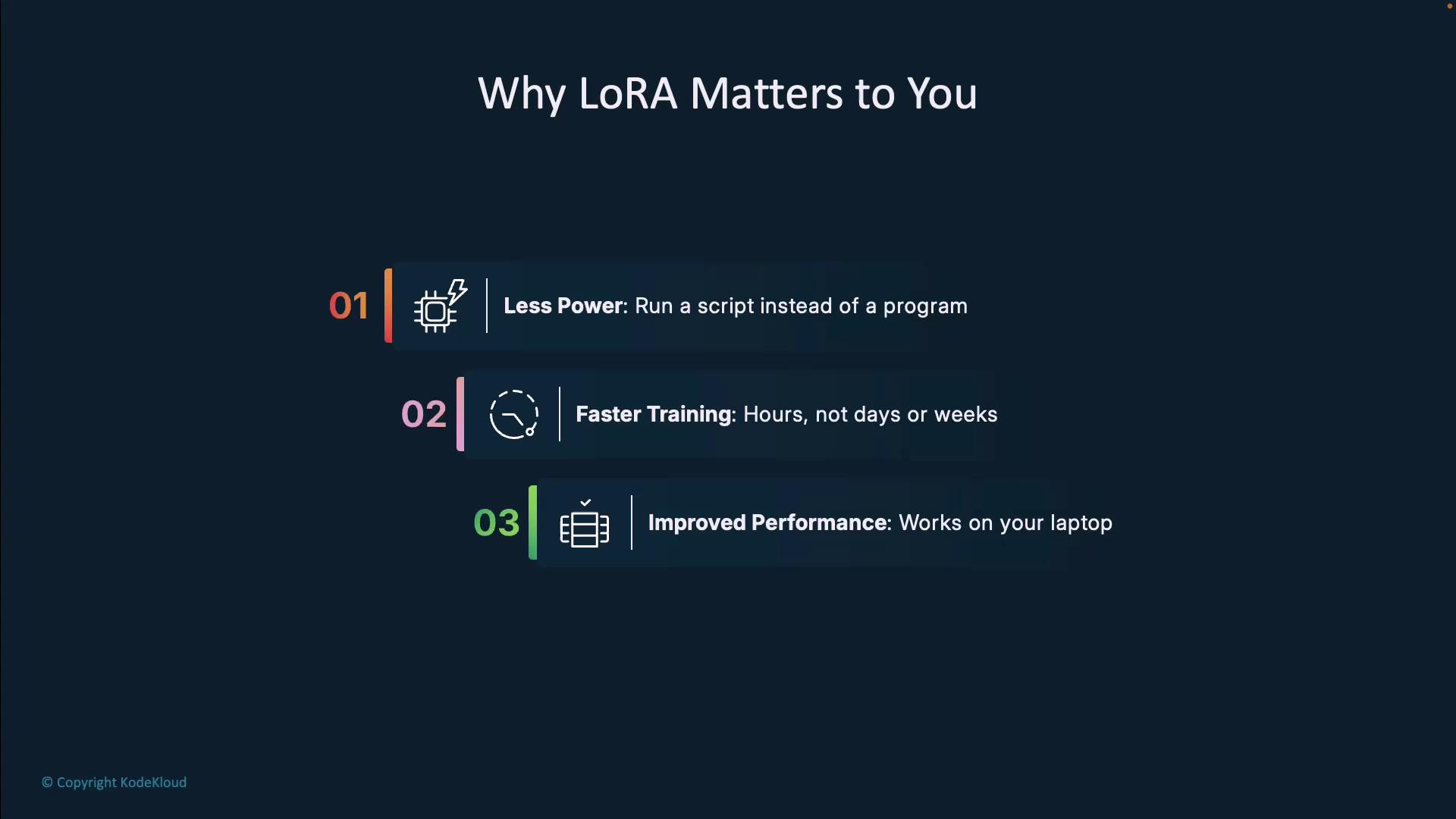
Full retraining of an LLM can require dozens of GPUs and take weeks, making it impractical for most teams. LoRA reduces compute requirements and speeds up iteration by training only a small set of additional parameters.
How LoRA Works
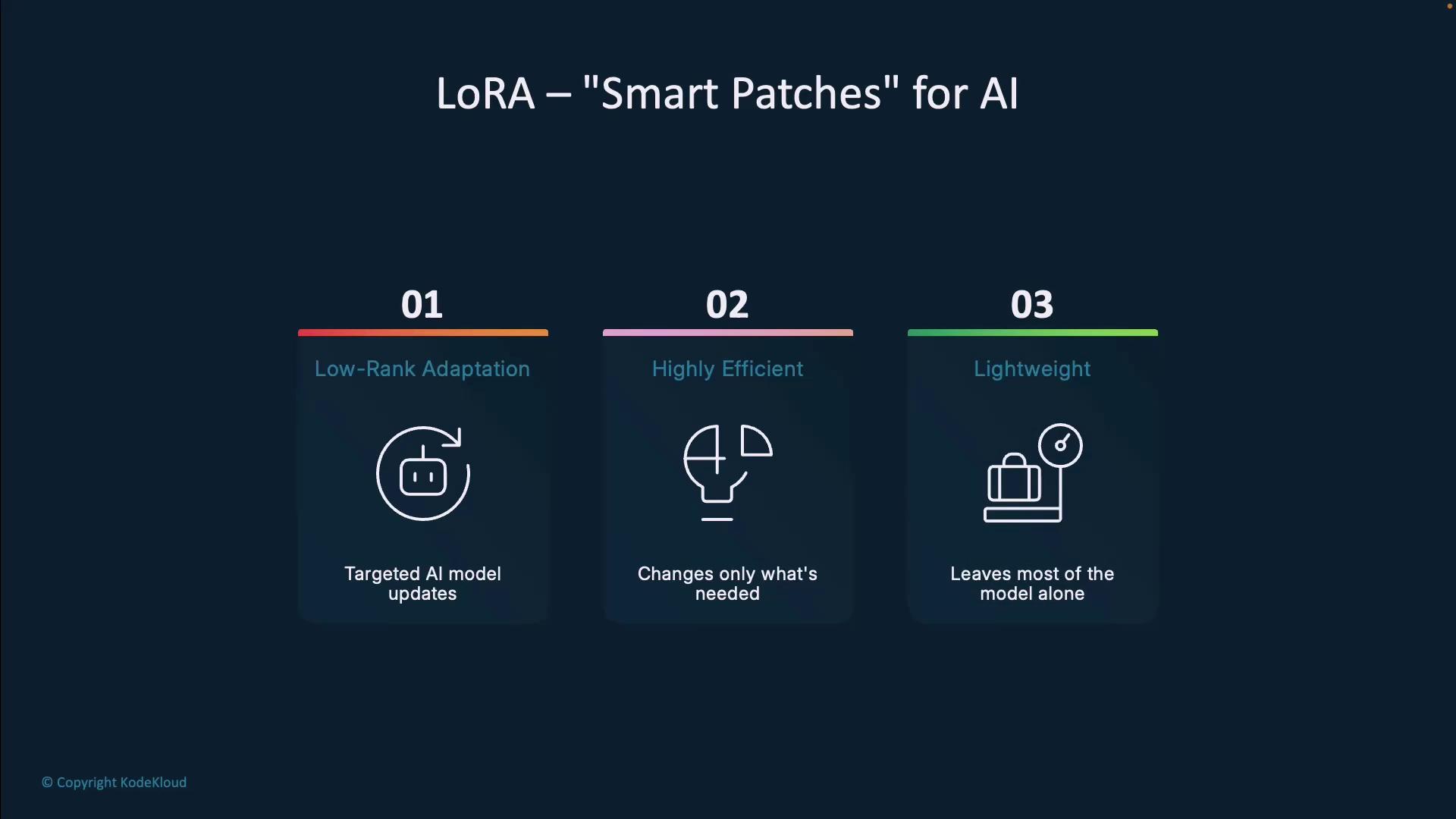
LoRA fine-tuning involves three straightforward steps:-
Freeze the Base Model
Keep the entire pre-trained LLM unchanged. This preserves its broad programming knowledge learned from billions of code examples. -
Inject Trainable Patches
Introduce small, low-rank adapters alongside existing model weights. These act like overlays on a GPS map—you keep the base map and add custom routes. -
Train Only the Adapters
Feed examples of your team’s coding style or preferences. During training, only the newly added parameters update, making the process much faster and more cost-effective.
Key Benefits of LoRA
Customization Methods Compared
LoRA strikes the ideal balance—delivering full fine-tuning quality without the prohibitive resource demands.
Attempting full model retraining on consumer hardware can lead to out-of-memory errors and excessive cloud costs. Choose LoRA to keep budgets and timelines on track.
Key Takeaways
- Efficiency: Train small adapter modules instead of the entire model.
- Cost-Effectiveness: Achieve full fine-tuning performance on standard GPUs.
- Customization: Tailor Copilot to your team’s conventions, libraries, and architecture in hours.
References and Further Reading
- GitHub Copilot Documentation
- LoRA Paper: Low-Rank Adaptation of Large Language Models
- Transformer Model Architecture