

Importing Fake Data into SQLite
First, open DB Browser for SQLite and create a database calledfake_data_generator.db. Then import fake-data.csv into a table named fake_data:
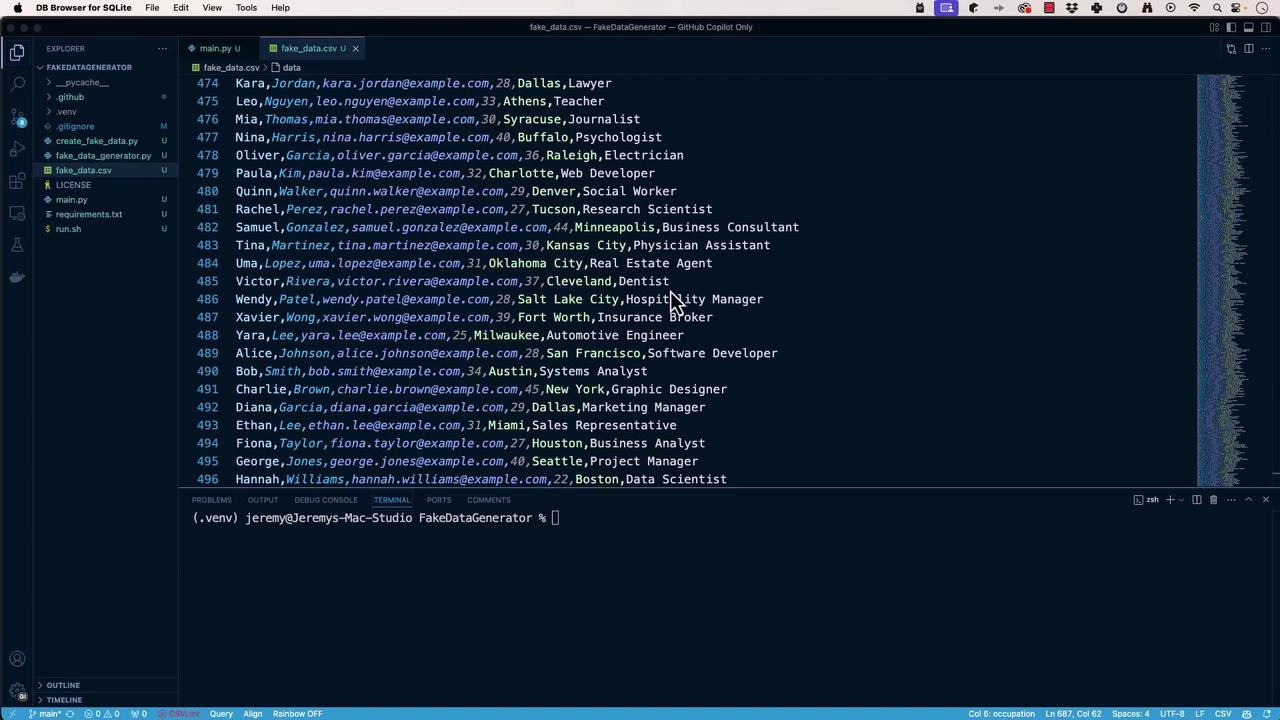
- In DB Browser, choose File > Import > Table from CSV file.
- Select
fake-data.csv. - Set the table name to
fake_data, enable Column names in the first line, and click OK.
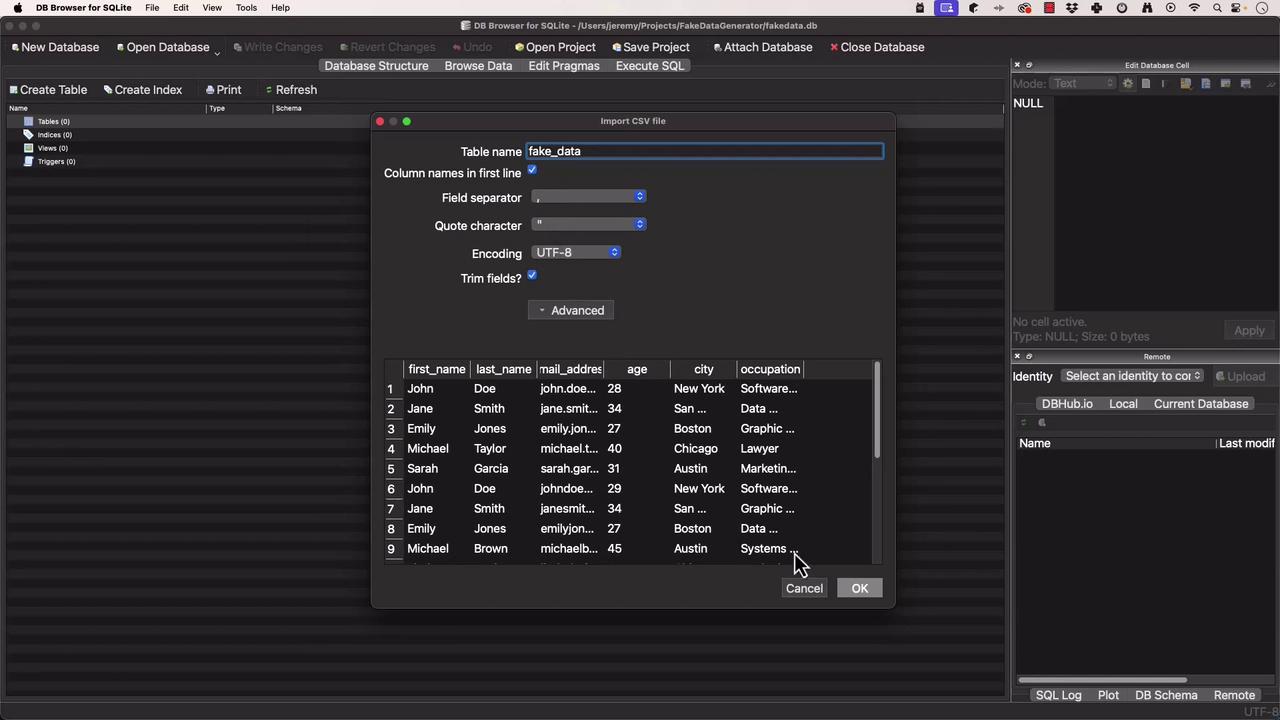
Ensure your CSV headers match the column names you want in SQLite. This makes querying and persistence more straightforward.
fake_data is populated and ready for queries.
Scaffolding the Python Project
Open your project root in VS Code: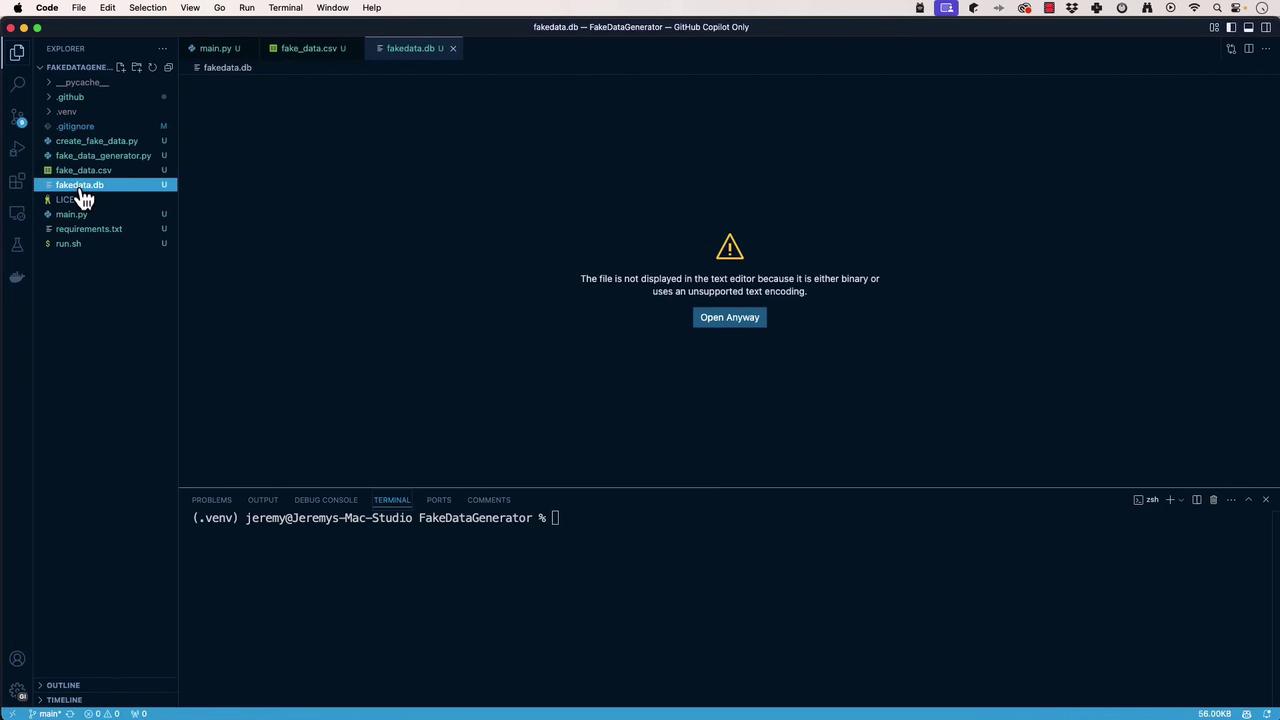
main.py to invoke the CLI generator:
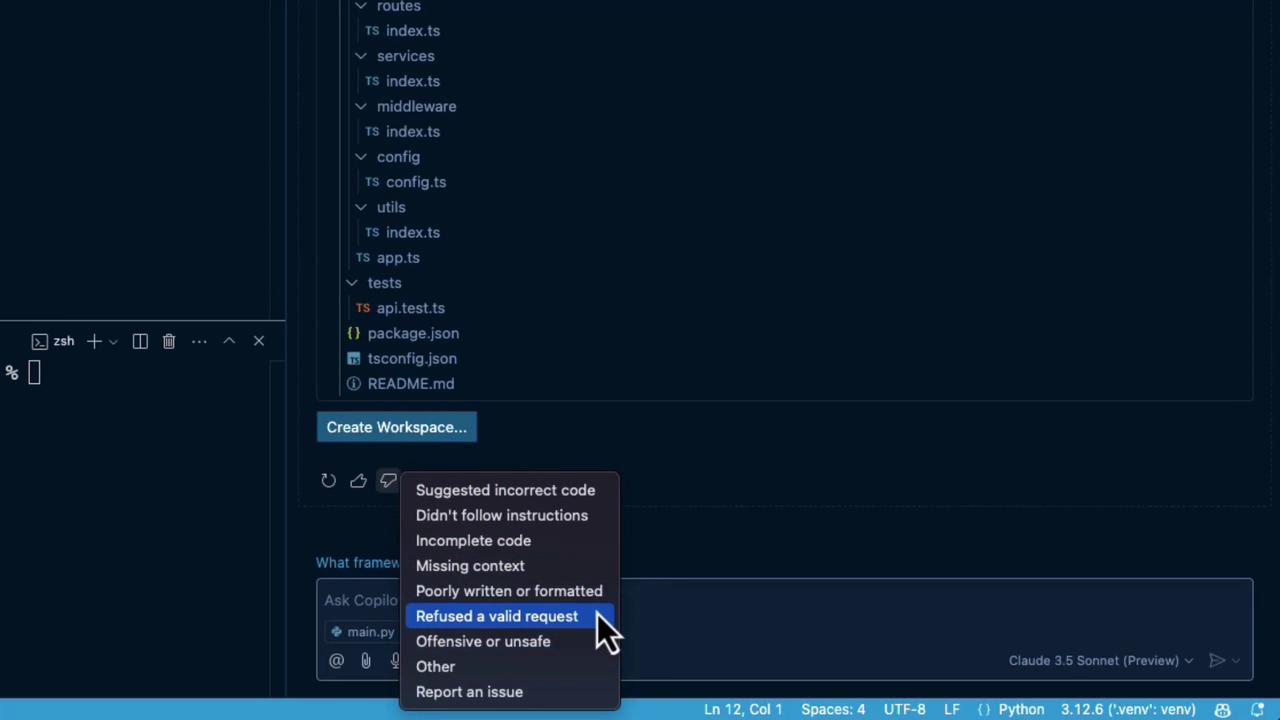
Refine prompts carefully. Copilot can veer off into other languages or frameworks if not guided.
Choosing the Right Framework
Let Copilot compare FastAPI, Flask, and Django REST Framework: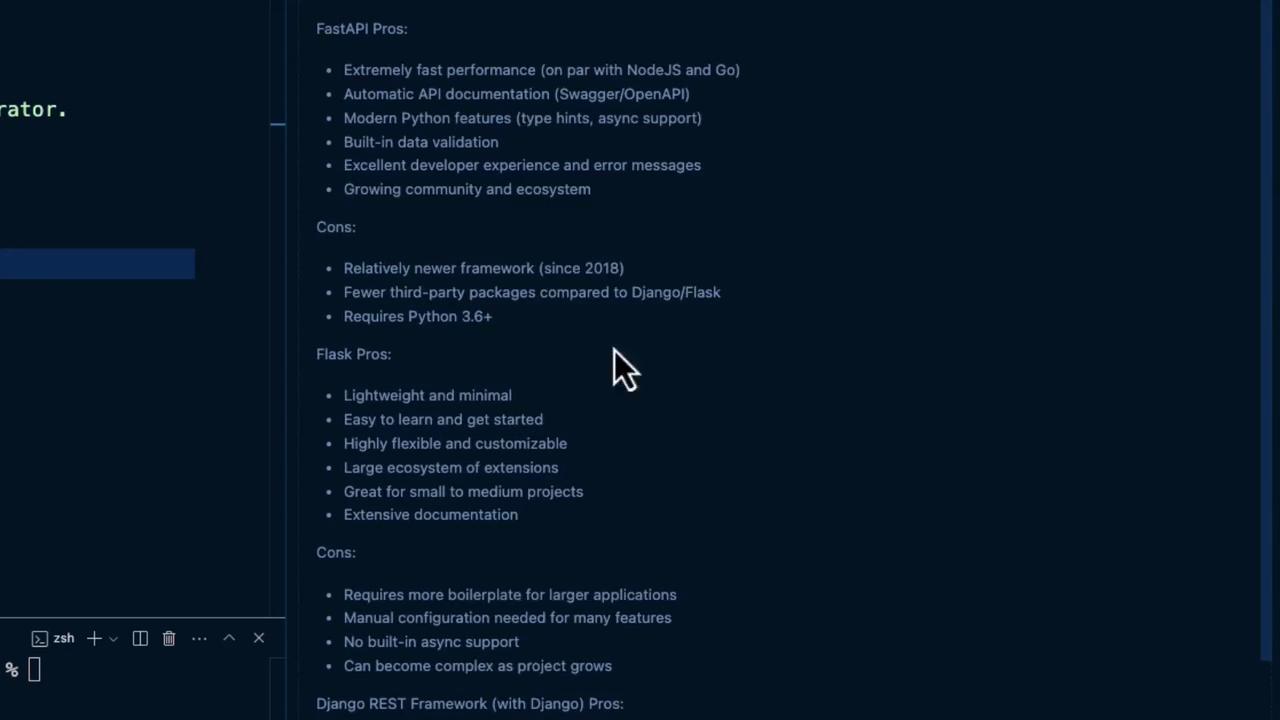
We’ll proceed with FastAPI for its speed and automatic documentation.
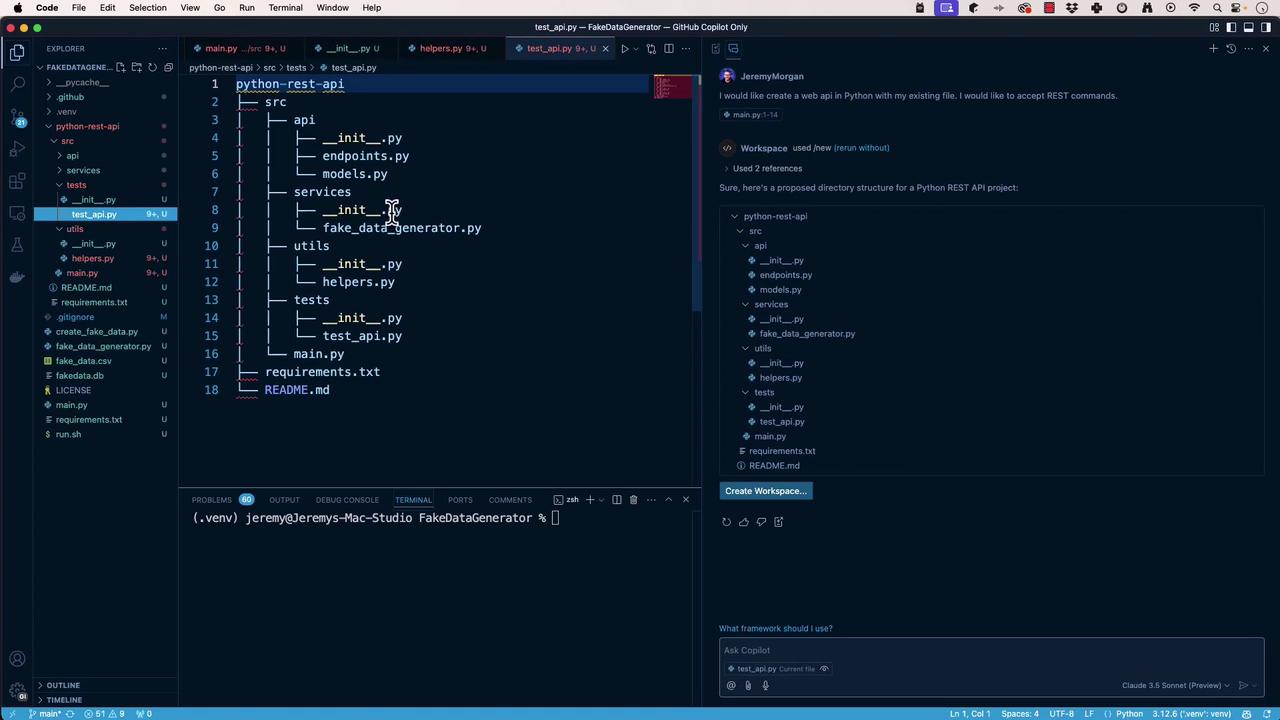
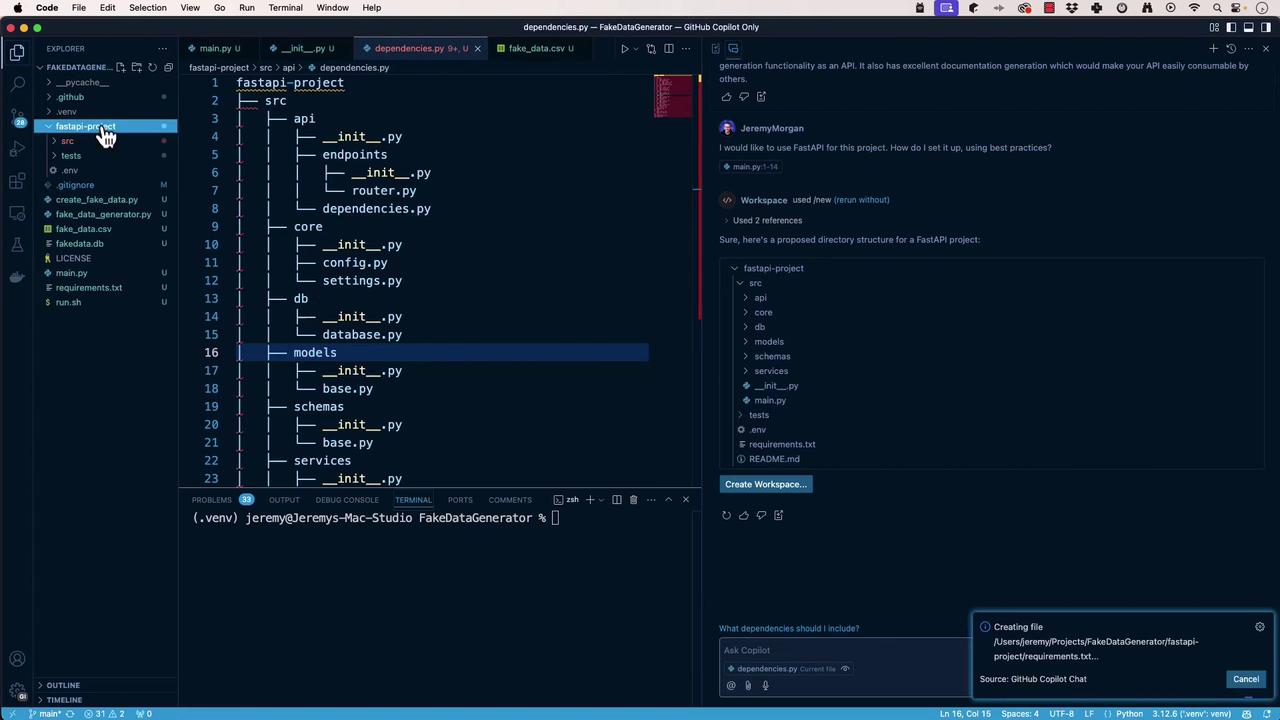
Generating the FastAPI Project Structure
Ask Copilot:- Move
srccontents to the project root. - Remove unused files (
.env,README.md, etc.). - Add a
testsfolder at the root.
Implementing the FastAPI Application
Install dependencies:main.py at the root:
Defining the Database Dependency
Indb/database.py, configure SQLAlchemy for SQLite:
Creating the Pydantic Request Model
Definemodels/fake_data_request.py:
Implementing the Fake Data Endpoint
Install Faker:/getfakedata in api/endpoints/router.py:
Testing the POST Endpoint
Send this request:Next Steps
- Persist generated records into SQLite.
- Add OpenAPI metadata and detailed endpoint docs.
- Write tests in
tests/to validate both database and API layers.